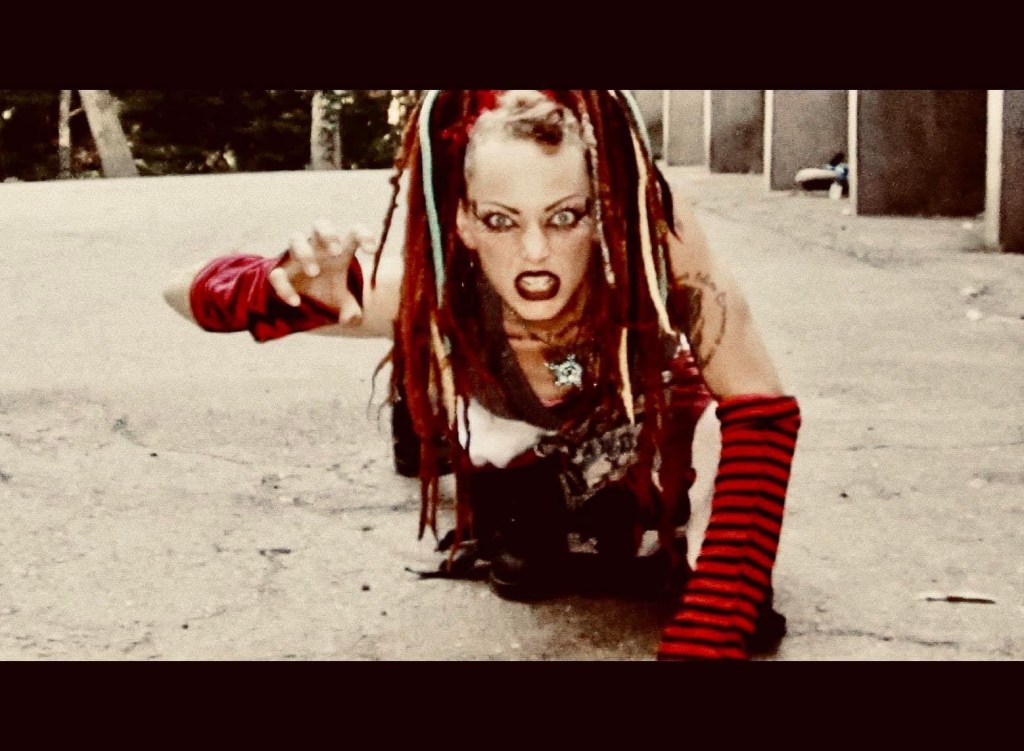
🔥 In contrast, archetypal psychology holds that the true iconoclast is the image itself which explodes its allegorical meanings, releasing startling new insights. Thus the most distressing images in dreams and fantasies, those we shy from for their disgusting distortion and perversion, are precisely the ones that break the allegorical frame of what we think we
know about this person or that, this trait of ourselves or that. The “worst” images are thus the best, for they are the ones that restore a figure to its pristine power as a numinous person at work in the soul…
….A more general result of nominalism is “logophobia,” a dread of words especially of big words which might harbor irrealities. Our difficulty with the word archetype and with envisioning the reality of archetypal images and ideas is one of the effects of nominalism. We are in peculiar double bind with words; they fascinate and at the same time repel. For because of nominalism words have become both bloated in importance and dried in content. In the modern language-games of Wittgenstein, words are the very fundamentals of conscious existence, yet they are also severed from things and from truth. They exist in a world of their own. In modern structural linguistics, words have no inherent sense, for they can be reduced, every single one of them, to basic quasi-mathematical units. The fantasy of a basic number of irreducible elements out of which all speech can be constituted is a dissecting technique of the analytic mind which applies logical atomism to Logos itself–a suicide of the word.
Of course there is a credibility gap, since we no longer trust words of any sort as true carriers of meaning. Of course, in psychiatry, words have become schizogenic, themselves a cause and source of mental disease. Of course we live in a world of slogan, jargon, and press releases, approximating the “Newspeak” of Orwell’s 1984.
As one art and academic field after another falls into the paralyzing coils of obsession with language and communication, speech succumbs to a new semantic anxiety. Even psychotherapy, which began as a “talking cure” – ‘ the rediscovery of the oral tradition of telling one’s story- is abandoning language for touch, cry, and gesture. We dare not
be eloquent. To be passionate, psychotherapy now says we must be physical or primitive. Such psychotherapy promotes a new barbarism.
Our semantic anxiety has made us forget that words, too, burn and become flesh as we speak.
A new angelology of words is needed so that we may once again have faith in them. Without the inherence of the angel in the word- and angel means originally “’emissary, “‘message-bearer” -how can we utter anything but personal opinions, things made up in our subjective minds? How can anything of worth and soul be conveyed from one psyche to another, as in a conversation, a letter, or a book, if archetypal significances are not carried in the depths of our words?
We need to recall the angel aspect of the word, recognizing words as independent carriers of soul between people. We need to recall that we do not just make words up or learn them in school, or ever have them fully under control. Words, like angels, are powers which have Invisible power over us. They are personal presences which have whole mythologies: genders, genealogies (etymologies concerning origins and creations), histories, and vogues; and their own guarding, blaspheming, creating, and annihilating effects. For words are persons. This aspect of the word transcends their nominalistic definitions and contexts and evokes in our souls a universal resonance. Without the inherence of soul
In words, speech would not move us, words would not provide forms for carrying our lives and giving sense to our deaths. “Death” itself, and “soul” “Gods,” “persons, would become, as Antiphon the Sophist said thousands of years ago, mere conventions and artifacts.’ Personifying would be simply a manner of nominalistic speech.
It is this person in the word, its angelic power, that nominalism dreads. Nominalism is not simply a philosophical position which would disembowel words, emptying them into windbags, fatus voci. It is a psychological defense against the psychic component of the word. The bigness it fears and would reduce refers to the complex nature of words
which act upon us as complexes and release complexes in us. Philosophy works wholly with words, so it must bring their complexities into rational order. This is the job of rational speech whether in logic,
theology, or science. In fact, rational use of words was what the word “sanity” originally meant in Latin. Therefore, nominalism refuses to recognize the person in the word or to personify them; to do so implies insanity.
I admit that the personifying path we are on is, indeed, deviant if not mad. But it is from this psychological perspective that we must look at
all judgments against personifying. For these judgments come from a tradition that has progressively depotentiated both images and words
in order to maintain a particular vision of man, reason, and reality. This vision divides the world into objects and egos, giving to the soul no more place than the pea-sized pineal gland, to which island in the middle of the brain Descartes banished the psyche at the beginning of our modern period….🔥
🌟James Hillman , Re-Visioning Psychology pg.8-10
 BlissNinja