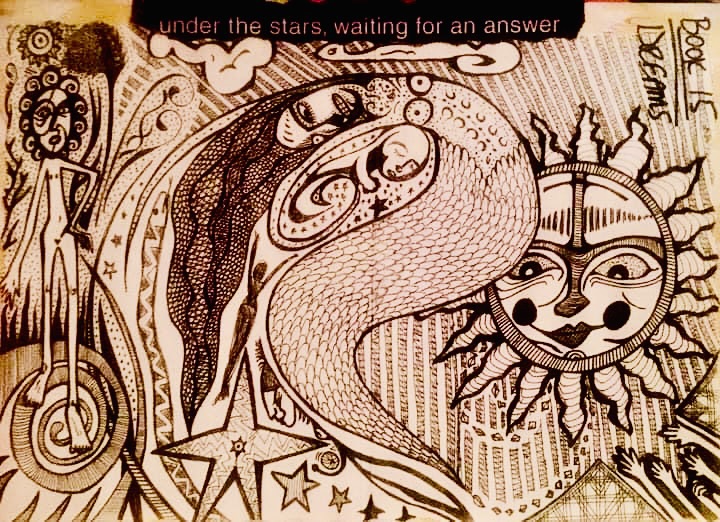
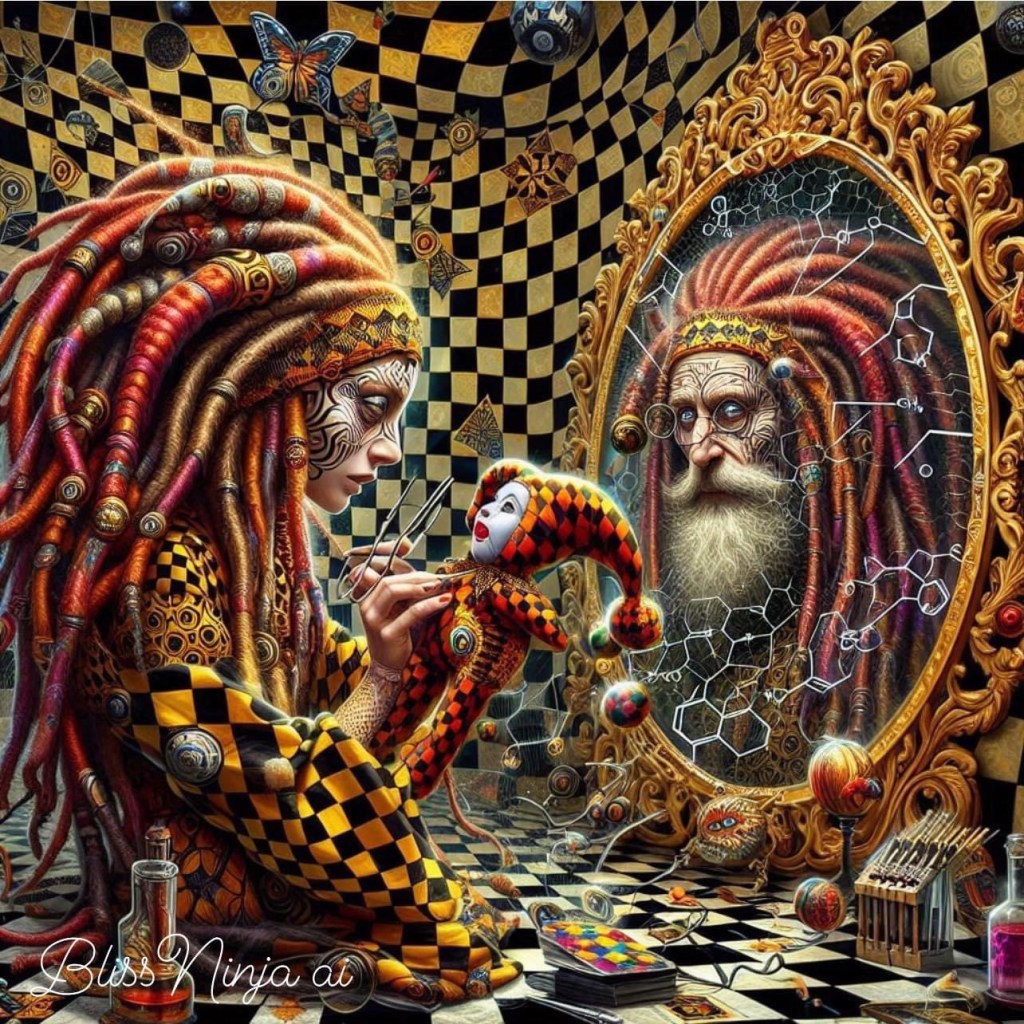
‘Voluptas lies curled in the womb of Psyche’….. Old painting of mine from 2009)
“The Poison is the cure”
Let me say it again: the result is not merely the objectification of subjective "me-ness," but the objectification of its material basis. This has been dissolved, calcined, tortured, putrefied, and distilled to a clarity that can be completely seen through, as if it were not there at all, not a speck of literalism remains, not even spiritual literalism. The libidinal compulsion, the organic towardness of hope and desire that would always go further for a faraway grail, turns around on itself and dissolves itself. The snake eats its own tail-another goal image of deconstructive subversion. The snake of healing, transformation, and rebirth, the goals most dearly desired, and the artifex's obedient service, all dry to dust, mineralized. The uroboric motion poisons (iosis) the very idea of cure. Or, poison is the cure.
What is actually accomplished by the alchemical work? According to my psychological fantasies, it is the objectification of the libido-our lives are not our lives. The alchemical goal is the realization in its complete sense of Freud's "object libido," The libido as a cosmic erotic dynamic that permeates the world because it loves the world of matter, even though it has been caught in the personal delusions of subjectivity, so that we believe we love the world, or can be improved or instructed to love the world. Whereas it is the object libido that loves the world through us, despite us. The anima in chains in the matter of "me, " and we place it there each time as we ask psychologically, what is the matter with me? Alchemy answers, saying: you, I, everyone, the world is matter, elemental material, and we indulge in the materials, as the artifex in the laboratory, all along believing that you are working on you, your life, your relations, your processes until the day dawns, aurora. You awaken within the idea of the goal, the goal not somewhere else out there calling for attainment, but you are within the idea. But because the mind is still trapped in me-ness, we shamelessly assert that the idea is in me when your mind is in the idea. You awaken to the recognition that you are already in that stone, mineralized, stoned out of your mind.
If my reading is on track and the telos or "that for the sake of which" is the de-subjectification of the object libido, then we are obliged to imagine resurrection from this vantage point, which hardly conforms with a Christian reading of either alchemy or resurrection. For now resurrection would indicate not the confirmation throughout eternity of the personal subject and its body saved from the world and the devil of its flesh but rather the resurrection of the body of the world with an idea to its eternity. Not the lifting, the Aufhebung, of material worldliness but the full realization of desire for a world that pulsates in the materials of the elemental psyche, those substances that compose the stone and give it its enduring life, a realization that the world itself speaks through the desire in the materials; that desire is the language of the world, that the libido of each individual human is indeed a cosmic force, an eros or object libido which yearns toward and enjoys this world. And we who labor in the garden as if it were a stony ground would find our individual resurrection in attachment to our materials, which are the world's body, this body becoming a jardin des délices, the objectification of pleasure.
Object libido finds its pleasure in the other, the object, the world as a body. This dry term "object libido" calls for a moistened language. Terms such as cosmogonic eros, desire, jouissance, or unus mundus cannot do justice to what is implied. Libido brings with it the aura of pleasure and the Aphroditic world of the senses. Did not Plotinus attribute to Plato the idea that the soul is always an Aphrodite, which suggests that we cannot adequately speak of the libidinal soul without shifting immediately to an Aphroditic language? Then we would imagine that this libidinal drive throughout the whole opus of soul-making and its increasing love has as its goal a resurrection in beauty and pleasure, and we would realize that even such terms as opus and operatio are work-words which distort the libido's nature. The Christianization of alchemy nonetheless retains the Aphroditic vision in the images it presents. She is the Golden One, the pearl is her jewel; the rose, her flower; the bath and the copulations in the bath of the Rosarium, her liquid territory. The translation of sensate images into spiritual value, as if a lifting improvement to the higher realm of Aphrodite Urania, succeeds only in losing the very sensate attraction of the goal as a pleasurable pull toward beauty. Hence Ficino, Valla, and other Renaissance Platonists insisted that Voluptas is nearer to the life of the spirit than the middle region or mediocrity of ataraxic rationality. Voluptas, according to Apuleius, lies curled in the womb of Psyche and comes to birth only after all psychological effort is passed.
This is the Nekyia, the night sea journey through the underworld made also by Odysseus, Aeneas, and Hercules, and by Eurydice, Inanna, Persephone, Psyche, by Orpheus, by Christ. Whether this underworld is frigid and ghastly or burning with the hots of hell, it is a realm characterized by temperatures suitable only for demons, ghosts, heroes and heroines, goddesses and shades who are no longer altogether of the upper world. Outsiders. Marginals. Alchemy is a profession of marginals; those at the edge. Those who live from their own fires, sweating it out, self-sustaining their own temperatures which may be at variance with the collective climate.”
The ultimate beauty of psyche is that which even Aphrodite does not have and which must come from Persephone, who is queen over the dead souls and whose name means “bringer of destruction." The Box of Beauty which Psyche must fetch as her last task refers to an underworld beauty that can never be seen with the senses. It is the beauty of the knowledge of death and of the effects of death upon all other beauty that does not contain this knowledge. Psyche must “die" herself in order to experience the reality of this beauty, a death different from her suicidal attempts. This would be the ultimate task of soul-making and its beauty: the incorporation of destruction into the flesh and skin, embalmed in life, the visible transfigured by the invisibility of Hades's kingdom, anointing the psyche by the killing experience of its personal mortality. The Platonic upward movement toward aestheticism is tempered by the beauty of Persephone. Destruction, death, and Hades are not left out. Moreover, Aphrodite does not have access to this kind of beauty. She can acquire it only through Psyche, for the soul mediates the beauty of the invisible inner world to the world of outer forms.
👁For the Eskimos, when one falls ill, one takes on a new name, a new diseased personality. To get over a disease, one must quite literally “get over” it by transcending it, that is, by dying. The only hope for cure lies in the death of the ill personality. Health requires death.
Perhaps this is what Socrates meant with his last obscure words about owing a sacrificial cock to Asklepiós. Once the cocky pride of life that crows hopefully at each day’s dawning is sacrificed, the instinct for tomorrow is yielded. Death then is the cure and the salvation and not just a last, worst stage of a disease. The cock crow at dawn also heralds resurrection of the light. But the victory over disease and the new day begins only when the ambition for it has been abandoned upon the altar. The disease which the experience of death cures is the rage to live. .
An analyst often finds himself purposely passing by the symptoms appearing in his practice. Rather than investigate these symptoms, he turns to the person’s life which has fostered the pathology. His premise is that the disease has its meaning in the life of the patient and he tries to understand this meaning. He cannot hold out the usual hope for cure or even relief of symptoms. His analytical experience says that the hope which the patient presents is part of the pathology itself. The patient’s hope arises as an essential part of the constellation of his suffering. It is frequently governed by impossible demands to be free of suffering itself. The same condition that constellated the symptoms is just the condition which these symptoms are interrupting and killing- or curing. Therefore, an analyst does not hope for a return to that condition out of which the symptoms and the hope for relief arose. Because hope has this core of illusion it favors repression. By hoping for the status quo ante, we repress the present state of weakness and suffering and all it can bring. Postures of strength are responsible for many major complaints today–ulcers, vascular and coronary conditions, high blood pressure, stress syndrome, alcoholism, highway and sport accidents, mental breakdown. The will to fall ill, like the suicide impulse, leads patient and physician face to face with morbidity, which stubbornly returns in spite of all hope to the contrary. One might ask if medical hope itself is not partly responsible for recurrent illness; since it never fully allows for weakness and suffering the death experience is not able to produce its meaning. Experiences are cheated of their thorough effect by speedy recovery. Until the soul has got what it wants, it must fall ill again. And another iatrogenic vicious circle of recurrent illness begins. 👁 (James Hillman ,Suicide and the Soul)
As an analysis proceeds, it moves inward from the case history toward the soul history, that is, it explores complexes more for their archetypal meanings and less for their traumatic history. Soul history is recaptured by separating it from obfuscations in case history. The immediate family, for instance, become the real people they are, undistorted by inner meanings which they had been forced to carry. The rediscovery of soul history shows itself in the reawakening of emotion, fantasy, and dream, in a sense of mythological destiny penetrated by the transpersonal, and by spontaneous acausal time. It reflects the “cure” from a chronic identification of the soul with outer events, places, and people. As this separation occurs, one is no longer a case but a person.
James HillmanSoul history emerges as one sheds case history, or, in other words, as one dies to the world as an arena of projection. Soul history is a living obituary, recording life from the point of view of death, giving the uniqueness of a person sub specie acternitatis. As one builds one’s death, so one writes one’s own obituary in one’s soul history.
“To sense penetratingly we must imagine, and to imagine accurately we must sense.”
James Hillman
( Continues in photo captions)
“Rather let us imagine the anima mundi as that particular soul-spark, that seminal image, which offers itself through each thing in its visible form. Then anima mundi indicates the animated possibilities presented by each new event as it is, its sensuous presentation as a face bespeaking its interior image – in short, its availability to imagination, its presence as psychic reality. Not only animals and plants ensouled as in the Romantic vision, but soul is given with each thing, God-given things of nature and man-made things of the street.”
James HillmanThere is a further consequent of the credit one pays to the im- ages of the soul. A new feeling of self-forgiveness and self-acceptance begins to spread and circulate. It is as if the heart and the left side were extending their dominion. Shadow aspects of the personality continue to play their burdensome roles but now within a larger tale, the myth of oneself, just what one is which begins to feel as if that is how one is meant to be. My myth becomes my truth; my life symbolic and allegorical. Self-forgiveness, self-acceptance, self-love; more, one finds oneself sinful but not guilty, grateful for the sins one has and not another’s, loving one’s lot even to the point of desire to have and to be always in this vivid inner connection with one’s own individual portion. Such strong experiences of religious emotion seem to be the gift again of the anima.
James HillmanThe third step is gratuitous. It refers to the free and creative appearance of imagination, as if the inner world now come to life begins to act spontaneously, by itself, undirected and even unattended by ego-consciousness. The inner world not only begins more and more to take care of itself, producing crises and resolving them within its own transformations, but it also takes care of you, your ego-worries and ego-claims. This is the feminine Shakti of India at a higher state; it is also the nine Muses responsible for culture and creativity. One feels lived by imagination.
James HillmanPanic, especially at night when the citadel darkens and the heroic ego sleeps, is a direct participation mystique in nature, a fundamental, even ontological experience of the world as alive and in dread. Objects become subjects; they move with life while one is oneself paralyzed with fear. When existence is experienced through instinctual levels of fear, aggression, hunger or sexuality, images take on compelling life of their own. The imaginal is never more vivid than when we are connected with it instinctually. The world alive is of course animism; that this living world is divine and imaged by different gods with attributes and characteristics is polytheistic pantheism. That fear, dread, horror are natural is wisdom. In Whitehead’s term nature alive means Pan, and panic flings open a door into this reality.
James Hillman“A world without soul offers no intimacy. Things are left out in the cold, each object by definition cast away before it is manufactured, lifeless litter and junk, taking its value wholly from my consumptive desire to have and to hold, wholly dependent on the subject to breathe it into life with personal desire. When particulars have no essential virtue, then my own virtue as a particular depends wholly and only on my subjectivity or on your desire for me, or fear of me: I must be desirable, attractive, a sex-object, or win importance and power. For without these investments in my particular person, coming either from your subjectivity or my own, I too am but a dead thing among dead things, potentially forever lonely.”“Isn’t devotio to anima the calling of psychology? So, another deep-seated reason for this book is to provide grounding for the vision of soul in psychology, so that psychology doesn’t abandon itself to the archetypal perspectives of the child and developmentalism or the mother and material causalism. The vision of soul given by anima is more than just one more perspective. The call of soul convinces; it is a seduction into psychological faith, a faith in images and the thought of the heart, into an animation of the world. Anima attaches and involves. She makes us fall into love. We cannot remain the detached observer looking through a lens. In fact, she probably doesn’t partake in optical metaphors at all. Instead, she is continually weaving, stewing, and enchanting consciousness into passionate attachments away from the vantage point of a perspective.
(James Hillman, Anima, ix-x)I like to imagine a person’s psyche to be like a boardinghouse full of characters. The ones who show up regularly and who habitually follow the house rules may not have met other long-term residents who stay behind closed doors, or who only appear at night. An adequate theory of character must make room for character actors, for the stuntmen and animal handlers, for all the figures who play bit parts and produce unexpected acts. They often make the show fateful, or tragic, or farcically absurd.
James HillmanDRAMATIC TENSIONS If psychotherapy is to understand the dreaming soul from within, it had best turn to “theatrical logic.” The nature of mind as it presents itself most immediately has a specific form: Dionysian form. Dionysus may be the force that through the green fuse drives the flower, but this force is not dumb. It has an internal organization. In psychology this language speaks not genetically, not biochemically in the information of DNA codes, but directly in Dionysus’s own art form, theatrical poetics. This means the dream is not a coded message at all, but a display, a Schau, in which the dreamer himself plays a part or is in the audience, and thus always involved. No wonder that Aristotle placed psychotherapy (catharsis) in the context of theater. Our lives are the enactment of our dreams; our case histories are from the very beginning, archetypally, dramas; we are masks (personae) through which the gods sound (personare). Like dreams, inner fantasy too has the compelling logic of theater.
James HillmanDionysian consciousness understands the conflicts in our stories through dramatic tensions and not through conceptual opposites; we are composed of agonies not polarities. Dionysian consciousness is the mode of making sense of our lives and worlds through awareness of mimesis, recognizing that our entire case history is an enactment, “either for tragedy, comedy, history, pastoral, pastoral-comical, historical-pastoral, tragical-historical, tragical- comical-pastoral,” and that to be “psychological” means to see myself in the masks of this particular fiction that is my fate to enact. Finally, to view ourselves from within a drama refers to the religious origins, not only of drama, but of the mythical enactments that we perform and name with the mask of “behavior.”
Salt is the mineral substance or objective ground of personal experience making experience possible. No salt, no experiencing- merely a running on and running through of events without psychic body. Thus salt makes events sensed and felt, giving us each a sense of the personal–my tears, my sweat and blood, my taste and value.
The entire alchemical opus hangs on the ability to experience subjectively. Hence it is said in The Golden Tract: “He who works without salt will never raise dead bodies.” The matters are only macrocosmic and chemical, out there, dead unless one works with salt. These intensely personal experiences which give taste and flavor to events are nonetheless common to all-both mine and yet common as blood, as urine, as salt. In other words, salt acts like the ground of subjectivity (“That which is left at the bottom of our distilling vessel is our salt-that is to say our earth.”). It makes possible what psychology calls felt experience. So, we must turn to this same ground to mine our salt.
James Hillman, Salt
(Continued in the Captions for each photo)
Felt experience takes on a radically altered meaning in the light of alchemical salt. We may imagine our deep hurts not merely as wounds to be healed but as salt mines from which we gain a precious essence and without which the soul cannot live. The fact that we return to these deep hurts, in remorse and regret, in repentance and revenge, indicates a psychic need beyond a mere mechanical repetition compulsion. Instead, the soul has a drive to remember; it is like an animal that returns to its salt licks; the soul licks at its own wounds to derive sustenance therefrom. We make salt in our suffering and, by working through our sufferings, we gain salt, healing the soul of its salt-deficiency.Salt requires a pinch, feeling the pinch of the event that stings; lead seems to require time, waiting it through. What results from the salt cure is a new sense of what happened, a new appreciation of its virtue for soul. Salt may also be mined from whatever is stable. As the principle of stability whose alchemical sign was a square, salt can be mined from the rocks of concrete experience, those fixities which mark our lives with defined positions. These places are not merely solid facts-my degree, my property, my car accident, my war record, my divorce; these are also places where psychic body is salted away and stored. These rocks, when recognized and owned, belong to the history of my soul, where it has been salted down by the fixities of experience, giving a certain crystallization to my nature and keeping me from inflammations and volatilizations.Though we do not make it by fire, we do make salt by means of dissolutions. Salt is soluble. Weeping, bleeding, sweating, urinating bring salt out of its interior underground mines. It appears in our moistures, which are the flow of salt to the surface. “During the work the salt assumes the appearance of blood” (CW’ 14, 8337). Moments of dissolution are not mere collapses; they release a sense of personal human value from the encrustations of habit. “I too am a human being worth my salt”-hence my blood, sweat, and tears.Viewed from the perspective of salt, early traumas are moments of initiation into the sense of being a me with a subjective personal interior. We tend to fixate on what was done to us and who did it: resentment, revenge. But what psychologically matters is that it was done: the blow, the blood, the betrayal. Like the ashes which are rubbed into the wounds at initiation rites to purify and scarify, the soul is marked by its trauma. Salt still is touched to the body in Christian Baptism, and eaten still at Jewish Pessach in ritual remembrance of trauma. A trauma is a salt mine; it is a fixed place for reflection about the nature and value of my personal being, where memory originates and personal history begins. These traumatic events initiate in the soul a sense of its embodiment as a Vulnerable experiencing subject.The paradigmatic story of “looking back” is that of Lot’s wife. (Lot and Lot’s wife were even used as alchemical terms for salt- Jobnson’s Dictionary.) Because Lot’s wife could not refrain from looking back at the destruction of Sodom from which they had been saved, she was turned to a pillar of salt. Jewish commentators on the tale say that her mother-love made her look behind to see whether her married daughters were following; and Christian comments on Luke 17:32 also see the source of her move in remembrances of family and relatives, personal subjectivities of feeling. Evidently, family fixations are also salt mines. The disappointments, worries, smarts of mother-complex love–the evening with the photograph album, the keepsakes- are ways the psyche produces salt, returning to events in order to turn them into experiences.The danger here is always fixation, whether in recollection, childhood trauma, or in a literalized and personalized notion of experience itself: “I am what I have experienced.” Paracelsus defined salt as the principle of fixation (Il:366).
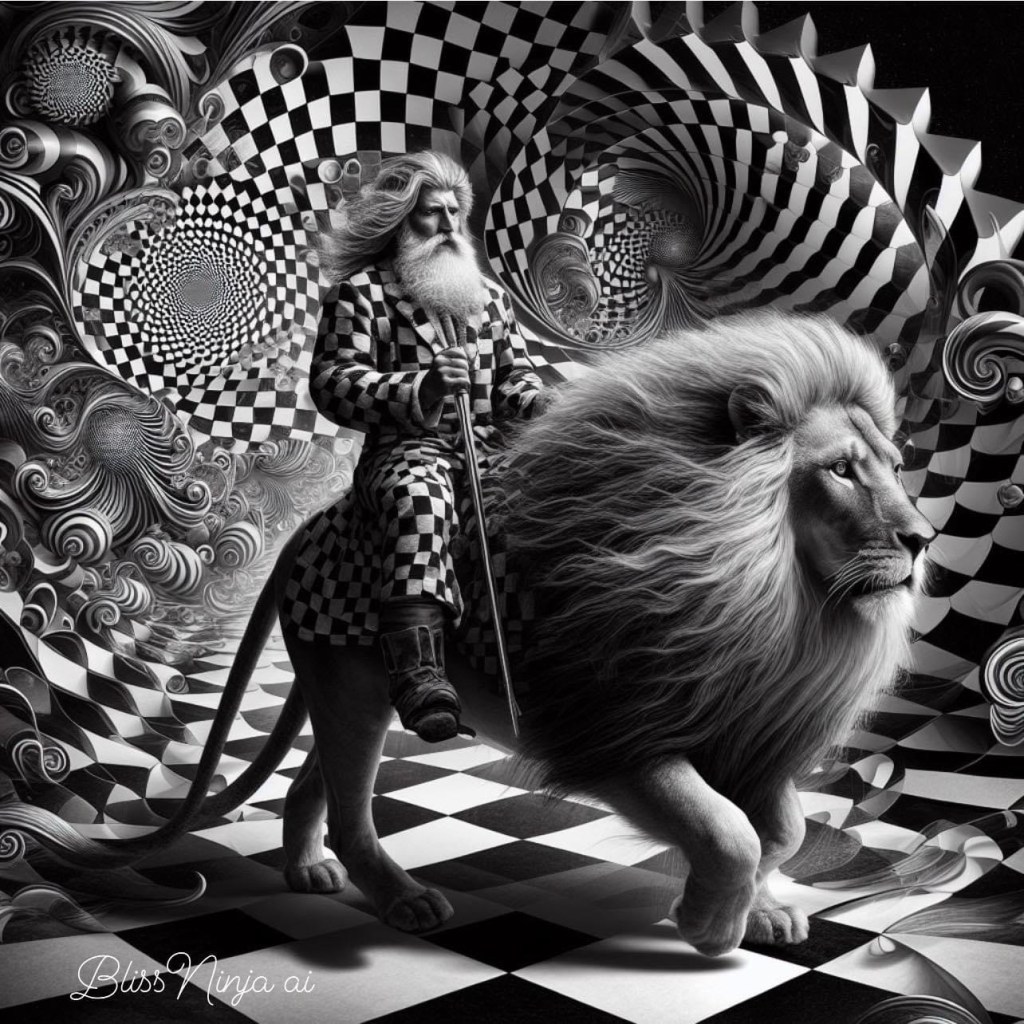
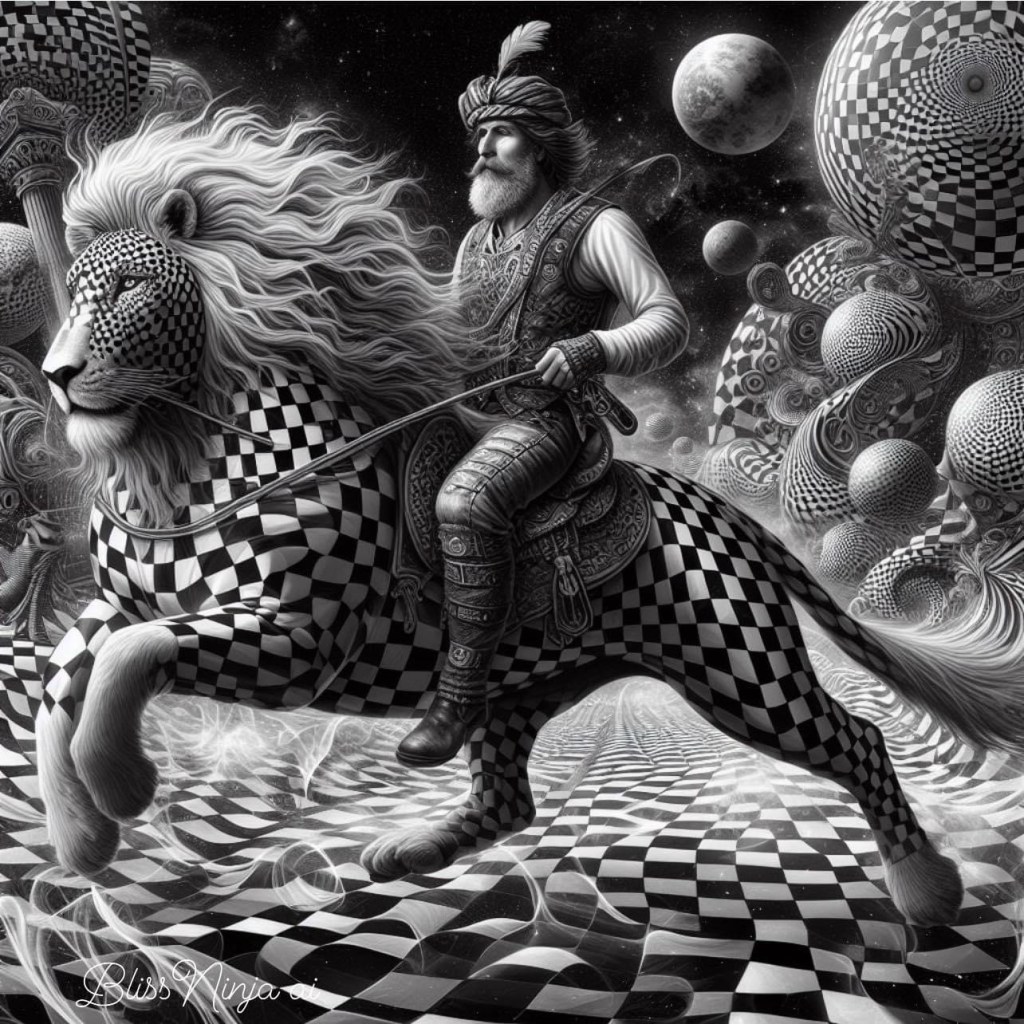
ALchemical psychology remarkably condenses the two traits of the lion heart–the conformity of its thought and its objectification- into the alchemical substance, sulfur, the principle of “combustibility,” the magna famma. “Where is the sulfur to be found? asks Kramer, a fourteenth-century English Benedictine. “In all substances, all things in the world–metals, herbs, trees, animals, stones, are its ore.
Everything that suddenly lights up, draws our joy, fares with beauty–each bush a god burning: this is the alchemical sulfur, the flammable face of the world, its phlogiston, its aureole of desire, enthymesis everywhere. That fat of goodness we reach toward as consumers is the active image in each thing, the active imagination of the anima mundi that fires the heart and provokes it out.
(James Hillman, Thought of the Heart )
Continued in photo captions
At the same time that sulfur conflagrates, it also coagulates; it is that which sticks, the mucilage, “the gum,” the joiner, the stickiness of attachment. Sulfur literalizes the heart’s desire at the very instant that the thymos enthuses. Conflagration and coagulation occur together. Desire and its object become indistinguishable. What I burn with attaches me to it; I am anointed by the fat of my own desire, captive to my own enthusiasm, and thus in exile from my heart at the very moment I seem most to own it. We lose our soul in the moment of discovering it: “Sweet Helen,” says Marlowe’s Faustus, “make me immortal with a kiss./Her lips suck forth my soul: see where it flies!” Hence Heraclitus had to oppose thymos and psyche: “Whatever thymos wishes, it buys at the expense of soul.”Psychology now calls this love in the heart of the lion compul- sive projection. The alchemical basis of this kind of projection is actually the sulfur in the heart that does not recognize it is imagining. The objective himma is literalized into the objects of its desire. Imagination is thrown outward, ahead of itself; and the task is less to take back these kinds of projections -who takes them back and where are they put–but more to leap after the projectile reclaiming it as imagination, thereby recognizing that himma demands that images always be experienced as sensuous independent bodies. There are styles of projection: it is not a unitary mechanism. Cordial projection requires an equally leonine mode of consciousness: pride, magnanimity, courage. To desire and to see through desire–this is the courage that the heart requires.As Jung says: “Sulphur represents the active substance of the sun… the motive factor in consciousness, on the one hand Will and on the other Compulsion” (CW 14, S15t). Compulsion becomes will through courage; it is in the heart that the operations upon sulfur are performed. We shall come back to these operations in the second part. For now it is enough to recognize compulsive projection to be a necessary activity of the sulfur, as the way in which this heart thinks, where thought and desire are one.Our lion rages and our sulfur burns. Our saint is eaten by lions. We cannot let loose our aesthetic outrage in its simple form. Alchemical psychology recognized this need for work on the lion. Alchemical psychology considered the black and red sulfurs, and the green lion, in desperate need of subliming. One well-known method cuts off the green lion’s paws, depriving it of its reach into the world. Yet it stays alive as a succus vitae in the heart, for “green is the color of the heart and of the vitality of the heart,” as we know from Corbin. The color of the himma must be green like the natural driving sulfur that is also the green/red copper goddess Venus. This ardent green has to be enlightened, the sulfur chastened: a whitening of the heart.To make white the heart is an opus contra naturam. We expect the heart to be red as its natural blood, green as its hopeful desire. This heart operation originates in the dilemma presented by sulfur: the imagination captive in its sulfur that both burns and coagulates at the same instant, imagination held fused into its desire and its desire fused with its object. The himma blinded, unable to distinguish between feeling and image, image and object, object and subject, true imagining and illusion.Alchemy often speaks of subliming to a sulfur white as snow. This is not only an operation of calming and cooling, the “Doves of Diana.” In fact sublimation requires going with the fire, like curing like, raising the temperature to a white heat so as to destroy all coagulations in the intensity of the desire, so that what one desires No longer matters, even as it matters most, mattering now sublimed translucent, all flame.
🔥From the outside, the appearance of the daimones seems to offer ethical relativity: a paradise of seductions and escapades. But this fantasy of ethical relativity betrays a consciousness that is not yet inside the imaginal world, that does not Know Thyself from within its images. In other words, the question of ethical relativity which raises its head whenever one speaks of a “pandemonium of images” and a plurality of gods is answered by the dedication which the images demand. It is they-not we–who demand meticulous crafting into jeweled idols; they, who call for ritualized devotions, who insist they be consulted before we act. Images are the compelling source of morality and religion as well as the conscientiousness of art. And, as we do not make them up, so we do not make up our response to them, but are “taught” this response by them as moral instances. It is when we lose the images that we become moralistic, as if the morality contained within the images becomes a dissociated, free-floating guilt, a conscience without face.
When an image is realized-fully imagined as a living being other than myself-then it becomes a psychopompos, a guide with a soul having its own inherent limitation and necessity. It is this image and no other, so that the conceptual questions of moral pluralism and relativism fade in front of the actual engagement with the image. The supposed creative pandemonium of the teeming imagination is limited to its phenomenal appearance in a particular image, that specific one which has come to me pregnant with significance and intention, a necessary angel as it appears here and now and which teaches the hand to represent it, the ear to hear, and the heart how to respond. There is thus revealed through this engagement a morality of the image. Psychological morality which derives from the imaginal is no longer a “new ethics” of shadow integration by means of that same old Kantian ego and its heroic wrestlings with abstract dualisms. The ego is no longer the place where morality resides, a philosophical position that had wrested morality from the imagination thereby demonizing it. Instead, it is the daimon who is our preceptor, our spiritus rector.🔥
Anthropologists describe a condition among "primitive" peoples called "loss of soul." In this condition a man is out of himself, unable to find either the outer connection between humans or the inner connection to himself. He is unable to take part in his society, its rituals, and traditions. They are dead to him, he to them. His connection to family, totem, nature, is gone. Until he regains his soul he Is not a true human. He is “not there." It is as if he had never been initiated, been given a name, come into real being. His soul may not only be lost; it may also be possessed, bewitched, ill, transposed into an object, animal, place, or another person. Without this soul, he has lost the sense of belonging and the sense of being in communion with the powers and the gods. They no longer reach him; he cannot pray, nor sacrifice, nor dance. His personal myth and his connection to the larger myth of his people, as raison d'être, is lost. Yet he is not sick with disease, nor is he out of his mind. He has simply lost his soul. He may even die. We become lonely. Other relevant parallels with ourselves today need not be spelled out.
One day in Burghölzli, the famous institute in Zurich where the words schizophrenia and complex were born, I watched a woman being interviewed. She sat in a wheelchair because she was elderlyand feeble. She said that she was dead for she had lost her heart. The psychiatrist asked her to place her hand over her breast to feel her heart beating: it must still be there if she could feel its beat. "That," she said, "is not my real heart." She and the psychiatrist looked at each other. There was nothing more to say. Like the primitive who has lost his soul, she had lost the loving courageous connection to life--and that is the real heart, not the ticker which can as well pulsate isolated in a glass bottle. This is a different view of reality from the usual one. It is so radically different that it forms part of the syndrome of insanity. But one can have as much understanding for the woman in her psychotic depersonalization as for the view of reality of the man attempting to convince her that her heart was indeed still there. Despite the elaborate and moneyed systems of medical research and the advertisements of the health and recreation industries to prove that the real is the physical and that loss of heart and loss of soul are only in the mind, I believe the "primitive" and the woman in the hospital: we can and do lose our souls. I believe with Jung that each of us is “modern man in search of a soul."
Because symptoms lead to soul, the cure of symptoms may also cure away soul, get rid of just what is beginning to show, at first tortured and crying for help, comfort, and love, but which is the soul in the neurosis trying to make itself heard, trying to impress the stupid and stubborn mind--that impotent mule which insists on going its unchanging obstinate way. The right reaction to a symptom may as well be a welcoming rather than laments and demands for remedies, for the symptom is the first herald of an awakening psyche which will not tolerate any more abuse. Through the symptom the psyche demands attention. Attention means attending to, tending, a certain tender care of, as well as waiting, pausing, listen ing. It takes a span of time and a tension of patience. Precisely what each symptom needs is time and tender care and attention. Just this same attitude is what the soul needs in order to be felt and heard.
So it is often little wonder that it takes a breakdown, an actual illness, for someone to report the most extraordinary experiences of, for instance, a new sense of time, of patience and waiting, and in the language of religious experience, of coming to the center, coming to oneself, letting go and coming home. The alchemists had an excellent image for the transformation of suffering and symptom into a value of the soul. A goal of the alchemical process was the pearl of great price. The pearl starts off as a bit of grit, a neurotic symptom or complaint, a bothersome irritant in one's secret inside flesh, which no defensive shell can protect oneself from. This is coated over, worked at day in day out, until the grit one day is a pearl; yet it still must be fished up from the depths and pried loose. Then when the grit is redeemed, it is worn. It must be worn on the warm skin to keep its luster: the redeemed complex which once caused suffering is exposed to public view as a virtue. The esoteric treasure gained through occult work becomes an exoteric splendor. To get rid of the symptom means to get rid of the chance to gain what may one day be of greatest value, even if at first an unbearable irritant, lowly, and disguised.
In the darkness of this [analytical] initiation, the two people instinctively move nearer to each other. A bond forms, as if an eros between the dying, something that is other than the transference of past emotions, other than love between pupil and guide, between patient and doctor, a quite rare and inexplicable feeling brought by the mystery of the image.
I do not know what this kind of loving is, but it is not reducible to other more familiar forms. Perhaps it is an experience of the eros in Thanatos. Perhaps it is an experience of telestic eros, of which Plato speaks in the Phaedrus, the eros of the mysteries and initiations of the soul; or, it may have something to do with the creative eros that always occurs when one is close to soul, the myth of (Eros) and Psyche moving through our emotions. Whatever the nature, there is a loving in dream work. We sense that dreams mean well for us, back us up and urge us on, understand us more deeply than we understand ourselves, expand our sensuousness and spirit, continually make up new things to give us- and this feeling of being loved by the images permeates the analytical relationship. Let us call it imaginal love, a love based wholly on relationship with images and through images, a love showing in the imaginative response of the partners to the imagination in the dreams. Is this Platonic love? It is like the love of an old man, the usual personal content of love voided by coming death, yet still intense, playful, and tenderly, carefully close.













 BlissNinja