This vision cannot be enacted unless archetypal persons strike us as utterly real. To experience imaginal reality, a psychic function–the specific function of the imaginative soul–must be active. This soul person is the person of our moods, self-reflections, and reveries, of our sensuous longing beyond the sensately concrete, the spinner of fantasy who is the personification of all unknown psychic capacities that lie waiting, drawing us seductively, uncannily inward to the dark of the uncut forest and the deeps below the waves. Anima means both psyche and soul, and we meet her in her numerous embodiments as soul of waters without whom we dry, as soul of vegetation who greens our hope or blights with symptoms, as Lady of the Beasts riding our passions. She is father’s daughter and mother’s daughter, and my sister, my soul. She is also a worrying succubus drawing off our life’s juice, a harpy with talons, a cold white wraith with mad addictions–but a nurse as well, and a serving maid, a Cinderella nymphet, vague with no history, a tabula rasa waiting for the word. And she is also the Sophia of wisdom, the Maria of compassion, the Persephone of destruction, compelling Necessity and Fate, and the Muse.
The multiplicity of her forms in fictions and lives, and the intensely personified and intensely subjectified reality of her nature, bespeak a world into which she calls and over which she rules.
Clinically, this polycentricity would be condemned as schizoid fragmentation, demonstrating the ambivalence of a center that cannot hold. But mythically we might look for a God in the disease, perhaps Hermes-Mercury or the Trickster. For schizoid polycentricity is a style of consciousness and not only a disease; and this style thrives in plural meanings, in cryptic double-talk, in escaping definitions, in not taking heroic committed stances, in ambisexuality, in psychically detached and separated body parts.
Or this style of consciousness could be given another clinical name: hysteria.” Then we might look for Dionysus and his community, where self division, dismemberment, and a flowing multiplicity belong to a mythical pattern. Again, consciousness is not heroic and fixed to one point, but seeps as if through mystical participation in a processional of personifications, interfused, enthusiastic, suggestible, labilc. Whether schizoid and Mercurial, whether hysterical and Dionysian, there are archetypal patterns at work, Gods affecting our styles of consciousness.
As the latter, anima has a series of meanings." First. (a) she is the personification of our unconsciousness-our stupidities, follies, intractable problems. Then (b) she is a particular personification appearing in a particular moment- call girl, shopgirl, schoolgirl--who presents a precise image of the current emotions of the soul. She is also (c) the feeling of personal interiority. She brings the sense of having an interior life, changing events into experience that means “me." She makes possible the inner ground of faith in myself as a person, giving the conviction that what happens matters to the soul and that one's existence is personal and important." She thus (d) personalizes existence. Anima, moreover, is (e) that person by means of whom we are initiated into imaginal understanding, who makes possible experiencing through images, for she embodies the reflective, reactive, mirroring activity of consciousness. Functionally anima works as that complex which connects our usual consciousness with imagination by provoking desire or clouding us with fantasies and reveries, or deepening our reflection. She is both bridge to the imaginal and also the other side, personifying the imagination of the soul. Anima is psyche personified, as Psyche in the ancient story of her by Apuleius personified the soul.
So the movement into psychological existence proceeds through her in one form or another. The movement through the constructed world of concepts and dead things into an animistic, subjective, mythical consciousness, where fantasy is alive in a world alive and means follows anima. She teaches personifying, and the very first lesson of her teaching is the reality of her independent personality over and against the habitual modes of experiencing with which we are so identified that they are called ego, I. The second lesson is love; shé comes to life through love and insists on it, just as Psyche in the old tale is paired forever with Eros.
Perhaps the loving comes first. Perhaps only through love is it possible to recognize the person of the soul. And this connection between love and psyche means a love for everything psychological, every symptom or habit, finding place for it within the heart of imagination, finding a mythical person who is its supportive ground. The connection between love and psyche means as well bringing a psychological eye to all of love's manifestations-that all its mad and deviate cravings seek ultimately the connection with psyche.
Whether we conceive of this interior person as Anima or as an Angel, a Daemon, a Genius, or a Paredros, or one of the personified souls in the traditions of ancient China and Egypt, this figure is indispensable to the notion of human personality. Some traditions, in fact, have asserted that an individual without his soul figure is not a human being. Such a one has lost soul.
Images of the soul show first of all more feminine connotations. Psyché, in the Greek language, besides being soul denoted a night-moth or butterfly and a particularly beautiful girl in the legend of Eros and Psyche. Our discussion in the previous chapter of the anima as a personified feminine idea continues this line of thinking. There we saw many of her attributes and effects, particularly the relationship of psyche with dream, fantasy, and image. This relationship has also been put mythologically as the soul's connection with the night world, the realm of the dead, and the moon. We still catch our soul's most essential nature in death experiences, in dreams of the night, and in the images of "lunacy."
The world of spirit is different indeed. Its images blaze with light, there is fire, wind, sperm. Spirit is fast, and it quickens what it touches. Its direction is vertical and ascending; it is arrow-straight, knife-sharp, powder-dry, and phallic. It is masculine, the active principle, making forms, order, and clear distinctions. Although there are many spirits, and many kinds of spirit, more and more the notion of "spirit" has come to be carried by the Apollonic archetype, the sublimations of higher and abstract disciplines, the intellectual mind, refinements, and purifications.
We can experience soul and spirit interacting. At moments of intellectual concentration or transcendental meditation, soul invades with natural urges, memories, fantasies, and fears. At times of new psychological insights or experiences, spirit would quickly extract a meaning, put them into action, conceptualize them into rules. Soul sticks to the realm of experience and to reflections within experience. It moves indirectly in circular reasonings, where retreats are as important as advances, prefer- ing labyrinths and corners, giving a metaphorical sense to life through such words as close, near, slow, and deep. Soul involves us in the pack and welter of phenomena and the flow of impressions. It is the "patient" part of us. Soul is vulnerable and suffers; it is passive and remembers. It Is water to the spirit's fire, like a mermaid who beckons the heroic spirit into the depths of passions to extinguish its certainty. Soul is imagination, a cavernous treasury-to use an image from St. Augustine -a confusion and richness, both. Whereas spirit chooses the better part and seeks to make all One. Look up, says spirit, gain distance; there is something beyond and above, and what is above is always, and always superior.
They differ in another way: spirit is after ultimates and it travels by means of a via negativa. “Neti, neti," it says, "not this, not that." Strait is the gate and only first or last things will do. Soul replies by saying, "Yes, this too has place, may find its archetypal significance, belongs in a myth." The cooking vessel of the soul takes in everything, everything can become soul; and by taking into its imagination any and all events, psychic space grows.
I have drawn apart soul and spirit in order to make us feel the differences, and especially to feel what happens to soul when its phenomena are viewed from the perspective of spirit. Then, it seems, the soul must be disciplined, its desires harnessed, imagination emptied, dreams forgotten, involvements dried.?? For soul, says spirit, cannot know, neither truth, nor law, nor cause. The soul is fantasy, all fantasy. The thousand pathologizings that soul is heir to by its natural attachments to the ten thousand things of life in the world shall be cured by making soul into an imitation of spirit. The imitatio Christi was the classical way; now there are other models, gurus from the Far East or Far West, who, if followed to the letter, put one's soul on a spiritual path which supposedly leads to freedom from pathologies. Pathologizing, so says spirit, is by its very nature confined only to soul; only the psyche can be pathological, as the word psychopathology attests. There is no "pneumopathology," and as one German tradition has insisted, there can be no such thing as mental illness ("Geisteskrankheit"), for the spirit cannot pathologize. So there must be spiritual disciplines for the soul, ways in which soul shall conform with models enunciated for it by spirit.
But from the viewpoint of the psyche the humanistic and Oriental movement upward looks like repression. There may well be more psycho- pathology actually going on while transcending than while being immersed in pathologizing. For any attempt at self-realization without full recognition of the psychopathology that resides, as Hegel said, inherently in the soul is in itself pathological, an exercise in self-deception. Such self-realization turns out to be a paranoid delusional system, or even a kind of charlatanism, the psychopathic behavior of an emptied soul.
Many modern methods of psychotherapy want to retain the spirit of analysis but not its soul. They want to retain the methods and forms without the pathologizings. Then the doctor can become a master, and the patient is metamorphosed into a pupil, client, partner, disciple- anything but a patient. Analysis itself is called a dialogue or a trans- action, for "therapy" smacks of pathology. The focus upon inwardness and the goal of integration of the interior person may remain, but disintegration tends to be excluded, without which such integration has no significance. In their view, falling apart is never for the sake of the parts, the multiple persons who are the richness of psychic life; falling apart is but a phase preliminary to reconstituting a stronger ego.
These approaches that would synthesize rather than analyse, integrate rather than differentiate, and keep the therapeutic rituals without the pathological contents, neglect one of the deepest insights resulting from the last century of psychotherapy. The psyche does not exist without pathologizing. Since the unconscious was discovered as an operative factor in every soul, pathologizing has been recognized as an inherent aspect of the interior personality. Freud declared this succinctly: "We can catch the unconscious only in pathological material." And after her last visit to Freud in 1913 Lou Salomé wrote:"... he put exceptionally strong emphasis on the necessity of maintaining the closest and most persistent contact with the pathological material. . .”
Pathologizing is present not only at moments of special crisis but in the everyday lives of all of us. It is present most profoundly in the individual’s sense of death, which he carries wherever he goes. It is present also in each person's inward feeling of his peculiar differentness which includes, and may be even based upon, his sense of individual “craziness". For we each have a private fantasy of mental illness; "crazy," "mad, “insane”- all their substitutes, colloquialisms, and synonyms- -form a regular part of our daily speech. As we cast our internal deviance from us with these exclamations about others, we are at the same time acknowledging that we each have a deviant, odd second (or third) personality that provides another perspective to our regular life. Indeed, pathologizing supplies material out of which we build our regular lives. Their styles, their concerns, their loves, reflect patterns that have pathologized strands woven all through them. The deeper we know ourselves and the other persons of our complexes, the more we recognize how well we, too, fit into the textbook sketches of abnormal psychology. Those case histories are also our own biographies. To put it in sociological language: nearly every individual in the United States of America has been, now is, or will have been in the hands of professional soul care of one kind or another, for a shorter or longer period, for one reason or another.
Discovery of the unconscious has meant the widespread and overwhelming recognition of the psyche's autonomous activity of pathologizing. That discovery and that recognition have led to one even more significant: the rediscovery of soul. But unfortunately and mistakenly we have confused these three interrelated discoveries: the unconscious, pathologizing, and soul. We confusedly believe that everyone needs professional therapy as if that is where soul could be refound. But this is not so. For then we are confusing the rediscovery of soul during the twentieth century with the place where it happened-- therapeutic analysis. But therapy or analysis was not the carrier of that discovery. Psychopathology was. Symptoms, not therapists, led this century to soul. The persistent pathologizings in Freud and in Jung and in their patients- pathologizings that refused to be repressed, transformed, or cured, or even understood- led this century's main explorers of the psyche ever deeper. Their movement through pathology into soul is an experience repeated in each of us. We owe them much, but we owe our pathologizing more. We owe our symptoms an immense debt. The soul can exist without its therapists but not without its afflictions.
Analysis has merely given psychopathology a hearing outside the asylums, prisons, and church institutions where it had been kept; the new therapy provided the only place given secular sanction for a prolonged and intense involvement with pathologizing. Symptoms were the very point and focus of its attention. So analysis offered the vessel into which our unconscious pathologizing could be poured and then cooked long enough for its significance to emerge, for it to make soul. Out of psyché-pathos-logos came the meaning of suffering of the soul, or the soul's suffering of meaning.
Again a confusion beset this experience: a special state of being- “being-in-therapy"- seemed required for this discovery of soul through pathologizing, and so for many people therapy became a religious ritual, even replacing religious ritual. One was “in" analysis, and analysis was “in." There were the initiates: those who had been analysed. And there were the others: those who had never even been in therapy or had not been “properly” or "thoroughly" analysed. To refind the sense of soul one had to "go through" analysis with its regular appointments, its techniques, and its stages of "beginning an analysis." "working through," and "terminating." Inevitably and without knowing it, the ritual of analysis had produced a new cult of soul. Finally, some have taken this religious direction literally, declaring that actually this is what therapy is all about, an expression of the religious activity of the soul: the psychotherapeutic movement is correctly a religious movement; therapists are indeed a new kind of ministers to soul--gurus or priests.
In this movement toward religion pathology now tends to be left behind. By shifting its ground from pathology to self-development, recent analysis no longer recognizes the primacy of affliction. One goes to therapy to grow, not because one is afflicted-as if growth and affliction excluded each other. A gulf has developed between soul and symptom. On the one hand analysis regards itself as a professional contract for solving problems, a variety of medical science without soul, ritual, or mystery. On the other, it imitates the transcendental disciplines, foster- ing ritual, community, and teachings. Pathologizing again foundered upon its old division, illness or sin, and a further division emerged. Now, to be in soul therapy for growth and realization of personality, symptoms are left out; to be in medical or behavioral therapy for relief of symptomatic afflictions, soul is left out. Soul and symptom have broken in two.
This chapter and this book want to mend that division. By retaining psychopathology as a descriptive language of the psyche which indeed speaks to and of the soul, I would keep psyche and pathology close together. If I seem to be making the soul sick again by such stress on pathologizing, I am at the same time giving sickness soul again. By returning symptoms to the soul, I am attempting to return soul to symptoms, restoring them to the central value in life that soul itself has.
The aesthetic finish calls up an image of genteel elders passing serenely away. This is not at all what I mean by “aesthetics.” The word roots itself in a gasp (aisthou), a sudden short intake of breath in the face of wonder, or horror. Aesthetics begins in the startle of surprise, the breath caught, held in astonishment. Aesthetics arises from an epiphanic image, the full force of character revealed as in a work of art.
Can a person become an epiphany?
Can we entertain the idea that all along our earthly life has been phenomenal, a showing, a presentation? Can we imagine that at the essence of human being is an insistence upon being witnessed–by others, by gods, by the cosmos itself….and that the inner force of character cannot be concealed from this display. The image will out, and the last years put the final finish to the image.
It is then only natural that we become more like apparitions, already sepulchral effigies, stand-ins for ancestors. Visits to us become ceremonies; gifts, offerings; conversations, liturgical repetitions. We are left as traces, lasting in our very thinness like the scarcely visible lines on a Chinese silkscreen, microlayers of pigment and carbon, which can yet portray the substantial pro- fundities of a face. Lasting no longer than a little melody, a unique composition of disharmonious notes, yet echoing long after we are gone. This is the thinness of our aesthetic reality, this old, very dear image that is left and lasts.
James Hillman, the Force of Character and the lasting life
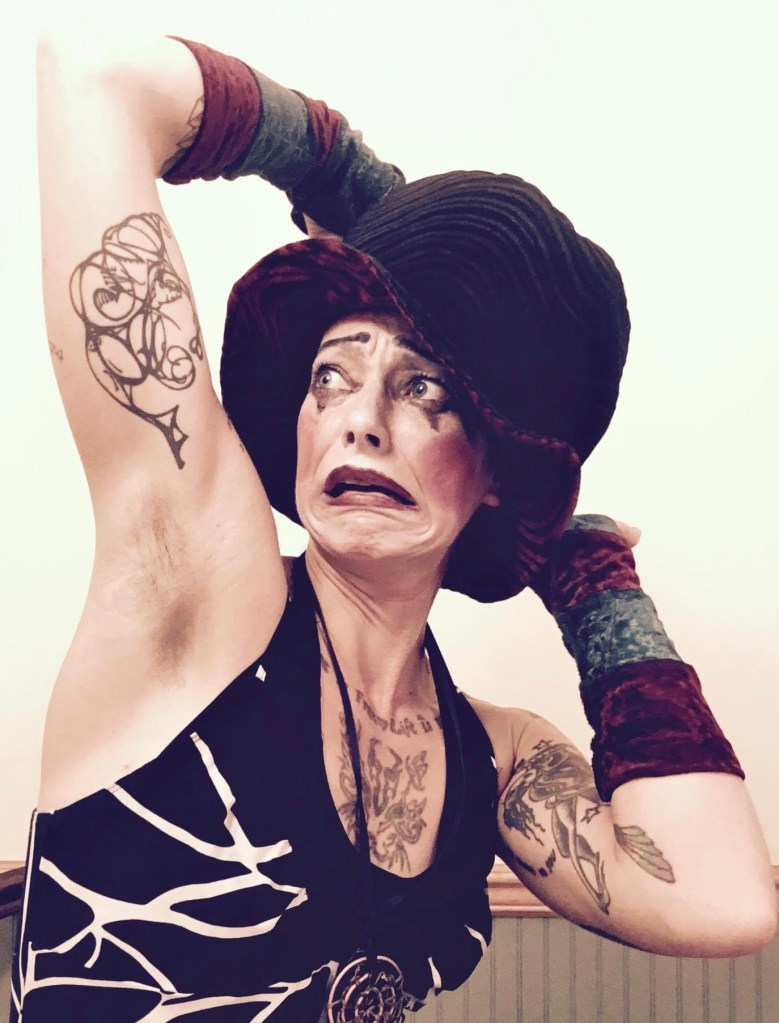
Besides the muscles needed functionally to chew, kiss, sniff, blow, squint, blink, and twitch away A fly, most of the forty-five facial muscles serve only emotional expression. You don't need them to bring in food, to beat down an enemy, nurse an offspring, or perform sexual intercourse. The ventriloquist proves they are not needed for speaking. Nor are they essential to breathing, hearing, or sleeping. The extravagance of facial musculature is all for expression of major emotions, yes; but even more for such peculiar subtleties of civilization as supercilious contempt, wry irony, wide-eyed fawning, cool unconcern, smiling, and sneering. By means of these muscles, our faces make pictures. The psyche displays aesthetically its states of soul. Character traits become intelligible images; yet each expression is characteristically different, and the more complex the character, the more individual the expression. "There is nothing average about ex- pression. It is essentially individual. In so far as an average dominates, expression fades."
::::::
~Faces need to be used~
A face is something that is incomplete; a work in progress….faces need to be used because they are not finished images, says the Chicago art historian James Elkins. Aging as a progress of the face. If you consider your face as one more part of the body, then it withers, crinkles, blotches, and falls away like other parts of the body. If youimagine your face as a phenomenon with a different significance, with its own destiny, then all that goes on there, after sixty especially, is a work in progress, building the image, preparing a face that has little to do with the faces that you meet. What's going on, rather, is the progress of a portrait, toward a memory.
"Faces need to be used." How? Out there, weathering and leathering, actively engaged with world? Should we engage in full-face confrontations, get in each other's faces? Another way to use the face is aging. Aging uses the face every day, and it is these traces of use that cosmetic surgery sets out to repair. Without any effort on our part, quite passively, even in the solitude of a monk's cell, even in an immune-protective bubble, the face is being used. "The aging process,” says Levinas, “probably the most perfect model of passive synthesis. " A face is being made, often against your will, as witness to your character.
~James Hillman, The force of character and the lasting life
Last time I saw Chaplin, all he said was, "Stay warm. Stay warm.”
(Groucho Marx in conversation with Woody Allen)
Last chance, last minute, last round, last inning, last exit, last ditch. Last rites, Last Supper, last days, Last Judgment. Last words, last breath. Last word, last laugh, last dance, last rose of summer, last good-bye. What an enormously weighty word! Why does it give such importance to the words it qualifies? And how does "last" bear on character? We shall have to find out.
Already I can tell you this: Our inquiry will aim deeper than the evident meaning of "the last time" " as the end and therefore death. If that were all, the inquiry could stop here, satisfied with this banal result. Remember, we are eluding death all through this book, trying to prevent death from swallowing into its im- penetrable darkness the light of intelligent inquiry. Death is a single stupefying generality that puts an end to our thinking about life. The idea of death robs inquiry of its passionate vi lality and empties our efforts of their purpose by coming to the predestined conclusion, death. Why inquire if you already know the answer?
If a pair of socks helped us in the previous chapter, the fic- ton of a couple may help in this one.
“She just got into her car and drove off. That was the last time I saw her." How casually the moment slips by, blurring into the everyday. But when the simple action is marked by "last." the event becomes an indelible image. "Last" makes an event eventful, elevates it beyond the everyday, leaves a lasting impression. Last words become "famous," " last moments enig- matic emblems to ponder for years to come.
Why? Because what happens at the end of a sequence stamps its closure, gives it finality. Reverberations of fate. The events that composed the marriage, the love affair, the life together be- come essentialized into the last scene. She gets into her car and drives off. To her death in an accident? To another city and a new start? To another lover? Home to Mother? Back to her husband and children? Where she drives to belongs more to the next story than to the last scene of this fiction of a jointly at- tempted life.
Had she returned later as on any other day, the image of her getting into her car would have no significance and therefore would not last. But now it tells of character: the abiding char- acter of the relationship- -its commitment to casualness; its apparent openness, which conceals truth. Or it reveals her re- bellious independence; or her adventurous courage; or her fail- ure of nerve; or her diffident coldness. .. . It says something about his character, too. the unspoken feelings; the dulled sensitivity that cannot perceive and does not foresee. Their character together, his, hers- last, as she drives off.
So the last time is more than information for a detective's re- port. "Just the facts." She does, in fact, just get into her car and drive away. But the last time transforms the facts into an image. The impression of her at the curb as the ignition catches lasts because it is compressed into a significant image, a poetic mo- ment. Other times are held captive by the last time and ever- lastingly signified.
Poetry depends on compression for its impact. The word for poet in German is Dichter, one who makes things dicht (thick, dense, compact). A poetic image compresses into a snapshot a particular moment characteristic of a larger whole, capturing its depth, complexity, and importance. By putting closure to a se- ries of events that otherwise could run on and on, the last time is outside serial time, transcendent.
This kind of moment is hard to bear and hard to relinquish. It feeds nostalgia, coming back to mind, a refrain that will not let go. Older age makes room for what T. S. Eliot refers to as "the evening with the photograph album," snapshots that bring back a world. ' Gerontology names these evenings "life review" and claims that they are the main calling of later years. Since anyone at any age can slip into nostalgic reverie, "later years" can be taken less literally, to mean a poetic state of soul favored by the old but not exclusive to them.
The last time turns love, pain, despair, and habit into poetry. It puts a stop to, arrests forward motion, and lifts life out of it- self. This is transcendence. We feel shaken to the bones, as if the gods had stepped into the middle of our lives.
Transcendence of the daily does not occur until the epiphany of the last time. She got into her car every day. The last time be- comes utterly different. In no succession of events do we imag- in any one moment to be the last. We can always come back another time, do this again. "The last time" says there is no "again." The last time is unique, singular, fateful. Pop lyrics play on this poetic moment: "The days dwindle down to a pre- cious few, September. .. " (Maxwell Anderson); "The last time we saw you . " (Leonard Cohen); "The last time I saw Paris" (Oscar Hammerstein), "Last time I saw him" (Pamela Sawyer); "This could be the last time ..." (Jagger and Richards), "The last time I saw George alive • (Rod Stewart). "Again, this couldn't happen again. "; etc. Each scene of life may be a last time, like the morning she drove off in her car.
To call the last time unique, singular, and fateful makes it sound inevitable and necessary, as if she drove off because it was determined by her character. If character is fate, as Heraclitus sald, then this was her day to die. Or she had to cut out, because *that's just the kind of freewheeling person she was; we should have expected it " Yet it might have been a spontancous impulse to which her character gave in: "Enough is enough; I'm out of here.” A whim, seemingly out of character. We can't know. For us the story stops as the car pulls away.
Right here, we have to be careful. Character could become an iron law, permitting only those acts that are "in character."In that case, the idea of character engenders little waves of repres- sion. "It's not my nature to do this, think that, want those, be- have like this." Is there no room for the spontaneous, for moments of speaking, thinking, and feeling quite "out of char. acter"? The answer depends on how we think about character.
I would claim that nothing is out of character. Character is inescapable; if anything were truly out of character, what would its source be? What stands behind a whim? Who pushes the urge and ignites an impulse? Whence do stray thoughts arise? Whims emerge from the same soul as choices and are as much part of your character as any habit. That last time belonged to her just as all the other times did. Belonged to her? Which "her"?
Her character must consist in several characters- "partial personalities," as psychology calls these figures who stir your impulses and enter your dreams, figures who would dare what you would not, who push and pull you off the beaten track, whose truth breaks through after a carafe of wine in a strange town. Character is characters; our nature is a plural complexity, a multiphasic polysemous weave, a bundle, a tangle, a sleeve. That's why we need a long old age: to ravel out the snarls and set things straight.
I like to imagine a person's psyche to be like a boardinghouse full of characters. The ones who show up regularly and who habitually follow the house rules may not have met other long- term residents who stay behind closed doors, or who only ap- pear at night. An adequate theory of character must make room for character actors, for the stuntmen and animal handlers, for all the figures who play bit parts and produce unexpected acts. They often make the show fateful, or tragic, or farcically ab- surd.
Fitting them in is called by Jungian psychologists integration of the shadow personalities. Fitting them in, however, means first of all finding them fitting, suitable to your idea of your character. The Jungian ideal calls for a more integrated charac- ter, for the full boardinghouse with no exclusions. This may re- quire conversion of the more disreputable and obstreperous to the morals of the majorin, an integration leading to the in tegrity of the matured character.
These noble ideals are better in the recipe than on the table. for old people, as Yeats wrote and Pound demonstrated, are often disheveled, intemperate, whimsical, and closer to chaos than to the sober well-honed wisdom that the idea of integra- ton suggests. The integrity of character is probably not so unitary , rather, the full company is onstage as at the end of the opera, when the chorus, the dancers, the leads, and the con ductor take their uncoordinated bows. Life wants the whole ensemble. in fagrante delicto. Even the cover-ups belong to the character.
The study of how each of these characters belongs is a main activity of later years, when "life review' consumes more and more of our hours. Whether going through piles of papers and closets of things, or regaling grandchildren with stories, or at- tempting to write autobiography, obituary, and history, we try to compress life's meanders and accidents into a "character study. That's why we need so many later years and why, as the days shorten, more and more evenings are absorbed in the photo- graph album. Regardless of whether contrition, nostalgia, or vindictiveness marks our feeling as we turn the pages, we are as engrossed in study as if for a final exam.
We study our character and others' for revelation of essence, and we read actions such as her driving away as compressed ex- pressions of this essence. She, at the curb, opening the car door, getting in and going off for the last time has become an in- delible image, an objective shot corresponding to her character. We study this poetic particular for descriptive predicates that might lead to predictions about her behavior. Other images come to mind--other times when her eyes shone with a wild light while she sat behind the wheel; casual words of envy at a friend's freedom; her collection of lightweight, thin-soled shoes; a girlhood story of a dangerous hike. This cluster of im- ages shows qualities that constitute her character: freedom, danger, movement, surprise. As these belong to her character so they can be predicted. Her driving off should be no surprise- providing we compact her character into only these compatible images, arrange them into a coherent story, and omit all that does not fit in.
What does not fit in demands all the more scrutiny and a widening notion of character. All we need to do is stick with the image, allow its complications to puzzle us, and abandon such superficial ideas of character as habits, virtues, vices, ideals. Ac- cess to character comes through the study of images, not the examination of morals.
The daily world is notoriously poor in this kind of study. The little schoolboy killer was such a quiet nice kid; the serial murderer was hardly noticeable and seemed like anybody else; the baby-sitter who abused her charges was so prompt and tidy and polite. Our restricted notion of character restricts what we are able to see in people. If people are prompt and polite, nice and quiet; if they lack noticeable quirks, we expect them to be tidy in character. Unless we have a trained eye for the signifi- cant discrepancy, our predictions will invariably be wrong. The crime comes as a shocking surprise, an act altogether out of character. A culture blind to the complexities of character al- lows the psychopath his heyday of mayhem. No one noticed any oddity because no one had an eye for it. So after the horror he is sent to be "seen" by the psychologists who now, post facto, know what to look for and will, of course, find it.
We are as we appear, yes, but only when appearances are read imaginatively, only when the perceiving eye studies what it sees as a lasting image. This eye looks at the facts for the significant gesture, the characteristic style, the verbal phrasings and rhythms. This eye is trained by the visibilities of human nature. It learns from "people-watching, " from movie close-ups, dance postures and dinner parties, body language, and the street. It sees an image, which Ezra Pound defined as "that which pre- sents an intellectual and emotional complex in an instant of time."2 Especially, I would add, in that instant we see as "the last time." The older we get the longer we look, and want to look.
A woman of one hundred and three, living in Nevada, de- scribed her desire:
I want to start a wedding chapel. ……. I would just sit in a nice chair and let ... whoever I hire do the strenuous work. The reason I'd like a wedding chapel is that I could study the peo- ple. I could see what kind of man she's going to marry, and what kind of woman or girl she is. I can tell, I can tell.
Al Hirschfeld, artist and caricaturist, at ninety-five declares:
What's a man to do? Sit around some sun-soaked beach all day? Watching the waves? Or playing golf? Human beings fascinate me. People. I used to love just sitting in the window of the Howard Johnson's at Forty-sixth and Broadway, draw- ing the constant parade of people passing by. . .. Ill draw a bow tie, or a cane, or jot down one word or make a sketch that brings back an entire scene.
The eye for the image cuts to the essential.
In our overpsychologized culture, psychological testing sub- stitutes for this seasoned eye and prevents its development. In- stead of looking, we test; instead of imaginative insight, we read write-ups; instead of interviews, inventories; instead of stories, scores. Psychology assumes it can get at character by probing motivations, reaction responses, choices, and projections. It uses concepts and numbers to assess the soul, rather than rely- ing on the anomalous eye of a practiced observer.
The anomalous eye is the old eye. The older soul, aged into its own peculiarity, cannot, in fact, see straight at all; it favors the odd. Love of the odd may appear early in life, with the af fectionate nicknames children give one another and that single Out a particular feature or trait of character. But usually youth prefers conformity, trying to adjust or smother what does not fit in. In late life, having now become studies in uniqueness, we look for companions as odd in their ways as we are in ours. Similarities in daily routines, similar past experiences, parallel symptoms, common backgrounds are not comforting enough The fun, the love comes with companions in uniqueness. The odd couple: a couple of oddball characters.
The term "gerontology" should more rightly refer to the kind of study we do with our old eye than to the study of old age by young psychologists. Our studying does not aim to un- cover why she got in the car and drove off. The cause is already given: It was necessary because it was in her character. No use laying out the reason--she felt trapped; she had a secret; it was her time; she went schizoid and fled from love, or was a para- noid and fled from demons, or a sociopath and took the money and ran. We have little interest in exculpatory causes, such as her mother, her childhood, her horoscope, her awakened femi- nism. Conventional generalities explain nothing to the old ob- server. The anomalous eye just likes to watch, to sink deeper into the puzzle of human character which increases tolerance for human oddity.
Instead of coming up with reasons and diagnoses, we study the image. Our curiosity focuses upon the image of the last time, on her behavior as a phenomenon, on the image as an epiphany, for it is the image that lasts and can be reflected again and again in a variety of stories, exhibiting character in action. She was performing a drama, in which, as Aristotle said, char- acter is revealed through action.
Her last scene is also dreamlike, a tableau: the curb, the car, the key in the switch. In a dream we never know the motive for anyone's action or the diagnosis of anyone's problem. Psychol- ogy begins in the morning. We do not know the reasons for what dream people do, how they were treated in childhood, or even why they are there at all. The more the dream strikes us as an image- and each dream is a one-and-only, last-time dream- the less we can formulate it, yet the more we can re- turn to it and draw from it. Everything we look upon seems odd, as if seen for the first time, or the last. Something re- demptive happens. "We are blest by everything, / Everything we look upon is blest," writes Yeats- the last, and lasting, lines of one of his reflective poems on aging published when he was sixty-eight.
Blessing is the one gift we want from the old, and the one great gift only they can bestow. Anyone can applaud above- average achievements and award the outstanding. The old, however, are able to recognize the beauty that is hidden from usual sight, not because they have seen so much through the vears, but because the years have forced them to see so oddly. What one needs blessed are the oddities of character specific to our solitary uniqueness and therefore so hard to bear. I can bless my own virtues, but I need a well-trained, long-suffering eye to bless the virtues concealed in my vices.
A culture is preserved by the old. This cliché usually means that they guard the old ways, the old knowledge, the old stories; they are wise and give prudent counsel. Rather, I think, culture is preserved by the old because they enjoy the odd, study oth- ers for it, and locate the essence of character in what is peculiar to each phenomenon. A culture that does not appreciate the character of anything eccentric to its model tends to homoge- nize and to standardize its definition of the good citizen. The old preserve culture by means of the stubborn sameness of their unsuitable peculiarities.
The increasing importance of oddity as we age shifts the idea of character from the constitutive center of a human being out to the edges. The character truest to itself becomes eccentric rather than immovably centered, as Emerson defined the noble character of the hero. At the edge, the certainty of borders gives way. We are more subject to invasion, less able to mobilize de- fenses, less sure of who we really are, even as we may be per- ceived by others as a person of character. This dislocation of self trom center to indefinite edge merges us more with the world, so that we can feel "blest by everything."
C. G. Jung spent his more than eighty years following the Delphic maxim Know thyself" Self-examination and inquiry into the self of others was his lifework and formed his theory. Yet, amazingly, this is what he writes on the very last page of his autobiographical memoir:
I am astonished, disappointed, pleased with myself. I am dis- tressed, depressed, rapturous. I am all these things at once, and cannot add up the sum. I am incapable of determining ultimate worth or worthlessness; I have no judgment about my- self and my life. There is nothing I am quite sure about. When Lao-tzu says: "All are clear, I alone am clouded," he is expressing what I now feel in advanced old age. ... Yet there is so much that fills me: plants, animals, clouds, day and night. and the eternal in man. The more uncertain I have felt about myself, the more there has grown up in me a feeling of kinship with all things. In fact it seems to me as if that alienation which so long separated me from the world has become transferred into my own inner world, and has revealed to me an unex- pected unfamiliarity with myself.
Let us review for the last time her departure. That image offers one more allegory for imagining character. Her move exposed a dimension that he at the door had never been able to perceive, owing to the assumptions he made about her charac- ter. What he could not see before, he sees only too clearly now, in his imagination. Perhaps, until she turned the key, she, too, was ignorant of this depth of potential, this eccentricity. Nor had either of them a foreboding of sudden death--if that is where she went.
We come to realize that character dissolves into stories about character. We become characters in these fictions; this implies that the very idea of character also becomes a fiction--and therefore vastly important, for it generates imagination much as her image in this chapter provoked our imagination to invent fictions about her character and about the idea of character.
This is why the idea of character is so needed in a culture: It nourishes imagination. Without the idea we have no perplex= ing, comprehensive, and long-lasting framework to ponder; In= stead we have mere collections of people whose quirks have no depth, whose images have no resonance, and who are distin- guishable only in terms of collective categories: occupation, age, gender, religion, nationality, income, IQ, diagnosis. The sum of these adds up to a faceless Nobody, not a qualified Each. Without the idea of character, no single person has a lasting value. If each is replaceable, each is also disposable. The social order becomes like a battalion under fire; we are all replace- ments, filler for empty slots.
Character itself dissolves into fiction, as she does in our imaginings about her character, but the idea of character makes the fiction lasting. The idea keeps us inquiring, makes us look more closely at the snapshots. Her image spurs our imagina- tions. We want to know her better, see who she really is. Yet "who she really is, " her literal character, is only literary, only a figure in the stories in which she is the main character, and that is what lasts even when she has gone.
We, too, last as fictional images, whether in the reminis- cences of family, the gossip of detractors, or the reports of obituarists. Our character becomes the fertile source of fictions that add another dimension of life to our lives even as we fade as actualities. Jung realized this truth in his very late years, find- ing that he had become unfamiliar with the character he had as- sumed himself to be. His self-same reality became porous, indefinite, susceptible. As he wholly loosens into the world of "plants, animals, clouds" and is assimilated by the natural World, his character in the imagination of the human world continues to last, and goes on generating stories of who he really was.





 BlissNinja