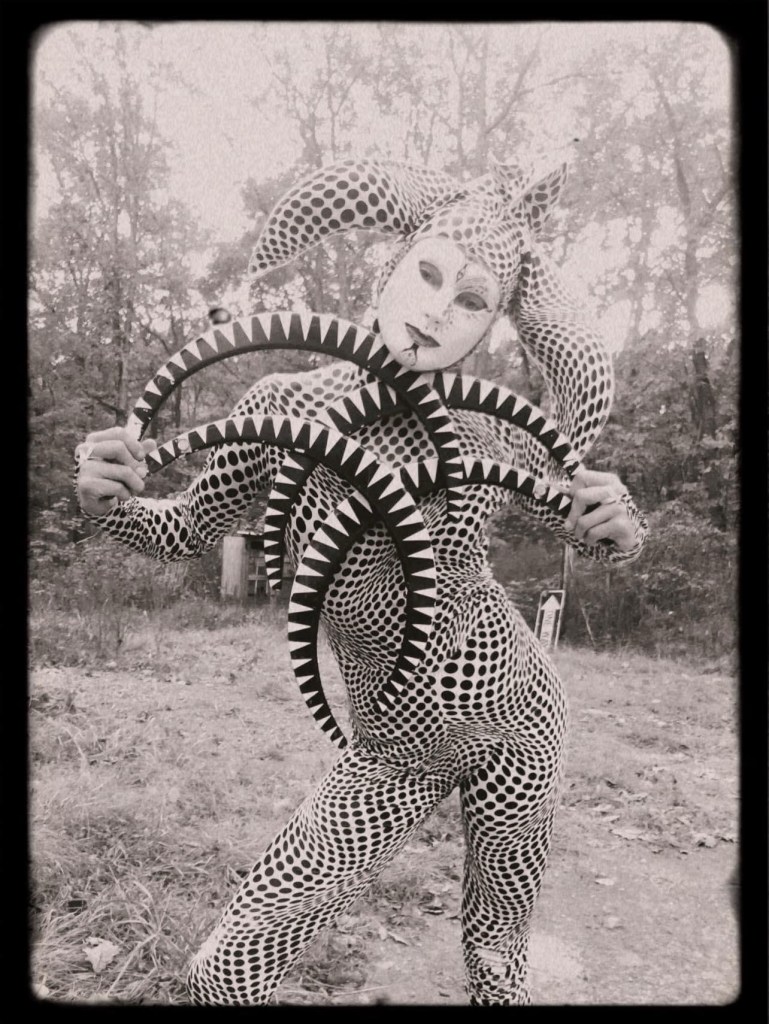
Mercury Hermes


“In the context of astrology and alchemy, mercury is the “womb of all metals,” meaning that it serves as both an entry point of spiritual influences and a receptive metal
(quicksilver) for transformation. As a god, Mercury makes vitally important connections between worlds and does so on all levels of reality. On the human plane, he works his magic through the skillful use of words. This is not ordinary word play, but eloquence that reveals the deepest meaning of thought. Mercury enjoys that intermediary space between image and symbol, the place where words have not yet been connected to internal thoughts and external senses. The point of this interaction is the ongoing creation, where unconsciousness is made conscious.

This flow of creation erupts into spoken language ,and Mercury is there, alongside King Neptune, to make sure that the spirit has found its way into the world. Hermeneutics, the art of translation, takes its name from one of Mercury’s many images,Hermes.All astute interpreters are well advised to pay homage to Mercury. He is god of language and the one who mediates the transactions between foolishness and wisdom. Winged Mercury hovers about the borderlands of reality. Wherever opposite sides are taken, he is there to mediate the transaction. Should he spy a pocket of inactivity, he can be counted on to stir things up by creating the necessary tension needed to bring conflict as well as resolution. Thus we find Mercury mixing it up with chemicals, between people at the bargaining table, and flying between planets and metals. He is a shape-shifter, a divine thief and above all else, a spirit of the highest order. Mercury delights us with surprise and upsets us with shocking news. If we do not understand his divine function, we will be the butt of his jokes. Understanding that he serves to awaken us to connections we would never have otherwise made is the secret to using his gifts well.

People having a strong mercurial disposition are quick minded, talkative, eloquent and highly expressive. They grasp what other people mean to say even before the words arespoken.Mercury types can therefore adopt the masculine and feminine aspects of either sexed person, blending these differences into perfect harmony. This potential to fuse, blend and harmonize opposites is so prevalent in Mercury that he was believed to be the personification of the philosopher’s stone. “

Thom F Cavalli
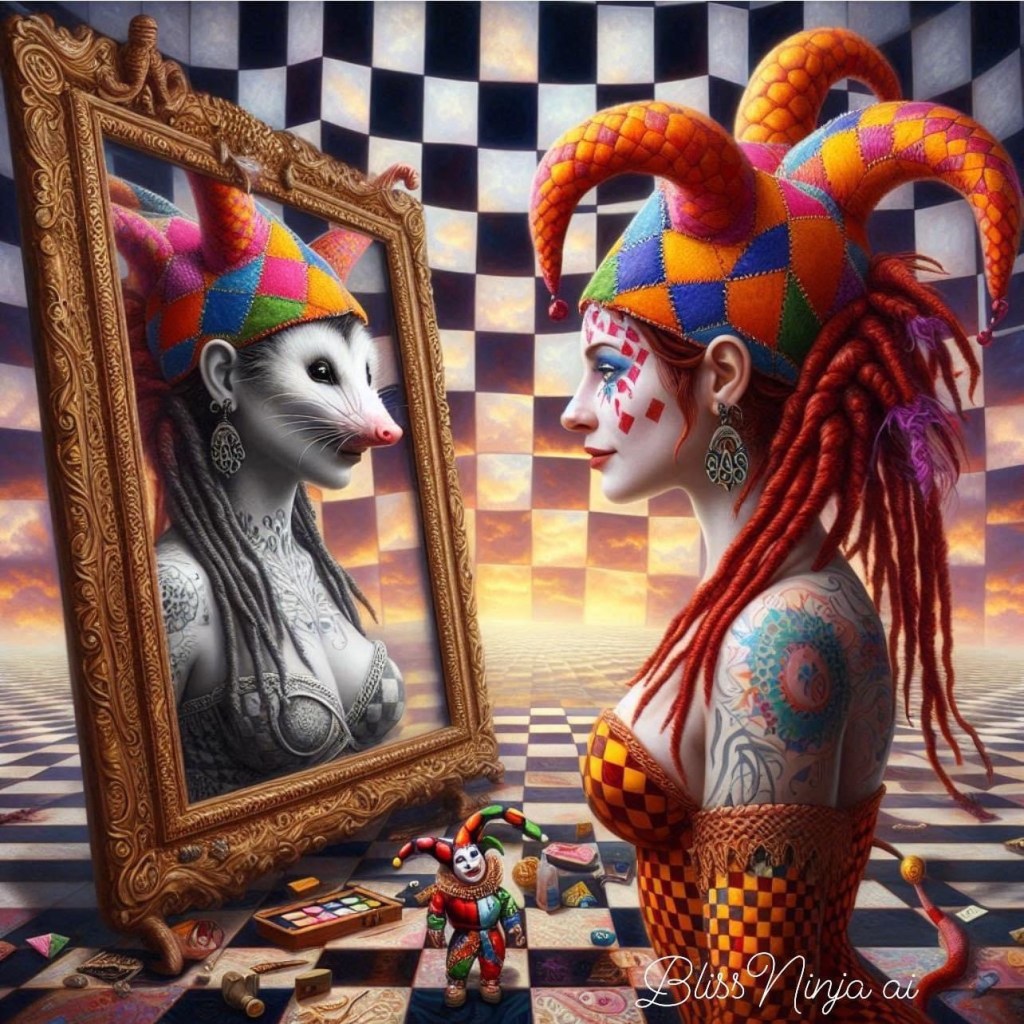
Soul-Speech

All modern therapies which claim that action is more curative than words (Moreno) and which seek techniques other than talk (rather than in addition to it) are repressing the most human of all faculties-the
telling of the tales of our souls. These therapies may be curative of the child in us who has not learned to speak or the animal who cannot, or a spirit-daimon that is beyond words because it is beyond soul. But only continued attempts at accurate soul-speech can cure our speech of its chatter and restore it to its first function, the communication of soul.

Soul of bulk and substance can be evoked by words and expressed in words; for myth and poetry, so altogether verbal and "fleshless," nonetheless resonate with the deepest intimacies of organic existence. A mark of imaginal man is the speech of his soul, and the range of this speech, its self-generative spontaneity, its precise subtlety and ambiguous suggestion, its capacity, as Hegel said,
"to receive and reproduce every modification of our ideational faculty, “ can be supplanted neither by the technology of communication media, by contemplative spiritual silence, nor by physical gestures and signs. The more we hold back from the risk of speaking because of the semantic anxiety that
keeps the soul in secret incommunicado, private and personal, the greater grows the credibility gap between what we are and what we say, splitting psyche and logos. The more we become tied by linguistic self-consciousness, the more we abdicate the ruling principle of psychological existence. That we then turn to the rats of Skinner and the dogs
of Pavlov, the geese and wolves of Lorenz--tune into dolphins or consider man a naked ape-in order to find prototypes for human behavior, indicates to what extent we are losing our speech and with it our sense of a distinctly human nature. It is not animal prototypes we need for discovering our original patterns, but personified archetypes, each of whom speaks, has a name, 'I' and has its existence in the language world of myth. Without speech we lose soul, and human being assumes the fantasy being of animals. But man is half-angel because he can
speak. The more we distrust speech in therapy or the capacity of speech to be therapeutic, the closer we are to an absorption into the fantasy of the archetypal subhuman, and the sooner the archetypal barbarian
strides into the communication ruins of a culture that refused eloquence as a mirror of its soul.

James Hillman, Re-Visioning Psychology

Language of the Soul

This is a style attempting to be precise in distinguishing among the faces of the soul, all the while appealing to that many-sided soul by speaking in figurative language to the emotions, senses, and fantasy, working its persuasion through artfulness, even if at times becoming bombastic, contrived, even piously woolly. This has all been called
rhetoric. In Renaissance rhetoric anima appears yet once more, this time as Aphrodite Peitho, the persuasive Venus who turns our head
with a well-turned phrase. Rhetoric played such an important part in Renaissance writing because it is the speech form of the anima archetype, the style of words when informed by soul.

Our academic tradition has missed the psychology of the Renaissance partly because it has not been attuned enough to this use of language, excoriating it for lack of solid evidence and marshaled argument. But logic and proof do not convince the anima, neither then nor now, so that really to hear Renaissance language we have to listen through anima, which is brought to life by personified and pathologized figures of speech, by hyperbole and metaphor, by indirection, repetition, allusion, conceit, and innuendo. This speech is forceful, seductive,
and convincing--until examined as scientific analysis or theological discourse. Then it is no longer "serious philosophy." Rhetoric's pleading, complaining, and reiterating speaks the way our symptoms speak,
the way our dreams speak. It is an argument of mood; or rather, the imagination does not argue, it imagines.'a Rhetoric never persuades the mind unless that mind be from the beginning susceptible to passion and images; its main discriminatory concern is not with forming definitions but with shaping the imagination itself into words.

Depth psychology today is heavily entangled in the problem of language, pulled between extremes of basing all therapy upon linguistic structures or leaving speech altogether for preverbal grunts and gestures. Therapy turns back either to Cartesian structuralism which abstracts speech into unutterable root units or to pietistic revivalism
where the inchoate sound of feeling is all. Neither those structures nor those feelings can carry psychology toward giving words to the full size
of soul, for they lack the main mark of rhetoric: eloquence. We need again what was common in the Renaissance-belief in the verbal imagination and the therapeutic incantational power of words. Besides the France of Lacan's intellect and the Germany of Reich's and Perl's feelings, there is the Mediterranean of the imagination, an inland sea of rhetoric from whose froth Venus rises.

~James Hillman , Re-Visioning Psychology