🌹 “This time of year my thoughts always return to the rites of Kore. I might be coping with the world folding in on itself, and the similar changes I experience within my own inner world, or it may just be an inherent fascination with etiological myth, to say nothing of the powerful duality of delicate springtime maiden and Queen of the Underworld within one goddess.
Her more widely known name, Persephone, means “bringer of death,” in the sense that her deft but gentle hand is a comfort and a guide to those making their descent. In this way, and as the goddess of the Eleusinian mysteries, she herself is the door to worlds unknown, a portal to revelations. Among her other epithets in Homer and among cults (Euripides calls her arrētos, “she who none may name,” Homer calls her agauē and hagnē, “venerable” and “demanding respect”). Persephone is her name as mistress of the house of Hades. In these rites, she is often referred to as Kore, which means, simply, “maiden.” “
~Sara Long
🌹
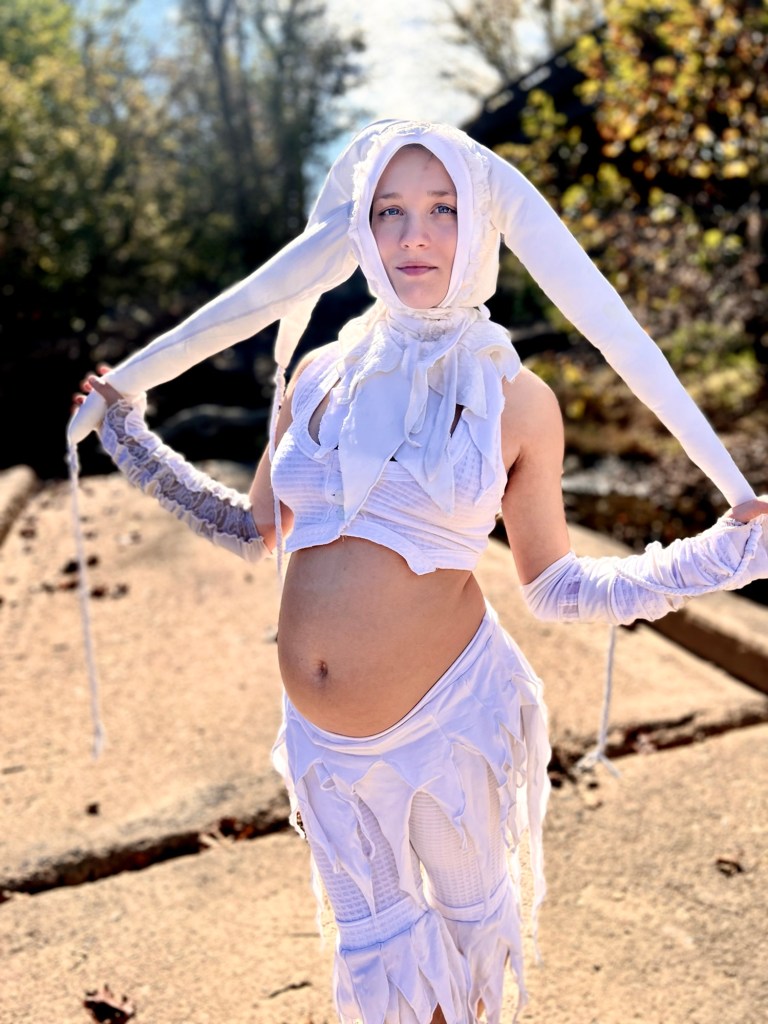
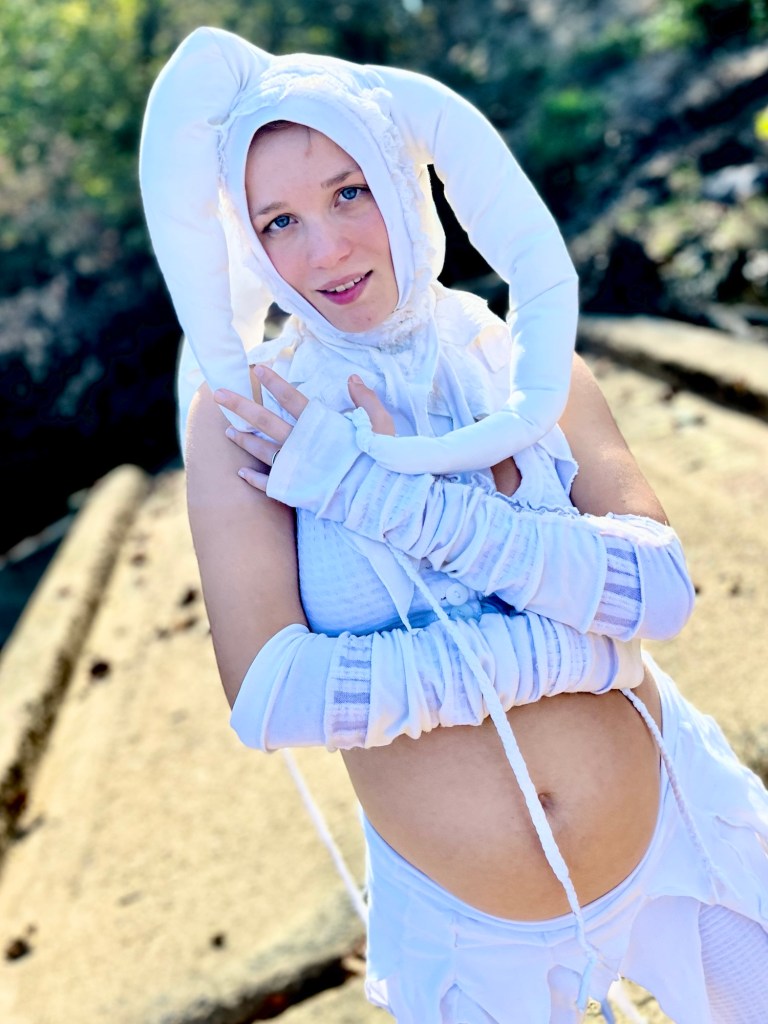
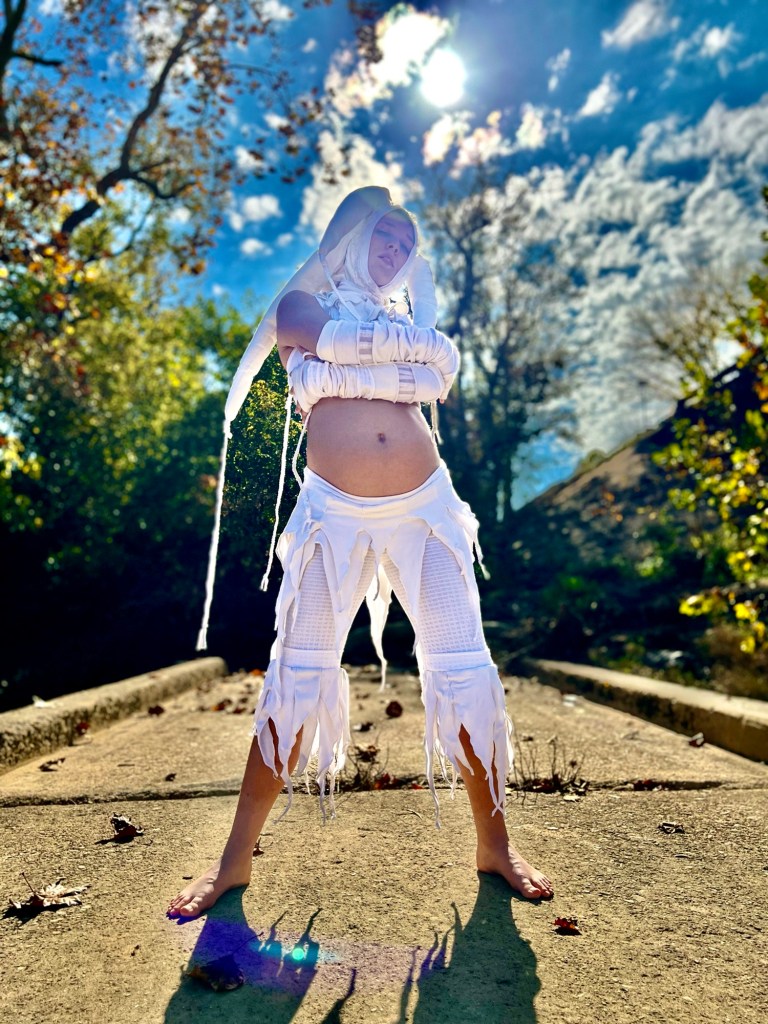
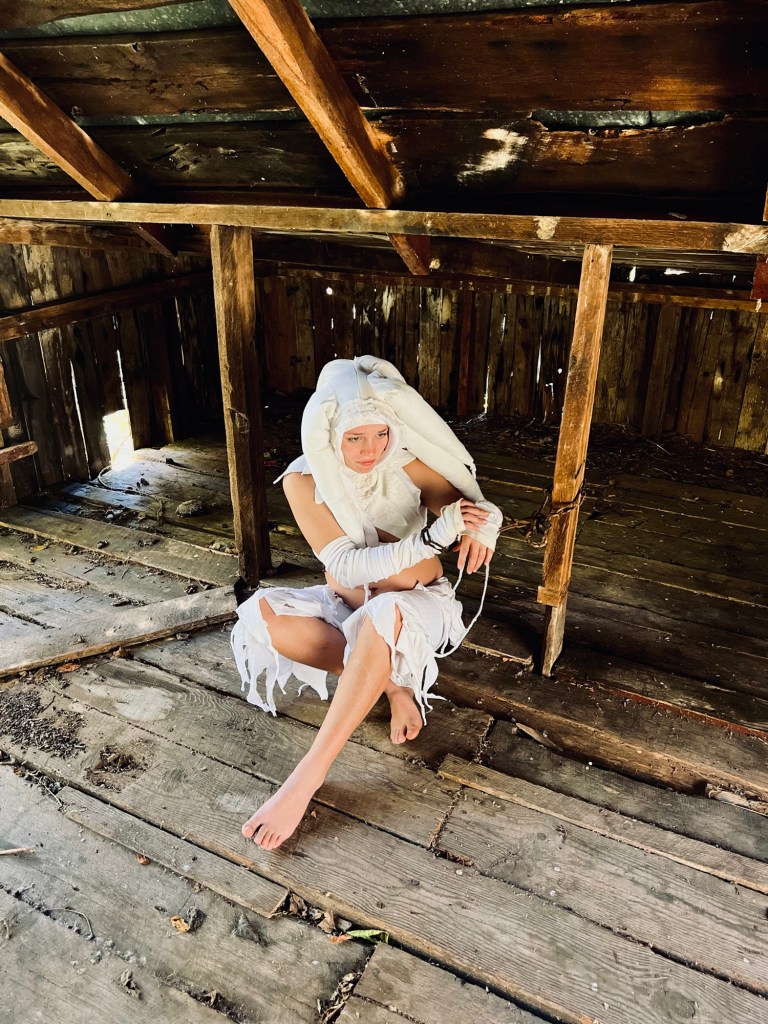
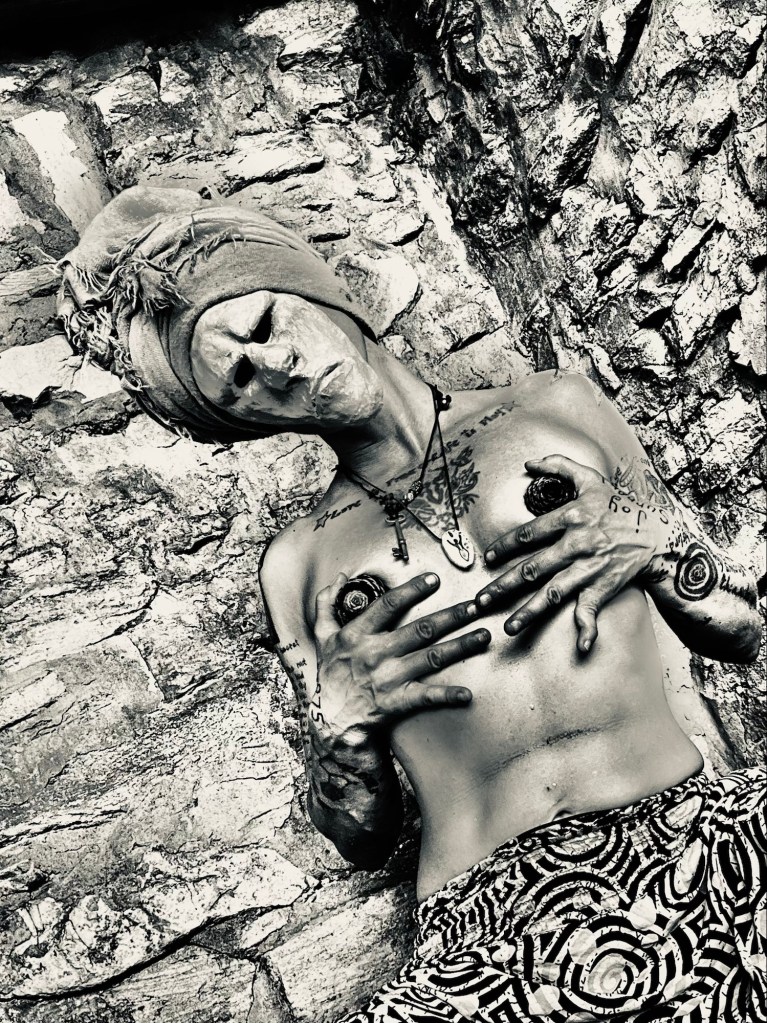
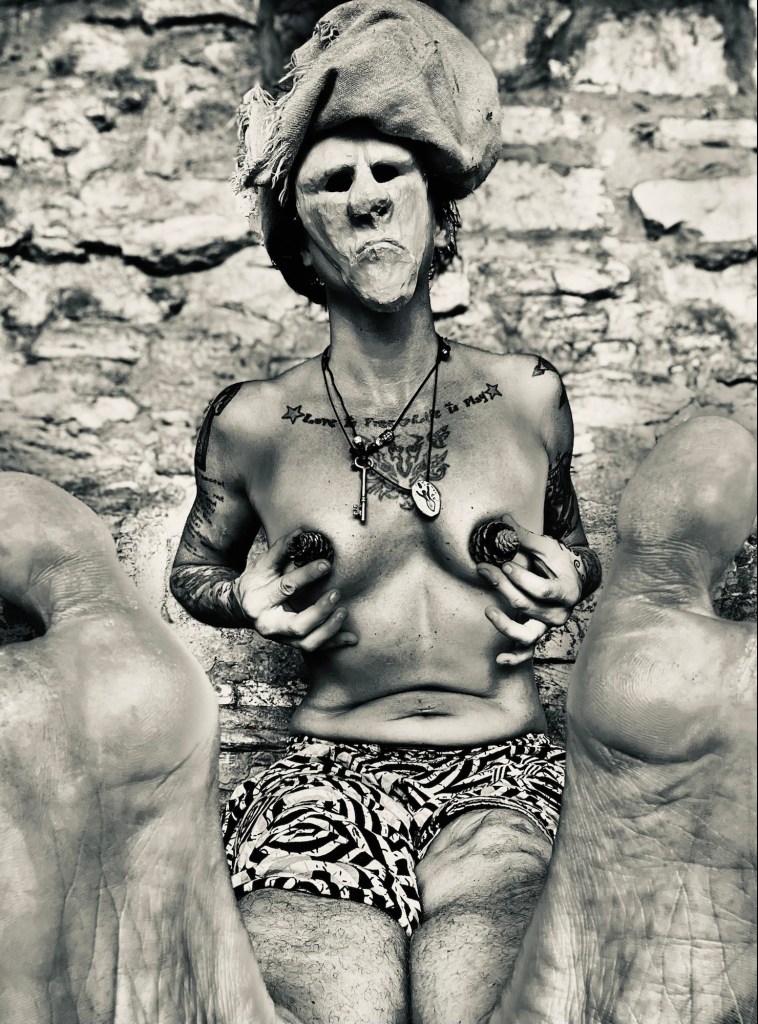
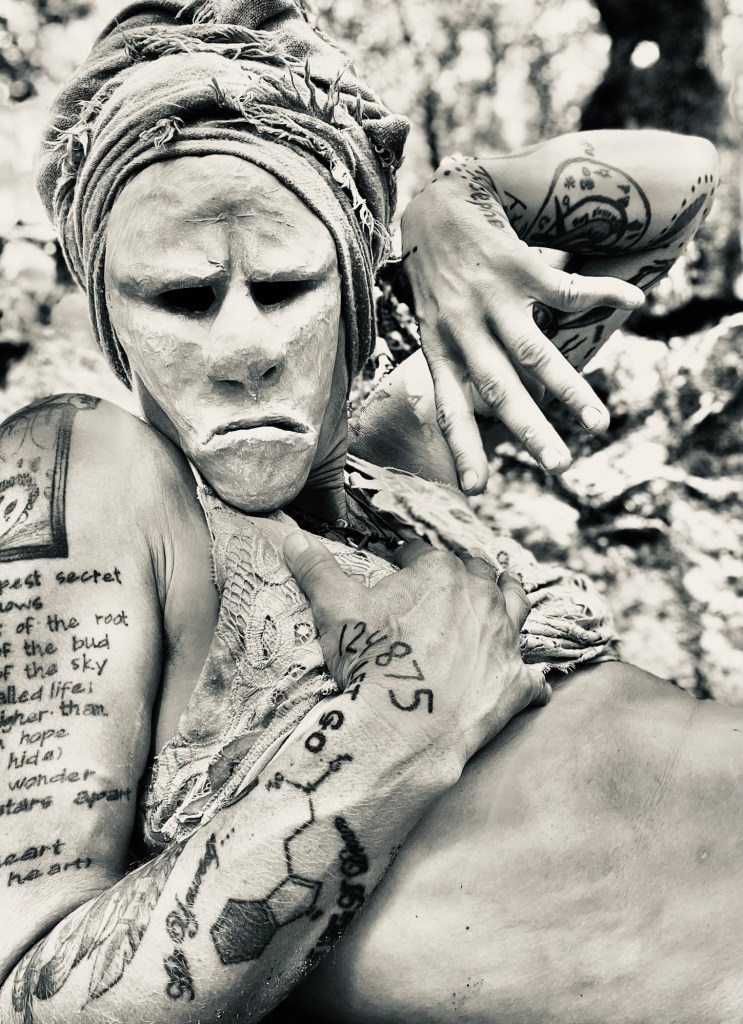
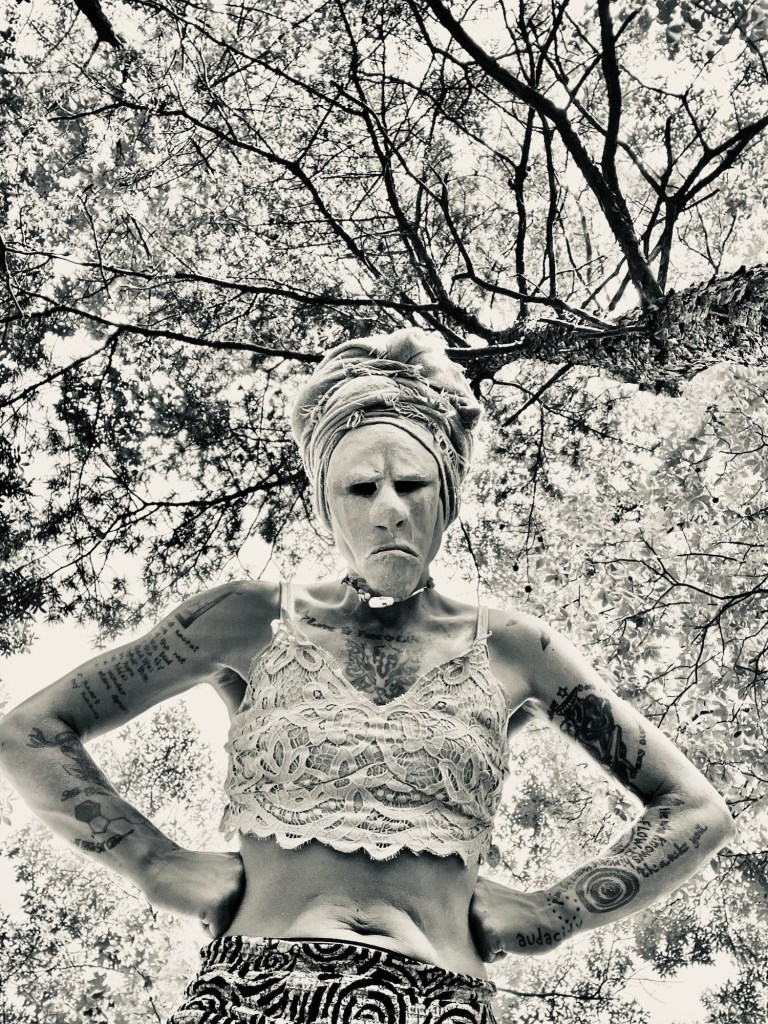
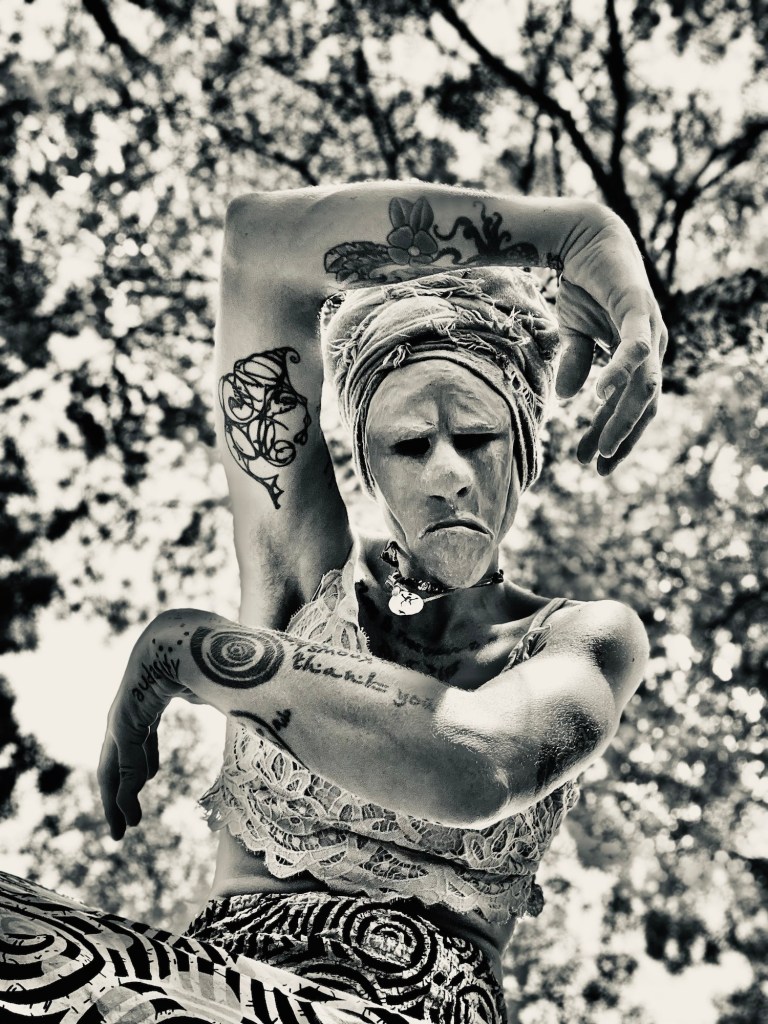
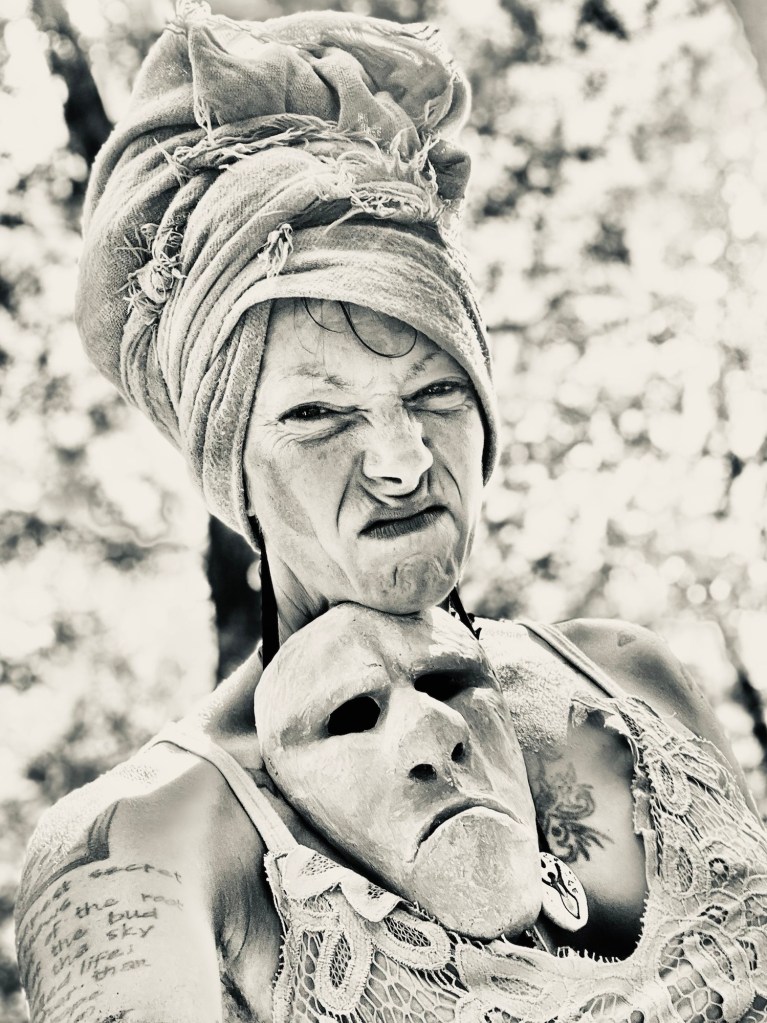
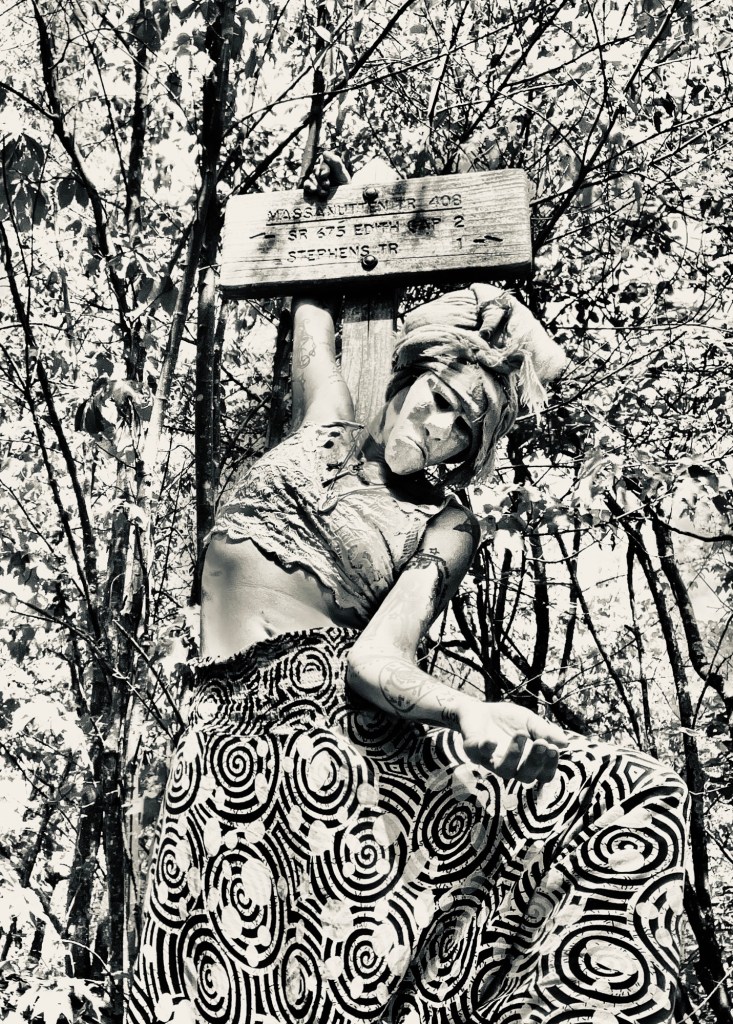
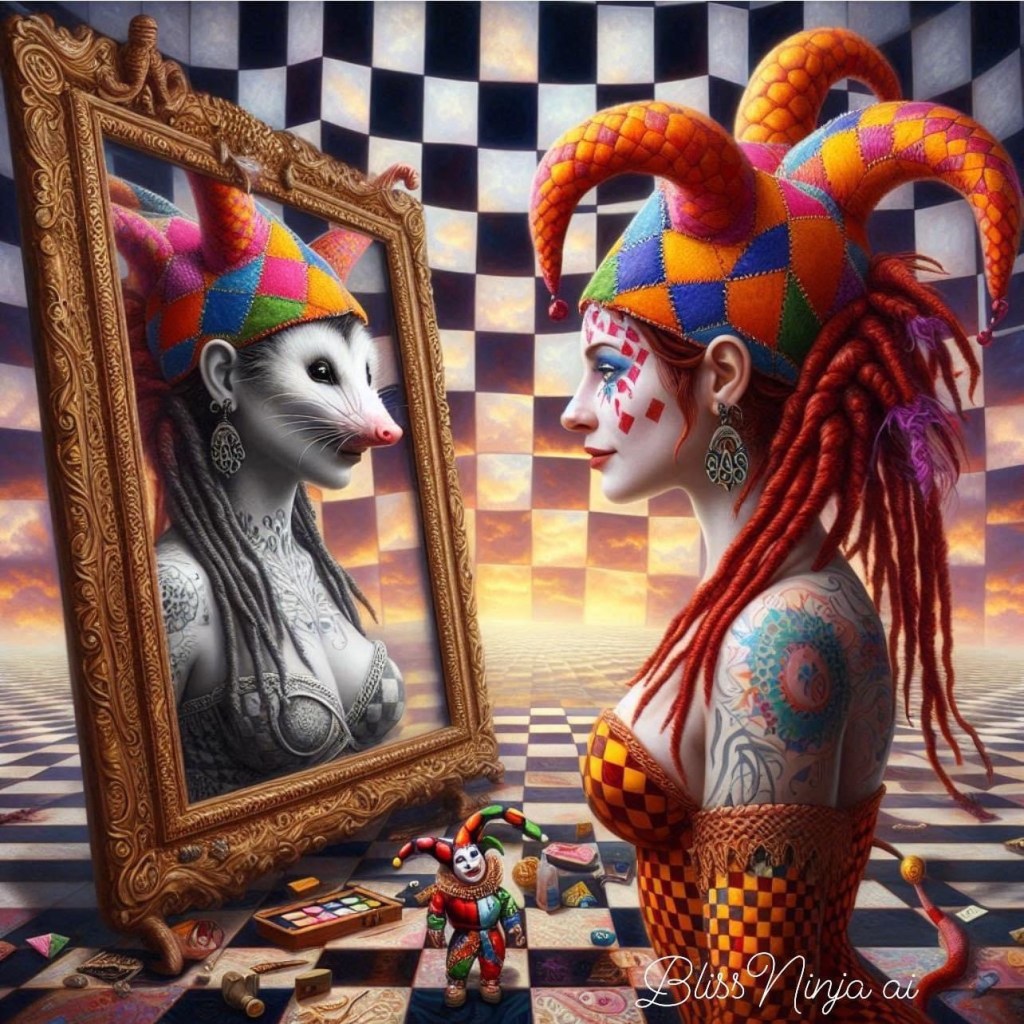
Reese Miller as the Kore , (or Jester Maiden) before being Taken by hades to the Underworld to become his Jester Queen
The Kore archetype, traditionally representing youthful innocence and potential in mythology and psychology, symbolizes much more than just the early stages of life. It is a powerful symbol of transformation, growth, and the cyclical nature of existence. The Kore, as a maiden figure often associated with goddesses like Persephone in Greek mythology, also carries deeper meanings about the illusions tied to youth, time, and identity. By examining the symbolism of the Kore, we can explore the larger themes of human experience—innocence, growth, and the journey from one phase of life to another. ~ Jenna LillaThe Kore is often depicted as a young maiden, symbolizing the freshness and purity of youth. This stage of life is marked by innocence, untested potential, and an open future. In mythology, the Kore is often paired with the figure of the mother, as seen in the myth of Demeter and Persephone. Kore, in this case, represents Persephone in her youthful form before her descent into the underworld, where she transforms into the queen of the dead. This dual role of the Kore—both innocent maiden and future queen—symbolizes the unfolding of life from youth to maturity. While the Kore is a symbol of growth and transformation, this very cycle also highlights the transitory nature of life. Youth, while often idealized as a time of beauty, vitality, and potential, is fleeting. The attachment to youth and the fear of aging reflect deeper psychological and spiritual challenges. Just as the Kore will eventually transform, we, too, are called to move beyond the illusions of youth and embrace the full journey of life. ~Jenna LillaThe Kore’s association with youth also raises questions about how we perceive time and change. The concept of youth, as something idealized or feared, is tied to the larger illusion of time itself. We often become attached to the idea of youth as a period of innocence and purity, but this attachment can lead to a sense of loss as we grow older. The fear of aging, or the desire to remain forever young, is an illusion created by the mind, which clings to temporary states of being. ~Jenna LillaIn reality, the essence of life is timeless and not bound by the cycles of youth and age. The Kore archetype reminds us that while we pass through different stages of life, these stages are just phases in a larger continuum. The true nature of our being—our consciousness or essence—remains unchanged, even as our bodies age and our experiences shift. The Kore, therefore, symbolizes the movement through these stages, but also serves as a reminder that beneath these changing forms, there is something timeless and unchanging.~Jenna LillaOne of the central themes of the Kore archetype is the journey from innocence to wisdom. In many myths, this journey involves a descent into the unknown, a confrontation with darker, more challenging forces. In the case of Persephone, her abduction by Hades and subsequent time spent in the underworld represent the loss of innocence and the gaining of wisdom. This is not just a story about personal growth but about the necessary transitions that all individuals must undergo to attain greater understanding. In this context, the Kore symbolizes the tension between innocence and experience, youth and maturity. While youth is often seen as a time of unblemished potential, true wisdom comes through the trials and challenges of life. However, both innocence and wisdom are part of the same journey. The duality between these states—between youth and age, innocence and wisdom—reflects the deeper truth that growth and transformation are part of the natural order of life. ~Jenna LillaThe Kore archetype also speaks to the cyclical nature of life, where birth, growth, decay, and renewal are intertwined. In many cultures, the Kore is connected to the cycles of the seasons, particularly in the myth of Persephone, whose descent and return from the underworld are linked to the changing of the seasons. Her time in the underworld represents winter and death, while her return to the surface symbolizes spring and rebirth. This cyclical pattern serves as a reminder that life is not linear but is made up of repeated cycles of growth and transformation. The Kore’s journey from maidenhood to queenhood, from innocence to wisdom, is not a one-time event but part of a continuous process of renewal. Just as nature moves through its seasons, so too do we pass through different phases of life, each phase offering its own lessons and opportunities for growth. ~Jenna LillaWhile the Kore represents the cycles of life, she also invites us to transcend the illusions of duality that often accompany these cycles. The distinction between youth and age, innocence and experience, can create a sense of separation, making us believe that these stages of life are opposites. However, the Kore archetype teaches that these are not separate states but are interconnected parts of a whole. ~Jenna LillaIn the myth of Persephone, her role as both Kore (the maiden) and queen of the underworld shows that youth and maturity are two sides of the same coin. The cycle of life encompasses both light and dark, innocence and wisdom. By embracing both aspects of ourselves—the youthful, innocent part and the mature, wise part—we can move beyond the illusions of duality and experience a more integrated, whole sense of self. ~Jenna LillaUltimately, the Kore archetype symbolizes the potential for growth, transformation, and renewal. She represents the beginning of a journey, but also the deeper truth that all stages of life are interconnected. The youthful innocence of the Kore is not something to cling to, but something to honor as part of the larger process of becoming. Her story is one of continuous transformation, reminding us that life is a series of cycles that lead us toward greater understanding and wisdom. ~Jenna LillaBy reflecting on the Kore, we are reminded that the passage of time, the movement from youth to age, is not something to fear but something to embrace. Each phase of life brings its own gifts, and by accepting the flow of time, we can experience life more fully. The Kore symbolizes the beauty of this unfolding journey, encouraging us to embrace both the innocence of youth and the wisdom that comes with experience. Jenna Lilla
I came thru the other side of that and learned that it’s not about Transcending but about Integrating. Spirit plays here for its own reasons, and is drawn to this Earth Flesh Playground because it wants to Feel Deeply and experience visceral Life. Being a very plutonic underworld person but aiming always for the spirit when I was in my 20s, it took a lot of delusional wake up experiences to Own all that I had believed myself to have transcended. All that stuff I thought I had evolved past, I had simply dissociated from, and the force of its wrath at being ignored and suppressed made its fury known in physical symptoms and deeply imbalanced emotional reality with a dash of incredibly Underworld-like navigations thrown in. The higher I thought I was flying in those years, the more pure i thought I was, came at a price and it was collected by the Dark Feminine in 2018. And since complete dissolution and and finally Truly making friends with the parts of the Self that I had trapped in deep subterranean caves and dungeons , with compassion, and awareness that it was a matter of freeing bit by bit, those fragments from all timelines trapped in my Prizm Cell.Ves. Instead of ‘Mind over Mattering’ my body and pushing it to extremes, instead of convincing myself I was pure and lofty and fully my idealized Spirit Self-the Puer( my online and business name even used to be Puella Eterna for 13 years)- i became engaged in the true Alchemical Work. I Realized how abusive I had been to Psyche and Body all those years ( and lifetimes) of denigrating the dark hungry fiery tempest of my soul, the Feminine, thinking I could Will Myself into the magical spheres of the heavenly abodes:.:::: I have always been easily carried away on the wings of spirit, can easily disembody into OBE states etc. What I came here to do, Now, was to actually Make This Body Fully Conscious , for it is the Marriage bed of Eros and Psyche, and the Alchemy of Life uses all vibrations to create.
When I made friends with the depth of my own Pain and Anger and Lust for Aliveness, Lust for Intensity of Being, and my own Arrogance etc ( Scorpio ascendent/Mercury conjunction, sun/Uranus Scorpio conjunction( all ruled by mars) and all in the 1st house( house of mars/Aries), with an Aries moon( mars ruled) and Mars aspecting strongly every planet in my chart = I was a complete Fool to imagine that I was a soft and ethereal spiritual angelic figure floating in the higher spheres…..:. I am a child of Mars, and Mars at its best is the Blood and Passion and Vitality to Exist and Move in this Realm, Mars is the defender and protecter of all that is sacred in creation, it is Raw, Brash, Authentic, Physically Vital, Mentally Agile, Temperamental….and Serves the Feminine……
When I truly came to Know Myself and stopped building castles in the sky, but used my archetypal Mercurial nature along with Mars to go to the Underworld and reclaim the very Selves I had locked up thru this Infinite Game over Time, I came Alive and learned what real Power is.
That’s my journey. I have compassion for that person I was and thought I was, but I have made my Vow, to Die in Battle, as a Sacred Warrior, and a Warrior must be in touch with his/her Fire and Anger and lust and Blood and sacrifice it on the alter of the Feminine Creation…..
( of interest is the relation of mars and Saturn… Mars/Blood is made in the Marrow of the bones/Saturn…… Mars is the Warrior who serves The Saturn Kingdom, which is the very energy that gives Form to the life principle:= in my chart, My mars is in Sagittarius/conjunct Neptune ( the spiritual warrior) in the second house( using the physical body/ it’s values and resources) And is Square( tension) (serving) Saturn in Libra which is also conjunct to almost a degree…… in the 11th house/ community and the larger stage of service to the people: It’s all written in Light Codes we wove ourselves into.
My heavy 12th house/ underworld where Pluto/hades sits exactly to the minute almost, with Venus, is my Lifelong lesson…..spiritualizing and completely transforming the Sexual and Aesthetic principles……using the raw lust and vitality of The black Goddess Black Carbon through Dionysus protean morphing Imaginal spheres under intense pressure to create the Diamond Body.:::: the twin Sisters of Carbon666 and Daimond ….. the Treasures hidden in this Earth and this Flesh and this Game of Matter Mater Mother Matrix Maat.
The Psyches realm is a dark realm that takes in everything….light and dark and everything in between. It likes the humus of earth, the compost, the shit of life, the messy smelly sweaty fleshy human realm of bodies bumping into bodies in sensate expression , playing with selves in Carnes Nation, the carnal nest of alchemy, where Soul is the Imaginal Playscape and Spirit must come Down To Earth to Play with Form.
I spent so much time out of body for the first 26 years of my life; I’m now happily Wed in the alchemical marriage bed knowing the Great Work goes on and on and on, and my relationship with Saturn has transformed my life into one of beauty: I used to balk at Saturn and his crusty old crystallization and constriction of my ever-so Icarus-like ideals……
But….
I am the Sacred Warrior who Serves the Divine…:.I serve the King and the Kingdom and Protect and Honor the Queen and her Queendom… because as the Mercurial Martian or the Martian Mercurius……..the Foolish Warrior or the Warrior Fool, my realm is not just the heavens but I travel between the Yooer and the Lower and The middle realms and so I just be able to hold the Tension of all Their Frequencies.
An honest person is one who knows his own capacity to Lie but chooses Truth…..a Strong person knows his own capacity for Violence but chooses Restraint….a Wise person is one who knows his own capacity for ignorance and knows he is a Fool…..a Peaceful person is one who knows his own Anger and so is not blindsided when least expecting it, and thus knows what it is to be Gentle.
May the black moist Fertile Soil keep your Roots nurtured as your branches reach for the Sky ⭐️🙌⭐️
Aho.
10-18-24
My friends post that my response is in reference to.
another way of saying what I expressed, is that as a Waving Being who Becomes Particular….in this journey of Embodiment through the entire Spectrum of Light and Frequency….. is that I am in the Prizm Cell of All my Lives in All Realities, in All Times and Spaces……expressing through this Body, Now, which is made up of All of Me~s, all the Cell.ves and Organ~I~zed Cohesions holographically …. In terms of Light… Infrared all The way thru UltraViolet….we also Embody as Sound and All variations of frequency.
Infrared penetrates all the way thru Earth and hence Body, ‘the smokeless fire’…..the realm of the Djinn….. that is where we have the Dark parts of ourCellves ….not Evil…..Darkness and of a different spectrum …..Ultraviolet more akin to our Angelic SidesOfSelf..,;;
When we seek the UV and demonize the Infrared, we get trapped in the Prizm of our own fragmentation…..we disown a huge amount of the deepest aspects of Being, whilst grasping for the Angelic Aspects: They have their Realms for a reason.:::::.
When I speak of going deep into the underworld, to mine the treasures of Pluto/Hades in the darkest layers of Self trapped and submerged and cast off in this infinite journey, I speak of going into the Infrared WaveForms of Self that are as much Me as the UV or higher vibration LightWaves that are of a very different nature, but equally Me.
Fire & Light
Is a poetic way of playing with it
In my lifetime of ‘out of Body’ experiences and traversing in the high frequency Light of detachment and lucidity, the permeations are very different than when I go deeply ‘in body experience’ which is raw and primal and Fiery and red heat of Feeling….
Our Bodies give us a Playground where we bring All Of these Refractions of Self into one Expression , as a Tether, if you will, to Come To Terms With Self Literally To Bring to Term Our Self Like a Mother carrying To term Her Baby
New creation.
The more we Integrate and ReClaim all the fractured frequencies that issue From our own Spark of Existence as a Being Who Is,
The more we Free those frequencies to Nourish all Of Bodies In all Of Times.
If the very Elementals/elements that make up my fleshly abode are brought into a cohesive net of Understanding and Loving Awareness, as they go on in their journey and become part of other bodies and abodes, they themselves are able to bring healing …
Like the Dwarves who live deep in earth and who are like elementals in a sense
And Elves who are like the perfected or angelic higher selves
And the HuMan, here in the Middle Earth,
Thigh we are all of them Depending on which Angle Of the Arc We Shine our I’s From
‘Voluptas lies curled in the womb of Psyche’….. Old painting of mine from 2009)
“The Poison is the cure”
Let me say it again: the result is not merely the objectification of subjective "me-ness," but the objectification of its material basis. This has been dissolved, calcined, tortured, putrefied, and distilled to a clarity that can be completely seen through, as if it were not there at all, not a speck of literalism remains, not even spiritual literalism. The libidinal compulsion, the organic towardness of hope and desire that would always go further for a faraway grail, turns around on itself and dissolves itself. The snake eats its own tail-another goal image of deconstructive subversion. The snake of healing, transformation, and rebirth, the goals most dearly desired, and the artifex's obedient service, all dry to dust, mineralized. The uroboric motion poisons (iosis) the very idea of cure. Or, poison is the cure.
What is actually accomplished by the alchemical work? According to my psychological fantasies, it is the objectification of the libido-our lives are not our lives. The alchemical goal is the realization in its complete sense of Freud's "object libido," The libido as a cosmic erotic dynamic that permeates the world because it loves the world of matter, even though it has been caught in the personal delusions of subjectivity, so that we believe we love the world, or can be improved or instructed to love the world. Whereas it is the object libido that loves the world through us, despite us. The anima in chains in the matter of "me, " and we place it there each time as we ask psychologically, what is the matter with me? Alchemy answers, saying: you, I, everyone, the world is matter, elemental material, and we indulge in the materials, as the artifex in the laboratory, all along believing that you are working on you, your life, your relations, your processes until the day dawns, aurora. You awaken within the idea of the goal, the goal not somewhere else out there calling for attainment, but you are within the idea. But because the mind is still trapped in me-ness, we shamelessly assert that the idea is in me when your mind is in the idea. You awaken to the recognition that you are already in that stone, mineralized, stoned out of your mind.
If my reading is on track and the telos or "that for the sake of which" is the de-subjectification of the object libido, then we are obliged to imagine resurrection from this vantage point, which hardly conforms with a Christian reading of either alchemy or resurrection. For now resurrection would indicate not the confirmation throughout eternity of the personal subject and its body saved from the world and the devil of its flesh but rather the resurrection of the body of the world with an idea to its eternity. Not the lifting, the Aufhebung, of material worldliness but the full realization of desire for a world that pulsates in the materials of the elemental psyche, those substances that compose the stone and give it its enduring life, a realization that the world itself speaks through the desire in the materials; that desire is the language of the world, that the libido of each individual human is indeed a cosmic force, an eros or object libido which yearns toward and enjoys this world. And we who labor in the garden as if it were a stony ground would find our individual resurrection in attachment to our materials, which are the world's body, this body becoming a jardin des délices, the objectification of pleasure.
Object libido finds its pleasure in the other, the object, the world as a body. This dry term "object libido" calls for a moistened language. Terms such as cosmogonic eros, desire, jouissance, or unus mundus cannot do justice to what is implied. Libido brings with it the aura of pleasure and the Aphroditic world of the senses. Did not Plotinus attribute to Plato the idea that the soul is always an Aphrodite, which suggests that we cannot adequately speak of the libidinal soul without shifting immediately to an Aphroditic language? Then we would imagine that this libidinal drive throughout the whole opus of soul-making and its increasing love has as its goal a resurrection in beauty and pleasure, and we would realize that even such terms as opus and operatio are work-words which distort the libido's nature. The Christianization of alchemy nonetheless retains the Aphroditic vision in the images it presents. She is the Golden One, the pearl is her jewel; the rose, her flower; the bath and the copulations in the bath of the Rosarium, her liquid territory. The translation of sensate images into spiritual value, as if a lifting improvement to the higher realm of Aphrodite Urania, succeeds only in losing the very sensate attraction of the goal as a pleasurable pull toward beauty. Hence Ficino, Valla, and other Renaissance Platonists insisted that Voluptas is nearer to the life of the spirit than the middle region or mediocrity of ataraxic rationality. Voluptas, according to Apuleius, lies curled in the womb of Psyche and comes to birth only after all psychological effort is passed.
“To sense penetratingly we must imagine, and to imagine accurately we must sense.”
James Hillman
( Continues in photo captions)
“Rather let us imagine the anima mundi as that particular soul-spark, that seminal image, which offers itself through each thing in its visible form. Then anima mundi indicates the animated possibilities presented by each new event as it is, its sensuous presentation as a face bespeaking its interior image – in short, its availability to imagination, its presence as psychic reality. Not only animals and plants ensouled as in the Romantic vision, but soul is given with each thing, God-given things of nature and man-made things of the street.”
James HillmanThere is a further consequent of the credit one pays to the im- ages of the soul. A new feeling of self-forgiveness and self-acceptance begins to spread and circulate. It is as if the heart and the left side were extending their dominion. Shadow aspects of the personality continue to play their burdensome roles but now within a larger tale, the myth of oneself, just what one is which begins to feel as if that is how one is meant to be. My myth becomes my truth; my life symbolic and allegorical. Self-forgiveness, self-acceptance, self-love; more, one finds oneself sinful but not guilty, grateful for the sins one has and not another’s, loving one’s lot even to the point of desire to have and to be always in this vivid inner connection with one’s own individual portion. Such strong experiences of religious emotion seem to be the gift again of the anima.
James HillmanThe third step is gratuitous. It refers to the free and creative appearance of imagination, as if the inner world now come to life begins to act spontaneously, by itself, undirected and even unattended by ego-consciousness. The inner world not only begins more and more to take care of itself, producing crises and resolving them within its own transformations, but it also takes care of you, your ego-worries and ego-claims. This is the feminine Shakti of India at a higher state; it is also the nine Muses responsible for culture and creativity. One feels lived by imagination.
James HillmanPanic, especially at night when the citadel darkens and the heroic ego sleeps, is a direct participation mystique in nature, a fundamental, even ontological experience of the world as alive and in dread. Objects become subjects; they move with life while one is oneself paralyzed with fear. When existence is experienced through instinctual levels of fear, aggression, hunger or sexuality, images take on compelling life of their own. The imaginal is never more vivid than when we are connected with it instinctually. The world alive is of course animism; that this living world is divine and imaged by different gods with attributes and characteristics is polytheistic pantheism. That fear, dread, horror are natural is wisdom. In Whitehead’s term nature alive means Pan, and panic flings open a door into this reality.
James Hillman“A world without soul offers no intimacy. Things are left out in the cold, each object by definition cast away before it is manufactured, lifeless litter and junk, taking its value wholly from my consumptive desire to have and to hold, wholly dependent on the subject to breathe it into life with personal desire. When particulars have no essential virtue, then my own virtue as a particular depends wholly and only on my subjectivity or on your desire for me, or fear of me: I must be desirable, attractive, a sex-object, or win importance and power. For without these investments in my particular person, coming either from your subjectivity or my own, I too am but a dead thing among dead things, potentially forever lonely.”“Isn’t devotio to anima the calling of psychology? So, another deep-seated reason for this book is to provide grounding for the vision of soul in psychology, so that psychology doesn’t abandon itself to the archetypal perspectives of the child and developmentalism or the mother and material causalism. The vision of soul given by anima is more than just one more perspective. The call of soul convinces; it is a seduction into psychological faith, a faith in images and the thought of the heart, into an animation of the world. Anima attaches and involves. She makes us fall into love. We cannot remain the detached observer looking through a lens. In fact, she probably doesn’t partake in optical metaphors at all. Instead, she is continually weaving, stewing, and enchanting consciousness into passionate attachments away from the vantage point of a perspective.
(James Hillman, Anima, ix-x)I like to imagine a person’s psyche to be like a boardinghouse full of characters. The ones who show up regularly and who habitually follow the house rules may not have met other long-term residents who stay behind closed doors, or who only appear at night. An adequate theory of character must make room for character actors, for the stuntmen and animal handlers, for all the figures who play bit parts and produce unexpected acts. They often make the show fateful, or tragic, or farcically absurd.
James HillmanDRAMATIC TENSIONS If psychotherapy is to understand the dreaming soul from within, it had best turn to “theatrical logic.” The nature of mind as it presents itself most immediately has a specific form: Dionysian form. Dionysus may be the force that through the green fuse drives the flower, but this force is not dumb. It has an internal organization. In psychology this language speaks not genetically, not biochemically in the information of DNA codes, but directly in Dionysus’s own art form, theatrical poetics. This means the dream is not a coded message at all, but a display, a Schau, in which the dreamer himself plays a part or is in the audience, and thus always involved. No wonder that Aristotle placed psychotherapy (catharsis) in the context of theater. Our lives are the enactment of our dreams; our case histories are from the very beginning, archetypally, dramas; we are masks (personae) through which the gods sound (personare). Like dreams, inner fantasy too has the compelling logic of theater.
James HillmanDionysian consciousness understands the conflicts in our stories through dramatic tensions and not through conceptual opposites; we are composed of agonies not polarities. Dionysian consciousness is the mode of making sense of our lives and worlds through awareness of mimesis, recognizing that our entire case history is an enactment, “either for tragedy, comedy, history, pastoral, pastoral-comical, historical-pastoral, tragical-historical, tragical- comical-pastoral,” and that to be “psychological” means to see myself in the masks of this particular fiction that is my fate to enact. Finally, to view ourselves from within a drama refers to the religious origins, not only of drama, but of the mythical enactments that we perform and name with the mask of “behavior.”
🔥From the outside, the appearance of the daimones seems to offer ethical relativity: a paradise of seductions and escapades. But this fantasy of ethical relativity betrays a consciousness that is not yet inside the imaginal world, that does not Know Thyself from within its images. In other words, the question of ethical relativity which raises its head whenever one speaks of a “pandemonium of images” and a plurality of gods is answered by the dedication which the images demand. It is they-not we–who demand meticulous crafting into jeweled idols; they, who call for ritualized devotions, who insist they be consulted before we act. Images are the compelling source of morality and religion as well as the conscientiousness of art. And, as we do not make them up, so we do not make up our response to them, but are “taught” this response by them as moral instances. It is when we lose the images that we become moralistic, as if the morality contained within the images becomes a dissociated, free-floating guilt, a conscience without face.
When an image is realized-fully imagined as a living being other than myself-then it becomes a psychopompos, a guide with a soul having its own inherent limitation and necessity. It is this image and no other, so that the conceptual questions of moral pluralism and relativism fade in front of the actual engagement with the image. The supposed creative pandemonium of the teeming imagination is limited to its phenomenal appearance in a particular image, that specific one which has come to me pregnant with significance and intention, a necessary angel as it appears here and now and which teaches the hand to represent it, the ear to hear, and the heart how to respond. There is thus revealed through this engagement a morality of the image. Psychological morality which derives from the imaginal is no longer a “new ethics” of shadow integration by means of that same old Kantian ego and its heroic wrestlings with abstract dualisms. The ego is no longer the place where morality resides, a philosophical position that had wrested morality from the imagination thereby demonizing it. Instead, it is the daimon who is our preceptor, our spiritus rector.🔥
“⭐️This book changed the way I look at dreams, or maybe the book taught me what my heart always wanted me to understand. Hillman looks at the dream as happening in the “Underworld” – a place of death – and wants us to enter into that world to understand the dream instead of trying to drag the dream up into the day-world by interpreting it.
Some quotes from the book:
“Freud’s method projects the persons in a dream back over the bridge into the dream-day, even if for the sake of their latent meaning. We associate my dream-brother and dream-father to my day-brother and day-father and, by this association, return the dream to the day. Jung’s method of interpretation on the subjective level takes the dream persons into the subject of the dreamer. They become expressions of my psychic traits. They are introjected into my personality. In neither method do we ever truly leave the personal aspect of the dream persons, and thus they remain in the upperworld. Dare I say it loud and clear? The persons I engage with in dreams are neither representations of their living selves nor parts of myself. They are shadow images that fill archetypal roles; they are personae, masks, in the hollow of which is numen.”
“Public performance on a stage, perhaps because it puts us into the underworld of theatre, also constellates the curious interplay between life-soul and image-soul. The almost depersonalization experience of stage fright makes one feel deserted by one’s soul. All that one memorized and trained for has suddenly vanished. It is as if another soul must play the role, and this moment of going on stage is like a rite de passage, a transition into death.”
“For a dream image to work in life it must, like a mystery, be experienced as fully real. Interpretation arises when we have lost touch with the images, when their reality is derivative, so that this reality must be recovered through conceptual translation. Then we try to replace its intelligence with ours instead of speaking to its intelligence with ours.”
Hillman notes that when we see a killer in a dream, we tend to fear him. But Hillman looks at this figure as a helper who is trying to initiate us into the Underworld land-of-the-dead; the dream world: “There is a divine death figure in the killer, either Hades, or Thanatos, or Kronos-Saturn, or Dis Pater, or Hermes, a death demon who would separate consciousness from it life attachments.
Hillman, in one section of the book describes the circus as a metaphor of the Underworld: “Where else but the circus will we ever see the underworld in daylight: the tent of enclosed space, the rings, everyone as close to death as his or her art will allow, the freaks of nature that are beyond nature, and above all, the precise performances of repetitive nonsense, as if Ixion, Tantalus, and Sisyphus had once worked for Ringling Brothers.”
“The comic spirit masquerades in all things we do and say; we are each a joke and do not need to put on a white face. The matter is not one of becoming a clown but of learning what he teaches: making an art of our senseless repetitions, our collapsing and our pathologizings, putting on the face of death that allows the dream world in and watching it turn ordinary objects into amazing images, our public persons into butts of laughter.”
“Unfortunately psychology emphasizes attention and recall; the dayworld wishes to have, must absolutely have, a ‘good memory’; a bad memory is more devastating to success than is a bad conscience. Forgetting therefore becomes a pathological sign. But depth psychology based on an archetypal perspective might understand forgetting as serving a deeper purpose, seeing in these holes and slips in the dayworld the means by which events are transformed out of personal life, voiding it, emptying it. Somehow we must come to better terms with Lethe, since she rules many years, especially the last years, and we would be foolish to dismiss her work only as pathological. The romantics took Lethe most seriously.”⭐️
James Kulm, in reference to the book ‘The Dream and the Underworld’ by James Hillman
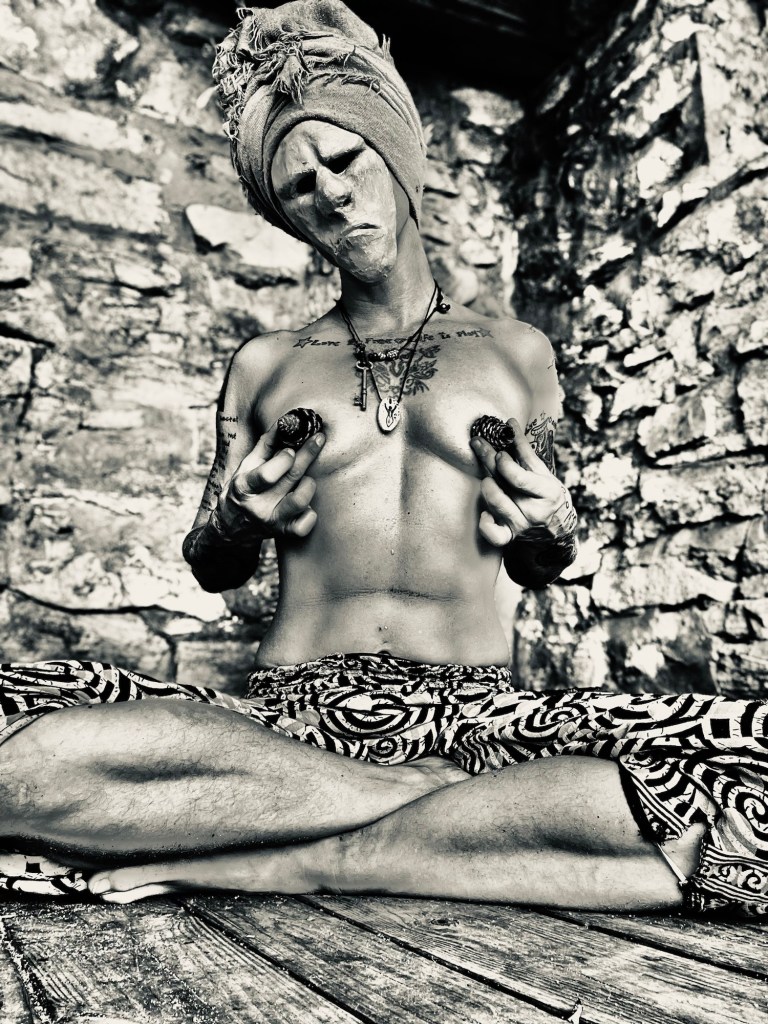
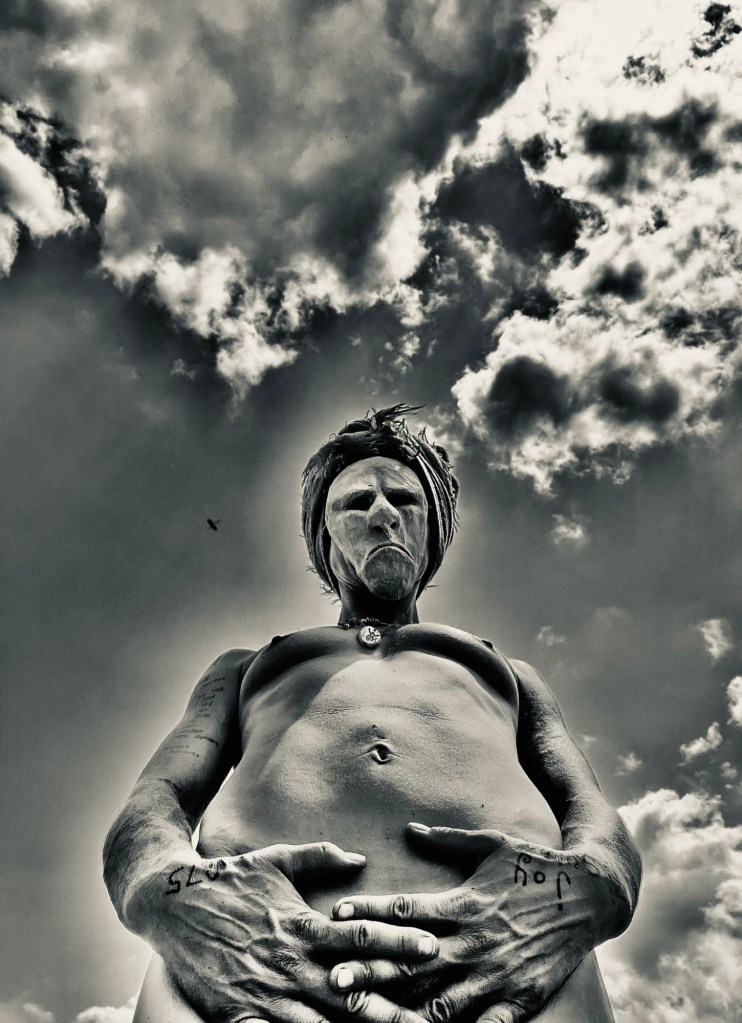
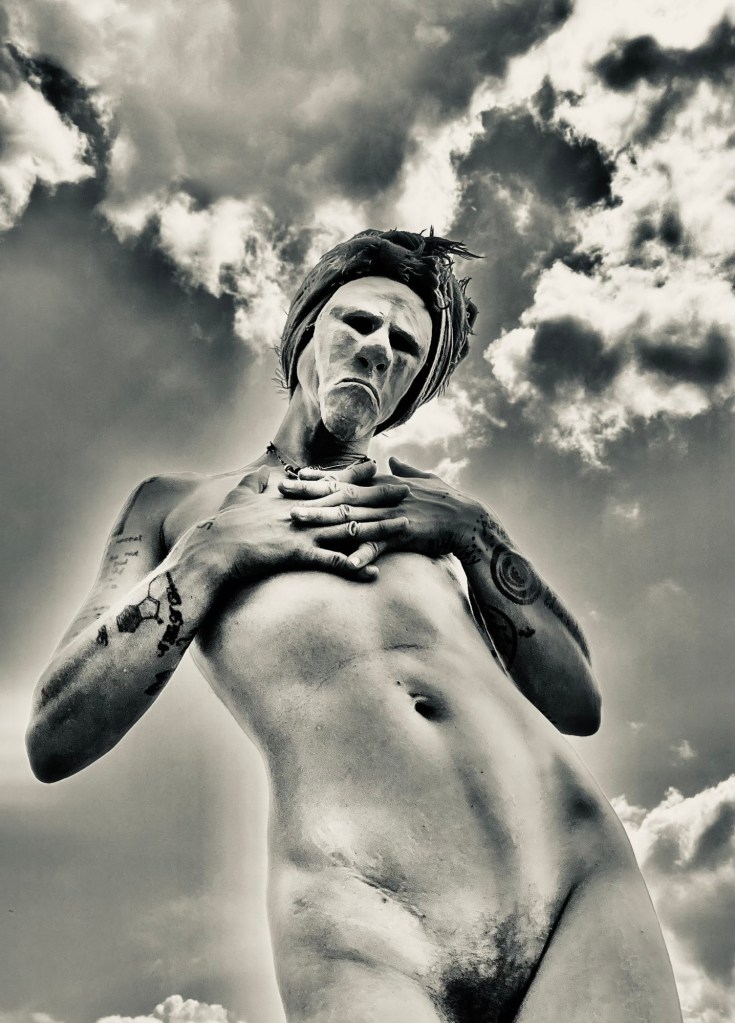
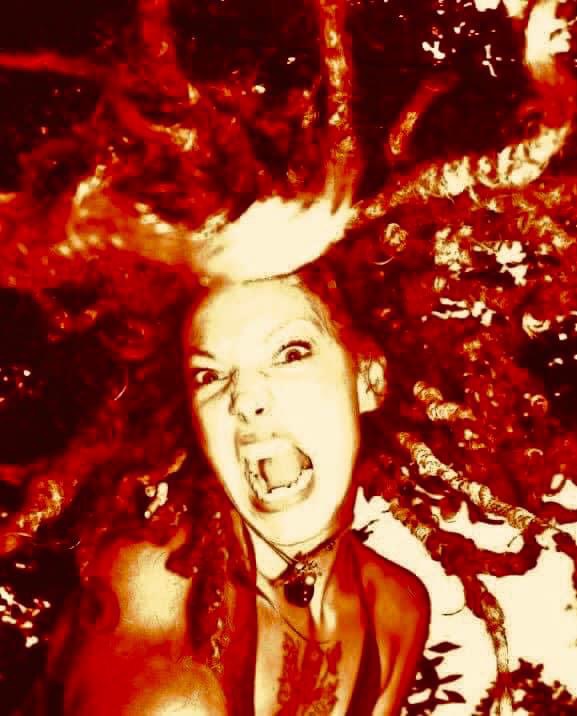
{self portrait series Kennedy Peak 8-6-24 part 4 ::::The SilverScreen of the Underworld Dream }
~all photo captions contain quotes/excerpts from the book by Hillman
UNDERGROUND AND UNDERWORLD When using the word underworld, it is imperative to keep in mind a distinction made by some classicists. This distinction is of great psychological importance, because it frees the psychic realm from nature. Chthon and ge (“underworld” and “underground”) do not necessarily refer to the same region or evoke identical feelings. “Chthon with its derivatives refers in origin to the cold, dead depths and has nothing to do with fertility. “This kind of deep ground is not the same as the dark earth; and the Great Lady (potnia chthon), who sends black-winged dreams and who can also be called Erinys, cannot simply be merged into the single figure of the Great Earth Mother.Psychology’s great-mother complex has swallowed even her own differentiations. Small wonder that this complex is also called “uroboric consciousness,” for even she herself vanishes into an interpretive monotony that makes me believe that the monotheistic psychology I so often belabor is less a mimesis of ancient Hebrewism (within and alongside of which there was much space for imaginal variety) than it is a mimesis of the Great Mother. Monism as Momism. Be this as it may, when we read analytical psychology today to discover about the ‘chthonic,’ we find it has taken on her meaning of primitive earthiness. Morever, as primitive and earthy, it must mean matriarchal and feminine. Thus our instinctual body, whether in flesh or image, in men or women, in the past or now, belongs to her, and we must become murderous heroes to get it back. The great-mother complex hangs the trinket of female gender on agriculture and fertility, as well as on the earth, body, instinct, and on depth. This move ignores that chthonic is an epithet belonging in the sense of “Is ignorant about,” a chthon that cannot be identified with instinctual body or earthy soil.Let us be clear: the chthonic is not only female, not only instinctual, not only physical, and it does not have to do with fertility rites. As Wilamowitz-Moellendorf said, Ïf modern scholars, who talk so much about chthonian cults, think in this connection of agriculture and all that goes along with Demeter in that sphere, they have not accustomed their ear to the overtones of Greek words.” The two words ge and chthon imply two worlds, the first of the earth and in it, the second below the earth and beyond it.There are even three distinctions here which have been imagined as levels of earth: an earthed imagination in keeping with Ge herself, whose name we still find in ge-ography, ge-ology, and ge-ometry. The first of these distinctions is between Demeter’s horizontal green plain with its activities of growth and Ge, the earth below Demeter. This second level Ge, may be imagined as the physical and psychic ground of an individual or community, its ‘place on earth,’ with its natural rights, rituals, and laws (Ge-Themis). Here, Ge serves as a fundament on which human life depends even more deeply than on food and fertility, like a governing maternal principle that makes material fertility possible and is its spiritual ground, and then beneath these the third, chthon, the depths, the dead’s world.Of course, a polytheistic mind does not firmly divide these “levels,” and so Demeter-Ge-chthon frequently merge in epithet and cult. (What scholars imagine about the Greeks does not correspond, nor must it, with what the Greeks imagine about the Gods.) Also against my distinctions is the fact that one can as well view the entire complex of the underworld that one can as well view the entire complex of the underworld from the perspective of Ge, as does Patricia Berry. She then is able to see much of the chthonic spirit that I meet in Hades to be equally present in Ge, and that Gaia (Ge) is both material, maternal earth, and chthonic void with its own spirit.The question here partly turns on how one regards earth. The strata of meanings which I have just laid out in terms of Demeter-Ge-chthon imagines a nonphysical earth or terre pur, below or beyond and maybe prior to the ground that we touch. Some etymologists and classicists try to relate the three “levels” culturally, believing one level of meaning to be prior in the sense of historically earlier than another; as if in a genealogy fantasy themselves, they try to derive one level from another, tracing the historical development of these three concepts. For example, Kirk refers to the very early pre-Socratic Pherecydes of Syros (frg. 1), who placed Chthon at the beginning with Zeus and Chronos, “but Chthonie acquired the name Ge…”Rather than enter the arguments of historical fantasy, I would keep to the psychological distinctions reflected in the three words and three personifications. Ge herself shows two aspects. On the one hand, she has to do with retributive justice, with the Fates, and she has also mantic, oracular powers. (Ge chthonia was worshipped on Mykonos, together with Zeus Chthonios and Dionysos Leneus, as she was linked with the chthonic Pluto and Hermes and the Erinyes at Athens [Areopagus].) This is the “great lady” who sends the black-winged dreams and is appropriately the mother of Themis (“Justice”). This spiritual side of her can be distinguished, on the other hand, from the physical Ge to whom grains and fruits were given (Ge-Demeter). Demeter too has a mystery aspect; her daughter Persephone belongs to Hades and has an underworld function. The spiritual significance may not be reduced to the physical (death cult to fertility rites, sense of justice to agricultural rituals) without ignoring the blatant fact that there are different figures with different epithets. In other words, even the earth and nature have their psychic function as well as their terrestrial ones, and one may serve the earth and be on the ground in more ways than one, i.e., through psychic activities, and not only through natural ones.“Is it the transition to light that gives the dream its shadowy quality? We all know how much of an art it is, not to dream, but to recall it.”The distinction between chthonicand earthy, between invisible fundaments and tangible ground, between darkness of soul and blackness of soil, between three Egyptian hieroglyphs, one for earth, another for Aker or entrance to the underground at the edge of existence, and yet another for the realm of the dead of Anubis, the blue-black jackal-dog.Once again, the distinctions are presented in terms of distance. The most radical classicist of the late nineteenth century, Erwin Rohde friend of Nietzsche, said in his great work Psyche that the underworld of Hades and Persephone is so remote from our world that those removed there “can have no influence upon the life and doings of men on earth.”He further emphasized the distinction between the underground of Ge and the chthonic underworld by saying that Ge ïn actual worship was seldom found among the groups of male and female deities of a chthonic nature such as were worshipped together at many places.”The spiritual quality of the underworld stands forth most clearly in descriptions of Tartaros, which, from Hesiod onward, was imagined to be at the very bottom of Hades, its farthest chasm. Tartaros was compared with the sky – as distant from the earth as the heaven above, and it was personified as the son of ether and of earth, that is, a realm of dust, a composite of the most material and immaterial. As the fantasy of Tartaros developed, it became more and more a pneumatic region of air and wind. Unlike the Christian hell of fire, in the imagination of late antiquity Tartaros was a region of dense cold air without light. Hence, Hades often was spoken of as having wings, just as in the Gilgamesh Epic, Enkidu dreams of his death as a transformation into a bird, his arms covered with feathers. The dead are clad like birds, their element evidently air.The volatilization of the underworld contrasts it sharply with the ground under our feet. In the Alexandrian age, the netherworld lost its localization in the earth altogether – that is, it became free of natural literalism – and was geographically transposed to the underside of the world. There was now a lower hemisphere. The word subterranean (hypogeios, or “below ge”) referred to the whole celestial hemisphere curved below our earth and which, like Hades, must necessarily be invisible from our perspective. It cannot be seen from our usual standpoint. Already then the dayworld and the nightworld, the two sides of the romantic soul, were conceived in a geographical theology of the upperworld and netherworld.In “this theology the world is divided into two halves by the line of the horizon; upper hemisphere is the domain of the living and the higher gods, the lower that of the dead and the infernal gods. “The Egyptians had carried into extreme detail this reversed world below our feet. The dead walked upside down, feet up, heads down. “People there walk with their feet against the ceiling. This has the unpleasant consequence that digestion goes in the reverse direction, so that excrements arrive in the mouth.” The Underworld is converse to the dayworld, and so its behavior will be obverse, perverse. What is merely shit from the daytime perspective – or what Freud called day-residues – becomes soul food when turned upside down. The way we go about there, the way we ruminate, even logic is stood on its head, for there our heads are in another place. (In Chapter 6 we shall look at some contemporary examples of this “upsidedownness,” including excrements in dreams.)Might there be an archetypal figure within Freud’s “day residues” that are the material of the dream? Could these leftover scraps refer to the household garbage that was sacrifice to Hekate (Cults2:515)? Hekate has long been implicated in dream interpretations. Both the magical view that considers dreams to be foretellings and the nineteenth-century mechanistic view that attributes them to waste products of physiological sensations (garbage) show Hekate’s influence when she becomes equated with Nyx (night), as in Spenser and at times in Shakespeare, then dreams become her province and our interpretative ideas reflect her perspectives.We may continue this tradition, although in a different manner. Yes, the dream is made of scraps that belong to the Goddess who makes sacred the waste of life, so that it all counts, it all matters. Offering the dream to “the mysteries of Hekate and the night” (King Lear, act 1, scene 1) means giving back the regurgitations that “come up” in dreams without attempts to save them morally or to find their dayworld use. The junk of the soul is primordially saved by Hekate’s blessing, and even our trashing ourselves can be led back to her. The messy life is a way of entering her domain and becoming a “child of Hekate.”Our part is only to recognize that there is a myth in the mess so as to dispose of the day residues at the proper place, that is, to place them at Hekate’s altar. Ritually, the garbage was placed at night at a crossroads so that each dream may lead off in at least three directions besides the one we have come from. Hekate, who has traditionally been represented with three heads, keeps us looking and listening in many ways at once.Because the underworld differs so radically from the underground, that which has its home there, dreams, must refer to psychic or pneumatic world of ghosts, spirits, ancestors, souls, daimones. These are invisible by nature, and not merely invisible because they have been forgotten or repressed. This world is fluid, or dusty, fiery, muddy, or aetherial, so there is nothing firm to hold to – unless we develop intuitive instruments for seizing impalpables that slip through our fingers or burn at the touch.By locating the dream among these impalpable fundamentals in Hades, we will begin to find that dreams reflect an underworld of essences rather than an underground of root and seed. They present images of being rather than of becoming. We will learn that a dream is less a comment on life and an indication as to where it is growing, than it is a statement from the chthonic depths, the cold, dense, unchanging state – what we so often today call psychopathic because, as Freud saw, the dream does not show morality, human feelings, or the sense of time. We can no longer turn to the dream in hopes of progress, transformation, and rebirth.I think too that the underworld teaches us to abandon our hopes for achieving unification of personality by means of the dream. The underworld spirits are plural. So much is this the case that the di manes (underworld spirits), who were the Roman equivalent of the Greek theoi chthonioi, have no native singular form. Even individual dead persons were spoken of plurally, as di manes. “The ancient Egyptian was thought to live after death in a multiplicity of forms, each of these forms was the full man himself”(Ba, p. 113). The underworld is an innumerable community of figures. The endless variety of figures reflects the endlessness of the soul, and dreams restore to consciousness this sense of multiplicity. The polytheistic perspective is grounded in the chthonic depths of the soul. A psychotherapeutic emphasis will be upon the disintegrative effects of the dream, which also confronts us with our moral dis-integrity, our psychopathic lack of a central hold on ourselves. Dreams show us to be plural and that each of the forms that figure there are “the full man himself,” full potentials of behavior. Only by falling apart (RP, pp. 53-112) into the multiple figures do we extend consciousness to embrace and contain its psychopathic potentials.We get into difficulties when we try to read the deep chthonic level from the viewpoints of Demeter or of Ge. To perceive the chthonic with Demeter’s eyes is to take the dream as signal for literal action and to translate it with naturalistic ethics into a moralized world. To take a dream as containing an immoral implication or a moral indication for setting matters right and redressing a balance is to read it from the Ge-Themis-Dike perspective. Perhaps we need the intervention of another lady of the underworld, Hekate, who was especially adept with ghosts, who both brought and banned fear, and who had nothing to do with the round of human life (marriage, birth, agriculture), herself without brother or sister or any descendants. “Her worship was without morality.” Hekate’s underworld perspective reaches to the chthonic depth of the dream, which, on the one hand, is a simple statement of essence – how spectral things look when stripped of their human context – and, on the other, elicits our psychopathy. The region of the soul in which dreams have their home is deeper than flesh-and-blood urges, which we have been, mistakenly, calling chthonic, as if it were the same as natural, as if the underworld referred to ira and cupiditas, the blood-soul, the thymos. This all is earthy; the natural, physical, somatic soul of emotions. Our modern word unconscious has become a catch-all, collecting into one clouded reservoir all fantasies of the deep, the lower, the baser, the heavier (depressed), and the darker. We have buried in the same monolithic tomb called The Unconscious the red and earthy body of the primeval Adam, the collective common man and woman, and the shades, phantoms, and ancestors. We cannot distinguish a compulsion from a call, an instinct for an image, a desirous demand from a movement of imagination. Looking into the night from the while light of the dayworld (where the term unconscious was fashioned), we cannot tell the red from the black. So, we read dreams for all sorts of messages at once – somatic, personal, psychic, mantic, ancestral, practical, confusing instinctual and emotional life with the realm of death. The pronounced distinction between emotion and soul, between emotional man and psychological man, comes out in another of Heraclitus’ fragments (85): “. . . whatever it [thymos] wishes it buys at the price of soul.” Thymos, the earlier Greek experience of emotional consciousness or moist soul, did not belong in the underworld. So, to consider the dream as an emotional wish costs soul; to mistake the chthonic as the natural loses psyche. We cannot claim to be psychological when we read dream image in terms of drives or desires. Whatever counsel an analyst gives about emotional life, supposing it drawn from dreams, refers to his experience, which he reflects from the dreams. It is not in the dreams. He is “sup-posing” about them, that is, he is “putting onto” them what he knows about life. What one knows about life may not be relevant for what is below life. What one knows and has done in life may be as irrelevant to the underworld as clothes that adjust us to life and the flesh and bones that the clothes cover. For in the underworld all is stripped away, and life is upside down. We are further than the expectations based on life experience, and the wisdom derived from it. Again, we can follow Heraclitus (frg. 27): “When men die there awaits what they neither expect nor even imagine.” The word translated here as “expect” is related in Greek to “hope” (elpis), so that the specific hope that is abandoned (Dante, Inferno 3) on entering the underworld perspective is the fantasy of daylife expectations and flesh-and-blood illusions. Souls in Hades are “incurable” said Plato. There is no alteration to be hoped for. Such hope would be hope for the wrong thing. We need more the hope of St. Paul, which is a hope of invisibles and for invisibles, than the hope of Pandora, who, as the wife of Prometheus, contains a hidden hope, which he makes evident in his mission to help mankind. To go deep into a dream requires abandoning hope, the hope that rises in the morning and would turn the dream to its purposes. At the Hades level of the dream there is neither hope nor despair. They cancel each other out; and we can move beyond the language of expectations, measuring progressions and regressions, ego strengthening and weakening, coping and failing.Let me once more try to draw this distinction between the underground of vital, emotional life and the underworld Heraclitus said (frg. 15): It it were not in honour of Dionysus that they conducted the procession and sang the hymn to the male organ, their activity would be completely shameless. Hades and Dionysus are the same, no matter how much they go mad and rave celebrating bacchic rites in honour of the latter. The passage has given scholars – those who accept this phrasing at all – so much trouble partly because it juxtaposes, even identifies, the very different realms we are keeping distinct: psychic essences and emotional nature.This fragment refers to the mystery of a sacred procession and it must be read with a similar reverence, even as a revelation of something profound in acts that seem shamelessly pornographic, raving, and mad. It is therefore not enough to pass it off with a moral generality, as some interpreters do, that Heraclitus means that even the wildest life forces also lead to death, or let it go by, as other interprets do, as another of his metaphysical generalities about the sameness of life and death (frgs. 62, 88). We are still left with the vivid imagery of this mystery in the sexual language that is so fundamental to psychology. So, Heraclitus, as one psychologist to another, across the centuries I read you to be saying that for this troublesome distinction between emotion and soul, between the perspective of vitality (Dionysos) and the perspective of psyche (Hades), sexual fantasy holds a secret. In what seems most evident, public, and concrete, there is also something covered in shame, hidden and invisible.The Hades within Dionysus says that there is an invisible meaning in sexual acts, a significance for soul in the phallic parade, that all our life force, including the polymorphous and pornographic desires of the psyche, refer to the underworld of images. Things in life, no matter how full of life, are not only natural. Dionysos is also a “downer.” We may believe we are living life only on the level of life, but we cannot escape the psychic significance of what we are doing. Soul is made in the rout of the world. What has meaning for life has meaning for soul at the same moment, so consider you living in the light of the Hades within it.The other side of the mysterious identity, the Dionysos within Hades, says that there is zoe, a vitality in all underworld phenomena. The realm of the dead is not as dead as we expect it. Hades too can rape and also seize the psyche through sexual fantasies. Although without thymos, body, or voice, there is a hidden libido in the shadows. The images in Hades are also Dionysian – not fertile in the natural sense, but in the psychic sense, imaginatively fertile. There is an imagination below the earth that abounds in animal forms, that revels and makes music. There is a dance in death. Hades and Dionysos are the same. As Hades darkens Dionysos toward his own richness. Farnell describes their fusion as a “mildness joined with melancholy.”
All modern therapies which claim that action is more curative than words (Moreno) and which seek techniques other than talk (rather than in addition to it) are repressing the most human of all faculties-the telling of the tales of our souls. These therapies may be curative of the child in us who has not learned to speak or the animal who cannot, or a spirit-daimon that is beyond words because it is beyond soul. But only continued attempts at accurate soul-speech can cure our speech of its chatter and restore it to its first function, the communication of soul.
Soul of bulk and substance can be evoked by words and expressed in words; for myth and poetry, so altogether verbal and "fleshless," nonetheless resonate with the deepest intimacies of organic existence. A mark of imaginal man is the speech of his soul, and the range of this speech, its self-generative spontaneity, its precise subtlety and ambiguous suggestion, its capacity, as Hegel said, "to receive and reproduce every modification of our ideational faculty, “ can be supplanted neither by the technology of communication media, by contemplative spiritual silence, nor by physical gestures and signs. The more we hold back from the risk of speaking because of the semantic anxiety that keeps the soul in secret incommunicado, private and personal, the greater grows the credibility gap between what we are and what we say, splitting psyche and logos. The more we become tied by linguistic self-consciousness, the more we abdicate the ruling principle of psychological existence. That we then turn to the rats of Skinner and the dogs of Pavlov, the geese and wolves of Lorenz--tune into dolphins or consider man a naked ape-in order to find prototypes for human behavior, indicates to what extent we are losing our speech and with it our sense of a distinctly human nature. It is not animal prototypes we need for discovering our original patterns, but personified archetypes, each of whom speaks, has a name, 'I' and has its existence in the language world of myth. Without speech we lose soul, and human being assumes the fantasy being of animals. But man is half-angel because he can speak. The more we distrust speech in therapy or the capacity of speech to be therapeutic, the closer we are to an absorption into the fantasy of the archetypal subhuman, and the sooner the archetypal barbarian strides into the communication ruins of a culture that refused eloquence as a mirror of its soul.
This is a style attempting to be precise in distinguishing among the faces of the soul, all the while appealing to that many-sided soul by speaking in figurative language to the emotions, senses, and fantasy, working its persuasion through artfulness, even if at times becoming bombastic, contrived, even piously woolly. This has all been called rhetoric. In Renaissance rhetoric anima appears yet once more, this time as Aphrodite Peitho, the persuasive Venus who turns our head with a well-turned phrase. Rhetoric played such an important part in Renaissance writing because it is the speech form of the anima archetype, the style of words when informed by soul.
Our academic tradition has missed the psychology of the Renaissance partly because it has not been attuned enough to this use of language, excoriating it for lack of solid evidence and marshaled argument. But logic and proof do not convince the anima, neither then nor now, so that really to hear Renaissance language we have to listen through anima, which is brought to life by personified and pathologized figures of speech, by hyperbole and metaphor, by indirection, repetition, allusion, conceit, and innuendo. This speech is forceful, seductive, and convincing--until examined as scientific analysis or theological discourse. Then it is no longer "serious philosophy." Rhetoric's pleading, complaining, and reiterating speaks the way our symptoms speak, the way our dreams speak. It is an argument of mood; or rather, the imagination does not argue, it imagines.'a Rhetoric never persuades the mind unless that mind be from the beginning susceptible to passion and images; its main discriminatory concern is not with forming definitions but with shaping the imagination itself into words.
Depth psychology today is heavily entangled in the problem of language, pulled between extremes of basing all therapy upon linguistic structures or leaving speech altogether for preverbal grunts and gestures. Therapy turns back either to Cartesian structuralism which abstracts speech into unutterable root units or to pietistic revivalism where the inchoate sound of feeling is all. Neither those structures nor those feelings can carry psychology toward giving words to the full size of soul, for they lack the main mark of rhetoric: eloquence. We need again what was common in the Renaissance-belief in the verbal imagination and the therapeutic incantational power of words. Besides the France of Lacan's intellect and the Germany of Reich's and Perl's feelings, there is the Mediterranean of the imagination, an inland sea of rhetoric from whose froth Venus rises.
This vision cannot be enacted unless archetypal persons strike us as utterly real. To experience imaginal reality, a psychic function–the specific function of the imaginative soul–must be active. This soul person is the person of our moods, self-reflections, and reveries, of our sensuous longing beyond the sensately concrete, the spinner of fantasy who is the personification of all unknown psychic capacities that lie waiting, drawing us seductively, uncannily inward to the dark of the uncut forest and the deeps below the waves. Anima means both psyche and soul, and we meet her in her numerous embodiments as soul of waters without whom we dry, as soul of vegetation who greens our hope or blights with symptoms, as Lady of the Beasts riding our passions. She is father’s daughter and mother’s daughter, and my sister, my soul. She is also a worrying succubus drawing off our life’s juice, a harpy with talons, a cold white wraith with mad addictions–but a nurse as well, and a serving maid, a Cinderella nymphet, vague with no history, a tabula rasa waiting for the word. And she is also the Sophia of wisdom, the Maria of compassion, the Persephone of destruction, compelling Necessity and Fate, and the Muse.
The multiplicity of her forms in fictions and lives, and the intensely personified and intensely subjectified reality of her nature, bespeak a world into which she calls and over which she rules.
As the latter, anima has a series of meanings." First. (a) she is the personification of our unconsciousness-our stupidities, follies, intractable problems. Then (b) she is a particular personification appearing in a particular moment- call girl, shopgirl, schoolgirl--who presents a precise image of the current emotions of the soul. She is also (c) the feeling of personal interiority. She brings the sense of having an interior life, changing events into experience that means “me." She makes possible the inner ground of faith in myself as a person, giving the conviction that what happens matters to the soul and that one's existence is personal and important." She thus (d) personalizes existence. Anima, moreover, is (e) that person by means of whom we are initiated into imaginal understanding, who makes possible experiencing through images, for she embodies the reflective, reactive, mirroring activity of consciousness. Functionally anima works as that complex which connects our usual consciousness with imagination by provoking desire or clouding us with fantasies and reveries, or deepening our reflection. She is both bridge to the imaginal and also the other side, personifying the imagination of the soul. Anima is psyche personified, as Psyche in the ancient story of her by Apuleius personified the soul.
So the movement into psychological existence proceeds through her in one form or another. The movement through the constructed world of concepts and dead things into an animistic, subjective, mythical consciousness, where fantasy is alive in a world alive and means follows anima. She teaches personifying, and the very first lesson of her teaching is the reality of her independent personality over and against the habitual modes of experiencing with which we are so identified that they are called ego, I. The second lesson is love; shé comes to life through love and insists on it, just as Psyche in the old tale is paired forever with Eros.
Perhaps the loving comes first. Perhaps only through love is it possible to recognize the person of the soul. And this connection between love and psyche means a love for everything psychological, every symptom or habit, finding place for it within the heart of imagination, finding a mythical person who is its supportive ground. The connection between love and psyche means as well bringing a psychological eye to all of love's manifestations-that all its mad and deviate cravings seek ultimately the connection with psyche.
Whether we conceive of this interior person as Anima or as an Angel, a Daemon, a Genius, or a Paredros, or one of the personified souls in the traditions of ancient China and Egypt, this figure is indispensable to the notion of human personality. Some traditions, in fact, have asserted that an individual without his soul figure is not a human being. Such a one has lost soul.























 BlissNinja