
We are building our bodies,
Now,
Inside the womb
And will be birthed
From our Mother
As we enter the Tomb
And drop this Dream
For Another

9-25-24
Love is Free~Life is Play
We are building our bodies,
Now,
Inside the womb
And will be birthed
From our Mother
As we enter the Tomb
And drop this Dream
For Another
9-25-24

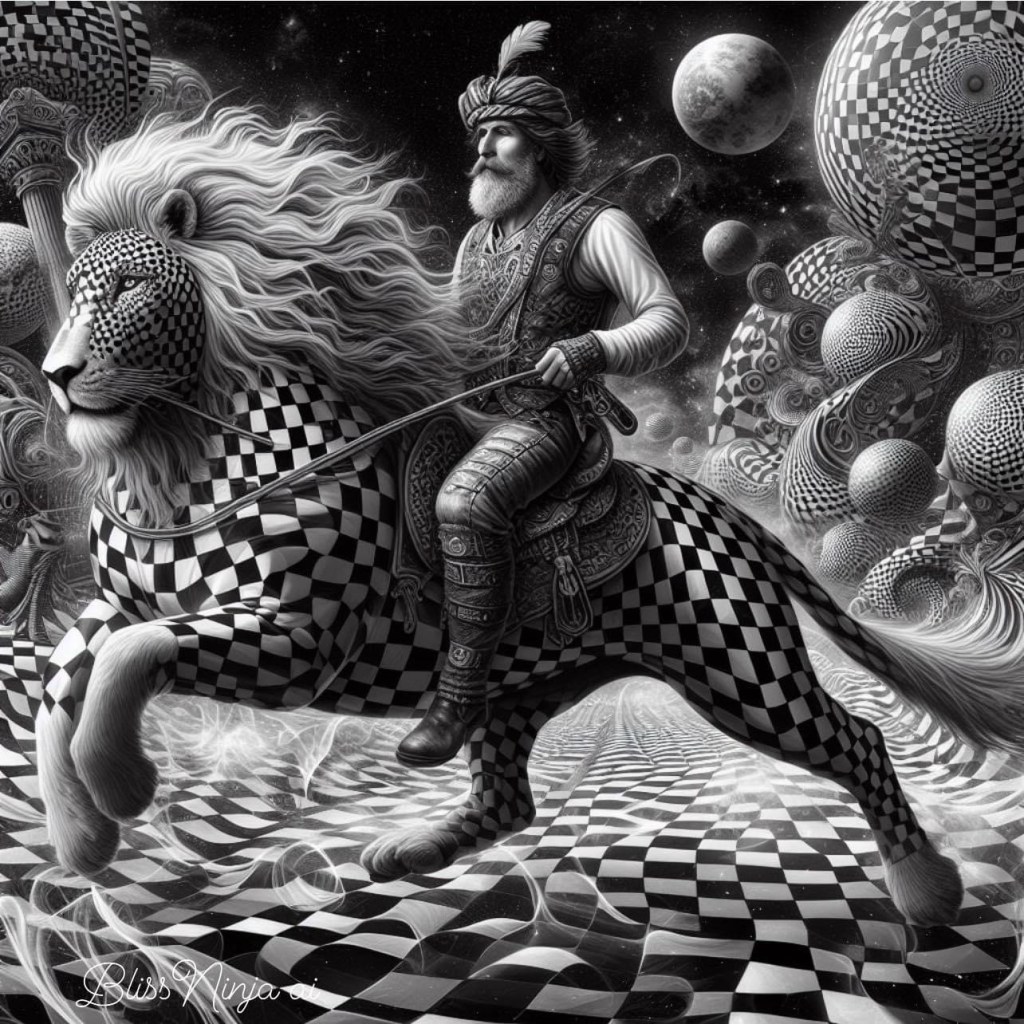
Tiger
Came to me in Dreamtime
Last night
Such
Presence, Will, Intent

I was close to tiger,
Yet Aware
Of its immense Power
It took my right hand
Into
It's mouth
Playfully , gently, with teeth
Penetrating gaze
To tell me
Remind me
I had not fed it, in a long time
I knew it could rip my arm off
If it chose
But it was choosing simply
To alert me
Of my neglect

I remembered then
All
Of it
Wistful that I had let it go hungry
Trying to remedy
The situation with
Meat

And the proximity
Of this fabulous beast
To me
To my knowing
The seemingly Tamed Tiger
Pacing
Hungry
A force of nature
Being released
From my own psyche
Awoke
My primal Will

It Was so obvious
That the Feeding
Was Now
In progress

9-20-2021



Everything Sees us
It seizes us
From inside
The eye and thine
I me mine
Entwined
In Sines of the Times

All roads lead
to the Torus
Hyperspheric tears
That Fall
From the Eyes of Horus
Making Waves
That Bleed before Us

Emanations
Of the Faces
And Names
Of God
La ilaha illallah
Everything Is
Until
It Is
KNot

9-19-24

The ultimate beauty of psyche is that which even Aphrodite does not have and which must come from Persephone, who is queen over the dead souls and whose name means “bringer of destruction."
The Box of Beauty which Psyche must fetch as her last task refers to an underworld beauty that can never be seen with the senses. It is the beauty of the knowledge of death and of the effects of death
upon all other beauty that does not contain this knowledge. Psyche must “die" herself in order to experience the reality of this beauty, a death different from her suicidal attempts. This would be the
ultimate task of soul-making and its beauty: the incorporation of destruction into the flesh and skin, embalmed in life, the visible transfigured by the invisibility of Hades's kingdom, anointing the psyche by the killing experience of its personal mortality. The Platonic upward movement toward aestheticism is tempered by the beauty of Persephone. Destruction, death, and Hades are not left out. Moreover, Aphrodite does not have access to this kind of beauty. She can acquire it only through Psyche, for the soul mediates the beauty of the invisible inner world to the world of outer forms.

(James Hillman, Myth of Analysis)

WHITE SHADOWS

When you walk, usually you don't see
the white shadow walking beside you
who may stray behind a hedgerow
or veer away into a dark wood
or a tall city full of thrusting agendas
different from your own, or into a love bower
you left behind, or never made.

Your co-walker may swap places
with another white shadow, and another.
This is a parallel self who made other choices,
who stayed with your former lover,
or still works in the old job, or never crossed the sea,
or chose pancakes instead of waffles for breakfast.
Though the veil between you is thinner
than shrink-wrap, you rarely see through it
except in your dreams, where you enter the life
of an alternate self who has trouble remembering
the alternate self you inhabit this side of the dreamlands.

Yet when your paths converge with a parallel self,
you feel something, obscurely, a tilt to the day,
and may notice you are drawing events and encounters
in a different way. People praise you or put you down
in ways you can't fathom unless you awaken to how
you are loaded now with karma of your white shadow
incurred in adventures you can't know about
until you follow the dream tracks of your multitudinous self.

-September 17, 2010

Robert Moss

From ‘Here, Everything is Dreaming’
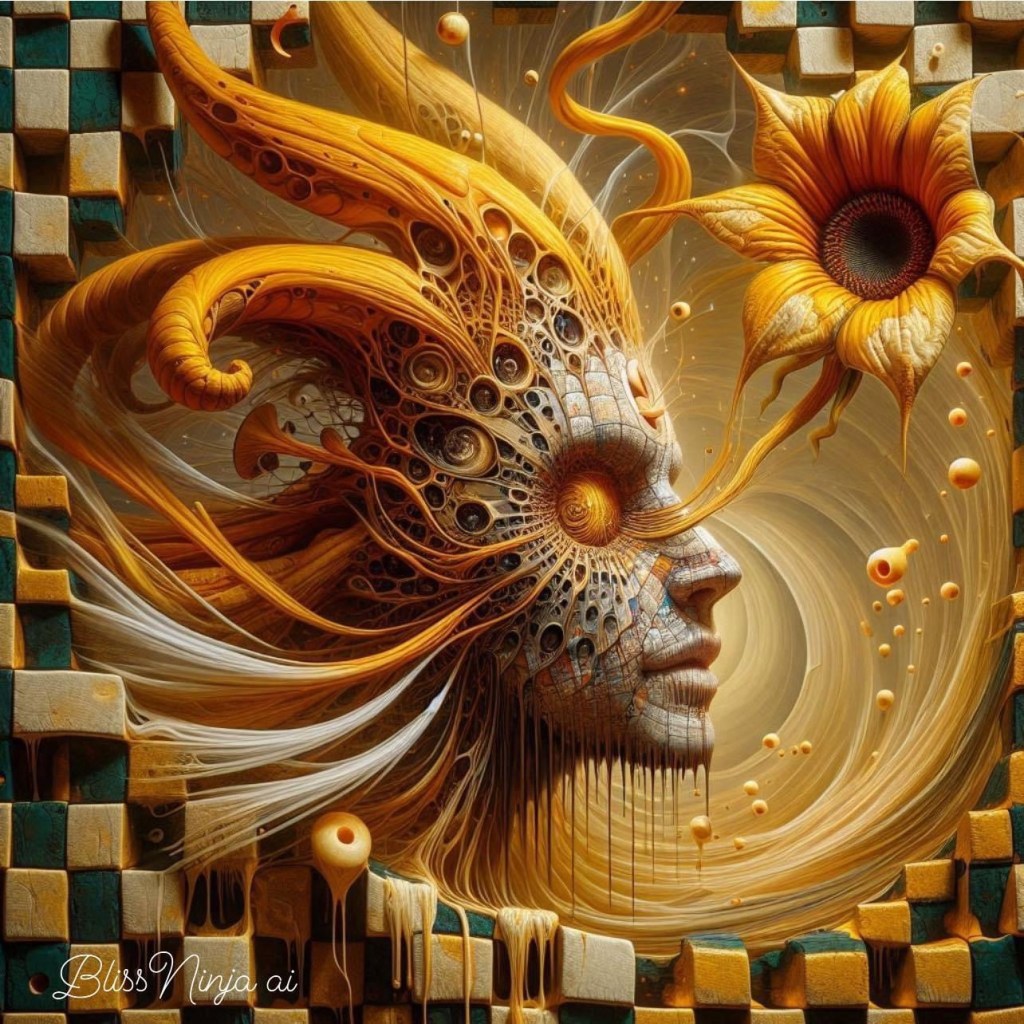
👁❤️👁TURNING-POINT👁❤️👁

The road from intensity to greatness
passes through sacrifice.
~Kassner

For a long time he attained it in looking.
Stars would fall to their knees
beneath his compelling vision.
Or as he looked on, kneeling,
his urgency's fragrance
tired out a god until
it smiled at him in its sleep.

Towers he would gaze at so
that they were terrified:
building them up again, suddenly, in an instant!
But how often the landscape,
overburdened by day,
came to rest in his silent awareness, at nightfall.

Animals trusted him, stepped
into his open look, grazing,
and the imprisoned lions
stared in as if into an incomprehensible freedom;
birds, as it felt them, few headlong
through it; and flowers, as enormous
as they are to children, gazed back
into it, on and on.

And the rumor that there was someone
who knew how to look,
stirred those less
visible creatures:
stirred the women.
Looking how long?
for how long now, deeply deprived,
beseeching in the depths of his glance?

When he, whose vocation was Waiting, sat far from home-
the hotel's distracted unnoticing bedroom
moody around him, and in the avoided mirror
once more the room, and later
from the tormenting bed
once more:
then in the air the voices
discussed, beyond comprehension,
his heart, which could still be felt;
debated what through the painfully buried body
could somehow be felt- his heart;
debated and passed their judgment:
that it did not have love.

(And denied him further communions.)

For there is a boundary to looking.
And the world that is looked at so deeply
wants to flourish in love.

Work of the eyes is done, now
go and do heart-work
on all the images imprisoned within you; for you
overpowered them: but even now you don't know them.
Learn, inner man, to look on your inner woman,
the one attained from a thousand
natures, the merely attained but
not yet beloved form.👁❤️👁

~Rainer Maria Rilke, trans.by Stephen Mitchell
👁For the Eskimos, when one falls ill, one takes on a new name, a new diseased personality. To get over a disease, one must quite literally “get over” it by transcending it, that is, by dying. The only
hope for cure lies in the death of the ill personality. Health requires death.
Perhaps this is what Socrates meant with his last obscure words about owing a sacrificial cock to Asklepiós. Once the cocky pride of
life that crows hopefully at each day’s dawning is sacrificed, the instinct for tomorrow is yielded. Death then is the cure and the salvation and not just a last, worst stage of a disease. The cock crow
at dawn also heralds resurrection of the light. But the victory over disease and the new day begins only when the ambition for it has been abandoned upon the altar. The disease which the experience of
death cures is the rage to live. .
An analyst often finds himself purposely passing by the symptoms appearing in his practice. Rather than investigate these symptoms, he turns to the person’s life which has fostered the pathology.
His premise is that the disease has its meaning in the life of the patient and he tries to understand this meaning. He cannot hold out the usual hope for cure or even relief of symptoms. His analytical
experience says that the hope which the patient presents is part of the pathology itself. The patient’s hope arises as an essential part of the constellation of his suffering. It is frequently governed by impossible demands to be free of suffering itself. The same condition that constellated the symptoms is just the condition which these symptoms
are interrupting and killing- or curing. Therefore, an analyst does not hope for a return to that condition out of which the symptoms and the hope for relief arose. Because hope has this core of illusion it favors repression. By hoping for the status quo ante, we repress the present state of weakness and suffering and all it can bring. Postures of strength are
responsible for many major complaints today–ulcers, vascular and coronary conditions, high blood pressure, stress syndrome, alcoholism, highway and sport accidents, mental breakdown. The will to
fall ill, like the suicide impulse, leads patient and physician face to face with morbidity, which stubbornly returns in spite of all hope
to the contrary. One might ask if medical hope itself is not partly responsible for recurrent illness; since it never fully allows for weakness and suffering the death experience is not able to produce its
meaning. Experiences are cheated of their thorough effect by speedy recovery. Until the soul has got what it wants, it must fall ill again. And another iatrogenic vicious circle of recurrent illness begins.
👁
(James Hillman ,Suicide and the Soul)


“To sense penetratingly we must imagine, and to imagine accurately we must sense.”
James Hillman
( Continues in photo captions)








Salt is the mineral substance or objective ground of personal experience making experience possible. No salt, no experiencing- merely a running on and running through of events without psychic body. Thus salt makes events sensed and felt, giving us each a sense of the personal–my tears, my sweat and blood, my taste and value.
The entire alchemical opus hangs on the ability to experience subjectively. Hence it is said in The Golden Tract: “He who works without salt will never raise dead bodies.” The matters are only macrocosmic and chemical, out there, dead unless one works with salt. These intensely personal experiences which give taste and flavor to events
are nonetheless common to all-both mine and yet common as blood, as urine, as salt. In other words, salt acts like the ground of subjectivity (“That which is left at the bottom of our distilling vessel is our salt-that is to say our earth.”). It makes possible what psychology calls felt experience. So, we must turn to this same ground to mine our salt.
James Hillman, Salt
(Continued in the Captions for each photo)
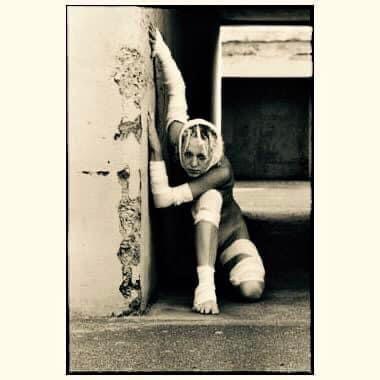


ALchemical psychology remarkably condenses the two traits of the lion heart–the conformity of its thought and its objectification- into the alchemical substance, sulfur, the principle of “combustibility,” the magna famma. “Where is the sulfur to be found?
asks Kramer, a fourteenth-century English Benedictine. “In all substances, all things in the world–metals, herbs, trees, animals, stones,
are its ore.
Everything that suddenly lights up, draws our joy, fares with beauty–each bush a god burning: this is the alchemical sulfur, the flammable face of the world, its phlogiston, its aureole of desire,
enthymesis everywhere. That fat of goodness we reach toward as consumers is the active image in each thing, the active imagination of the anima mundi that fires the heart and provokes it out.
(James Hillman, Thought of the Heart )
Continued in photo captions



Have a WordPress.com account? Log in now.

