Waking before dawn, Persephone finds herself curled in a ball at the foot of the couch. As she lay, shivering, her mind flashes from image to image, groggy pictures and feelings that seem like dreams, but she knows they are more than this. There is a subtle difference in the quality of these flashes of memory that tell her it is more than imagination. Suddenly she is gripped with fear. Panic shoots through her half-numb body and forces her to rise to her feet. She looks around, as if she has just woken from a terrible nightmare... her eyes grasping for familiarity. There is no one here except her. At least, not in the living room. She's in her friends apartment...nothing strange about that. It's the feeling of death that shakes her up, that makes her heart beat wildly in the walls of her chest. As if it were trying to wake her soul to something she is trying to forget. Outside, the streetlamps are on, the sun has not yet announced the new day. Inside, the cold atmosphere of foreboding wraps around her like silk.
As Persephone makes her way to the bathroom down the hall, she peeks into her friends room... she is laying on her bed, asleep to the world. As she gently closes the bathroom door, she realizes that she is afraid to see what she knows is there. Silently, slowly, calmly, she unbuttons her faded jeans and slides them down her chattering legs. There it is. A crimson stain in the sacred fold of her panties. Now there is no pretending that her night's hauntings were but dreams...she had been swallowed whole by the night and regurgitated in this dark and cold dwelling, left to ponder the pieces left scattered in her mind. Her soul too afraid to recall in that moment the enormity of the Shadow that now covered her. As she flees the building she is vaguely aware of fleeing her body, so heavy is the weight of what she knows.
The steaming bathroom makes a fortress of her sorrow, the boiling water running over her flesh trying to remove the stain of Him. The Shadowman has left his imprint all over her, the white satin sheet of her existence now saturated black. No matter how hard she scrubs, no matter how deeply she digs at her flesh, she feels she cannot escape the vines that have tangled around her soul, suffocating her sense of Self and lacerating the last remaining vestige of innocence she had known. The tears feel like daggers, sliding down her face, mingling with the bullets of blistering shower spray which, for a moment at least, make her feel that she is really here. Existing. Still.
Persephone huddles in the still steaming bathroom, arms wrapped around knees, head buried in arms. She knows that she must leave her grandmothers house before she wakes, or else the desecration will be obvious. She gathers herself and manages to get dressed...sickened at the thought of wearing the same clothes that hold the smell of Him, the stain of Him. But with no extra clothes with her, she pulls on the jeans as if she is entering the skin of the devil himself.
(From Intro/ Linguistic Trickster Volume 6....poems from 1996 through 1998)
🌹 “This time of year my thoughts always return to the rites of Kore. I might be coping with the world folding in on itself, and the similar changes I experience within my own inner world, or it may just be an inherent fascination with etiological myth, to say nothing of the powerful duality of delicate springtime maiden and Queen of the Underworld within one goddess.
Her more widely known name, Persephone, means “bringer of death,” in the sense that her deft but gentle hand is a comfort and a guide to those making their descent. In this way, and as the goddess of the Eleusinian mysteries, she herself is the door to worlds unknown, a portal to revelations. Among her other epithets in Homer and among cults (Euripides calls her arrētos, “she who none may name,” Homer calls her agauē and hagnē, “venerable” and “demanding respect”). Persephone is her name as mistress of the house of Hades. In these rites, she is often referred to as Kore, which means, simply, “maiden.” “
~Sara Long
🌹
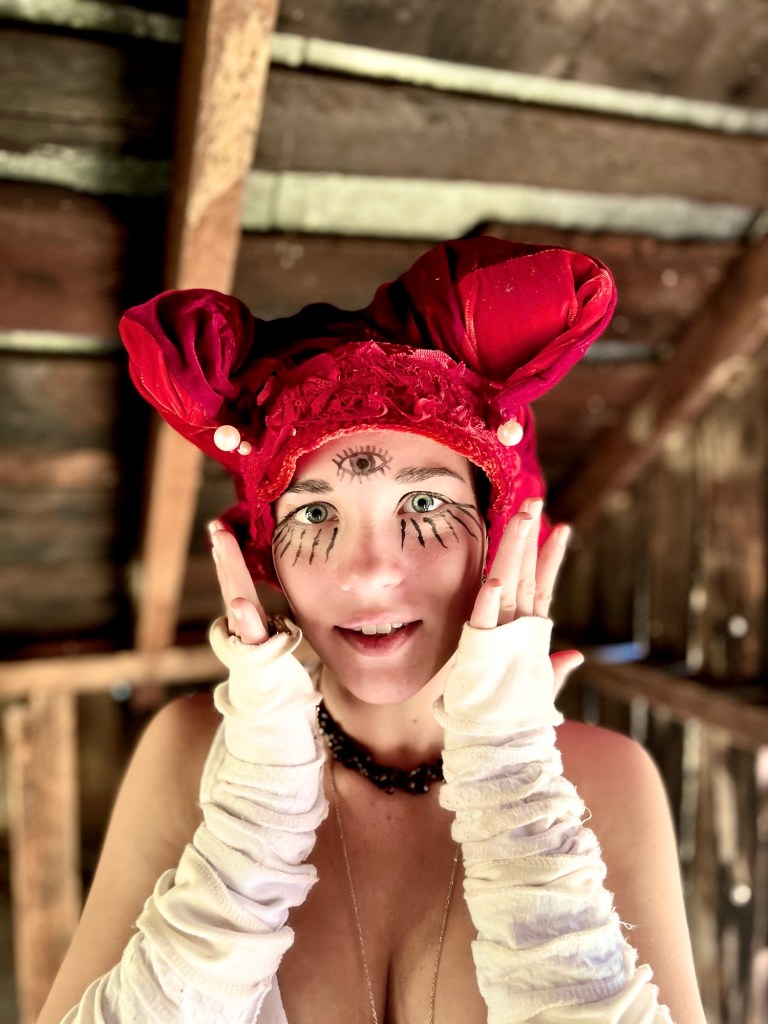
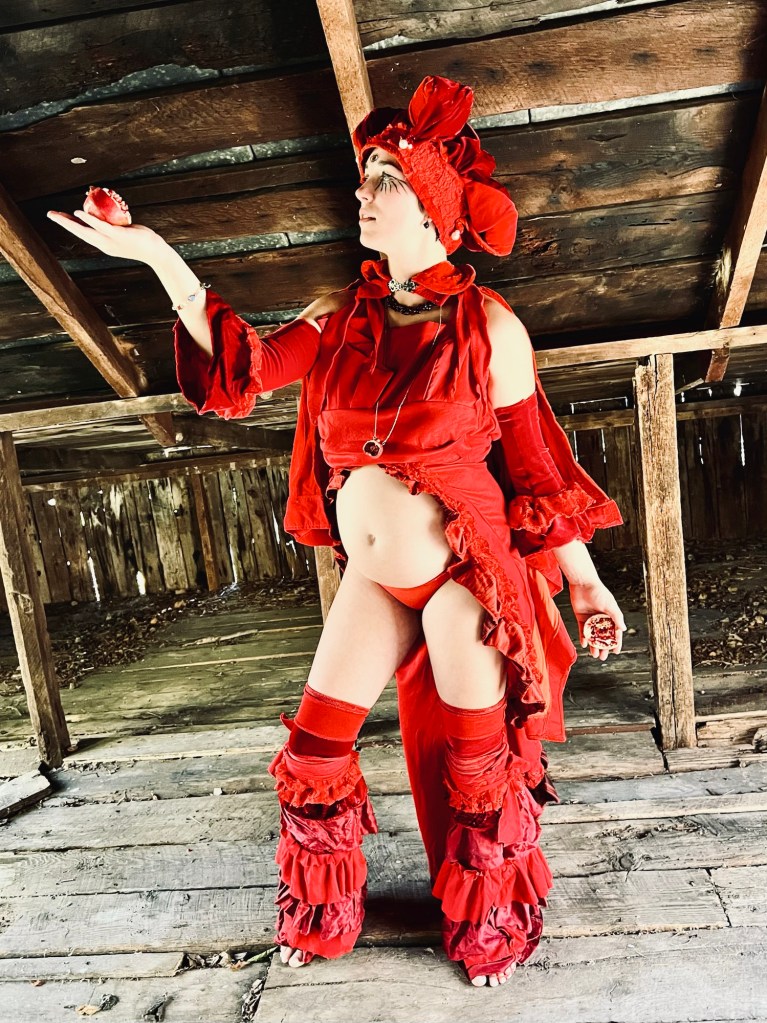
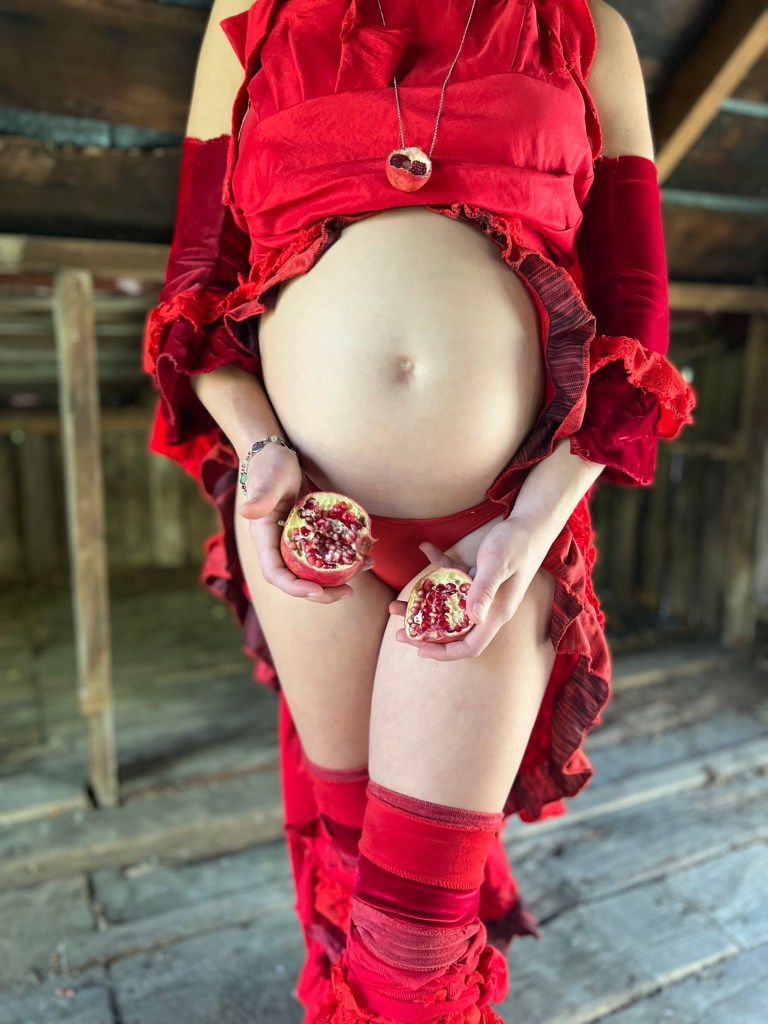
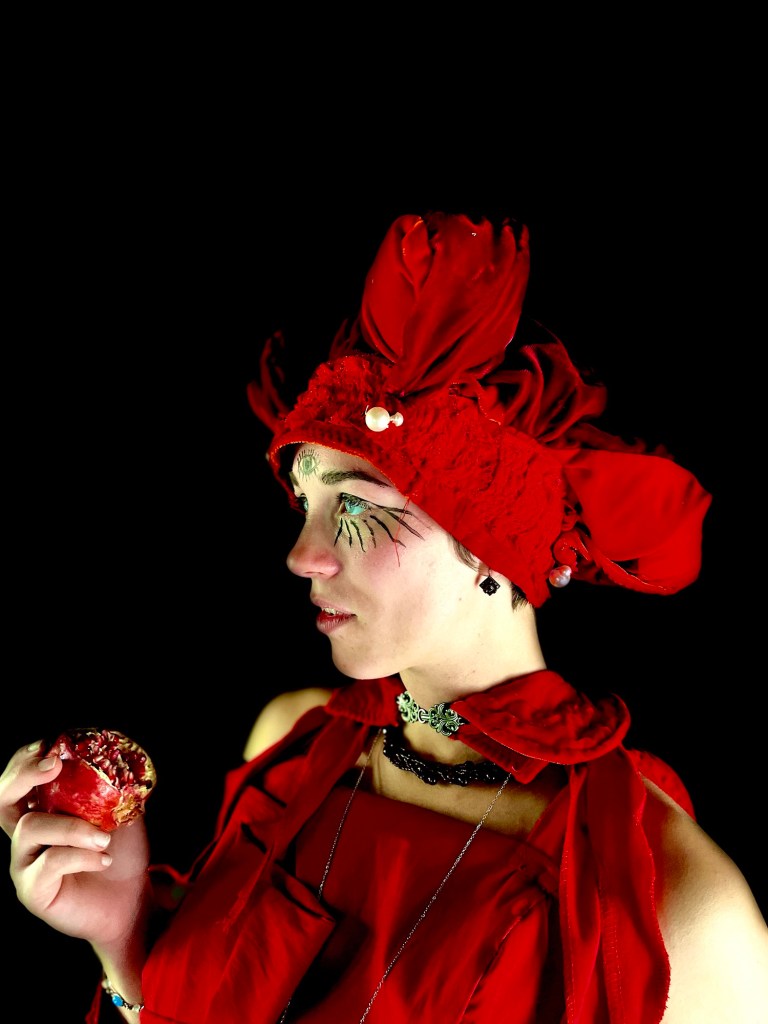
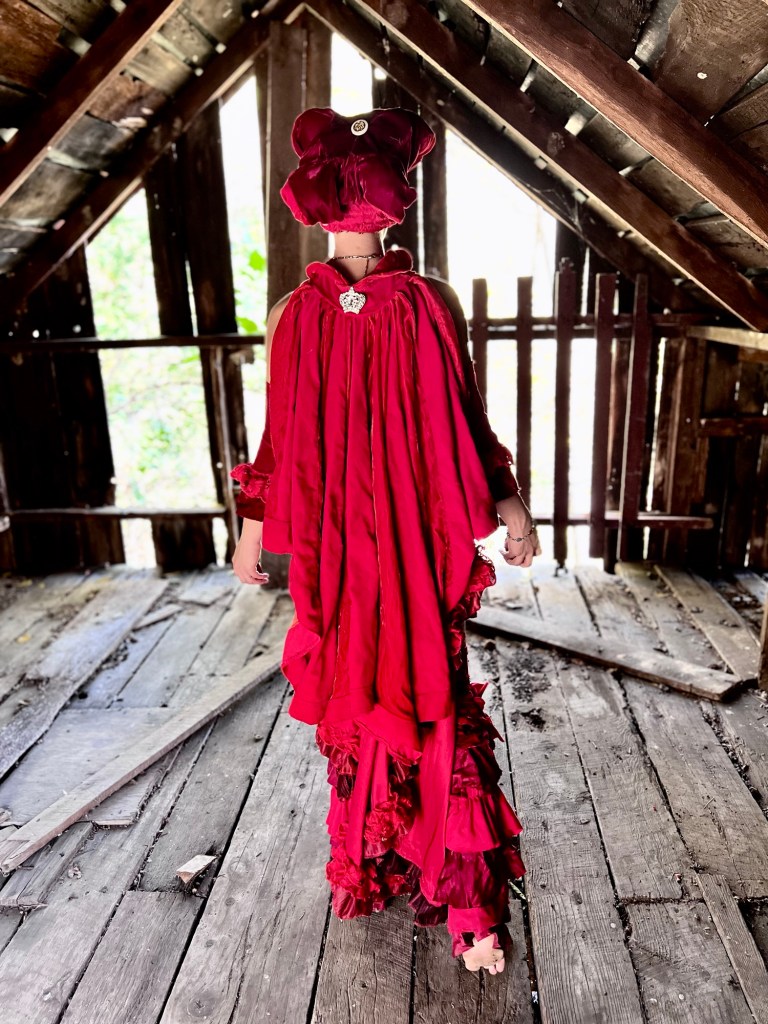
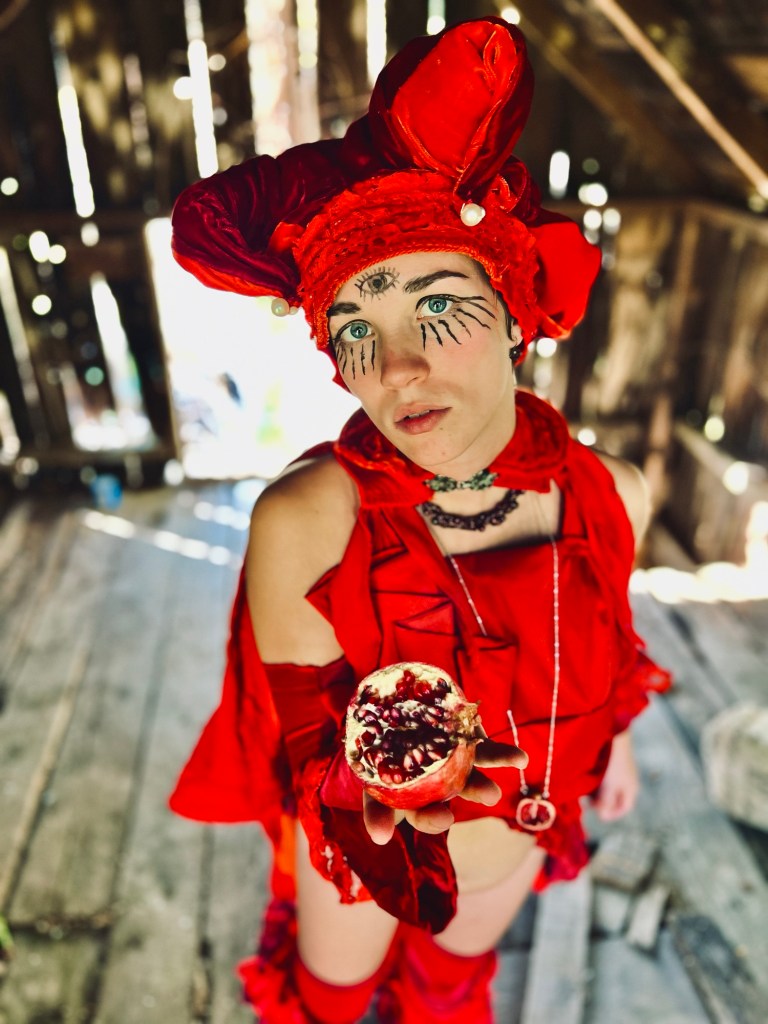
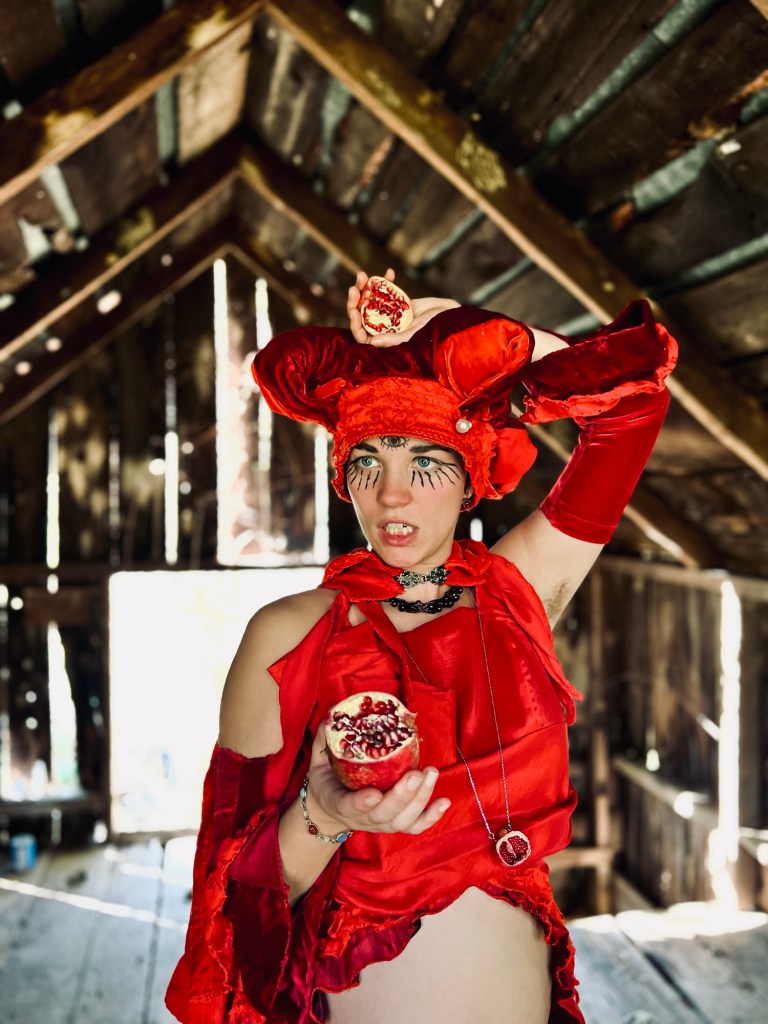
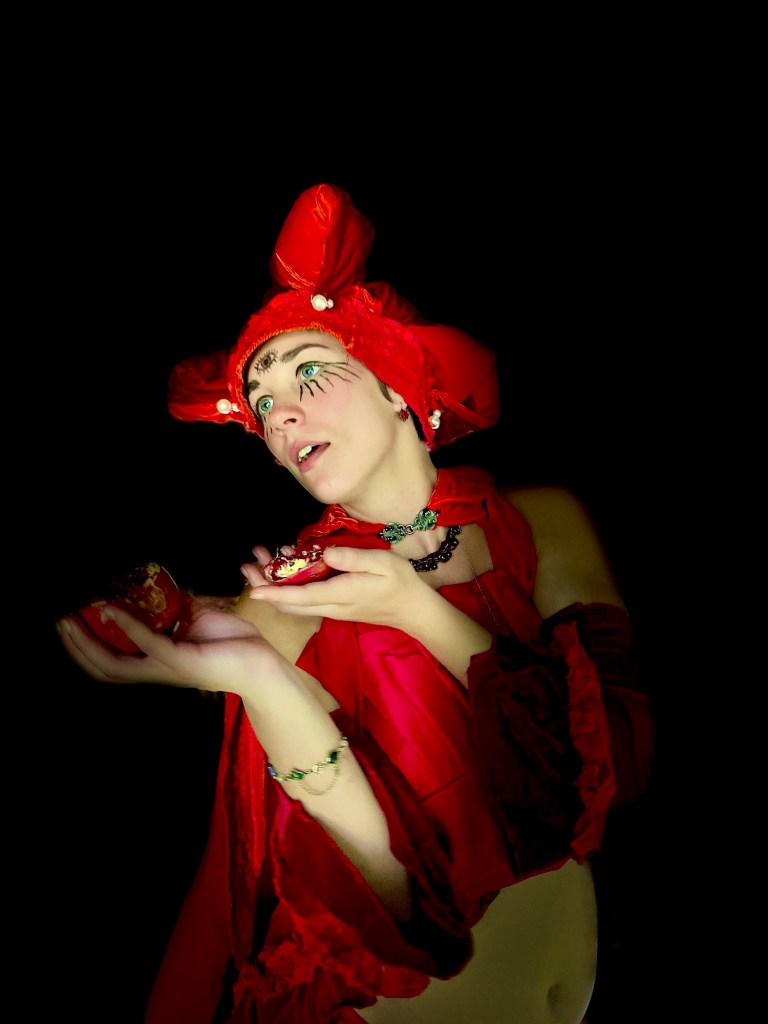
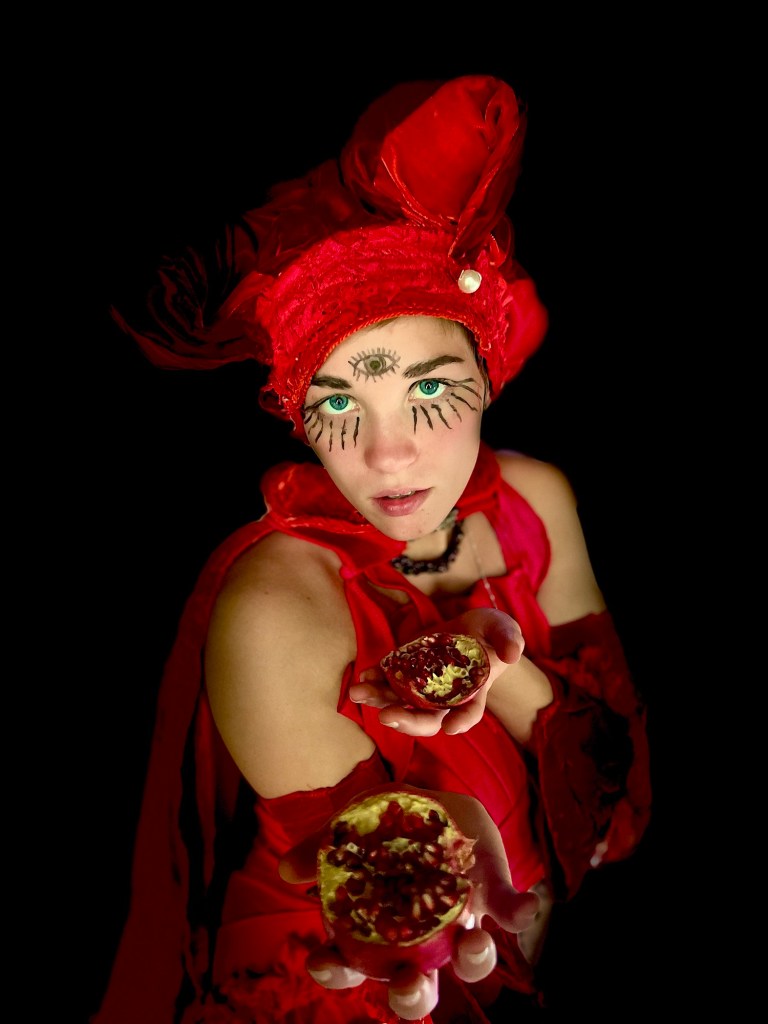
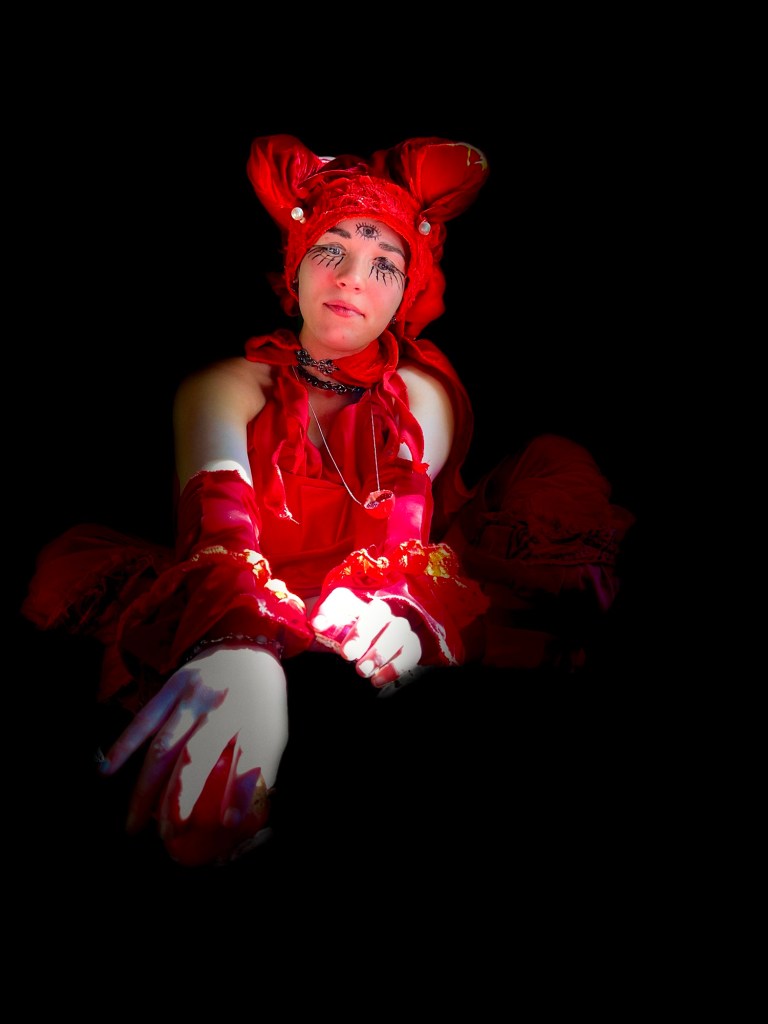
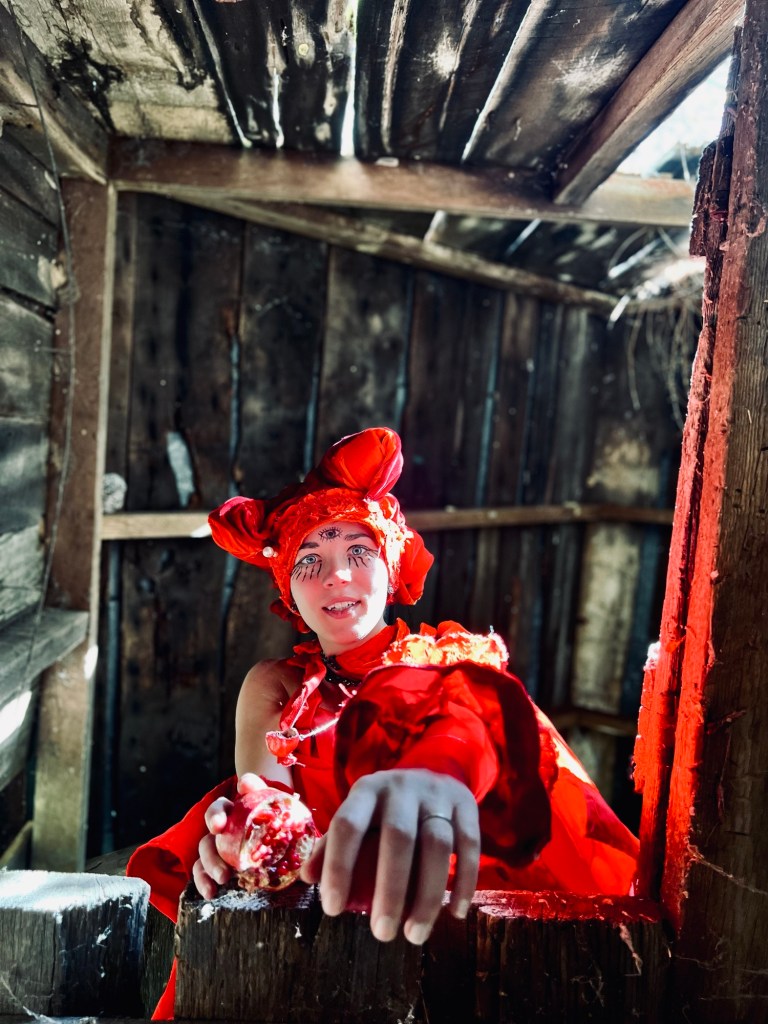
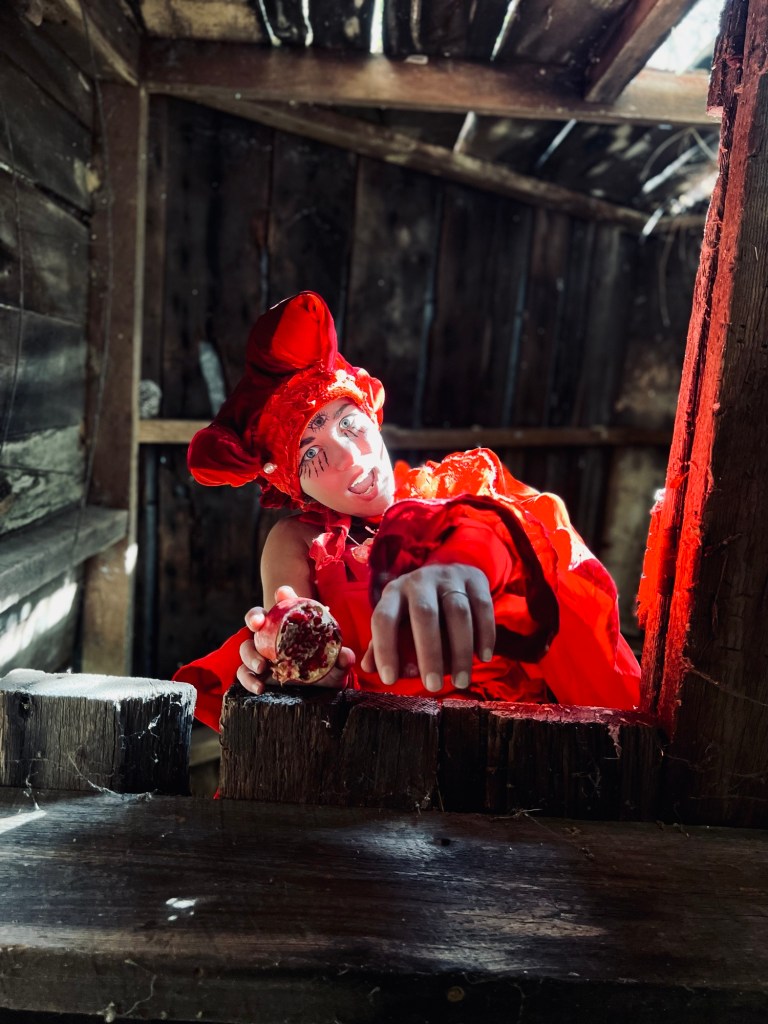
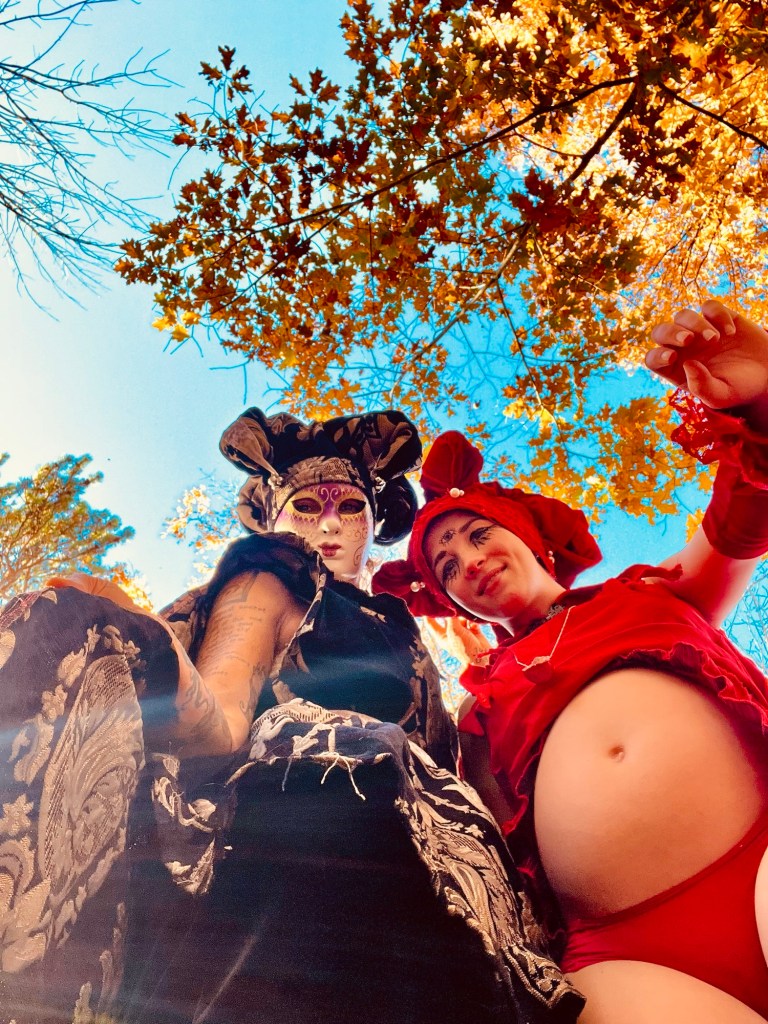
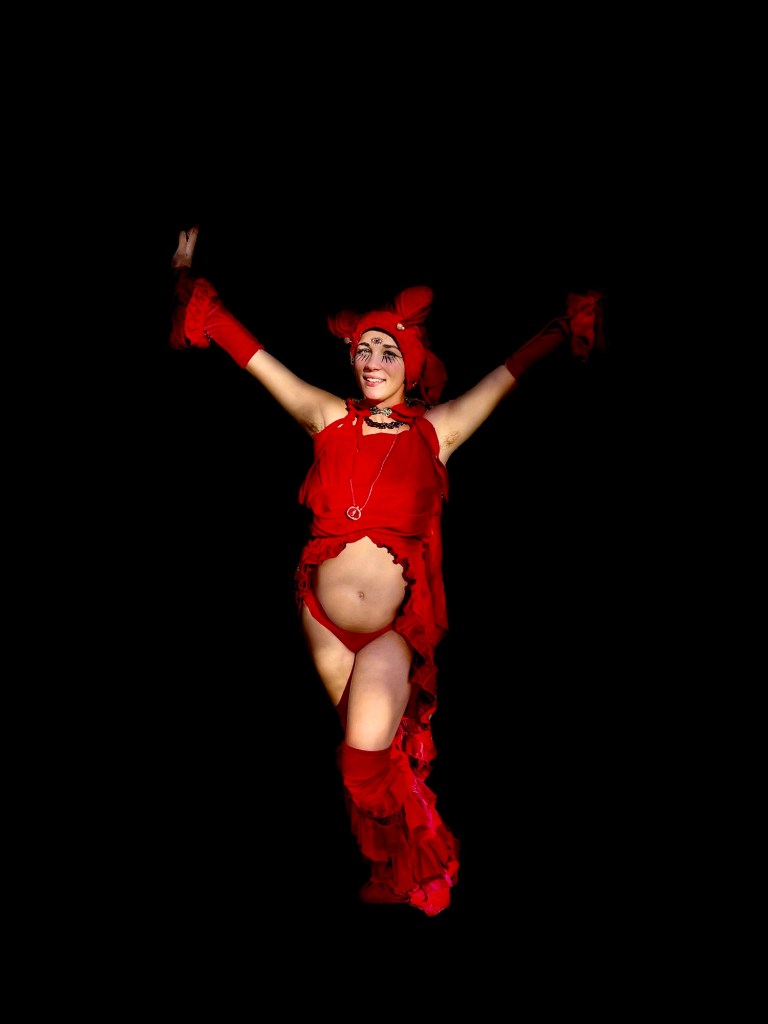
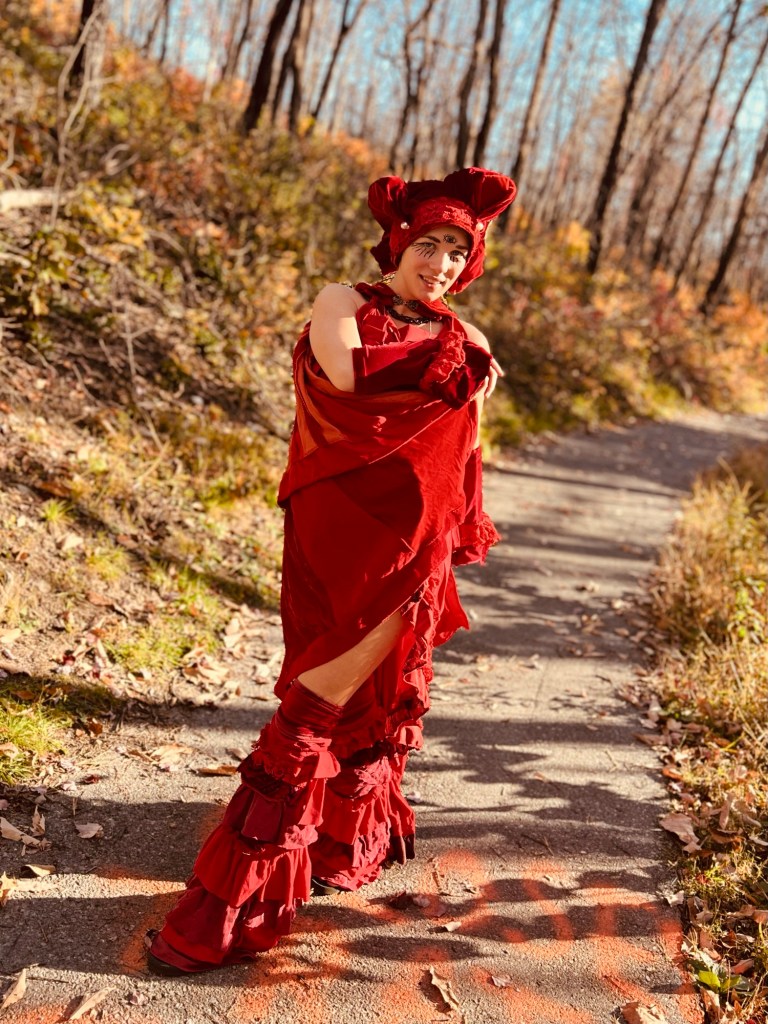
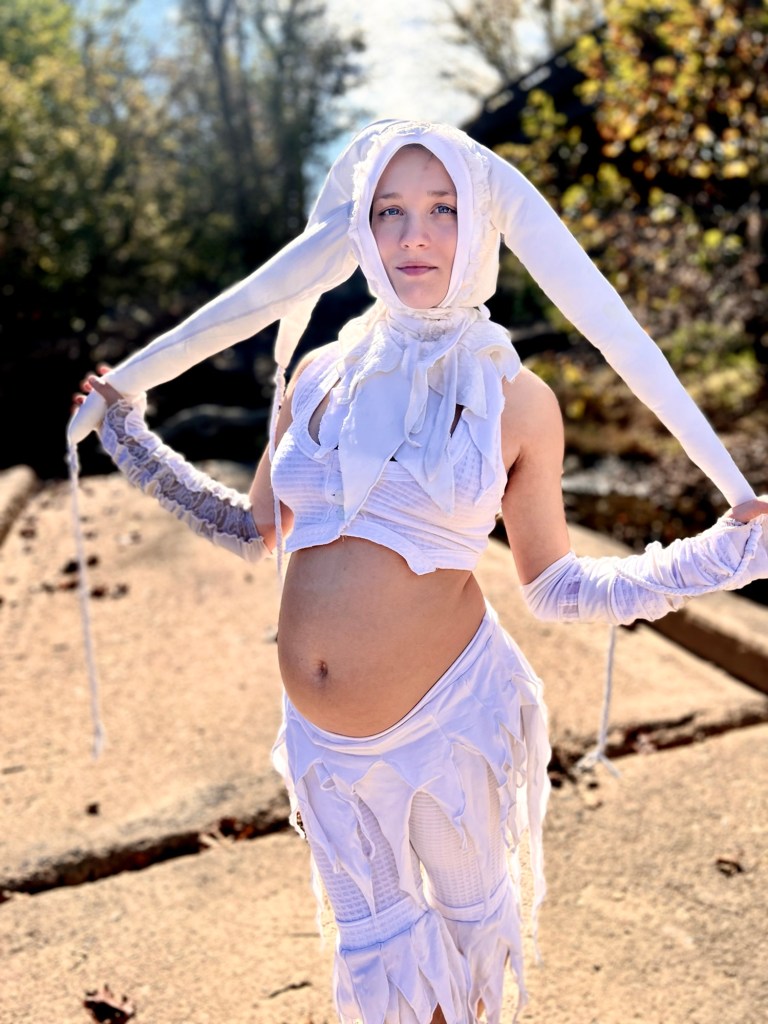
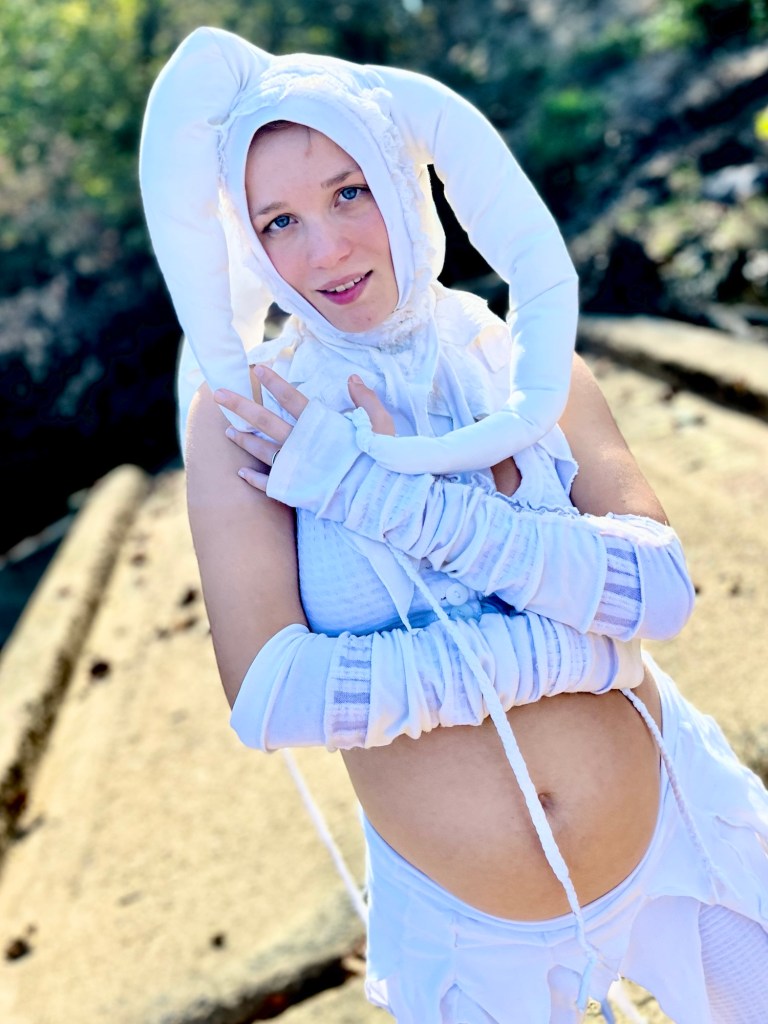
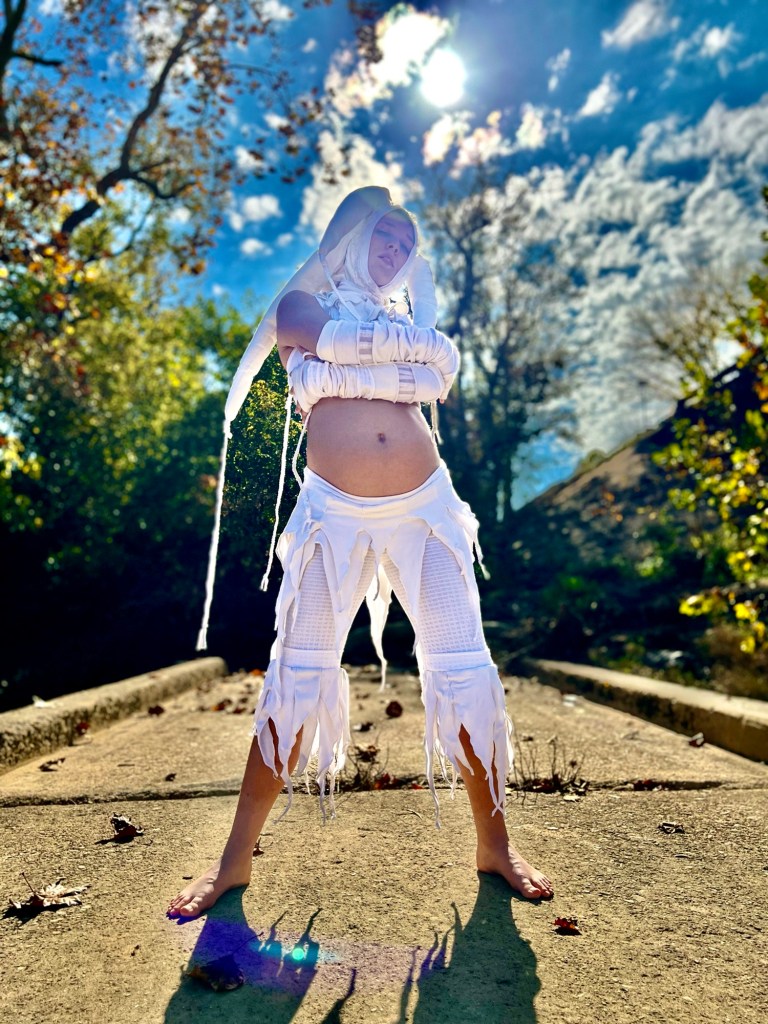
Reese Miller as the Kore , (or Jester Maiden) before being Taken by hades to the Underworld to become his Jester Queen
The Kore archetype, traditionally representing youthful innocence and potential in mythology and psychology, symbolizes much more than just the early stages of life. It is a powerful symbol of transformation, growth, and the cyclical nature of existence. The Kore, as a maiden figure often associated with goddesses like Persephone in Greek mythology, also carries deeper meanings about the illusions tied to youth, time, and identity. By examining the symbolism of the Kore, we can explore the larger themes of human experience—innocence, growth, and the journey from one phase of life to another. ~ Jenna LillaThe Kore is often depicted as a young maiden, symbolizing the freshness and purity of youth. This stage of life is marked by innocence, untested potential, and an open future. In mythology, the Kore is often paired with the figure of the mother, as seen in the myth of Demeter and Persephone. Kore, in this case, represents Persephone in her youthful form before her descent into the underworld, where she transforms into the queen of the dead. This dual role of the Kore—both innocent maiden and future queen—symbolizes the unfolding of life from youth to maturity. While the Kore is a symbol of growth and transformation, this very cycle also highlights the transitory nature of life. Youth, while often idealized as a time of beauty, vitality, and potential, is fleeting. The attachment to youth and the fear of aging reflect deeper psychological and spiritual challenges. Just as the Kore will eventually transform, we, too, are called to move beyond the illusions of youth and embrace the full journey of life. ~Jenna LillaThe Kore’s association with youth also raises questions about how we perceive time and change. The concept of youth, as something idealized or feared, is tied to the larger illusion of time itself. We often become attached to the idea of youth as a period of innocence and purity, but this attachment can lead to a sense of loss as we grow older. The fear of aging, or the desire to remain forever young, is an illusion created by the mind, which clings to temporary states of being. ~Jenna LillaIn reality, the essence of life is timeless and not bound by the cycles of youth and age. The Kore archetype reminds us that while we pass through different stages of life, these stages are just phases in a larger continuum. The true nature of our being—our consciousness or essence—remains unchanged, even as our bodies age and our experiences shift. The Kore, therefore, symbolizes the movement through these stages, but also serves as a reminder that beneath these changing forms, there is something timeless and unchanging.~Jenna LillaOne of the central themes of the Kore archetype is the journey from innocence to wisdom. In many myths, this journey involves a descent into the unknown, a confrontation with darker, more challenging forces. In the case of Persephone, her abduction by Hades and subsequent time spent in the underworld represent the loss of innocence and the gaining of wisdom. This is not just a story about personal growth but about the necessary transitions that all individuals must undergo to attain greater understanding. In this context, the Kore symbolizes the tension between innocence and experience, youth and maturity. While youth is often seen as a time of unblemished potential, true wisdom comes through the trials and challenges of life. However, both innocence and wisdom are part of the same journey. The duality between these states—between youth and age, innocence and wisdom—reflects the deeper truth that growth and transformation are part of the natural order of life. ~Jenna LillaThe Kore archetype also speaks to the cyclical nature of life, where birth, growth, decay, and renewal are intertwined. In many cultures, the Kore is connected to the cycles of the seasons, particularly in the myth of Persephone, whose descent and return from the underworld are linked to the changing of the seasons. Her time in the underworld represents winter and death, while her return to the surface symbolizes spring and rebirth. This cyclical pattern serves as a reminder that life is not linear but is made up of repeated cycles of growth and transformation. The Kore’s journey from maidenhood to queenhood, from innocence to wisdom, is not a one-time event but part of a continuous process of renewal. Just as nature moves through its seasons, so too do we pass through different phases of life, each phase offering its own lessons and opportunities for growth. ~Jenna LillaWhile the Kore represents the cycles of life, she also invites us to transcend the illusions of duality that often accompany these cycles. The distinction between youth and age, innocence and experience, can create a sense of separation, making us believe that these stages of life are opposites. However, the Kore archetype teaches that these are not separate states but are interconnected parts of a whole. ~Jenna LillaIn the myth of Persephone, her role as both Kore (the maiden) and queen of the underworld shows that youth and maturity are two sides of the same coin. The cycle of life encompasses both light and dark, innocence and wisdom. By embracing both aspects of ourselves—the youthful, innocent part and the mature, wise part—we can move beyond the illusions of duality and experience a more integrated, whole sense of self. ~Jenna LillaUltimately, the Kore archetype symbolizes the potential for growth, transformation, and renewal. She represents the beginning of a journey, but also the deeper truth that all stages of life are interconnected. The youthful innocence of the Kore is not something to cling to, but something to honor as part of the larger process of becoming. Her story is one of continuous transformation, reminding us that life is a series of cycles that lead us toward greater understanding and wisdom. ~Jenna LillaBy reflecting on the Kore, we are reminded that the passage of time, the movement from youth to age, is not something to fear but something to embrace. Each phase of life brings its own gifts, and by accepting the flow of time, we can experience life more fully. The Kore symbolizes the beauty of this unfolding journey, encouraging us to embrace both the innocence of youth and the wisdom that comes with experience. Jenna Lilla































 BlissNinja