I came thru the other side of that and learned that it’s not about Transcending but about Integrating. Spirit plays here for its own reasons, and is drawn to this Earth Flesh Playground because it wants to Feel Deeply and experience visceral Life. Being a very plutonic underworld person but aiming always for the spirit when I was in my 20s, it took a lot of delusional wake up experiences to Own all that I had believed myself to have transcended. All that stuff I thought I had evolved past, I had simply dissociated from, and the force of its wrath at being ignored and suppressed made its fury known in physical symptoms and deeply imbalanced emotional reality with a dash of incredibly Underworld-like navigations thrown in. The higher I thought I was flying in those years, the more pure i thought I was, came at a price and it was collected by the Dark Feminine in 2018. And since complete dissolution and and finally Truly making friends with the parts of the Self that I had trapped in deep subterranean caves and dungeons , with compassion, and awareness that it was a matter of freeing bit by bit, those fragments from all timelines trapped in my Prizm Cell.Ves. Instead of ‘Mind over Mattering’ my body and pushing it to extremes, instead of convincing myself I was pure and lofty and fully my idealized Spirit Self-the Puer( my online and business name even used to be Puella Eterna for 13 years)- i became engaged in the true Alchemical Work. I Realized how abusive I had been to Psyche and Body all those years ( and lifetimes) of denigrating the dark hungry fiery tempest of my soul, the Feminine, thinking I could Will Myself into the magical spheres of the heavenly abodes:.:::: I have always been easily carried away on the wings of spirit, can easily disembody into OBE states etc. What I came here to do, Now, was to actually Make This Body Fully Conscious , for it is the Marriage bed of Eros and Psyche, and the Alchemy of Life uses all vibrations to create.
When I made friends with the depth of my own Pain and Anger and Lust for Aliveness, Lust for Intensity of Being, and my own Arrogance etc ( Scorpio ascendent/Mercury conjunction, sun/Uranus Scorpio conjunction( all ruled by mars) and all in the 1st house( house of mars/Aries), with an Aries moon( mars ruled) and Mars aspecting strongly every planet in my chart = I was a complete Fool to imagine that I was a soft and ethereal spiritual angelic figure floating in the higher spheres…..:. I am a child of Mars, and Mars at its best is the Blood and Passion and Vitality to Exist and Move in this Realm, Mars is the defender and protecter of all that is sacred in creation, it is Raw, Brash, Authentic, Physically Vital, Mentally Agile, Temperamental….and Serves the Feminine……
When I truly came to Know Myself and stopped building castles in the sky, but used my archetypal Mercurial nature along with Mars to go to the Underworld and reclaim the very Selves I had locked up thru this Infinite Game over Time, I came Alive and learned what real Power is.
That’s my journey. I have compassion for that person I was and thought I was, but I have made my Vow, to Die in Battle, as a Sacred Warrior, and a Warrior must be in touch with his/her Fire and Anger and lust and Blood and sacrifice it on the alter of the Feminine Creation…..
( of interest is the relation of mars and Saturn… Mars/Blood is made in the Marrow of the bones/Saturn…… Mars is the Warrior who serves The Saturn Kingdom, which is the very energy that gives Form to the life principle:= in my chart, My mars is in Sagittarius/conjunct Neptune ( the spiritual warrior) in the second house( using the physical body/ it’s values and resources) And is Square( tension) (serving) Saturn in Libra which is also conjunct to almost a degree…… in the 11th house/ community and the larger stage of service to the people: It’s all written in Light Codes we wove ourselves into.
My heavy 12th house/ underworld where Pluto/hades sits exactly to the minute almost, with Venus, is my Lifelong lesson…..spiritualizing and completely transforming the Sexual and Aesthetic principles……using the raw lust and vitality of The black Goddess Black Carbon through Dionysus protean morphing Imaginal spheres under intense pressure to create the Diamond Body.:::: the twin Sisters of Carbon666 and Daimond ….. the Treasures hidden in this Earth and this Flesh and this Game of Matter Mater Mother Matrix Maat.
The Psyches realm is a dark realm that takes in everything….light and dark and everything in between. It likes the humus of earth, the compost, the shit of life, the messy smelly sweaty fleshy human realm of bodies bumping into bodies in sensate expression , playing with selves in Carnes Nation, the carnal nest of alchemy, where Soul is the Imaginal Playscape and Spirit must come Down To Earth to Play with Form.
I spent so much time out of body for the first 26 years of my life; I’m now happily Wed in the alchemical marriage bed knowing the Great Work goes on and on and on, and my relationship with Saturn has transformed my life into one of beauty: I used to balk at Saturn and his crusty old crystallization and constriction of my ever-so Icarus-like ideals……
But….
I am the Sacred Warrior who Serves the Divine…:.I serve the King and the Kingdom and Protect and Honor the Queen and her Queendom… because as the Mercurial Martian or the Martian Mercurius……..the Foolish Warrior or the Warrior Fool, my realm is not just the heavens but I travel between the Yooer and the Lower and The middle realms and so I just be able to hold the Tension of all Their Frequencies.
An honest person is one who knows his own capacity to Lie but chooses Truth…..a Strong person knows his own capacity for Violence but chooses Restraint….a Wise person is one who knows his own capacity for ignorance and knows he is a Fool…..a Peaceful person is one who knows his own Anger and so is not blindsided when least expecting it, and thus knows what it is to be Gentle.
May the black moist Fertile Soil keep your Roots nurtured as your branches reach for the Sky ⭐️🙌⭐️
Aho.
10-18-24
My friends post that my response is in reference to.
another way of saying what I expressed, is that as a Waving Being who Becomes Particular….in this journey of Embodiment through the entire Spectrum of Light and Frequency….. is that I am in the Prizm Cell of All my Lives in All Realities, in All Times and Spaces……expressing through this Body, Now, which is made up of All of Me~s, all the Cell.ves and Organ~I~zed Cohesions holographically …. In terms of Light… Infrared all The way thru UltraViolet….we also Embody as Sound and All variations of frequency.
Infrared penetrates all the way thru Earth and hence Body, ‘the smokeless fire’…..the realm of the Djinn….. that is where we have the Dark parts of ourCellves ….not Evil…..Darkness and of a different spectrum …..Ultraviolet more akin to our Angelic SidesOfSelf..,;;
When we seek the UV and demonize the Infrared, we get trapped in the Prizm of our own fragmentation…..we disown a huge amount of the deepest aspects of Being, whilst grasping for the Angelic Aspects: They have their Realms for a reason.:::::.
When I speak of going deep into the underworld, to mine the treasures of Pluto/Hades in the darkest layers of Self trapped and submerged and cast off in this infinite journey, I speak of going into the Infrared WaveForms of Self that are as much Me as the UV or higher vibration LightWaves that are of a very different nature, but equally Me.
Fire & Light
Is a poetic way of playing with it
In my lifetime of ‘out of Body’ experiences and traversing in the high frequency Light of detachment and lucidity, the permeations are very different than when I go deeply ‘in body experience’ which is raw and primal and Fiery and red heat of Feeling….
Our Bodies give us a Playground where we bring All Of these Refractions of Self into one Expression , as a Tether, if you will, to Come To Terms With Self Literally To Bring to Term Our Self Like a Mother carrying To term Her Baby
New creation.
The more we Integrate and ReClaim all the fractured frequencies that issue From our own Spark of Existence as a Being Who Is,
The more we Free those frequencies to Nourish all Of Bodies In all Of Times.
If the very Elementals/elements that make up my fleshly abode are brought into a cohesive net of Understanding and Loving Awareness, as they go on in their journey and become part of other bodies and abodes, they themselves are able to bring healing …
Like the Dwarves who live deep in earth and who are like elementals in a sense
And Elves who are like the perfected or angelic higher selves
And the HuMan, here in the Middle Earth,
Thigh we are all of them Depending on which Angle Of the Arc We Shine our I’s From
I am grateful and blessed and blissed beyond Measure to have come thru the Matrix of This Particular portal... This Womans Womb, the Waveform of Being entangled in Tidal Seeing rooted here in this Loom on the warp and weft of the pain and pleasure and the games and tricks as I play at Being mortal in Times intrepid Tomb.
It is not the first Dance but an endless Symphony of enfolded genes and hologenetic memory It is not a game of chance but an intentional theophany of unfolding schemes and peripatetic biocartography
I was given the invective Kun! Be! And compressed mySelf into a tiny LightSeed planted within a body that bleeds spirit enraptured and captured by the decree to waver between Doer and deed as the Verb of Me descended Down into Noun of Me embodied in Sound Heartbeat pulsing within Skin of Mothers Drum Echoes of rhythm and melody Willing Birth and spilling memory and MomentsOfMe into the fabric of spaceTime instantly
I crawled thru the walls of her Wonder following the Electro Magnetic storm of Lightening and Thunder that cleaves Egg and rends Asunder the Begging beginning Form of fertilized Feeling that clings to Mothers Walls Safe inside the Measured Space of MaMa Mater Matter Maat Matrice of Mind as Thoth Impregnates and BioLuminescent Grace awaits in Stasis the Amazing exit from the Gates of this Nexus that Enters Existence An.Noun.C.I.ng Me.
👁For the Eskimos, when one falls ill, one takes on a new name, a new diseased personality. To get over a disease, one must quite literally “get over” it by transcending it, that is, by dying. The only hope for cure lies in the death of the ill personality. Health requires death.
Perhaps this is what Socrates meant with his last obscure words about owing a sacrificial cock to Asklepiós. Once the cocky pride of life that crows hopefully at each day’s dawning is sacrificed, the instinct for tomorrow is yielded. Death then is the cure and the salvation and not just a last, worst stage of a disease. The cock crow at dawn also heralds resurrection of the light. But the victory over disease and the new day begins only when the ambition for it has been abandoned upon the altar. The disease which the experience of death cures is the rage to live. .
An analyst often finds himself purposely passing by the symptoms appearing in his practice. Rather than investigate these symptoms, he turns to the person’s life which has fostered the pathology. His premise is that the disease has its meaning in the life of the patient and he tries to understand this meaning. He cannot hold out the usual hope for cure or even relief of symptoms. His analytical experience says that the hope which the patient presents is part of the pathology itself. The patient’s hope arises as an essential part of the constellation of his suffering. It is frequently governed by impossible demands to be free of suffering itself. The same condition that constellated the symptoms is just the condition which these symptoms are interrupting and killing- or curing. Therefore, an analyst does not hope for a return to that condition out of which the symptoms and the hope for relief arose. Because hope has this core of illusion it favors repression. By hoping for the status quo ante, we repress the present state of weakness and suffering and all it can bring. Postures of strength are responsible for many major complaints today–ulcers, vascular and coronary conditions, high blood pressure, stress syndrome, alcoholism, highway and sport accidents, mental breakdown. The will to fall ill, like the suicide impulse, leads patient and physician face to face with morbidity, which stubbornly returns in spite of all hope to the contrary. One might ask if medical hope itself is not partly responsible for recurrent illness; since it never fully allows for weakness and suffering the death experience is not able to produce its meaning. Experiences are cheated of their thorough effect by speedy recovery. Until the soul has got what it wants, it must fall ill again. And another iatrogenic vicious circle of recurrent illness begins. 👁 (James Hillman ,Suicide and the Soul)
As an analysis proceeds, it moves inward from the case history toward the soul history, that is, it explores complexes more for their archetypal meanings and less for their traumatic history. Soul history is recaptured by separating it from obfuscations in case history. The immediate family, for instance, become the real people they are, undistorted by inner meanings which they had been forced to carry. The rediscovery of soul history shows itself in the reawakening of emotion, fantasy, and dream, in a sense of mythological destiny penetrated by the transpersonal, and by spontaneous acausal time. It reflects the “cure” from a chronic identification of the soul with outer events, places, and people. As this separation occurs, one is no longer a case but a person.
James HillmanSoul history emerges as one sheds case history, or, in other words, as one dies to the world as an arena of projection. Soul history is a living obituary, recording life from the point of view of death, giving the uniqueness of a person sub specie acternitatis. As one builds one’s death, so one writes one’s own obituary in one’s soul history.
Salt is the mineral substance or objective ground of personal experience making experience possible. No salt, no experiencing- merely a running on and running through of events without psychic body. Thus salt makes events sensed and felt, giving us each a sense of the personal–my tears, my sweat and blood, my taste and value.
The entire alchemical opus hangs on the ability to experience subjectively. Hence it is said in The Golden Tract: “He who works without salt will never raise dead bodies.” The matters are only macrocosmic and chemical, out there, dead unless one works with salt. These intensely personal experiences which give taste and flavor to events are nonetheless common to all-both mine and yet common as blood, as urine, as salt. In other words, salt acts like the ground of subjectivity (“That which is left at the bottom of our distilling vessel is our salt-that is to say our earth.”). It makes possible what psychology calls felt experience. So, we must turn to this same ground to mine our salt.
James Hillman, Salt
(Continued in the Captions for each photo)
Felt experience takes on a radically altered meaning in the light of alchemical salt. We may imagine our deep hurts not merely as wounds to be healed but as salt mines from which we gain a precious essence and without which the soul cannot live. The fact that we return to these deep hurts, in remorse and regret, in repentance and revenge, indicates a psychic need beyond a mere mechanical repetition compulsion. Instead, the soul has a drive to remember; it is like an animal that returns to its salt licks; the soul licks at its own wounds to derive sustenance therefrom. We make salt in our suffering and, by working through our sufferings, we gain salt, healing the soul of its salt-deficiency.Salt requires a pinch, feeling the pinch of the event that stings; lead seems to require time, waiting it through. What results from the salt cure is a new sense of what happened, a new appreciation of its virtue for soul. Salt may also be mined from whatever is stable. As the principle of stability whose alchemical sign was a square, salt can be mined from the rocks of concrete experience, those fixities which mark our lives with defined positions. These places are not merely solid facts-my degree, my property, my car accident, my war record, my divorce; these are also places where psychic body is salted away and stored. These rocks, when recognized and owned, belong to the history of my soul, where it has been salted down by the fixities of experience, giving a certain crystallization to my nature and keeping me from inflammations and volatilizations.Though we do not make it by fire, we do make salt by means of dissolutions. Salt is soluble. Weeping, bleeding, sweating, urinating bring salt out of its interior underground mines. It appears in our moistures, which are the flow of salt to the surface. “During the work the salt assumes the appearance of blood” (CW’ 14, 8337). Moments of dissolution are not mere collapses; they release a sense of personal human value from the encrustations of habit. “I too am a human being worth my salt”-hence my blood, sweat, and tears.Viewed from the perspective of salt, early traumas are moments of initiation into the sense of being a me with a subjective personal interior. We tend to fixate on what was done to us and who did it: resentment, revenge. But what psychologically matters is that it was done: the blow, the blood, the betrayal. Like the ashes which are rubbed into the wounds at initiation rites to purify and scarify, the soul is marked by its trauma. Salt still is touched to the body in Christian Baptism, and eaten still at Jewish Pessach in ritual remembrance of trauma. A trauma is a salt mine; it is a fixed place for reflection about the nature and value of my personal being, where memory originates and personal history begins. These traumatic events initiate in the soul a sense of its embodiment as a Vulnerable experiencing subject.The paradigmatic story of “looking back” is that of Lot’s wife. (Lot and Lot’s wife were even used as alchemical terms for salt- Jobnson’s Dictionary.) Because Lot’s wife could not refrain from looking back at the destruction of Sodom from which they had been saved, she was turned to a pillar of salt. Jewish commentators on the tale say that her mother-love made her look behind to see whether her married daughters were following; and Christian comments on Luke 17:32 also see the source of her move in remembrances of family and relatives, personal subjectivities of feeling. Evidently, family fixations are also salt mines. The disappointments, worries, smarts of mother-complex love–the evening with the photograph album, the keepsakes- are ways the psyche produces salt, returning to events in order to turn them into experiences.The danger here is always fixation, whether in recollection, childhood trauma, or in a literalized and personalized notion of experience itself: “I am what I have experienced.” Paracelsus defined salt as the principle of fixation (Il:366).
Anthropologists describe a condition among "primitive" peoples called "loss of soul." In this condition a man is out of himself, unable to find either the outer connection between humans or the inner connection to himself. He is unable to take part in his society, its rituals, and traditions. They are dead to him, he to them. His connection to family, totem, nature, is gone. Until he regains his soul he Is not a true human. He is “not there." It is as if he had never been initiated, been given a name, come into real being. His soul may not only be lost; it may also be possessed, bewitched, ill, transposed into an object, animal, place, or another person. Without this soul, he has lost the sense of belonging and the sense of being in communion with the powers and the gods. They no longer reach him; he cannot pray, nor sacrifice, nor dance. His personal myth and his connection to the larger myth of his people, as raison d'être, is lost. Yet he is not sick with disease, nor is he out of his mind. He has simply lost his soul. He may even die. We become lonely. Other relevant parallels with ourselves today need not be spelled out.
One day in Burghölzli, the famous institute in Zurich where the words schizophrenia and complex were born, I watched a woman being interviewed. She sat in a wheelchair because she was elderlyand feeble. She said that she was dead for she had lost her heart. The psychiatrist asked her to place her hand over her breast to feel her heart beating: it must still be there if she could feel its beat. "That," she said, "is not my real heart." She and the psychiatrist looked at each other. There was nothing more to say. Like the primitive who has lost his soul, she had lost the loving courageous connection to life--and that is the real heart, not the ticker which can as well pulsate isolated in a glass bottle. This is a different view of reality from the usual one. It is so radically different that it forms part of the syndrome of insanity. But one can have as much understanding for the woman in her psychotic depersonalization as for the view of reality of the man attempting to convince her that her heart was indeed still there. Despite the elaborate and moneyed systems of medical research and the advertisements of the health and recreation industries to prove that the real is the physical and that loss of heart and loss of soul are only in the mind, I believe the "primitive" and the woman in the hospital: we can and do lose our souls. I believe with Jung that each of us is “modern man in search of a soul."
Because symptoms lead to soul, the cure of symptoms may also cure away soul, get rid of just what is beginning to show, at first tortured and crying for help, comfort, and love, but which is the soul in the neurosis trying to make itself heard, trying to impress the stupid and stubborn mind--that impotent mule which insists on going its unchanging obstinate way. The right reaction to a symptom may as well be a welcoming rather than laments and demands for remedies, for the symptom is the first herald of an awakening psyche which will not tolerate any more abuse. Through the symptom the psyche demands attention. Attention means attending to, tending, a certain tender care of, as well as waiting, pausing, listen ing. It takes a span of time and a tension of patience. Precisely what each symptom needs is time and tender care and attention. Just this same attitude is what the soul needs in order to be felt and heard.
So it is often little wonder that it takes a breakdown, an actual illness, for someone to report the most extraordinary experiences of, for instance, a new sense of time, of patience and waiting, and in the language of religious experience, of coming to the center, coming to oneself, letting go and coming home. The alchemists had an excellent image for the transformation of suffering and symptom into a value of the soul. A goal of the alchemical process was the pearl of great price. The pearl starts off as a bit of grit, a neurotic symptom or complaint, a bothersome irritant in one's secret inside flesh, which no defensive shell can protect oneself from. This is coated over, worked at day in day out, until the grit one day is a pearl; yet it still must be fished up from the depths and pried loose. Then when the grit is redeemed, it is worn. It must be worn on the warm skin to keep its luster: the redeemed complex which once caused suffering is exposed to public view as a virtue. The esoteric treasure gained through occult work becomes an exoteric splendor. To get rid of the symptom means to get rid of the chance to gain what may one day be of greatest value, even if at first an unbearable irritant, lowly, and disguised.
“⭐️This book changed the way I look at dreams, or maybe the book taught me what my heart always wanted me to understand. Hillman looks at the dream as happening in the “Underworld” – a place of death – and wants us to enter into that world to understand the dream instead of trying to drag the dream up into the day-world by interpreting it.
Some quotes from the book:
“Freud’s method projects the persons in a dream back over the bridge into the dream-day, even if for the sake of their latent meaning. We associate my dream-brother and dream-father to my day-brother and day-father and, by this association, return the dream to the day. Jung’s method of interpretation on the subjective level takes the dream persons into the subject of the dreamer. They become expressions of my psychic traits. They are introjected into my personality. In neither method do we ever truly leave the personal aspect of the dream persons, and thus they remain in the upperworld. Dare I say it loud and clear? The persons I engage with in dreams are neither representations of their living selves nor parts of myself. They are shadow images that fill archetypal roles; they are personae, masks, in the hollow of which is numen.”
“Public performance on a stage, perhaps because it puts us into the underworld of theatre, also constellates the curious interplay between life-soul and image-soul. The almost depersonalization experience of stage fright makes one feel deserted by one’s soul. All that one memorized and trained for has suddenly vanished. It is as if another soul must play the role, and this moment of going on stage is like a rite de passage, a transition into death.”
“For a dream image to work in life it must, like a mystery, be experienced as fully real. Interpretation arises when we have lost touch with the images, when their reality is derivative, so that this reality must be recovered through conceptual translation. Then we try to replace its intelligence with ours instead of speaking to its intelligence with ours.”
Hillman notes that when we see a killer in a dream, we tend to fear him. But Hillman looks at this figure as a helper who is trying to initiate us into the Underworld land-of-the-dead; the dream world: “There is a divine death figure in the killer, either Hades, or Thanatos, or Kronos-Saturn, or Dis Pater, or Hermes, a death demon who would separate consciousness from it life attachments.
Hillman, in one section of the book describes the circus as a metaphor of the Underworld: “Where else but the circus will we ever see the underworld in daylight: the tent of enclosed space, the rings, everyone as close to death as his or her art will allow, the freaks of nature that are beyond nature, and above all, the precise performances of repetitive nonsense, as if Ixion, Tantalus, and Sisyphus had once worked for Ringling Brothers.”
“The comic spirit masquerades in all things we do and say; we are each a joke and do not need to put on a white face. The matter is not one of becoming a clown but of learning what he teaches: making an art of our senseless repetitions, our collapsing and our pathologizings, putting on the face of death that allows the dream world in and watching it turn ordinary objects into amazing images, our public persons into butts of laughter.”
“Unfortunately psychology emphasizes attention and recall; the dayworld wishes to have, must absolutely have, a ‘good memory’; a bad memory is more devastating to success than is a bad conscience. Forgetting therefore becomes a pathological sign. But depth psychology based on an archetypal perspective might understand forgetting as serving a deeper purpose, seeing in these holes and slips in the dayworld the means by which events are transformed out of personal life, voiding it, emptying it. Somehow we must come to better terms with Lethe, since she rules many years, especially the last years, and we would be foolish to dismiss her work only as pathological. The romantics took Lethe most seriously.”⭐️
James Kulm, in reference to the book ‘The Dream and the Underworld’ by James Hillman
{self portrait series Kennedy Peak 8-6-24 part 4 ::::The SilverScreen of the Underworld Dream }
~all photo captions contain quotes/excerpts from the book by Hillman
UNDERGROUND AND UNDERWORLD When using the word underworld, it is imperative to keep in mind a distinction made by some classicists. This distinction is of great psychological importance, because it frees the psychic realm from nature. Chthon and ge (“underworld” and “underground”) do not necessarily refer to the same region or evoke identical feelings. “Chthon with its derivatives refers in origin to the cold, dead depths and has nothing to do with fertility. “This kind of deep ground is not the same as the dark earth; and the Great Lady (potnia chthon), who sends black-winged dreams and who can also be called Erinys, cannot simply be merged into the single figure of the Great Earth Mother.Psychology’s great-mother complex has swallowed even her own differentiations. Small wonder that this complex is also called “uroboric consciousness,” for even she herself vanishes into an interpretive monotony that makes me believe that the monotheistic psychology I so often belabor is less a mimesis of ancient Hebrewism (within and alongside of which there was much space for imaginal variety) than it is a mimesis of the Great Mother. Monism as Momism. Be this as it may, when we read analytical psychology today to discover about the ‘chthonic,’ we find it has taken on her meaning of primitive earthiness. Morever, as primitive and earthy, it must mean matriarchal and feminine. Thus our instinctual body, whether in flesh or image, in men or women, in the past or now, belongs to her, and we must become murderous heroes to get it back. The great-mother complex hangs the trinket of female gender on agriculture and fertility, as well as on the earth, body, instinct, and on depth. This move ignores that chthonic is an epithet belonging in the sense of “Is ignorant about,” a chthon that cannot be identified with instinctual body or earthy soil.Let us be clear: the chthonic is not only female, not only instinctual, not only physical, and it does not have to do with fertility rites. As Wilamowitz-Moellendorf said, Ïf modern scholars, who talk so much about chthonian cults, think in this connection of agriculture and all that goes along with Demeter in that sphere, they have not accustomed their ear to the overtones of Greek words.” The two words ge and chthon imply two worlds, the first of the earth and in it, the second below the earth and beyond it.There are even three distinctions here which have been imagined as levels of earth: an earthed imagination in keeping with Ge herself, whose name we still find in ge-ography, ge-ology, and ge-ometry. The first of these distinctions is between Demeter’s horizontal green plain with its activities of growth and Ge, the earth below Demeter. This second level Ge, may be imagined as the physical and psychic ground of an individual or community, its ‘place on earth,’ with its natural rights, rituals, and laws (Ge-Themis). Here, Ge serves as a fundament on which human life depends even more deeply than on food and fertility, like a governing maternal principle that makes material fertility possible and is its spiritual ground, and then beneath these the third, chthon, the depths, the dead’s world.Of course, a polytheistic mind does not firmly divide these “levels,” and so Demeter-Ge-chthon frequently merge in epithet and cult. (What scholars imagine about the Greeks does not correspond, nor must it, with what the Greeks imagine about the Gods.) Also against my distinctions is the fact that one can as well view the entire complex of the underworld that one can as well view the entire complex of the underworld from the perspective of Ge, as does Patricia Berry. She then is able to see much of the chthonic spirit that I meet in Hades to be equally present in Ge, and that Gaia (Ge) is both material, maternal earth, and chthonic void with its own spirit.The question here partly turns on how one regards earth. The strata of meanings which I have just laid out in terms of Demeter-Ge-chthon imagines a nonphysical earth or terre pur, below or beyond and maybe prior to the ground that we touch. Some etymologists and classicists try to relate the three “levels” culturally, believing one level of meaning to be prior in the sense of historically earlier than another; as if in a genealogy fantasy themselves, they try to derive one level from another, tracing the historical development of these three concepts. For example, Kirk refers to the very early pre-Socratic Pherecydes of Syros (frg. 1), who placed Chthon at the beginning with Zeus and Chronos, “but Chthonie acquired the name Ge…”Rather than enter the arguments of historical fantasy, I would keep to the psychological distinctions reflected in the three words and three personifications. Ge herself shows two aspects. On the one hand, she has to do with retributive justice, with the Fates, and she has also mantic, oracular powers. (Ge chthonia was worshipped on Mykonos, together with Zeus Chthonios and Dionysos Leneus, as she was linked with the chthonic Pluto and Hermes and the Erinyes at Athens [Areopagus].) This is the “great lady” who sends the black-winged dreams and is appropriately the mother of Themis (“Justice”). This spiritual side of her can be distinguished, on the other hand, from the physical Ge to whom grains and fruits were given (Ge-Demeter). Demeter too has a mystery aspect; her daughter Persephone belongs to Hades and has an underworld function. The spiritual significance may not be reduced to the physical (death cult to fertility rites, sense of justice to agricultural rituals) without ignoring the blatant fact that there are different figures with different epithets. In other words, even the earth and nature have their psychic function as well as their terrestrial ones, and one may serve the earth and be on the ground in more ways than one, i.e., through psychic activities, and not only through natural ones.“Is it the transition to light that gives the dream its shadowy quality? We all know how much of an art it is, not to dream, but to recall it.”The distinction between chthonicand earthy, between invisible fundaments and tangible ground, between darkness of soul and blackness of soil, between three Egyptian hieroglyphs, one for earth, another for Aker or entrance to the underground at the edge of existence, and yet another for the realm of the dead of Anubis, the blue-black jackal-dog.Once again, the distinctions are presented in terms of distance. The most radical classicist of the late nineteenth century, Erwin Rohde friend of Nietzsche, said in his great work Psyche that the underworld of Hades and Persephone is so remote from our world that those removed there “can have no influence upon the life and doings of men on earth.”He further emphasized the distinction between the underground of Ge and the chthonic underworld by saying that Ge ïn actual worship was seldom found among the groups of male and female deities of a chthonic nature such as were worshipped together at many places.”The spiritual quality of the underworld stands forth most clearly in descriptions of Tartaros, which, from Hesiod onward, was imagined to be at the very bottom of Hades, its farthest chasm. Tartaros was compared with the sky – as distant from the earth as the heaven above, and it was personified as the son of ether and of earth, that is, a realm of dust, a composite of the most material and immaterial. As the fantasy of Tartaros developed, it became more and more a pneumatic region of air and wind. Unlike the Christian hell of fire, in the imagination of late antiquity Tartaros was a region of dense cold air without light. Hence, Hades often was spoken of as having wings, just as in the Gilgamesh Epic, Enkidu dreams of his death as a transformation into a bird, his arms covered with feathers. The dead are clad like birds, their element evidently air.The volatilization of the underworld contrasts it sharply with the ground under our feet. In the Alexandrian age, the netherworld lost its localization in the earth altogether – that is, it became free of natural literalism – and was geographically transposed to the underside of the world. There was now a lower hemisphere. The word subterranean (hypogeios, or “below ge”) referred to the whole celestial hemisphere curved below our earth and which, like Hades, must necessarily be invisible from our perspective. It cannot be seen from our usual standpoint. Already then the dayworld and the nightworld, the two sides of the romantic soul, were conceived in a geographical theology of the upperworld and netherworld.In “this theology the world is divided into two halves by the line of the horizon; upper hemisphere is the domain of the living and the higher gods, the lower that of the dead and the infernal gods. “The Egyptians had carried into extreme detail this reversed world below our feet. The dead walked upside down, feet up, heads down. “People there walk with their feet against the ceiling. This has the unpleasant consequence that digestion goes in the reverse direction, so that excrements arrive in the mouth.” The Underworld is converse to the dayworld, and so its behavior will be obverse, perverse. What is merely shit from the daytime perspective – or what Freud called day-residues – becomes soul food when turned upside down. The way we go about there, the way we ruminate, even logic is stood on its head, for there our heads are in another place. (In Chapter 6 we shall look at some contemporary examples of this “upsidedownness,” including excrements in dreams.)Might there be an archetypal figure within Freud’s “day residues” that are the material of the dream? Could these leftover scraps refer to the household garbage that was sacrifice to Hekate (Cults2:515)? Hekate has long been implicated in dream interpretations. Both the magical view that considers dreams to be foretellings and the nineteenth-century mechanistic view that attributes them to waste products of physiological sensations (garbage) show Hekate’s influence when she becomes equated with Nyx (night), as in Spenser and at times in Shakespeare, then dreams become her province and our interpretative ideas reflect her perspectives.We may continue this tradition, although in a different manner. Yes, the dream is made of scraps that belong to the Goddess who makes sacred the waste of life, so that it all counts, it all matters. Offering the dream to “the mysteries of Hekate and the night” (King Lear, act 1, scene 1) means giving back the regurgitations that “come up” in dreams without attempts to save them morally or to find their dayworld use. The junk of the soul is primordially saved by Hekate’s blessing, and even our trashing ourselves can be led back to her. The messy life is a way of entering her domain and becoming a “child of Hekate.”Our part is only to recognize that there is a myth in the mess so as to dispose of the day residues at the proper place, that is, to place them at Hekate’s altar. Ritually, the garbage was placed at night at a crossroads so that each dream may lead off in at least three directions besides the one we have come from. Hekate, who has traditionally been represented with three heads, keeps us looking and listening in many ways at once.Because the underworld differs so radically from the underground, that which has its home there, dreams, must refer to psychic or pneumatic world of ghosts, spirits, ancestors, souls, daimones. These are invisible by nature, and not merely invisible because they have been forgotten or repressed. This world is fluid, or dusty, fiery, muddy, or aetherial, so there is nothing firm to hold to – unless we develop intuitive instruments for seizing impalpables that slip through our fingers or burn at the touch.By locating the dream among these impalpable fundamentals in Hades, we will begin to find that dreams reflect an underworld of essences rather than an underground of root and seed. They present images of being rather than of becoming. We will learn that a dream is less a comment on life and an indication as to where it is growing, than it is a statement from the chthonic depths, the cold, dense, unchanging state – what we so often today call psychopathic because, as Freud saw, the dream does not show morality, human feelings, or the sense of time. We can no longer turn to the dream in hopes of progress, transformation, and rebirth.I think too that the underworld teaches us to abandon our hopes for achieving unification of personality by means of the dream. The underworld spirits are plural. So much is this the case that the di manes (underworld spirits), who were the Roman equivalent of the Greek theoi chthonioi, have no native singular form. Even individual dead persons were spoken of plurally, as di manes. “The ancient Egyptian was thought to live after death in a multiplicity of forms, each of these forms was the full man himself”(Ba, p. 113). The underworld is an innumerable community of figures. The endless variety of figures reflects the endlessness of the soul, and dreams restore to consciousness this sense of multiplicity. The polytheistic perspective is grounded in the chthonic depths of the soul. A psychotherapeutic emphasis will be upon the disintegrative effects of the dream, which also confronts us with our moral dis-integrity, our psychopathic lack of a central hold on ourselves. Dreams show us to be plural and that each of the forms that figure there are “the full man himself,” full potentials of behavior. Only by falling apart (RP, pp. 53-112) into the multiple figures do we extend consciousness to embrace and contain its psychopathic potentials.We get into difficulties when we try to read the deep chthonic level from the viewpoints of Demeter or of Ge. To perceive the chthonic with Demeter’s eyes is to take the dream as signal for literal action and to translate it with naturalistic ethics into a moralized world. To take a dream as containing an immoral implication or a moral indication for setting matters right and redressing a balance is to read it from the Ge-Themis-Dike perspective. Perhaps we need the intervention of another lady of the underworld, Hekate, who was especially adept with ghosts, who both brought and banned fear, and who had nothing to do with the round of human life (marriage, birth, agriculture), herself without brother or sister or any descendants. “Her worship was without morality.” Hekate’s underworld perspective reaches to the chthonic depth of the dream, which, on the one hand, is a simple statement of essence – how spectral things look when stripped of their human context – and, on the other, elicits our psychopathy. The region of the soul in which dreams have their home is deeper than flesh-and-blood urges, which we have been, mistakenly, calling chthonic, as if it were the same as natural, as if the underworld referred to ira and cupiditas, the blood-soul, the thymos. This all is earthy; the natural, physical, somatic soul of emotions. Our modern word unconscious has become a catch-all, collecting into one clouded reservoir all fantasies of the deep, the lower, the baser, the heavier (depressed), and the darker. We have buried in the same monolithic tomb called The Unconscious the red and earthy body of the primeval Adam, the collective common man and woman, and the shades, phantoms, and ancestors. We cannot distinguish a compulsion from a call, an instinct for an image, a desirous demand from a movement of imagination. Looking into the night from the while light of the dayworld (where the term unconscious was fashioned), we cannot tell the red from the black. So, we read dreams for all sorts of messages at once – somatic, personal, psychic, mantic, ancestral, practical, confusing instinctual and emotional life with the realm of death. The pronounced distinction between emotion and soul, between emotional man and psychological man, comes out in another of Heraclitus’ fragments (85): “. . . whatever it [thymos] wishes it buys at the price of soul.” Thymos, the earlier Greek experience of emotional consciousness or moist soul, did not belong in the underworld. So, to consider the dream as an emotional wish costs soul; to mistake the chthonic as the natural loses psyche. We cannot claim to be psychological when we read dream image in terms of drives or desires. Whatever counsel an analyst gives about emotional life, supposing it drawn from dreams, refers to his experience, which he reflects from the dreams. It is not in the dreams. He is “sup-posing” about them, that is, he is “putting onto” them what he knows about life. What one knows about life may not be relevant for what is below life. What one knows and has done in life may be as irrelevant to the underworld as clothes that adjust us to life and the flesh and bones that the clothes cover. For in the underworld all is stripped away, and life is upside down. We are further than the expectations based on life experience, and the wisdom derived from it. Again, we can follow Heraclitus (frg. 27): “When men die there awaits what they neither expect nor even imagine.” The word translated here as “expect” is related in Greek to “hope” (elpis), so that the specific hope that is abandoned (Dante, Inferno 3) on entering the underworld perspective is the fantasy of daylife expectations and flesh-and-blood illusions. Souls in Hades are “incurable” said Plato. There is no alteration to be hoped for. Such hope would be hope for the wrong thing. We need more the hope of St. Paul, which is a hope of invisibles and for invisibles, than the hope of Pandora, who, as the wife of Prometheus, contains a hidden hope, which he makes evident in his mission to help mankind. To go deep into a dream requires abandoning hope, the hope that rises in the morning and would turn the dream to its purposes. At the Hades level of the dream there is neither hope nor despair. They cancel each other out; and we can move beyond the language of expectations, measuring progressions and regressions, ego strengthening and weakening, coping and failing.Let me once more try to draw this distinction between the underground of vital, emotional life and the underworld Heraclitus said (frg. 15): It it were not in honour of Dionysus that they conducted the procession and sang the hymn to the male organ, their activity would be completely shameless. Hades and Dionysus are the same, no matter how much they go mad and rave celebrating bacchic rites in honour of the latter. The passage has given scholars – those who accept this phrasing at all – so much trouble partly because it juxtaposes, even identifies, the very different realms we are keeping distinct: psychic essences and emotional nature.This fragment refers to the mystery of a sacred procession and it must be read with a similar reverence, even as a revelation of something profound in acts that seem shamelessly pornographic, raving, and mad. It is therefore not enough to pass it off with a moral generality, as some interpreters do, that Heraclitus means that even the wildest life forces also lead to death, or let it go by, as other interprets do, as another of his metaphysical generalities about the sameness of life and death (frgs. 62, 88). We are still left with the vivid imagery of this mystery in the sexual language that is so fundamental to psychology. So, Heraclitus, as one psychologist to another, across the centuries I read you to be saying that for this troublesome distinction between emotion and soul, between the perspective of vitality (Dionysos) and the perspective of psyche (Hades), sexual fantasy holds a secret. In what seems most evident, public, and concrete, there is also something covered in shame, hidden and invisible.The Hades within Dionysus says that there is an invisible meaning in sexual acts, a significance for soul in the phallic parade, that all our life force, including the polymorphous and pornographic desires of the psyche, refer to the underworld of images. Things in life, no matter how full of life, are not only natural. Dionysos is also a “downer.” We may believe we are living life only on the level of life, but we cannot escape the psychic significance of what we are doing. Soul is made in the rout of the world. What has meaning for life has meaning for soul at the same moment, so consider you living in the light of the Hades within it.The other side of the mysterious identity, the Dionysos within Hades, says that there is zoe, a vitality in all underworld phenomena. The realm of the dead is not as dead as we expect it. Hades too can rape and also seize the psyche through sexual fantasies. Although without thymos, body, or voice, there is a hidden libido in the shadows. The images in Hades are also Dionysian – not fertile in the natural sense, but in the psychic sense, imaginatively fertile. There is an imagination below the earth that abounds in animal forms, that revels and makes music. There is a dance in death. Hades and Dionysos are the same. As Hades darkens Dionysos toward his own richness. Farnell describes their fusion as a “mildness joined with melancholy.”
The pathologized images have moved the soul in several ways: we are afraid; we feel vulnerable and in danger; our very physical substance and sanity appear to be menaced; we want to prevent or rectify. Especially this last seizes us. We feel protective, impelled to correct, straighten, repair. For we have confused something sick with something wrong. […] affliction reaches us partly through the guilt it brings. Guilt belongs to the experiences of deviation, the the sense of being off, failing, ‘missing the mark’. […] However the true missing of the mark is taking the guilt literally, where failings becomes faults to be set right. This places the guilt on the shoulders of the ego who ‘should not’ have failed. Then pathologizing reinforces the ego’s style and guilt serves a secondary gain, increasing the ego’s sense of importance: ego becomes superego, drivenly busy with repairing wrongs. A guilty ego is no less egocentric than a proud one.
James Hillman, Re-Visioning Psychology
{self Portrait series part 3 : 8-6-24}
“The poeisis of space In this chaotic time Of birth” ~Charleen Johnston
What door is opened into soul through our wounds.
James HillmanThe cure of the shadow is on the one hand a moral problem, that is, recognition of what we have repressed, how we perform our repressions, how we rationalize and deceive ourselves, what sort of goals we have and what we have hurt, even maimed, in the name of these goals. On the other hand, the cure of the shadow is a problem of love. How far can our love extend to the broken and ruined parts of ourselves, the disgusting and perverse? How much charity and compassion have we for our own weakness and sickness?… Loving oneself is no easy matter just because it means loving all of oneself, including the shadow where one is inferior and socially so unacceptable. The care one gives this humiliating part is also the cure. More: as the cure depends on care, so does caring sometimes mean nothing more than carrying.
James Hillman, Meeting the Shadow: The Hidden Power of the Dark Side of Human NatureFor any one of us, child or adult, the question eclipsing all others is: How does what comes with you to the world find a place in the world? How does my meaning fit with the meanings to which I am asked to conform? What helps growing down?
James Hillman, The Soul’s Code: In Search of Character and CallingThere is more in a human life than our theories of it allow. Sooner or later something seems to call us onto a particular path. You may remember this “something” as a signal moment in childhood when an urge out of nowhere, a fascination, a peculiar turn of events struck like an annunciation: This is what I must do, this is what I’ve got to have. This is who I am.
James Hillman, The Soul’s Code: In Search of Character and CallingBut our task here is not to restore all the invisibles but to discriminate among them by attending to the one that once was called your daimon or genius, sometimes your soul or your fate, and now your acorn.
James Hillman, The Soul’s Code: In Search of Character and CallingAttention does for consciousness what our hands do for our bodies: it grabs hold of nature so that we can change it.
James Hillman, Alchemical Psychology: Uniform Edition of the Writings of James Hillman, Vol. 5For the daimon surprises. It crosses my intentions with its interventions, sometimes with a little twinge of hesitation, sometimes with a quick crush on someone or something. These surprises feel small and irrational; you can brush them aside; yet they also convey a sense of importance, which can make you say afterward: “Fate.
James HillmanIdeas that we do not know we have have us. And then they shape our experiences from behind, unbeknown. Psychology’s job, it seems to me, is to see the subjective, archetypal factor in our sight, before or while looking at facts and events. Other sciences have to pretend to being objective, to be describing things as they are; psychology fortunately is always bound by its psychic limitations and can be spared the pretense of objectivity. In place of the obligation to be objectively factual, it is obliged to be subjectively aware, which becomes possible only if we are willing to have an exhaustive go at the assumptions in our primary notions.
James Hillman, Anima: Anatomy of a Personified NotionThere is more in a human life than our theories of it allow.
James Hillman, The Soul’s Code: In Search of Character and Calling“The work of soul–making is concerned essentially with the evocation of psychological faith, the faith arising from the psyche which shows as faith in the reality of the soul… Psychological faith begins in the love of images, and it flows mainly through the shapes of persons in reveries, fantasies, reflections, and imaginations. Their increasing vivification gives one an increasing conviction of having, and then of being, an interior reality of deep significance transcending one’s personal life….”
James HillmanPsychological faith is reflected in an ego that gives credit to images and turns to them in its darkness. Its trust is in the imagination as the only uncontrovertible reality, directly presented, immediately felt.
James HillmanSoul making, as work on anima through images, offers a way of resolving the dependencies of transference. For it is not the therapist or any actual person whatever who is the keeper of my soul beyond all betrayals, but the archetypal persons of the Gods to whom the anima acts as bridge. The shaping of her amorphous moods, sulfuric passions, bitter resentments, and bubbles of distraction into distinct personalities is the main work of therapeutic analysis or soul-making. Therefore, it works in imagination, with imagination, and for imagination. It discovers and forms a personality by disclosing and shaping the multiple soul personalities out of the primary massa confusa of arguing voices and pushing demands.
From Hillman, James, Re-Visioning Psychology, p. 50This is what I must do, this is what I’ve got to have. This is who I am.
James Hillman, The Soul’s Code: In Search of Character and Calling…you find your genius by looking in the mirror of your life. Your visible image shows your inner truth, so when you’re estimating others, what you see is what you get. It therefore becomes critically important to see generously, or you will get only what you see; to see sharply, so that you discern the mix of traits rather than a generalized lump; and to see deeply into dark shadows, or else you will be deceived.
James Hillman, The Soul’s Code: In Search of Character and CallingAnytime you’re gonna grow, you’re gonna lose something. You’re losing what you’re hanging onto to keep safe. You’re losing habits that you’re comfortable with, you’re losing familiarity.
James HillmanI can no longer be sure whether the psyche is in me or whether I’m in the psyche…
James HillmanEach life is formed by its unique image, an image that is the essence of that life and calls it to a destiny. As the force of fate, this image acts as a personal daimon, an accompanying guide who remembers your calling.
James HillmanThe daimon motivates. It protects. It invents and persists with stubborn fidelity. It resists compromising reasonableness and often forces deviance and oddity upon its keeper, especially when neglected or opposed. It offers comfort and can pull you into its shell, but it cannot abide innocence. It can make the body ill. It is out of step with time, finding all sorts of faults, gaps, and knots in the flow of life – and it prefers them. It has affinities with myth, since it is itself a mythical being and thinks in mythical patterns.
James HillmanIt has much to do with feelings of uniqueness, of grandeur and with the restlessness of the heart, its impatience, its dissatisfaction, its yearning. It needs its share of beauty. It wants to be seen, witnessed, accorded recognition, particularly by the person who is its caretaker. Metaphoric images are its first unlearned language, which provides the poetic basis of mind, making possible communication between all people and all things by means of metaphors.
James HillmanExtraordinary people display calling most evidently…they are extraordinary because their calling comes through so clearly and they are so loyal to it. They serve as exemplars of calling and its strength, and also of keeping faith with its signals.
James HillmanFor centuries we have searched for the right term for this “call”. The Romans named it your ‘genius’; the Greeks, your ‘daimon’; and the Christians your guardian angel. The Romantics, like Keats, said the call came from the heart, and Michelangelo’s intuitive eye saw an image in the heart of the person he was sculpting. The Neoplatonists referred to an imaginal body, the ‘ochema’, that carried you like a vehicle. It was your personal bearer or support. For some it is Lady Luck or Fortuna; for others a genie or jinn, a bad seed or evil genius. In Egypt, it might have been the ‘ka’, or the ‘ba’ with whom you could converse. Among the people we refer to as Eskimos and others who follow shamanistic practices, it is your spirit, your free-soul, your animal-soul, your breath-soul.
James Hillman, The Soul’s Code: In Search of Character and CallingPerception bestows blessing—as the stories sketched in this chapter attempt to demonstrate. Perception brings into being and maintains the being of whatever is perceived; and when perception sees in “the holiness of the Heart’s affections,” again as these stories say, things are revealed that prove the Truth of the Imagination.
James Hillman, The Soul’s Code: In Search of Character and CallingAging is no accident. It is necessary to the human condition, intended by the soul. We become more characteristic of who we are simply by lasting into later years; the older we become, the more our true natures emerge. Thus the final years have a very important purpose: the fulfillment and confirmation of one’s character.
James HillmanTell me what you yearn for and I shall tell you who you are. We are what we reach for, the idealized image that drives our wandering.
James HillmanI like to imagine a person’s psyche to be like a boardinghouse full of characters. The ones who show up regularly and who habitually follow the house rules may not have met other long-term residents who stay behind closed doors, or who only appear at night. An adequate theory of character must make room for character actors, for the stuntmen and animal handlers, for all the figures who play bit parts and produce unexpected acts. They often make the show fateful, or tragic, or farcically absurd.
James HillmanLove alone is not enough. Without imagination, love stales into sentiment, duty, boredom. Relationships fail not because we have stopped loving but because we first stopped imagining.
James Hillman
Anything you attend to carefully can bring blessing.
James Hillman
An individual’s harmony with his or her ‘own deep self’ requires not merely a journey to the interior but a harmonizing with the environmental world.
James HillmanAn individual’s harmony with his or her ‘own deep self’ requires not merely a journey to the interior but a harmonizing with the environmental world.
🌟🌟🌟 “Creativity is divine! To me it is the virgin soul opening to spirit and creating the divine child. You cannot live without it. That’s the meaning of life, that creative fire………::”
“::….. My soul is fed. I see, I smell, I taste, I hear, I touch. Through the orifices of my body, I give and I receive. I am not trying to capture what is absent. It’s that interchange between the embodied soul and the outside world that is the dynamic process. That’s how growth takes place. That is life.”🌟🌟🌟
Marion Woodman
{self Portrait series at Kennedy peak 8-6-24}
This is your body, your greatest gift, pregnant with wisdom you do not hear, grief you thought was forgotten, and joy you have never known. Marion WoodmanTo me, real love, the move from power to love, involves immense suffering. Any creative work comes from that level, where we share our sufferings, just the sheer suffering of being human. And that’s where the real love is. Marion WoodmanWhen the power comes from within us and we claim it as our own, then we no longer have to affirm ourselves by dominating others. The irony is that we are actually afraid of our own power.
Marion Woodman, Dancing in the Flames: The Dark Goddess in the Transformation of ConsciousnessOnly by discovering and loving the goddess lost within our rejected body can we hear our own authentic voice.
Marion Woodman, Coming Home to Myself: Reflections for Nurturing a Woman’s Body and SoulI yearned for lightness; I still yearn for lightness. Lightness is freedom — freedom from the heaviness of too much stuff, too many words, too heavy a pull toward inertia. I feared being buried in stone — becoming stone.
Marion Woodman, Bone: Dying into LifeKill the imagination and you kill the soul. Kill the soul and you’re left with a listless, apathetic creature who can become hopeless or brutal or both.
Marion Woodman, Bone: Dying into LifeIn our yearning to be perfect, we have mistaken perfection for wholeness. We think we cannot love ourselves until we and others meet some external standard. Depression, anxiety—in fact, most neuroses and compulsions—are ultimately a defense against loving ourselves without condition. We are afraid to look at the damp, dark, ugly yet exquisite roots of being that stretch deep into our survival chakra. We are fearful of finding that the spirit is not there, that our Home is empty, even as our outer home is empty. Yet it is in that place of survival, where the dark mother has been abandoned, that spirit longs to be embodied so that the whole body may become light. Ego wants to be the god of our own idealized projection; spirit wants to be incarnated in our humanity where it can grow in wisdom through experience.
Marion Woodman, Dancing in the Flames: The Dark Goddess in the Transformation of ConsciousnessThe Goddess is the unspeakable wisdom that grows into the very cells of the body. She lives with this sacramental truth at her center: the beauty and the horror of the whole of life are blazing in Her love. She is dancing in the flames.
Marion Woodman, Dancing in the Flames: The Dark Goddess in the Transformation of ConsciousnessIn the story of Persephone and Hades there is a child. Hades abducts Persephone and takes her into the Underworld, where in some versions of the myth she has a child. In many of the myths, Leda and the swan, Danae and the shower of gold, for example, the human woman is impregnated by the god. In other words, matter is penetrated by spirit and the child of the union of matter and spirit is the divine child.
Marion WoodmanYou think of yourself — light, fast, free — free of earth, free of bondage to your body. In your ‘perfect’ body, you are in control, addicted to the light that keeps you out of body. You’re a swan maiden, addicted to wings, addicted to spirit. You refused to eat in order to fly.
Marion Woodman, Bone: Dying into LifeThe solid line throughout was my trying to make space to fly and forever smashing my wings against the bars of the cage. Granted, the cage grew bigger and very big, but I was always beyond the collective in my soul and always cut back by the collective in my body.
Marion Woodman, Bone: Dying into LifeThe word ‘feminine,’ as I understand it, has very little to do with gender, nor is woman the custodian of femininity. Both men and women are searching for their pregnant virgin. She is the part of us who is outcast, the part who comes to consciousness through going into darkness, mining our leaden darkness, until we bring her silver out.
Marion Woodman, The Pregnant Virgin: A Process of Psychological TransformationWhy put them through the danger of the fire? And then, I heard, as though it spoke, the voice of the guardian-head: “Each piece must go through the fire. The cowl, the wings, the pneuma, the source, the flow. All must go the way that I have gone. Each may crack in the process, as I have cracked. But look, the crack has healed. I did not break. Without the fire, the piece is untested, unlived, raw. Each must go through the fire.
Marion Woodman, Leaving My Father’s House: A Journey to Conscious FemininityKundalini power, the symbol of raising the energy coiled at the base of the spine upward through the chakras, is called by Sri Chinmoy, ‘the power of the Supreme Goddess.’ Repressed or coiled in a circle, she can be poisonous both to the body and the psyche, but once risen and standing upright, she is beneficent. The power of the serpent, rightly understood, is one of the ways the Goddess overcomes duality.
Marion Woodman, Dancing in the Flames: The Dark Goddess in the Transformation of ConsciousnessSo long as she is obedient to a mother—actual or internal—who unconsciously wishes to annihilate her, she is in a state of possession by the witch; she will have to differentiate herself out from that witch in order to live her own life.
Marion Woodman, Addiction to Perfection: The Still Unravished Bride: A Psychological StudyThe way to healing an addiction lies in finding a connection between body and soul.
Marion Woodman, Coming Home to Myself: Reflections for Nurturing a Woman’s Body and SoulIf we are blindly living out an archetype, we are not containing our own life. We are possessed, and possession acts as a magnet on unconscious people in our environment. A life that is being truly lived is constantly burning away the veils of illusion, gradually revealing the essence of the individual.
Marion Woodman, The Pregnant Virgin: A Process of Psychological TransformationMany people are being dragged toward wholeness in their daily lives, but because they do not understand initiation rites, they cannot make sense of what is happening to them. They are being presented with the possibility of rebirth into a different life. Through failures, symptoms, inferiority feelings and overwhelming problems, they are being prodded to renounce life attachments that have become redundant. The possibility of rebirth constellates with the breakdown of what has gone before. But because they do not understand, people cling to the familiar, refuse to make the necessary sacrifices, resist their own growth. Unable to give up their habitual lives, they are unable to receive new life. Unless cultural rituals support the leap from one level of consciousness to another, there are no containing walls within which the process can happen. Without an understanding of myth or religion, without an understanding of the relationship between destruction and creation, death and rebirth, the individual suffers the mysteries of life as meaningless mayhem—alone.
Marion Woodman, The Pregnant Virgin: A Process of Psychological TransformationWhat I learned is the difference between of destiny and fate. We are all fated to die. Destiny is recognizing the radiance of the soul that, even when faced with human impossibility, loves all of life. Fate is the death we owe to Nature. Destiny is the life we own to soul.
Marion Woodman, Bone: Dying into LifeLinearity does not come naturally to me. It kills my imagination. Nothing happens. No bell rings. No moment of here and now. No moment that says yes. Without these, I am not alive. I prefer the pleasure of the journey through the spiral. Relax. Enjoy the spiral. If you miss something on the first round, don’t worry. You might pick it up on the second—or third—or ninth. It doesn’t matter. Relax. Timing is everything. If the bell does ring, it will resonate through all the rungs of your spiral. If it doesn’t ring, it is the wrong spiral— or the wrong time— or there is no bell.
Marion Woodman, Coming Home to Myself: Reflections for Nurturing a Woman’s Body and SoulA free woman has a strong neck—an open connection between heart and head, a balance between reality and ideals. To fall into the complex is to damn herself for her imperfections; to accept the attitude of the virgin is to accept her human life and open herself to her own truth.
Marion WoodmanWithout embodied soul, spirit cannot manifest through human feeling.
Marion Woodman, The Ravaged Bridegroom: Masculinity in WomenWhether we like it or not, one of our tasks on this earth is to work with the opposites through different levels of consciousness until body, soul and spirit resonate together. Initiation rites, experienced at the appropriate times in our lives, burn off what is no longer relevant, opening our eyes to new possibilities of our own uniqueness. They tear off the protective veils of illusion until at last we are strong enough to stand in our own naked truth.
Marion Woodman, The Pregnant Virgin: A Process of Psychological TransformationA woman must be able to stand in the face of power, because ultimately some part of that power will become hers.
Clarissa Pinkola Estés, Women Who Run With the WolvesThis is your body, your greatest gift, pregnant with wisdom you do not hear, grief you thought was forgotten, and joy you have never known.
Marion WoodmanSo long as consciousness is enslaved by the darkness of unconsciousness, we blindly live out these handicaps in our lives, projecting them onto our men or choosing defeated men as an image of our own defeat. The flames of our fear, grief and rage burn without light. Without realizing what we are doing, we can allow consciousness to fall into the service of darkness. If, on the other hand, we are conscious of the darkness, that very consciousness is the light that illumines the darkness. This is the journey into mature consciousness, with arms and legs, heart and genitals, strong enough to bear the lights.
Marion Woodman, The Ravaged Bridegroom: Masculinity in WomenLiving by principles is not living your own life. It is easier to try to be better than you are than to be who you are.
Marion Woodman, Addiction to Perfection: The Still Unravished Bride:William Blake says the body is ‘that portion of soul discerned by the five senses.
Marion Woodman, Conscious Femininity: Interviews With Marion WoodmanLove is the real power. It’s the energy that cherishes. The more you work with that energy, the more you will see how people respond naturally to it, and the more you will want to use it. It brings out your creativity, and helps everyone around you flower. Your children, the people you work with–everyone blooms.
Marion WoodmanThe Crone has been missing from our culture for so long that many women, particularly young girls, know nothing of her tutelage. Young girls in our society are not initiated by older women into womanhood with its accompanying dignity and power. Without the Crone, the task of belonging to oneself, of being a whole person, is virtually impossible.
Marion Woodman, Dancing in the Flames: The Dark Goddess in the Transformation of ConsciousnessWomen are, by nature, disposed to relationship and connectedness; yet true relationship cannot be embraced until a woman as a deep sense of her at-one-ment. Without this essential independence from all roles and bonds, she is a potential victim for servitude.
Marion Woodman, Dancing in the Flames: The Dark Goddess in the Transformation of ConsciousnessShe dreams she is in a glass coffin. From her prison, details have beauty. In her aloneness, she imagines emotions. Her husband is the perfect bridegroom, the trickster, the small boy looking for mother. She is goddess and mirror, siren and friend, femme fatale and sacrificing wife. He is attracted to her girlhood purity, her desire to sacrifice, to serve. At first he may be flattered: she sees him as a god.
Marion Woodman, Coming Home to Myself: Reflections for Nurturing a Woman’s Body & SoulSince she has not been present in the culture, she has not been readily accessible to the conscious awareness of modern women. Without her, even the dynamic symbols of Virgin and Mother are distorted. The Crone is a woman is that part of her psyche that is not identified with any relationship nor confined by any bond. She infuses an intrinsic sense of self-worth, of autonomy, into the role of virgin and mother, and gives the woman strength to stand to her own creative experience.
Marion Woodman, Dancing in the Flames: The Dark Goddess in the Transformation of ConsciousnessCan I really believe I am worth an hour a day? Am I, who have given my life to others, selfish enough to take one hour a day to find myself?
Marion Woodman, Coming Home to Myself: Reflections for Nurturing a Woman’s Body & SoulChange means change. We may have all the insights, but if we do not incarnate them, they are all in vain.
Marion Woodman, Dancing in the Flames: The Dark Goddess in the Transformation of ConsciousnessWe know we can change ourselves when we realize that we are not dependent on how we feel, nor on how others feel about us, nor on what the situation is around us. The values we hold, the choices we make within ourselves and for iourselves remain our prerogative. In most situations, if we begin to change, to do our own inner work, to accept our own darkness and work toward consciousness, the situation will change. We will begin to emanate a different energy, one that exudes a sense of autonomy and authenticity.
Marion Woodman, Dancing in the Flames: The Dark Goddess in the Transformation of ConsciousnessIt takes great courage to break with one’s past history and stand alone
Marion WoodmanOnce the purging has taken place, the woman often dreams of a black goddess who becomes her bridge between spirit and body. As one aspect of Sophia, such an image can open her to the mystery of life being enacted in her own body. Her “mysterious and exotic darkness” inspires a particular depth of wonderment and love. For a woman without a positive mother, this “dark” side of the Virgin can bring freedom, the security of freedom, because she is a natural home for the rejected child. The child born from the rejected side of the mother can bring her own rebel to rest in the outcast state of Mary. In loving the abandoned child within herself, a woman becomes pregnant with herself. The child her mother did not nourish, she will now nourish, not as the pure white biblical Virgin who knew no Joseph, but as the dark Montserrat Virgin who presides over “marriage and sex, pregnancy and childbirth.” The Black Madonna is nature impregnated by spirit, accepting the human body as the chalice of the spirit. She is the redemption of matter, the intersection of sexuality and spirituality.
Marion WoodmanWe are all unconsciously bound to the wheel of fortune. It goes round and round and we go blindly around on it until one day something happens that wakes us up, face to face with ourselves. What for years we could not or would not see is made visible. The unconscious is made answerable to consciousness. The Self demands a reckoning: the ego must recognize what it has long feared and rejected. Whether we grow or wither in that encounter depends on whether we cling to our ego’s rigid standpoint or whether we choose to trust the Self and leap into the unknown.
Marion Woodman, The Ravaged Bridegroom: Masculinity in Women
Images of the soul show first of all more feminine connotations. Psyché, in the Greek language, besides being soul denoted a night-moth or butterfly and a particularly beautiful girl in the legend of Eros and Psyche. Our discussion in the previous chapter of the anima as a personified feminine idea continues this line of thinking. There we saw many of her attributes and effects, particularly the relationship of psyche with dream, fantasy, and image. This relationship has also been put mythologically as the soul's connection with the night world, the realm of the dead, and the moon. We still catch our soul's most essential nature in death experiences, in dreams of the night, and in the images of "lunacy."
The world of spirit is different indeed. Its images blaze with light, there is fire, wind, sperm. Spirit is fast, and it quickens what it touches. Its direction is vertical and ascending; it is arrow-straight, knife-sharp, powder-dry, and phallic. It is masculine, the active principle, making forms, order, and clear distinctions. Although there are many spirits, and many kinds of spirit, more and more the notion of "spirit" has come to be carried by the Apollonic archetype, the sublimations of higher and abstract disciplines, the intellectual mind, refinements, and purifications.
We can experience soul and spirit interacting. At moments of intellectual concentration or transcendental meditation, soul invades with natural urges, memories, fantasies, and fears. At times of new psychological insights or experiences, spirit would quickly extract a meaning, put them into action, conceptualize them into rules. Soul sticks to the realm of experience and to reflections within experience. It moves indirectly in circular reasonings, where retreats are as important as advances, prefer- ing labyrinths and corners, giving a metaphorical sense to life through such words as close, near, slow, and deep. Soul involves us in the pack and welter of phenomena and the flow of impressions. It is the "patient" part of us. Soul is vulnerable and suffers; it is passive and remembers. It Is water to the spirit's fire, like a mermaid who beckons the heroic spirit into the depths of passions to extinguish its certainty. Soul is imagination, a cavernous treasury-to use an image from St. Augustine -a confusion and richness, both. Whereas spirit chooses the better part and seeks to make all One. Look up, says spirit, gain distance; there is something beyond and above, and what is above is always, and always superior.
They differ in another way: spirit is after ultimates and it travels by means of a via negativa. “Neti, neti," it says, "not this, not that." Strait is the gate and only first or last things will do. Soul replies by saying, "Yes, this too has place, may find its archetypal significance, belongs in a myth." The cooking vessel of the soul takes in everything, everything can become soul; and by taking into its imagination any and all events, psychic space grows.
I have drawn apart soul and spirit in order to make us feel the differences, and especially to feel what happens to soul when its phenomena are viewed from the perspective of spirit. Then, it seems, the soul must be disciplined, its desires harnessed, imagination emptied, dreams forgotten, involvements dried.?? For soul, says spirit, cannot know, neither truth, nor law, nor cause. The soul is fantasy, all fantasy. The thousand pathologizings that soul is heir to by its natural attachments to the ten thousand things of life in the world shall be cured by making soul into an imitation of spirit. The imitatio Christi was the classical way; now there are other models, gurus from the Far East or Far West, who, if followed to the letter, put one's soul on a spiritual path which supposedly leads to freedom from pathologies. Pathologizing, so says spirit, is by its very nature confined only to soul; only the psyche can be pathological, as the word psychopathology attests. There is no "pneumopathology," and as one German tradition has insisted, there can be no such thing as mental illness ("Geisteskrankheit"), for the spirit cannot pathologize. So there must be spiritual disciplines for the soul, ways in which soul shall conform with models enunciated for it by spirit.
But from the viewpoint of the psyche the humanistic and Oriental movement upward looks like repression. There may well be more psycho- pathology actually going on while transcending than while being immersed in pathologizing. For any attempt at self-realization without full recognition of the psychopathology that resides, as Hegel said, inherently in the soul is in itself pathological, an exercise in self-deception. Such self-realization turns out to be a paranoid delusional system, or even a kind of charlatanism, the psychopathic behavior of an emptied soul.
Many modern methods of psychotherapy want to retain the spirit of analysis but not its soul. They want to retain the methods and forms without the pathologizings. Then the doctor can become a master, and the patient is metamorphosed into a pupil, client, partner, disciple- anything but a patient. Analysis itself is called a dialogue or a trans- action, for "therapy" smacks of pathology. The focus upon inwardness and the goal of integration of the interior person may remain, but disintegration tends to be excluded, without which such integration has no significance. In their view, falling apart is never for the sake of the parts, the multiple persons who are the richness of psychic life; falling apart is but a phase preliminary to reconstituting a stronger ego.
These approaches that would synthesize rather than analyse, integrate rather than differentiate, and keep the therapeutic rituals without the pathological contents, neglect one of the deepest insights resulting from the last century of psychotherapy. The psyche does not exist without pathologizing. Since the unconscious was discovered as an operative factor in every soul, pathologizing has been recognized as an inherent aspect of the interior personality. Freud declared this succinctly: "We can catch the unconscious only in pathological material." And after her last visit to Freud in 1913 Lou Salomé wrote:"... he put exceptionally strong emphasis on the necessity of maintaining the closest and most persistent contact with the pathological material. . .”
Pathologizing is present not only at moments of special crisis but in the everyday lives of all of us. It is present most profoundly in the individual’s sense of death, which he carries wherever he goes. It is present also in each person's inward feeling of his peculiar differentness which includes, and may be even based upon, his sense of individual “craziness". For we each have a private fantasy of mental illness; "crazy," "mad, “insane”- all their substitutes, colloquialisms, and synonyms- -form a regular part of our daily speech. As we cast our internal deviance from us with these exclamations about others, we are at the same time acknowledging that we each have a deviant, odd second (or third) personality that provides another perspective to our regular life. Indeed, pathologizing supplies material out of which we build our regular lives. Their styles, their concerns, their loves, reflect patterns that have pathologized strands woven all through them. The deeper we know ourselves and the other persons of our complexes, the more we recognize how well we, too, fit into the textbook sketches of abnormal psychology. Those case histories are also our own biographies. To put it in sociological language: nearly every individual in the United States of America has been, now is, or will have been in the hands of professional soul care of one kind or another, for a shorter or longer period, for one reason or another.
Discovery of the unconscious has meant the widespread and overwhelming recognition of the psyche's autonomous activity of pathologizing. That discovery and that recognition have led to one even more significant: the rediscovery of soul. But unfortunately and mistakenly we have confused these three interrelated discoveries: the unconscious, pathologizing, and soul. We confusedly believe that everyone needs professional therapy as if that is where soul could be refound. But this is not so. For then we are confusing the rediscovery of soul during the twentieth century with the place where it happened-- therapeutic analysis. But therapy or analysis was not the carrier of that discovery. Psychopathology was. Symptoms, not therapists, led this century to soul. The persistent pathologizings in Freud and in Jung and in their patients- pathologizings that refused to be repressed, transformed, or cured, or even understood- led this century's main explorers of the psyche ever deeper. Their movement through pathology into soul is an experience repeated in each of us. We owe them much, but we owe our pathologizing more. We owe our symptoms an immense debt. The soul can exist without its therapists but not without its afflictions.
Analysis has merely given psychopathology a hearing outside the asylums, prisons, and church institutions where it had been kept; the new therapy provided the only place given secular sanction for a prolonged and intense involvement with pathologizing. Symptoms were the very point and focus of its attention. So analysis offered the vessel into which our unconscious pathologizing could be poured and then cooked long enough for its significance to emerge, for it to make soul. Out of psyché-pathos-logos came the meaning of suffering of the soul, or the soul's suffering of meaning.
Again a confusion beset this experience: a special state of being- “being-in-therapy"- seemed required for this discovery of soul through pathologizing, and so for many people therapy became a religious ritual, even replacing religious ritual. One was “in" analysis, and analysis was “in." There were the initiates: those who had been analysed. And there were the others: those who had never even been in therapy or had not been “properly” or "thoroughly" analysed. To refind the sense of soul one had to "go through" analysis with its regular appointments, its techniques, and its stages of "beginning an analysis." "working through," and "terminating." Inevitably and without knowing it, the ritual of analysis had produced a new cult of soul. Finally, some have taken this religious direction literally, declaring that actually this is what therapy is all about, an expression of the religious activity of the soul: the psychotherapeutic movement is correctly a religious movement; therapists are indeed a new kind of ministers to soul--gurus or priests.
In this movement toward religion pathology now tends to be left behind. By shifting its ground from pathology to self-development, recent analysis no longer recognizes the primacy of affliction. One goes to therapy to grow, not because one is afflicted-as if growth and affliction excluded each other. A gulf has developed between soul and symptom. On the one hand analysis regards itself as a professional contract for solving problems, a variety of medical science without soul, ritual, or mystery. On the other, it imitates the transcendental disciplines, foster- ing ritual, community, and teachings. Pathologizing again foundered upon its old division, illness or sin, and a further division emerged. Now, to be in soul therapy for growth and realization of personality, symptoms are left out; to be in medical or behavioral therapy for relief of symptomatic afflictions, soul is left out. Soul and symptom have broken in two.
This chapter and this book want to mend that division. By retaining psychopathology as a descriptive language of the psyche which indeed speaks to and of the soul, I would keep psyche and pathology close together. If I seem to be making the soul sick again by such stress on pathologizing, I am at the same time giving sickness soul again. By returning symptoms to the soul, I am attempting to return soul to symptoms, restoring them to the central value in life that soul itself has.






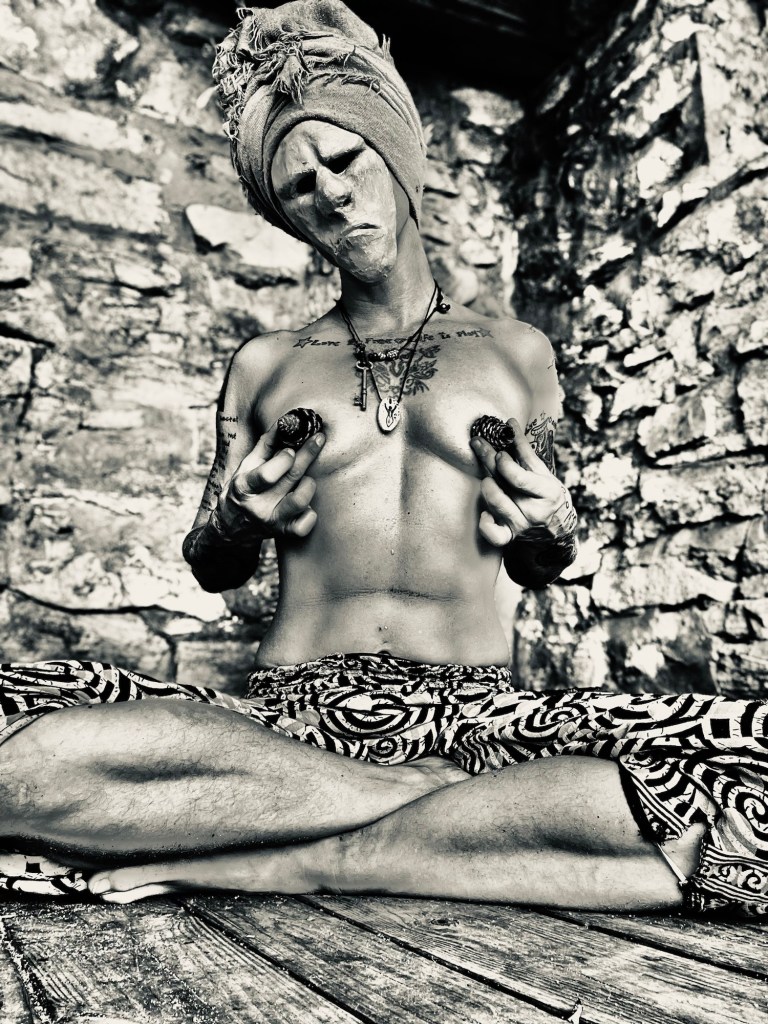


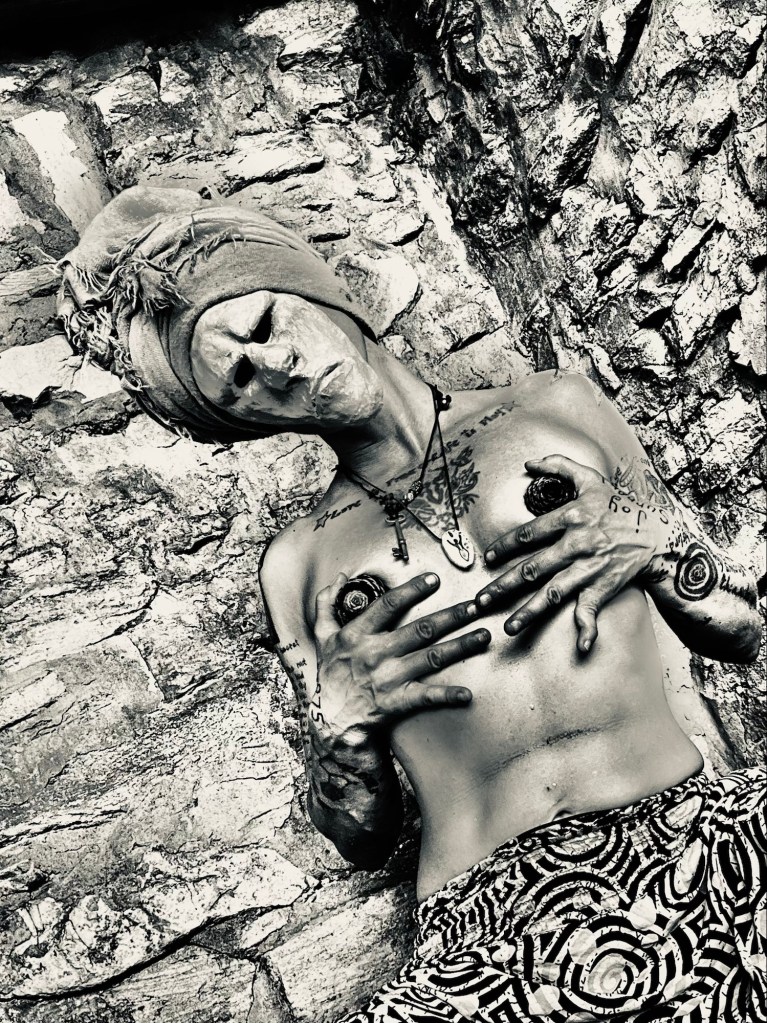
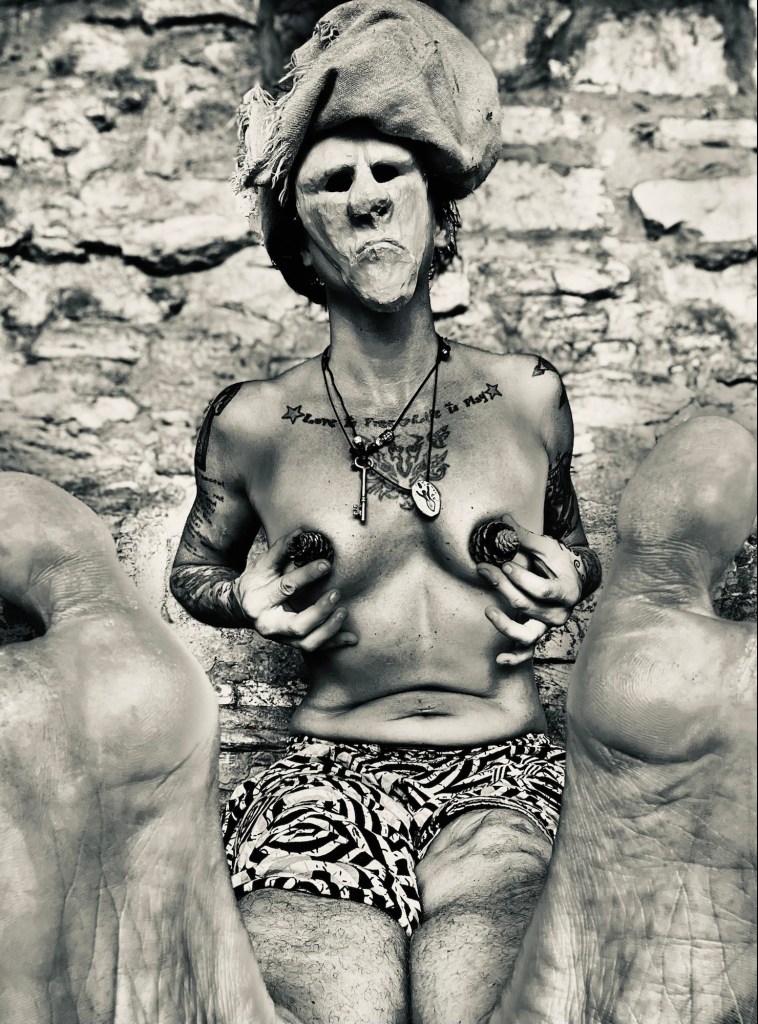


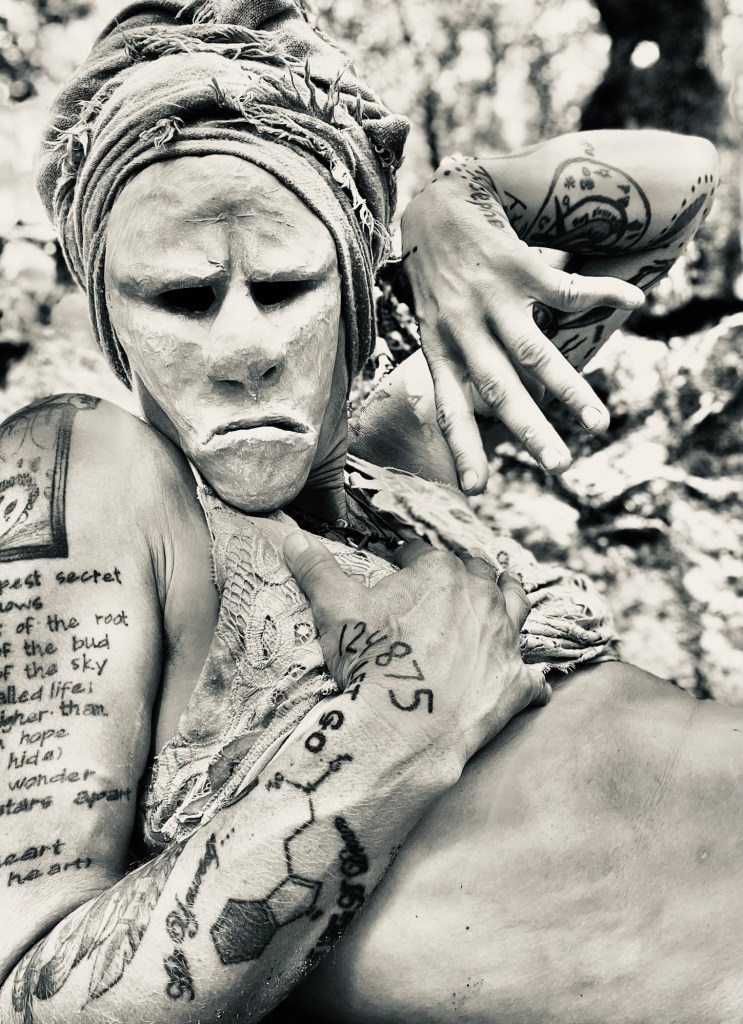
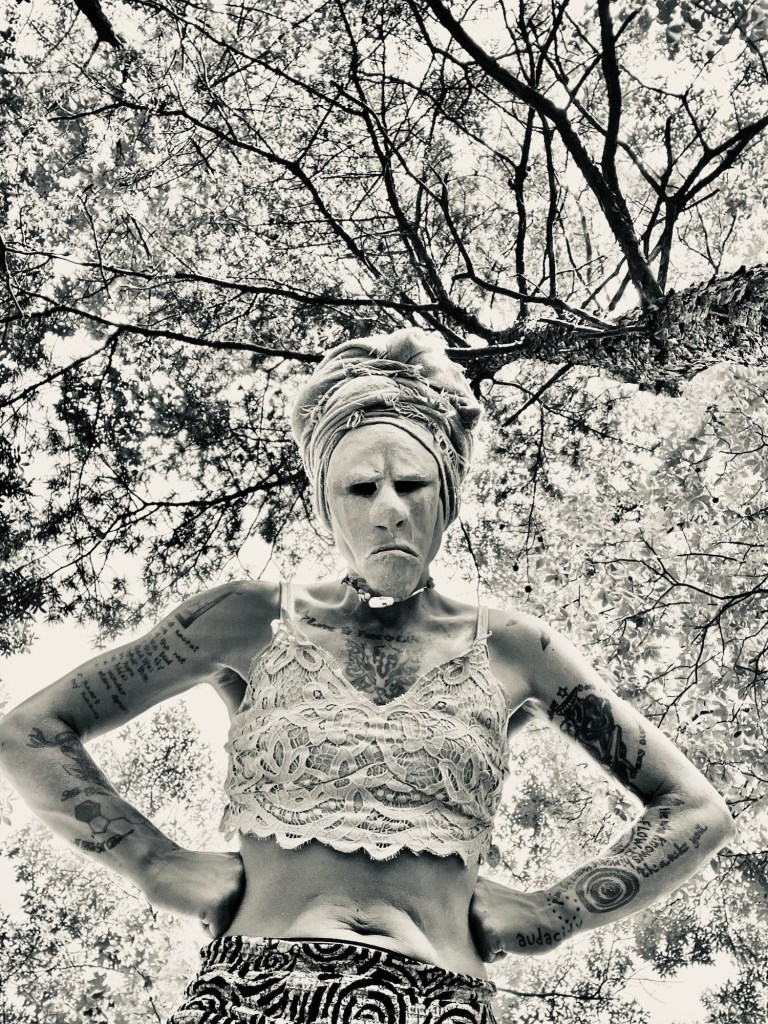
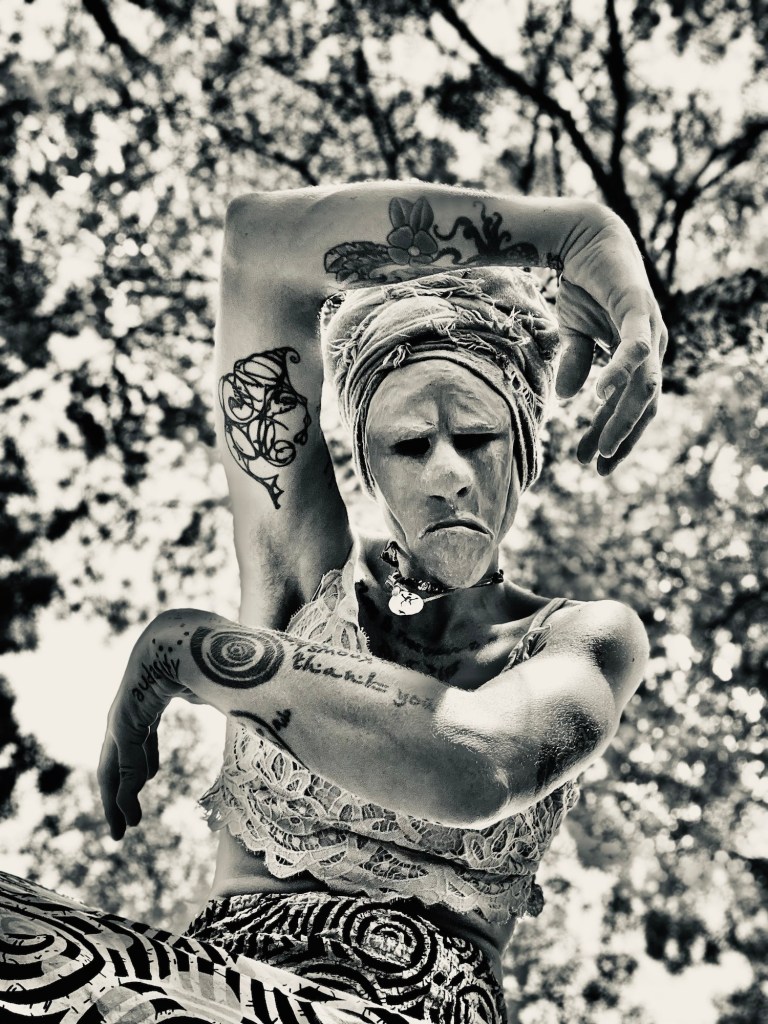

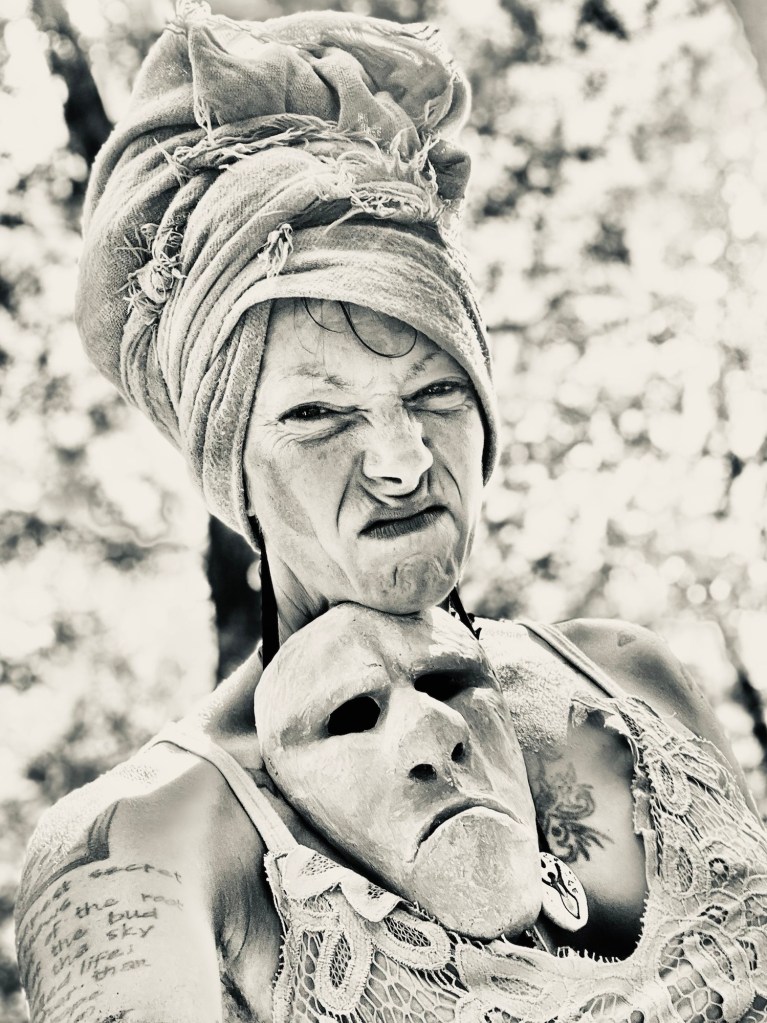

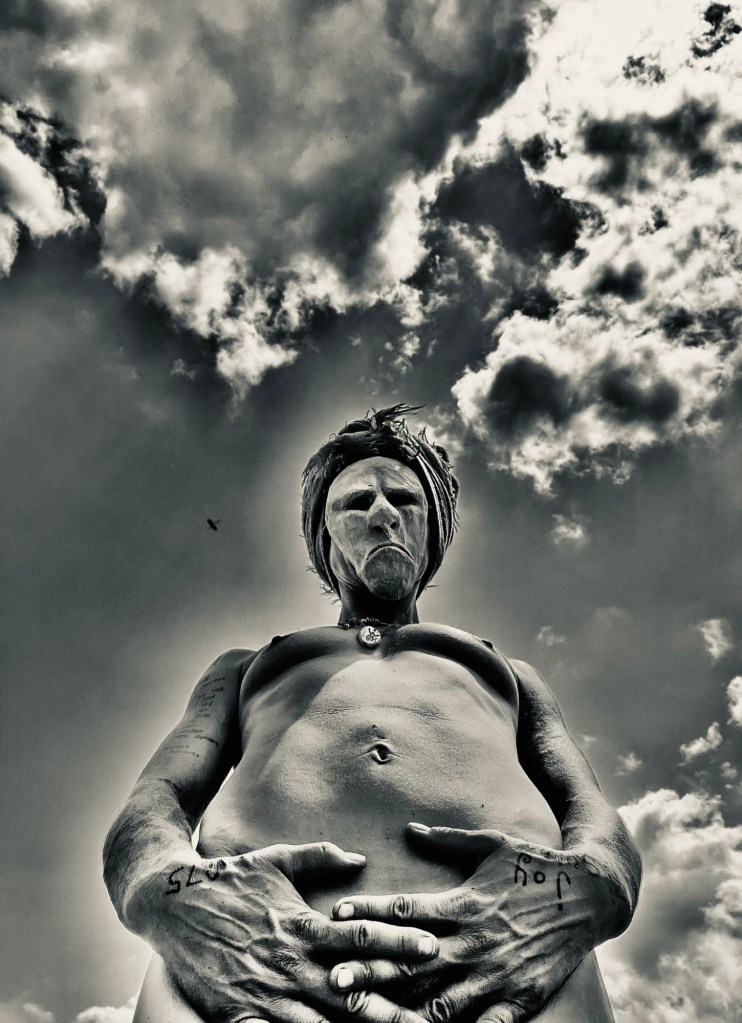
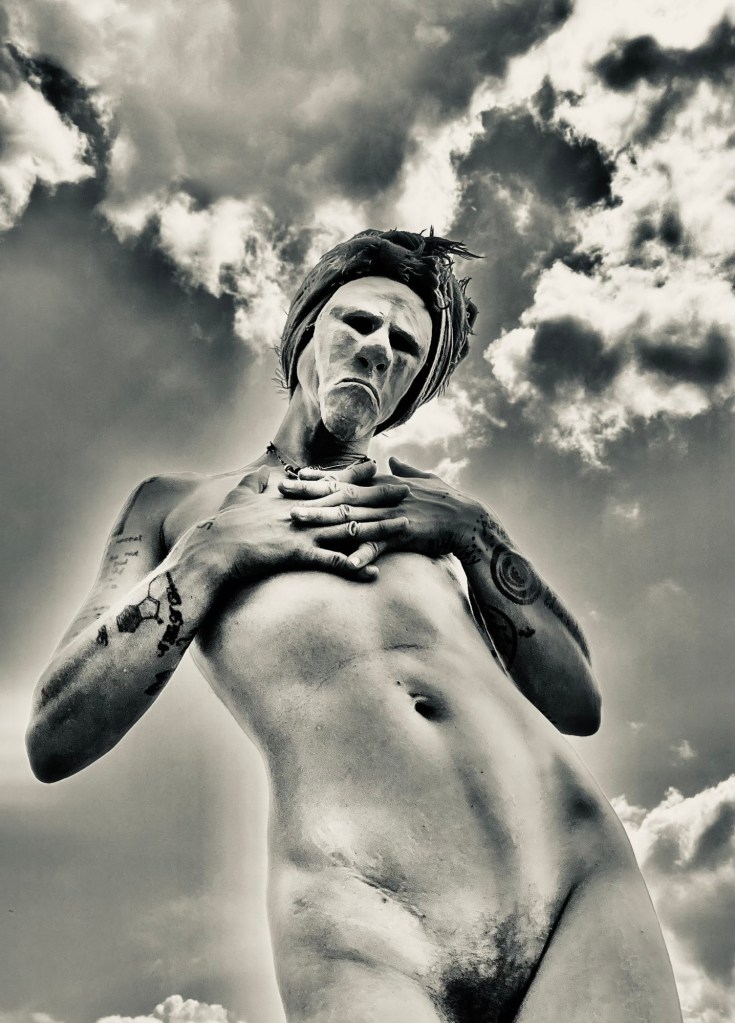


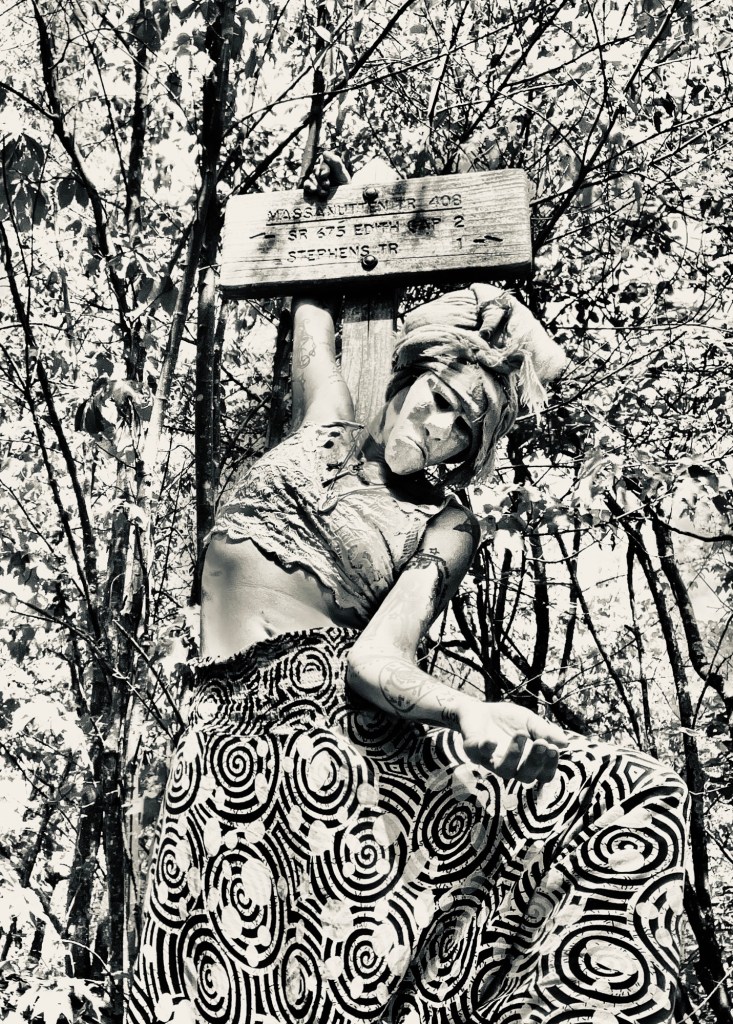
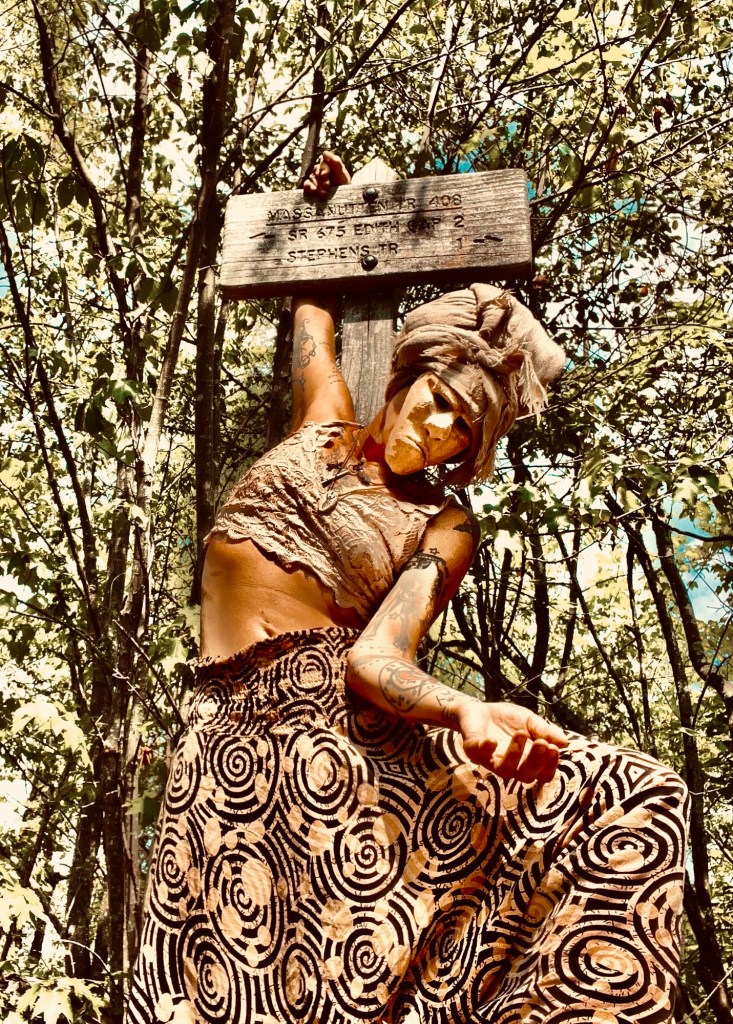
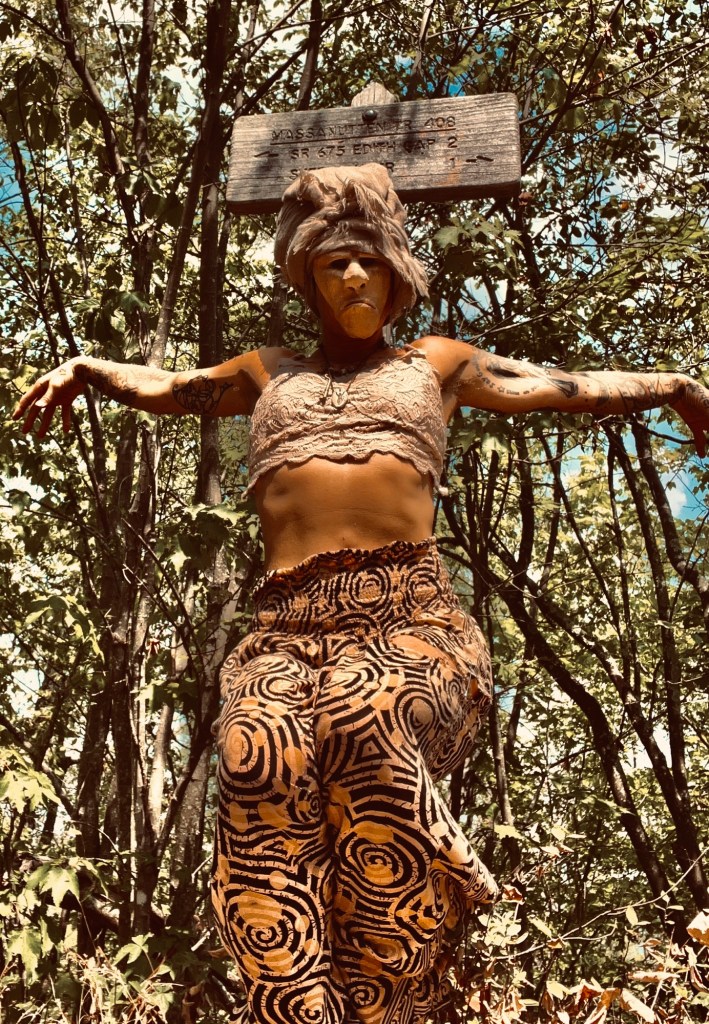





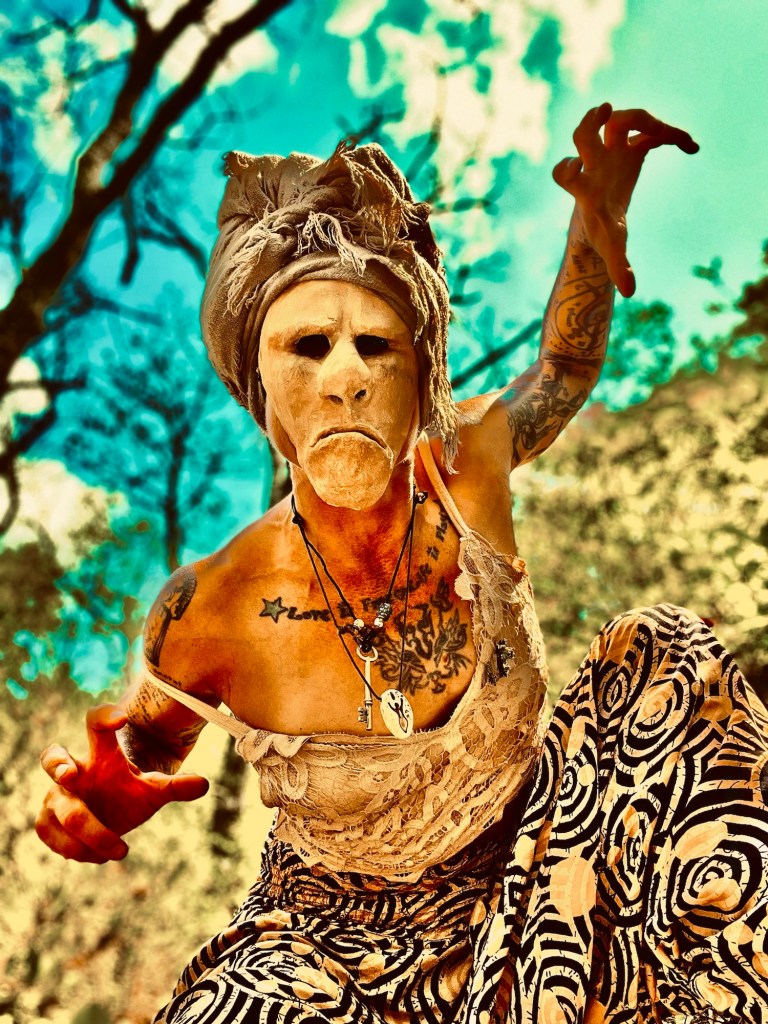




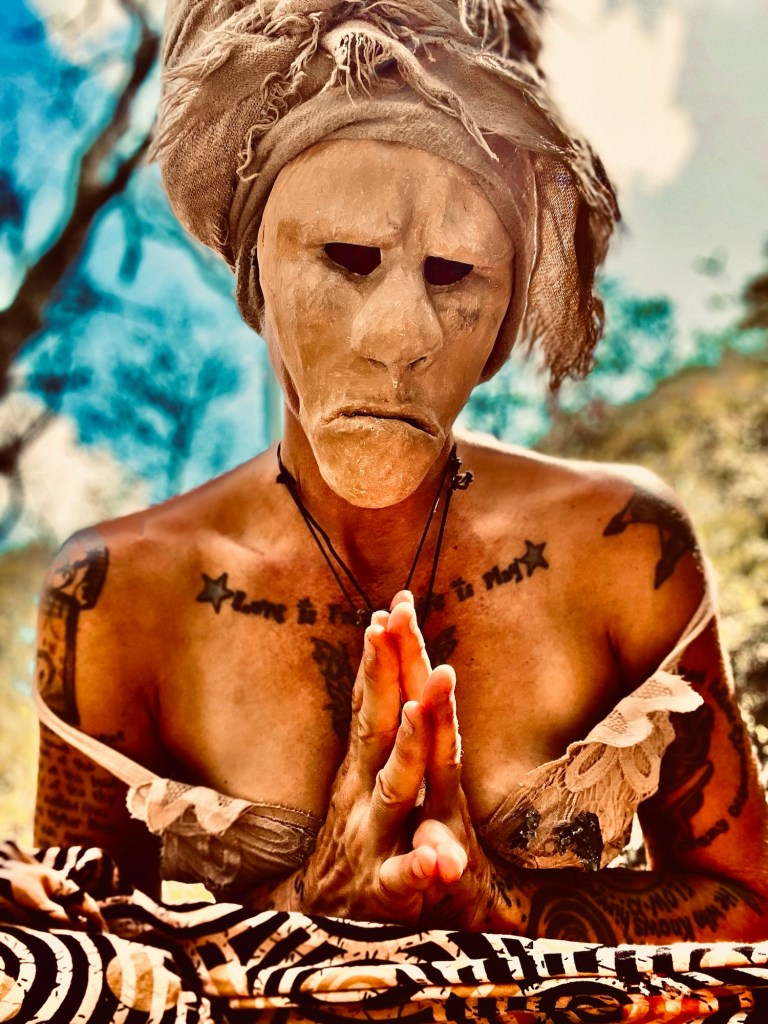


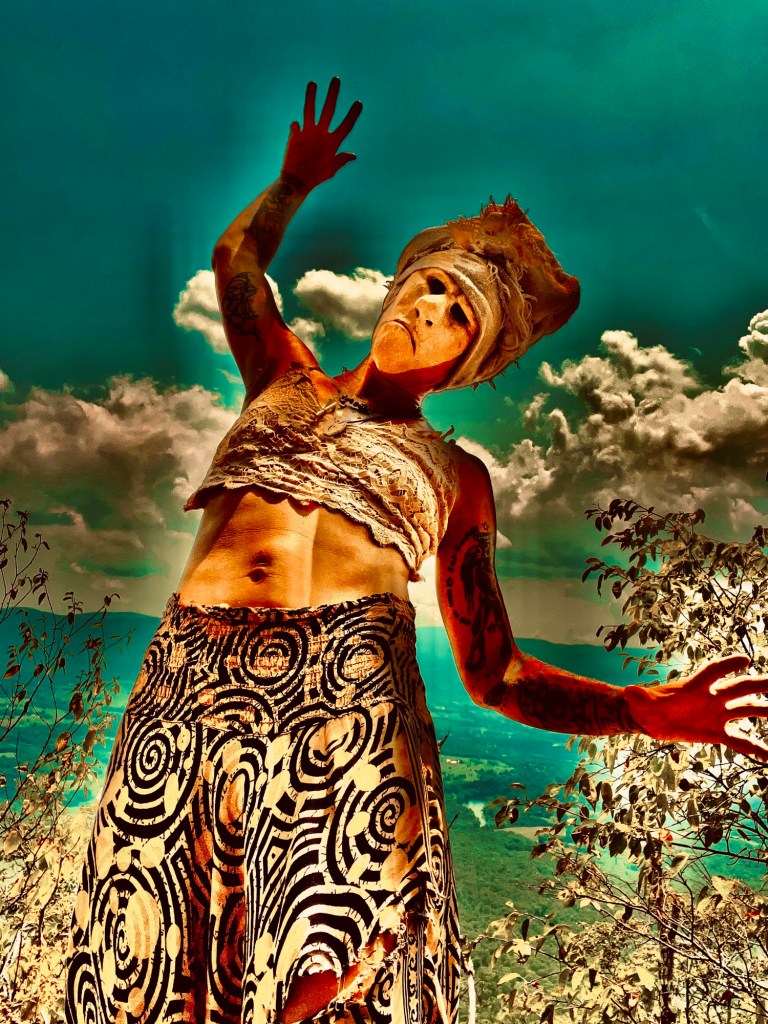

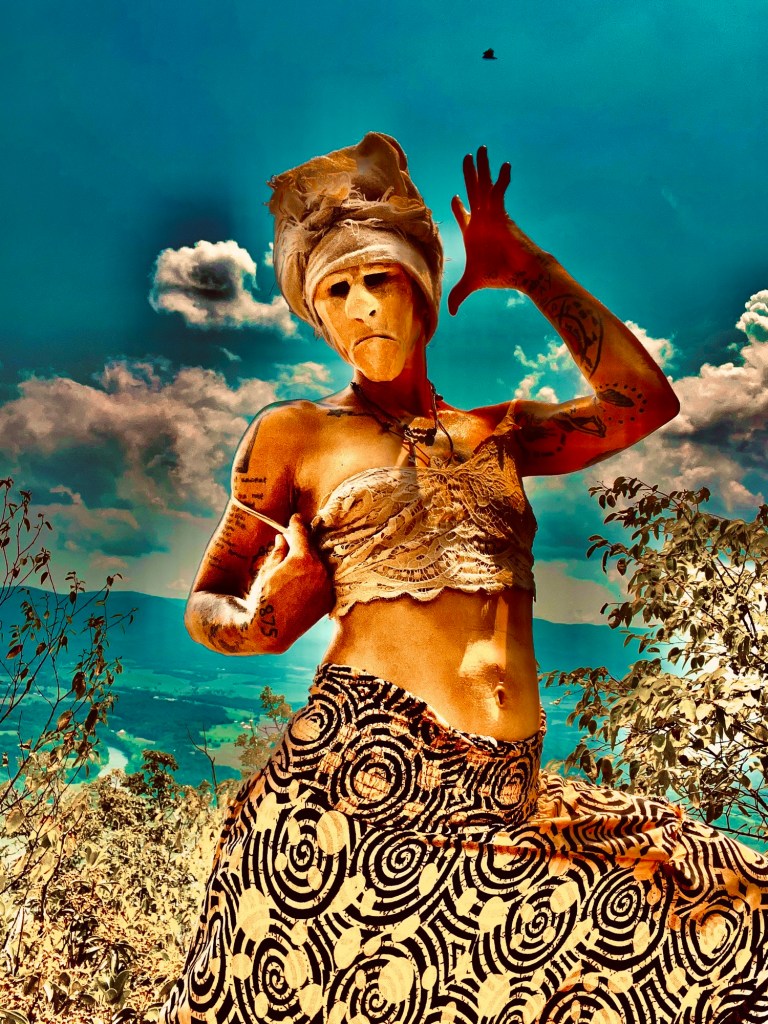


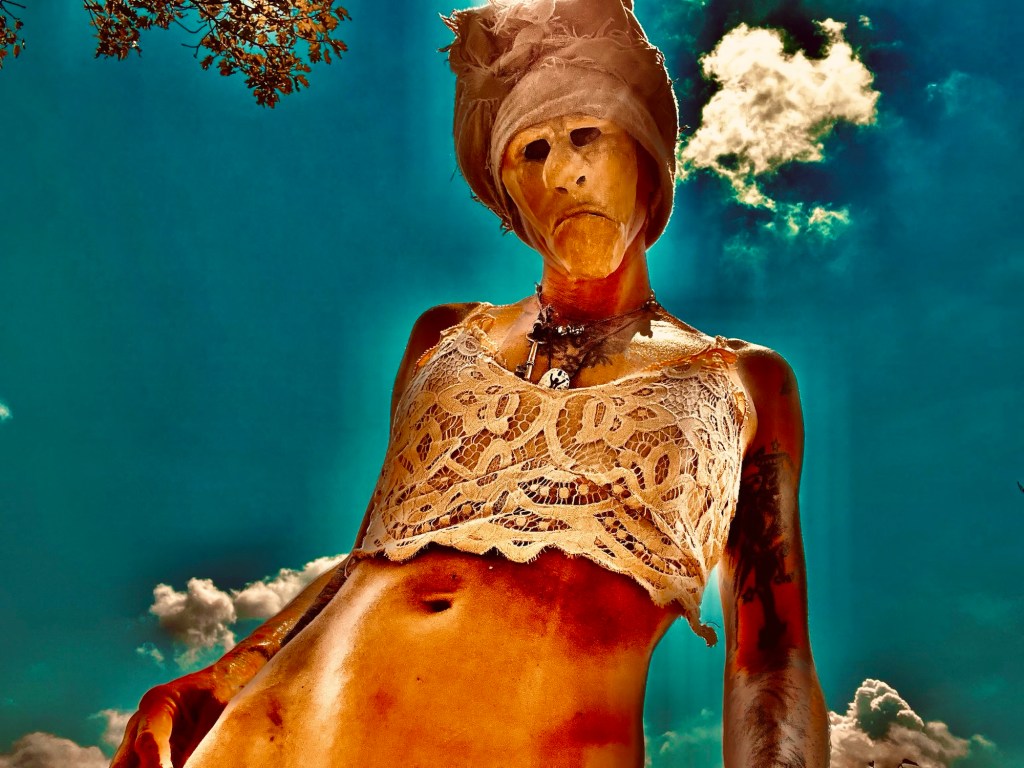







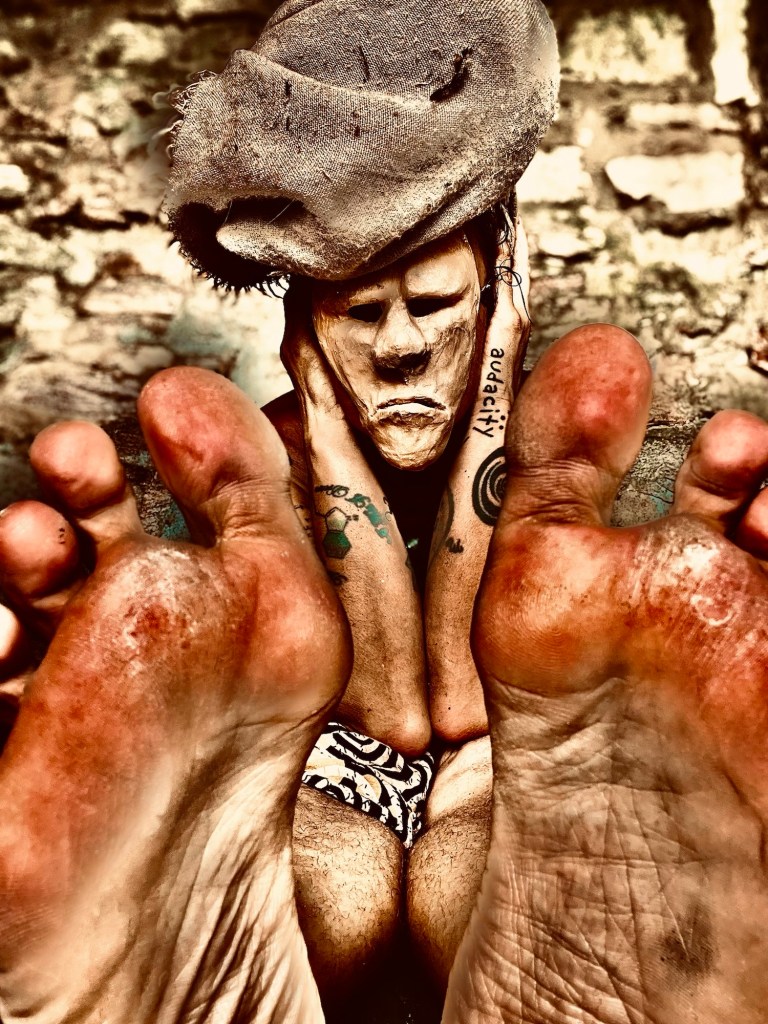
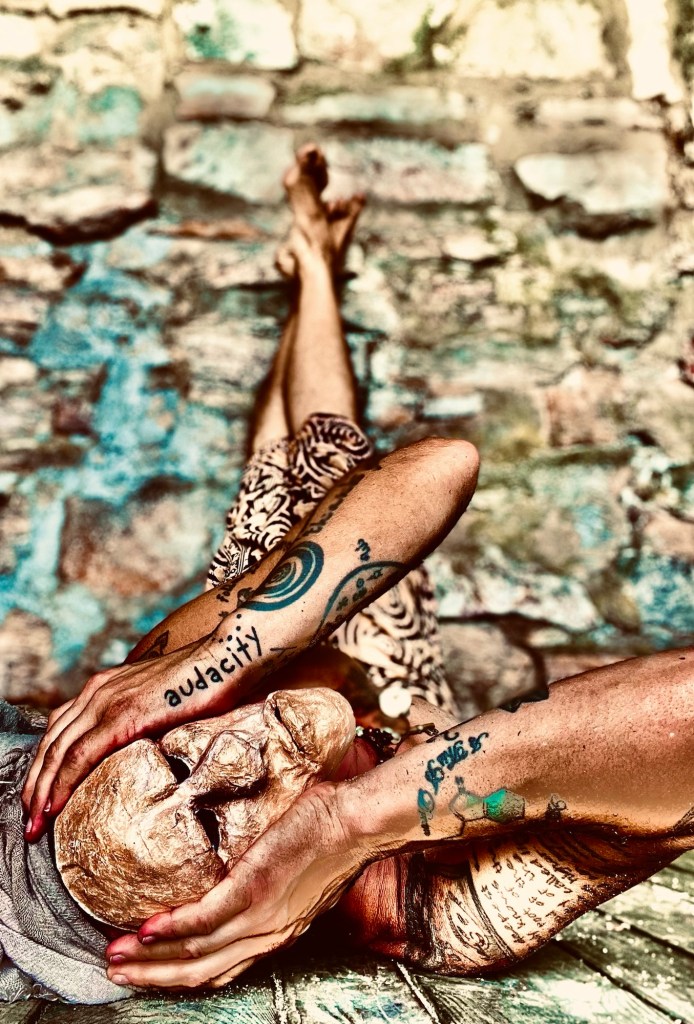










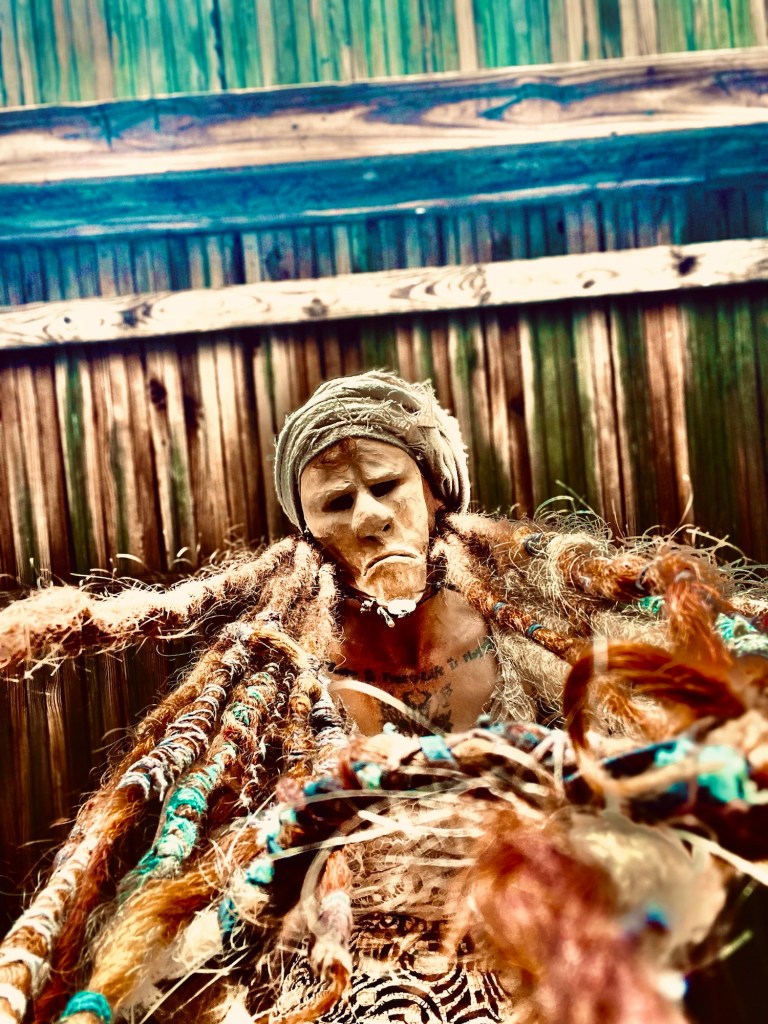
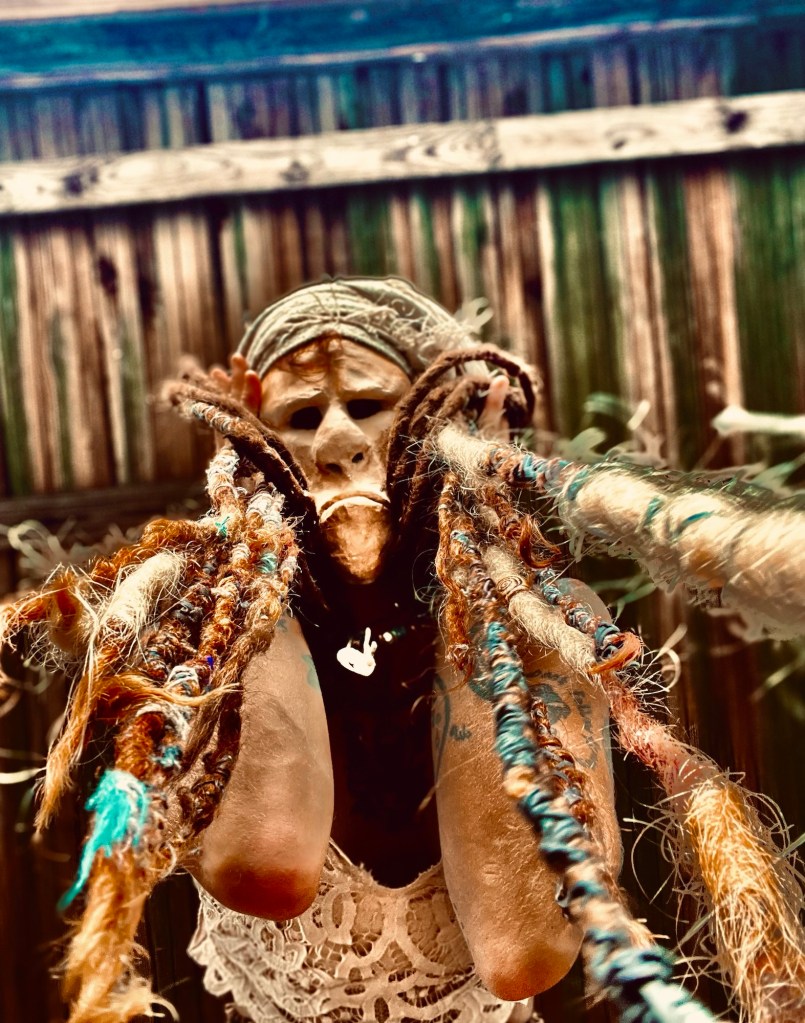
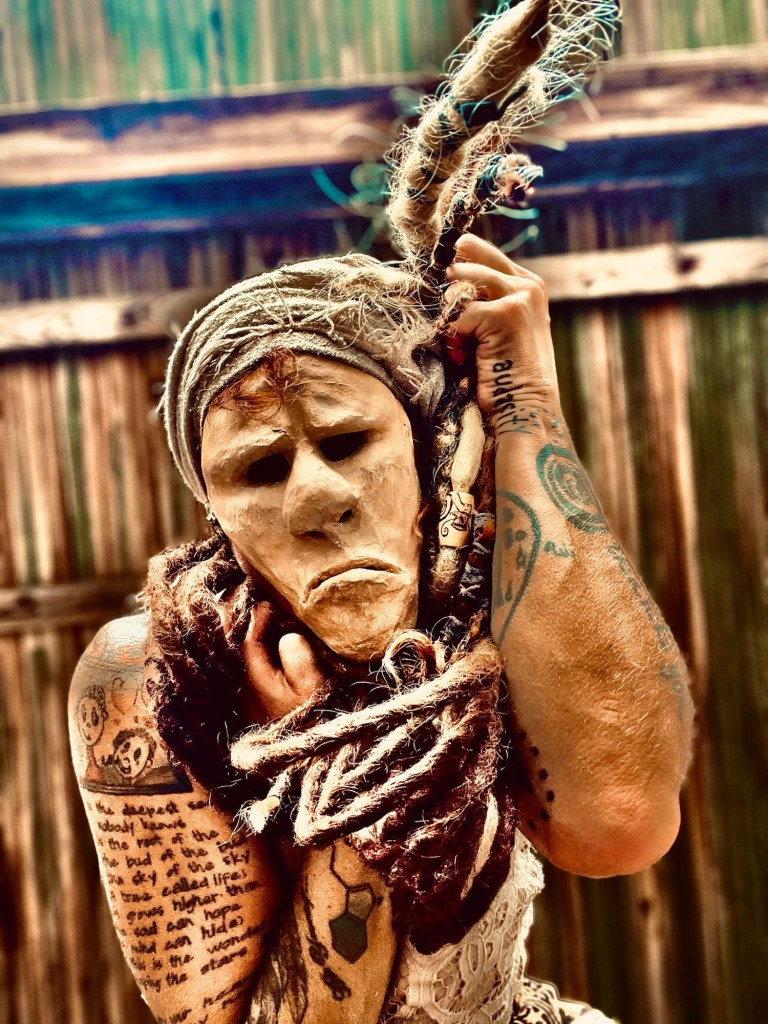


 BlissNinja