“Happiness is strange; it comes when you are not seeking it. When you are not making an effort to be happy, then unexpectedly, mysteriously, happiness is there, born of purity, of a loveliness of being.”
― Jiddu Krishnamurti

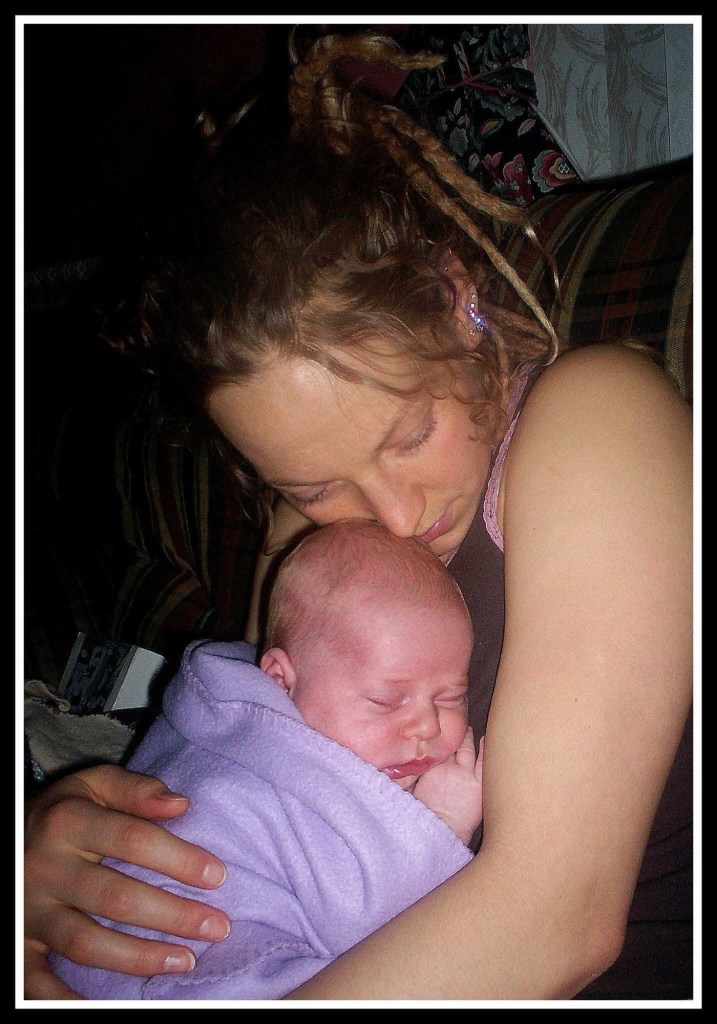
🌹⭐️🌹 the biggest gift I could ever have given this reality , is the devotion to my own healing and awareness both before, during, and after becoming a portal for the deliverance of a Child Of the Heart into this fleshDream…. How can we help to heal this fractured schism of a world if we do not undertake the Great Work and then emit that Seed into the fertile Soul of a Soul who will carry on the blessings we bestow through our devotion to Integration?

I know the extent of how much of my own lineage of trauma and pain has been cleared thru my own participation in the dance of alchemy, by watching my son become a man…. By seeing how different he navigates and how few ‘holes’ he has to fill , and how ‘whole’ his mind and heart and body is; I am grateful beyond words that I dug so deep into the underworld, even if the only result were to be that my son did not have to spend most of his life undoing the patterns and poisons  and dysfunctional inheritances we bear from our ancestral lines.  We are the forebears, each and every one of us who choose to alchemise the vessel, of a different way of coCreating reality here in this Realm. It’s starts with Us, and with what and how we Birth our Fruits into this Womb, for we are a womb just as the Mother Matrix is a womb, and we can only produce seeds from the particular fruit we have grown.

We CanSeed this Dream Consciously

There are many ways to alter the design and help raise the veils to see the beauty of creation and the dance of selves at play; the absolute miracle of the process of gestating and birthing a new Being into this playground is so beyond scope , and is an absolute wonder to behold.

Have we forgotten what is at play when we participate in this adventure? Please don’t forget, find the magic and majesty in this engagement and watch the seeds become mighty oaks ❤️
It’s time to go Down Inside Within Echos and grins Of times Long ago Again
It’s time to pull The threads Loose Untangle Heads From Nous That dangles Too close To this
Tapestry
Wrapping me in silken Cocoon Memories Like Maters Milk Born from blood In Tomb Torn from Moon And Madness And trapped Floods In veins That ached to bloom But instead Lay dead In ivory bed Dreaming Of Red
Monsoon
Twisting tendrils Of ancient crimes Broken chimes That signal Doom As Woken slumber Fumbles With moods
Folds number And name Into games Of Me~s & You~s
As Bodies lie bruised Shaken from truth As soul Let’s loose It’s claims Of Youth
The Trump Card is the Wild Card That plays amongst the Glorious Shards That twist themSelves into Stars And refract the facts of WhoWeAre Playing Games of Growing Glows Synoptic Salutations of Yes&No In&Out&Up&Down&Here&Now we Go Thru Ether Films of Fantasy Shifting Light of You~s & Me~s Taking Time and Stitching Seams Into Scripted Twisting Dreams Interference is inherent and appears As aParent in this Vale of Tears Amplified and polarized into Sides Double Split Slit to Categorize the Tide The Synodal Vote will energize the Rise Of Lids from Eyes which undergo Anodic Dance with Cathode diode flow Inside the trance and the Trip of We Hiding Magnets within Fields of Electricity The womb of the Waters birthing Seeds The Cross of the Cosmos perpetually Arising Aries fiery Impulse to Be On the Disk Til the Fish Returns to Sea? I AM.....a R.andomA.ccessM.emory In the Drive to Find the Hard Rind That covers the Lovers embraced InSide A Byte of the Apple and a Rite of Way A Light in the Darkness Living to Play For the Joy of Discovering Eternally Which is Which and Who is Me? Infinite Glitch in the System of Sound The Shiva Destroyer of Stitches Unwound
🌹 “This time of year my thoughts always return to the rites of Kore. I might be coping with the world folding in on itself, and the similar changes I experience within my own inner world, or it may just be an inherent fascination with etiological myth, to say nothing of the powerful duality of delicate springtime maiden and Queen of the Underworld within one goddess.
Her more widely known name, Persephone, means “bringer of death,” in the sense that her deft but gentle hand is a comfort and a guide to those making their descent. In this way, and as the goddess of the Eleusinian mysteries, she herself is the door to worlds unknown, a portal to revelations. Among her other epithets in Homer and among cults (Euripides calls her arrētos, “she who none may name,” Homer calls her agauē and hagnē, “venerable” and “demanding respect”). Persephone is her name as mistress of the house of Hades. In these rites, she is often referred to as Kore, which means, simply, “maiden.” “
~Sara Long
🌹
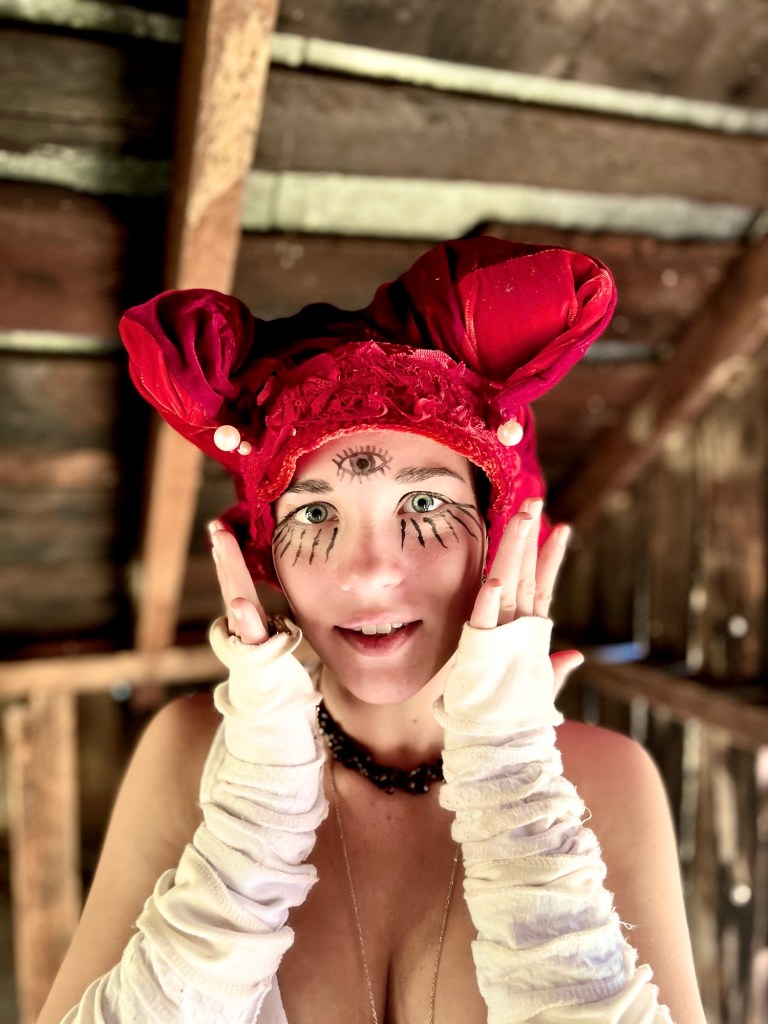
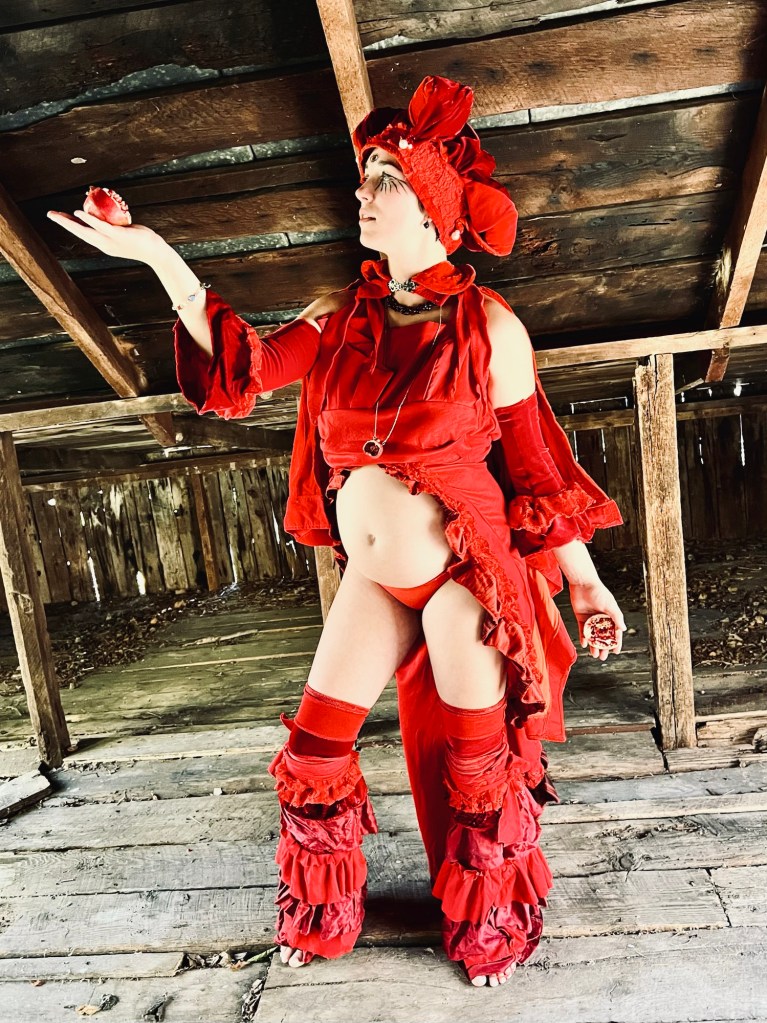
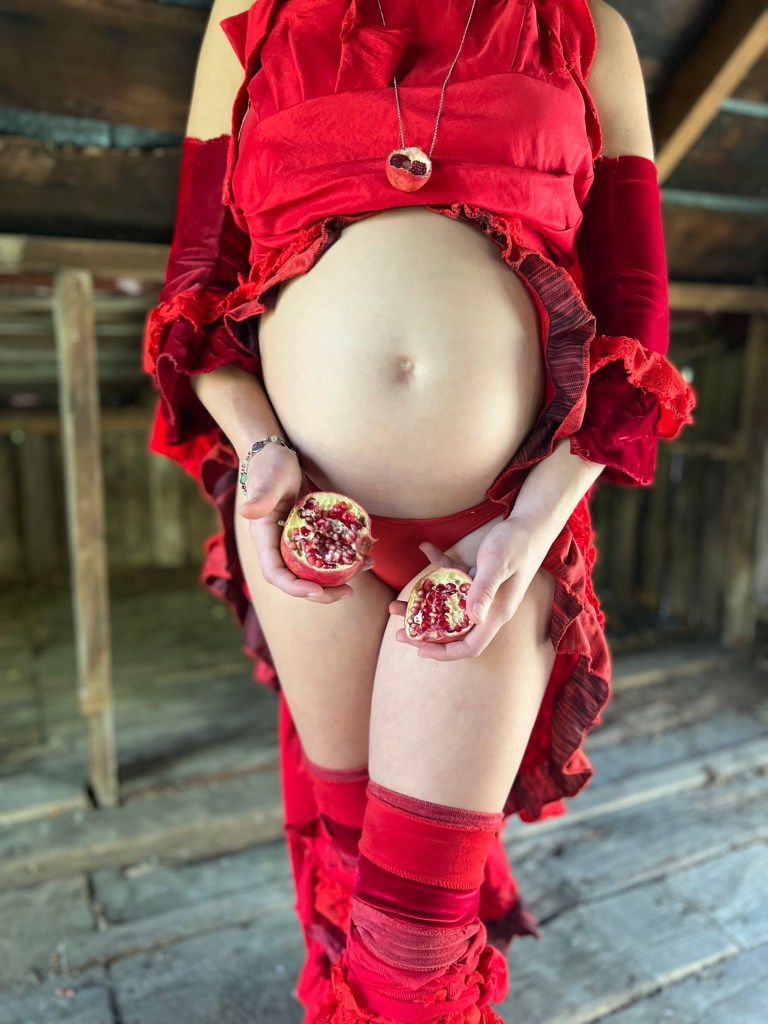
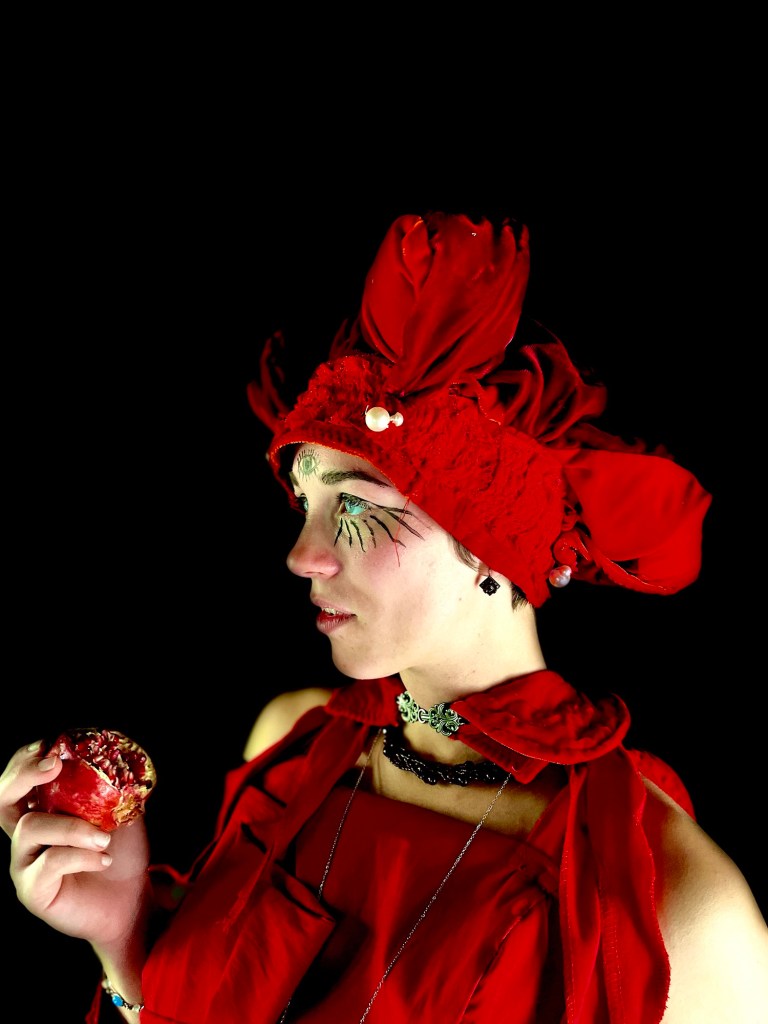
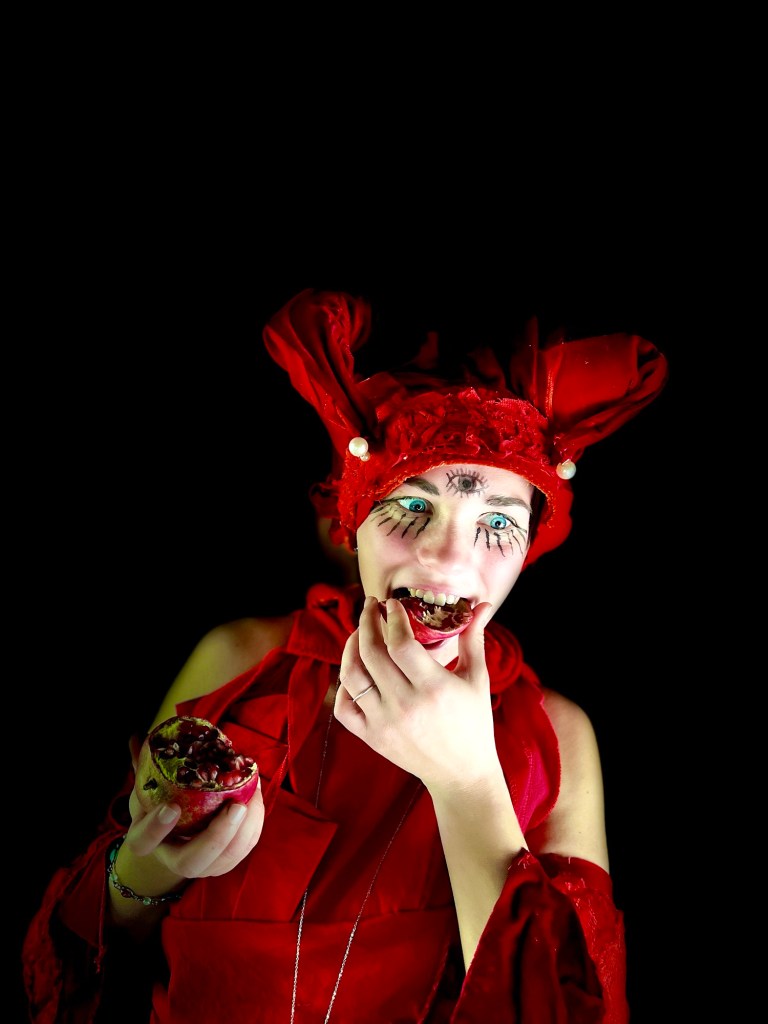
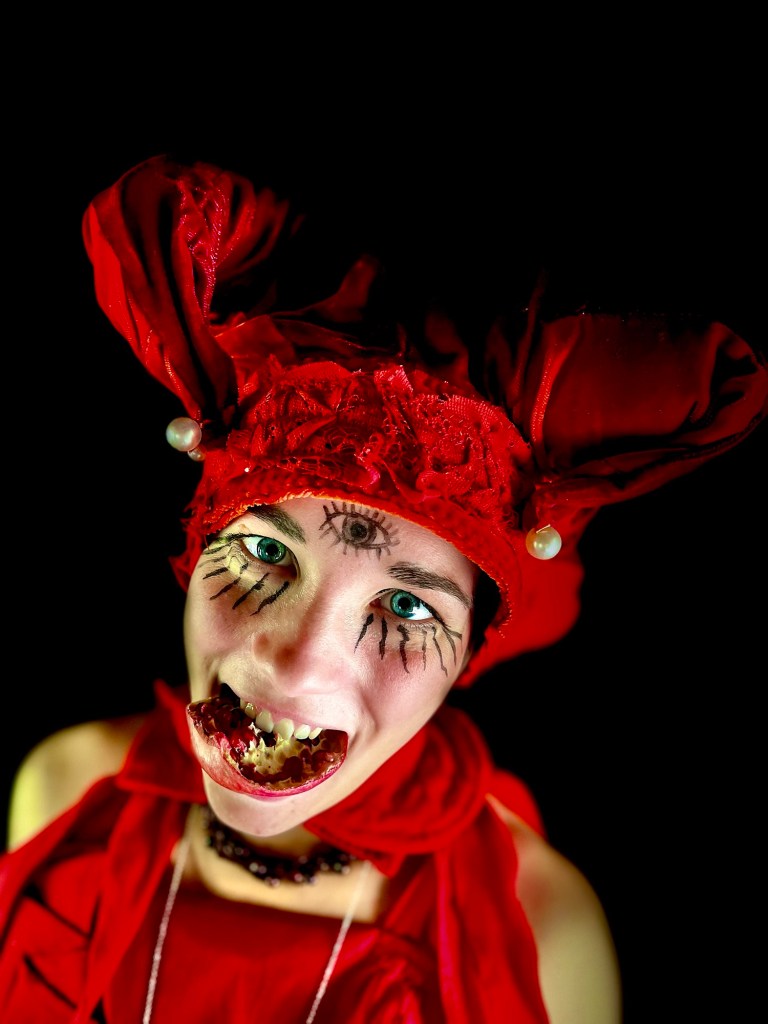
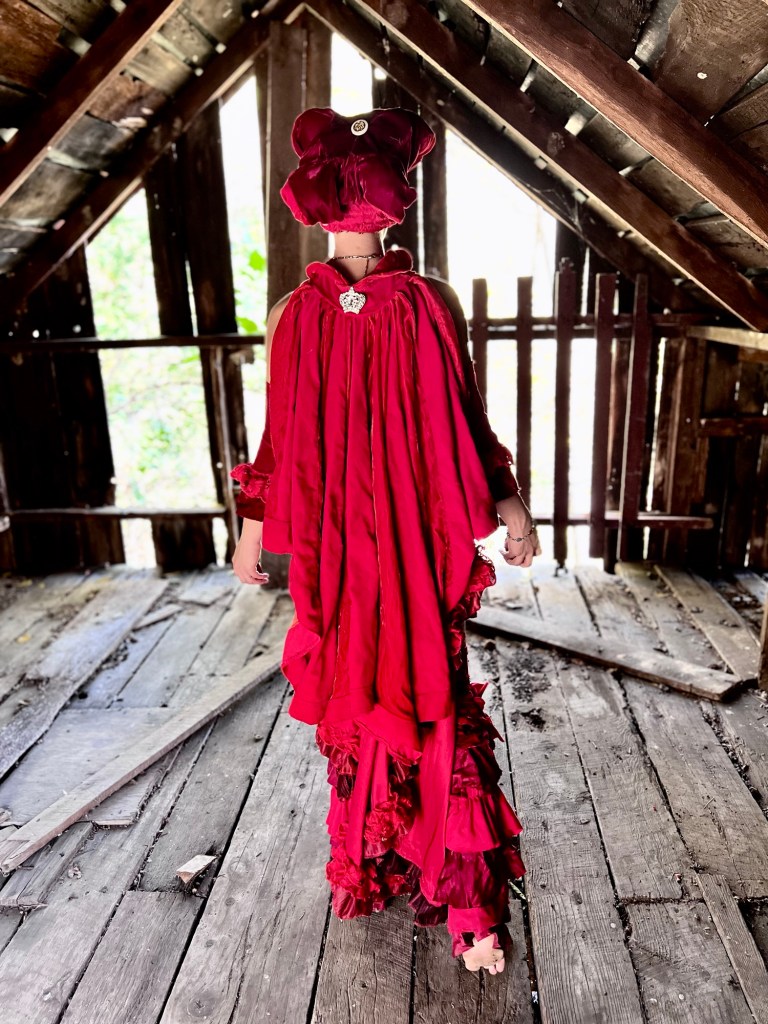
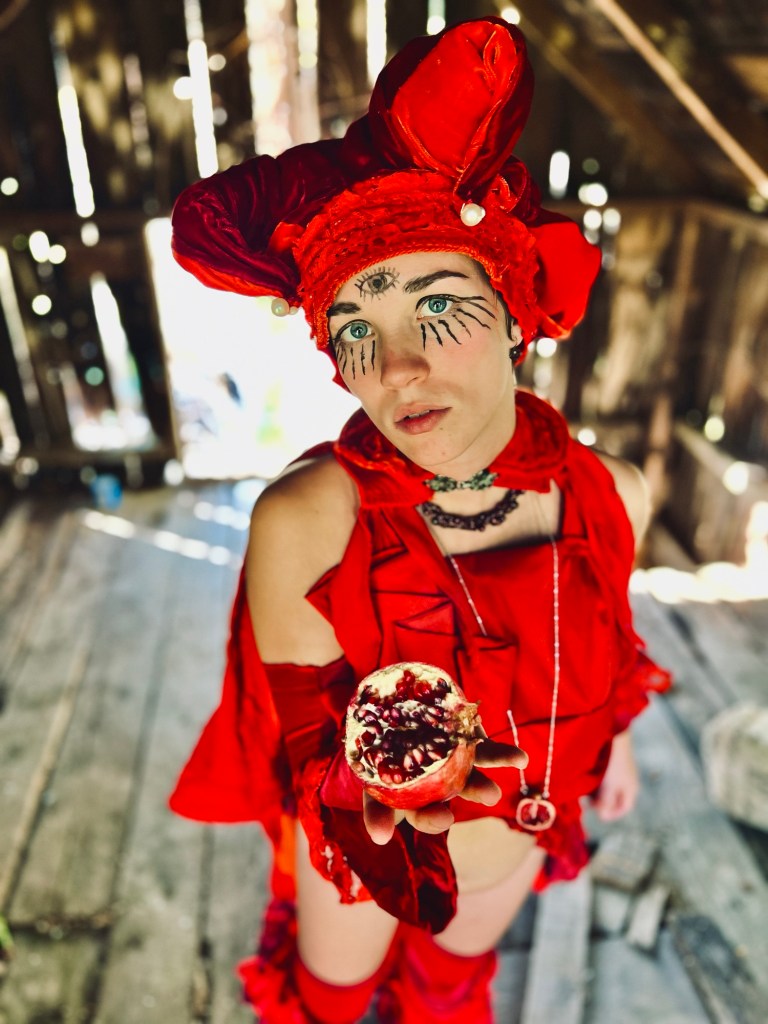
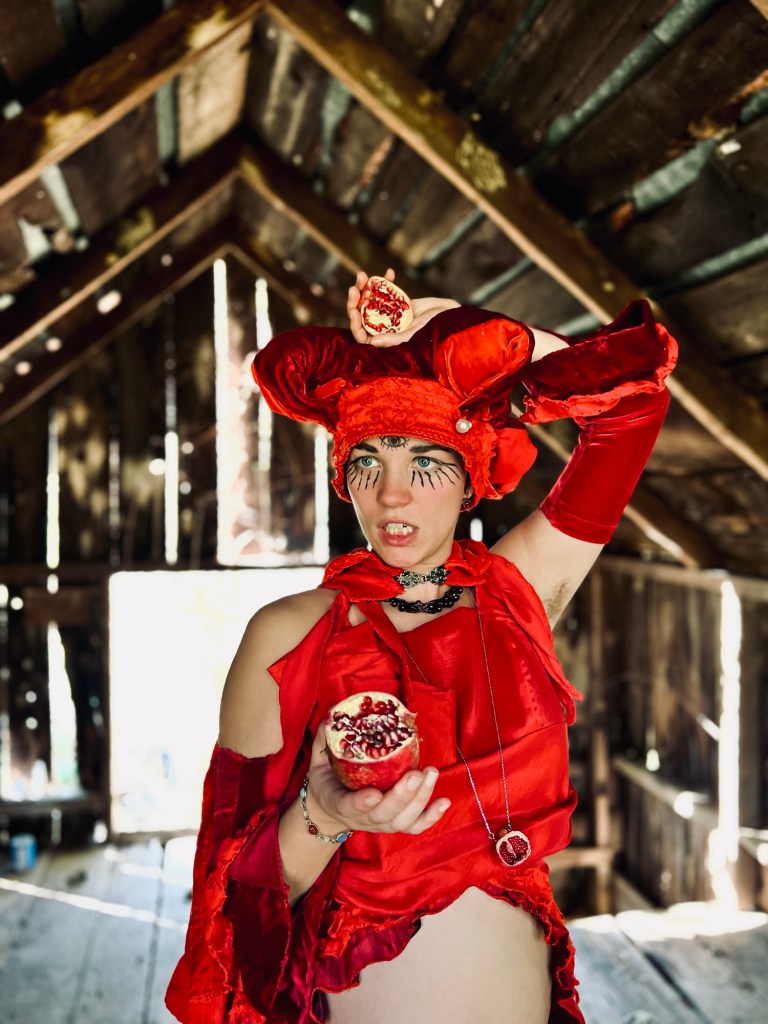
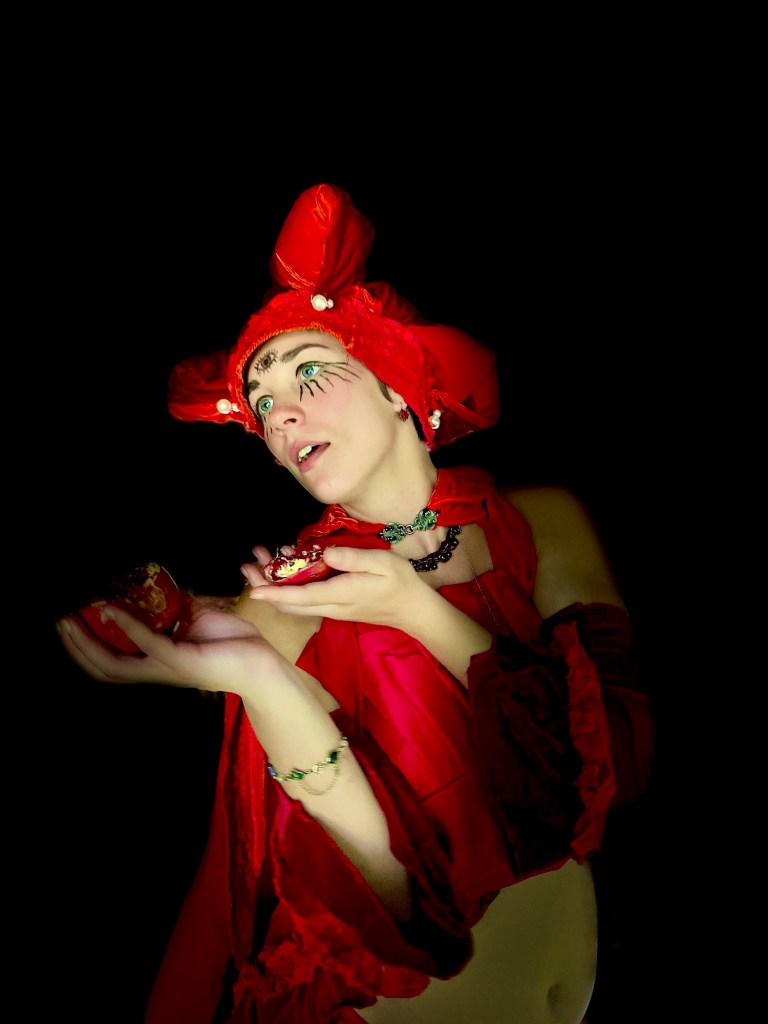
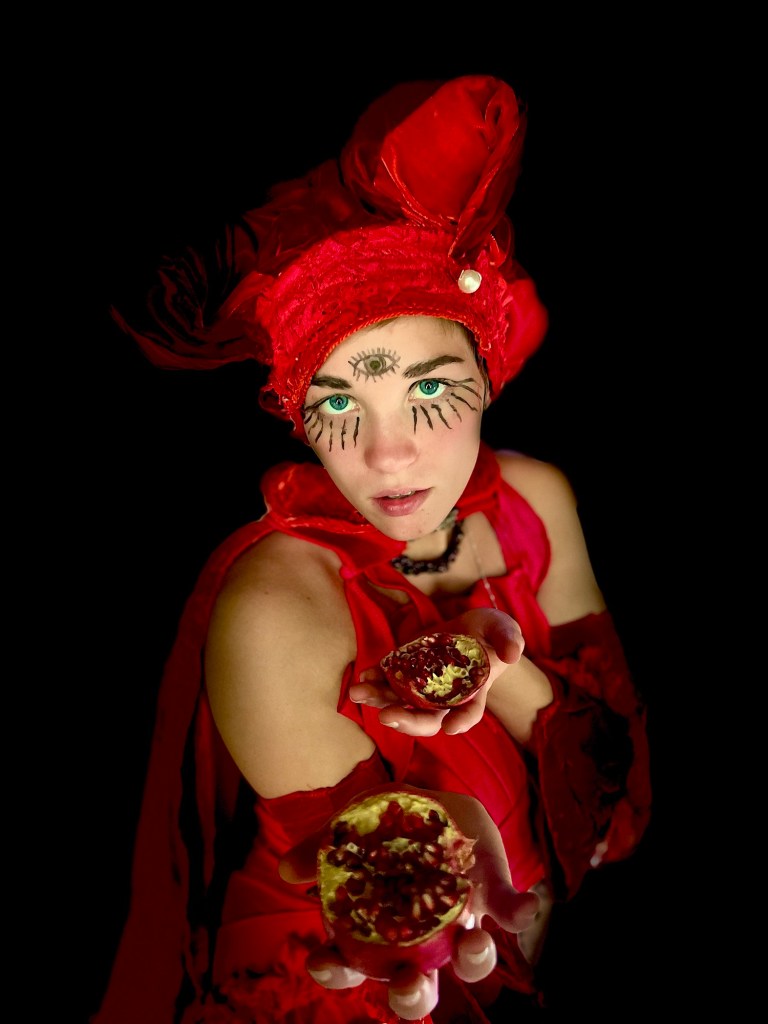
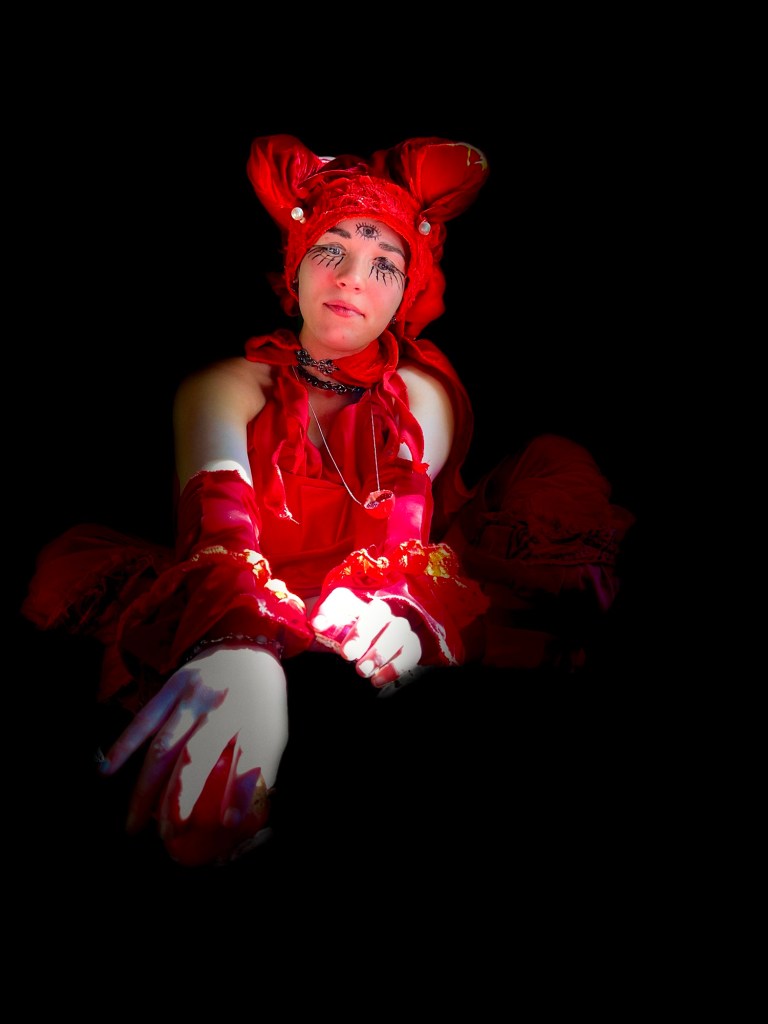
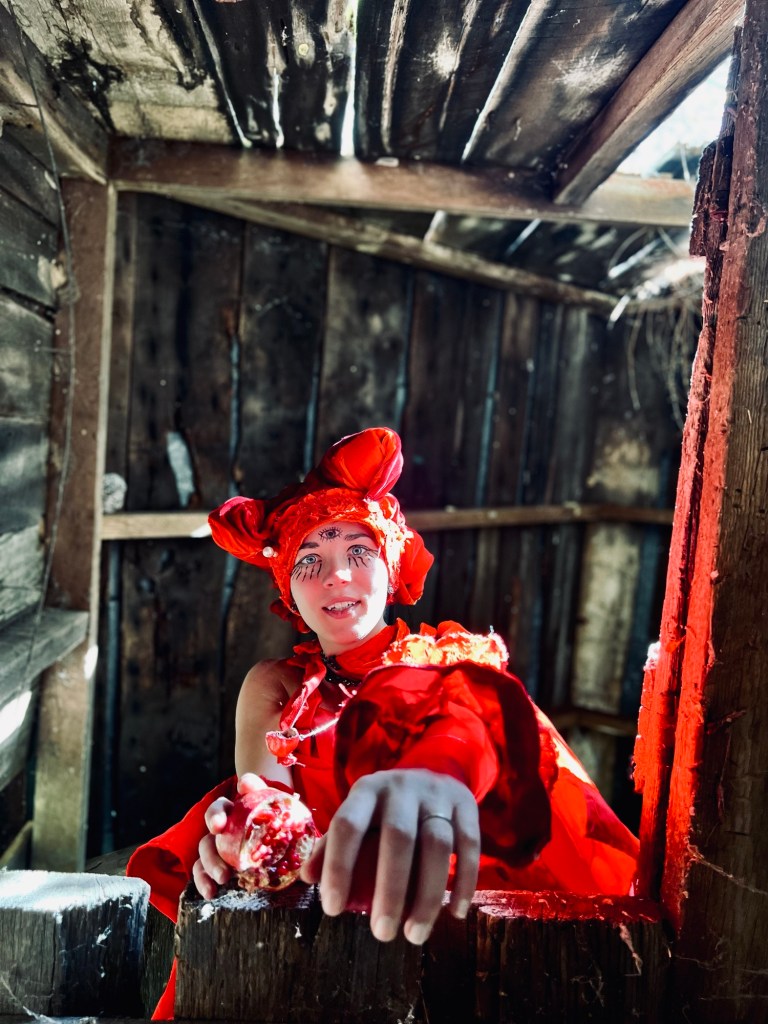
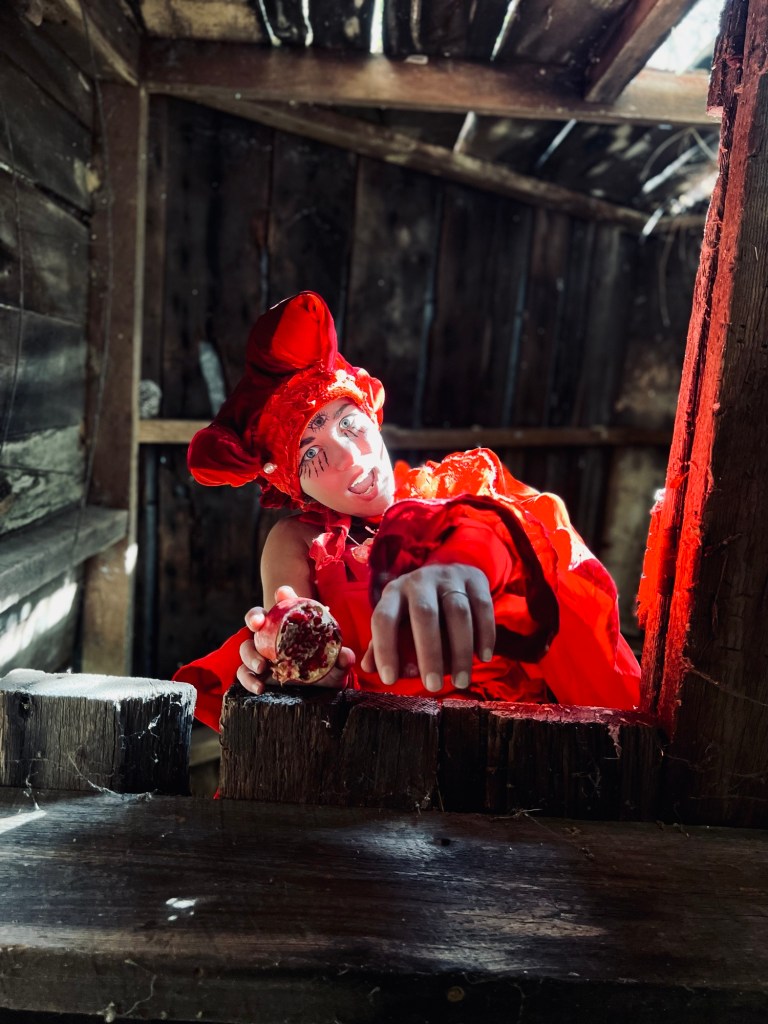
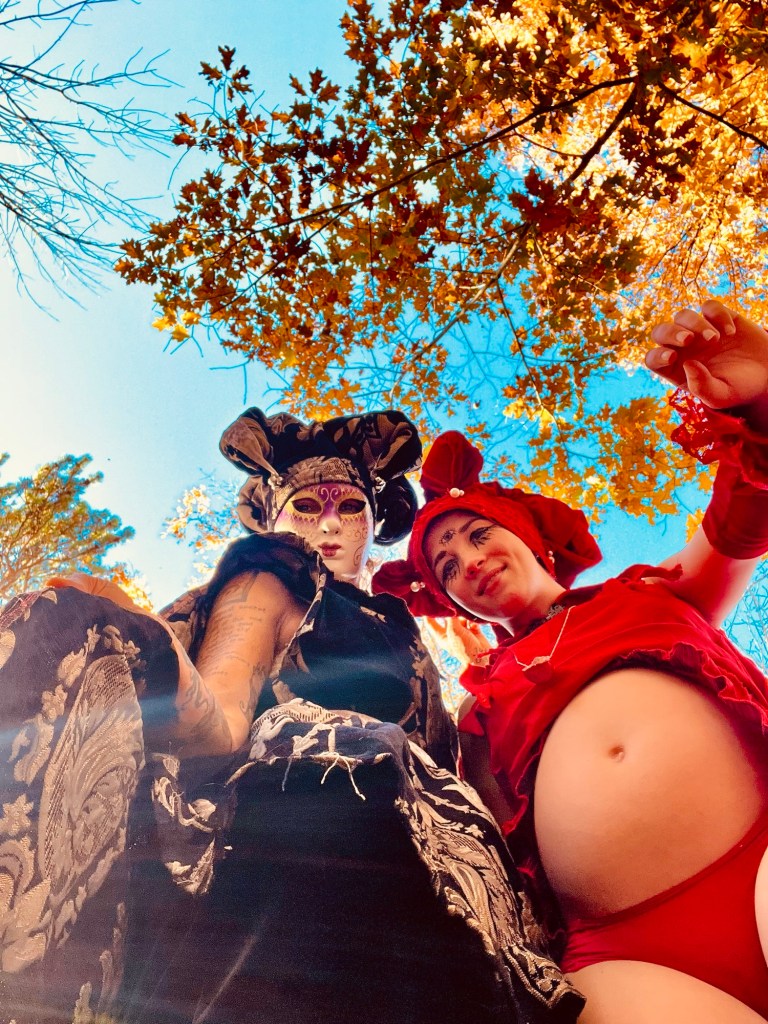
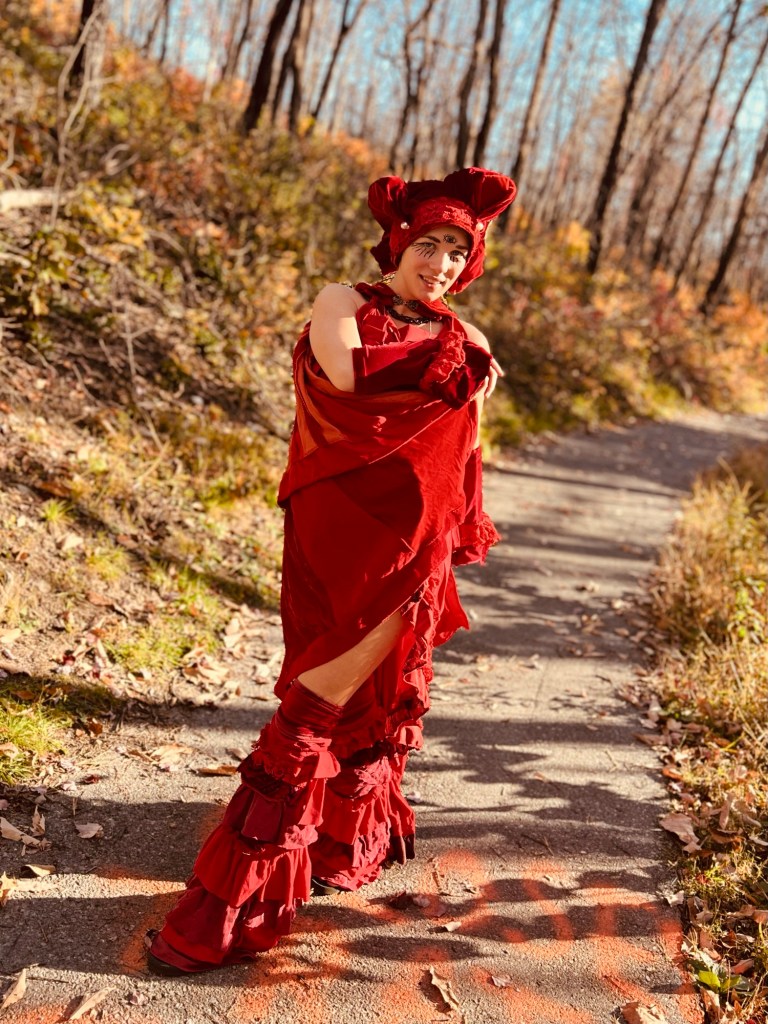
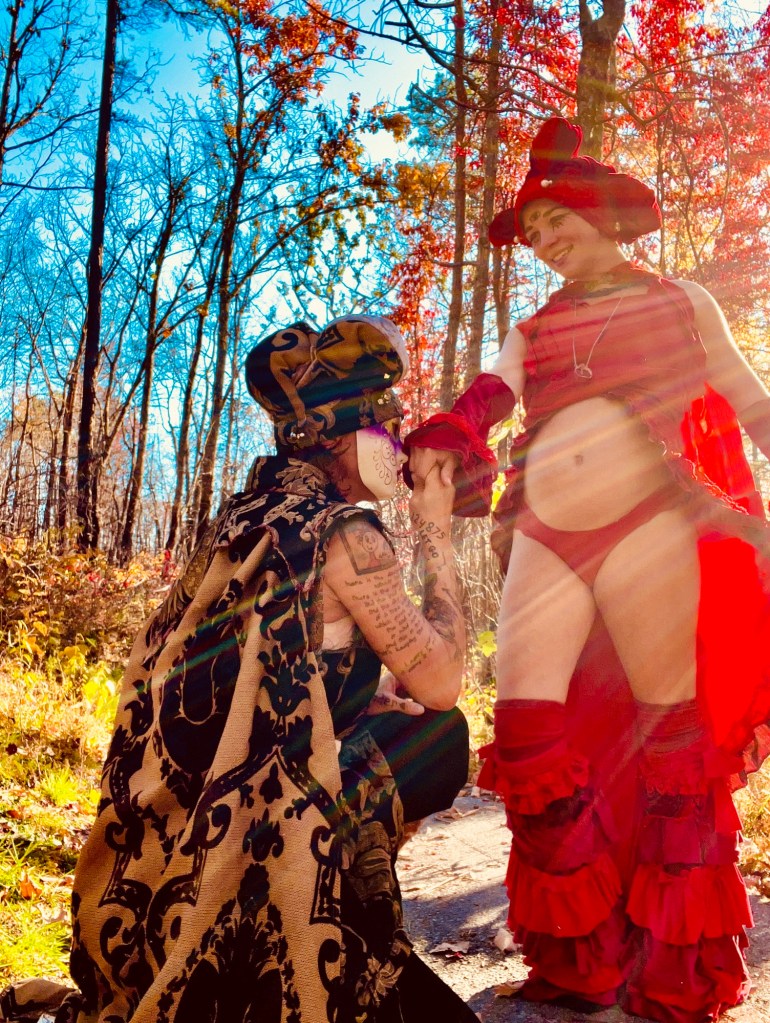
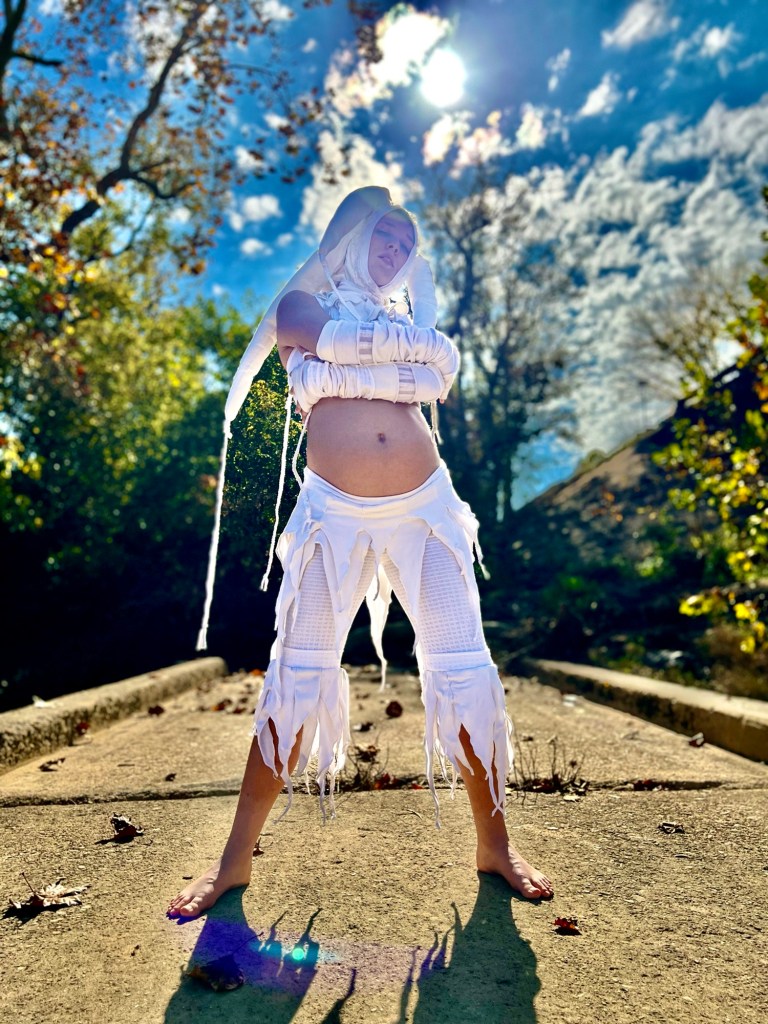
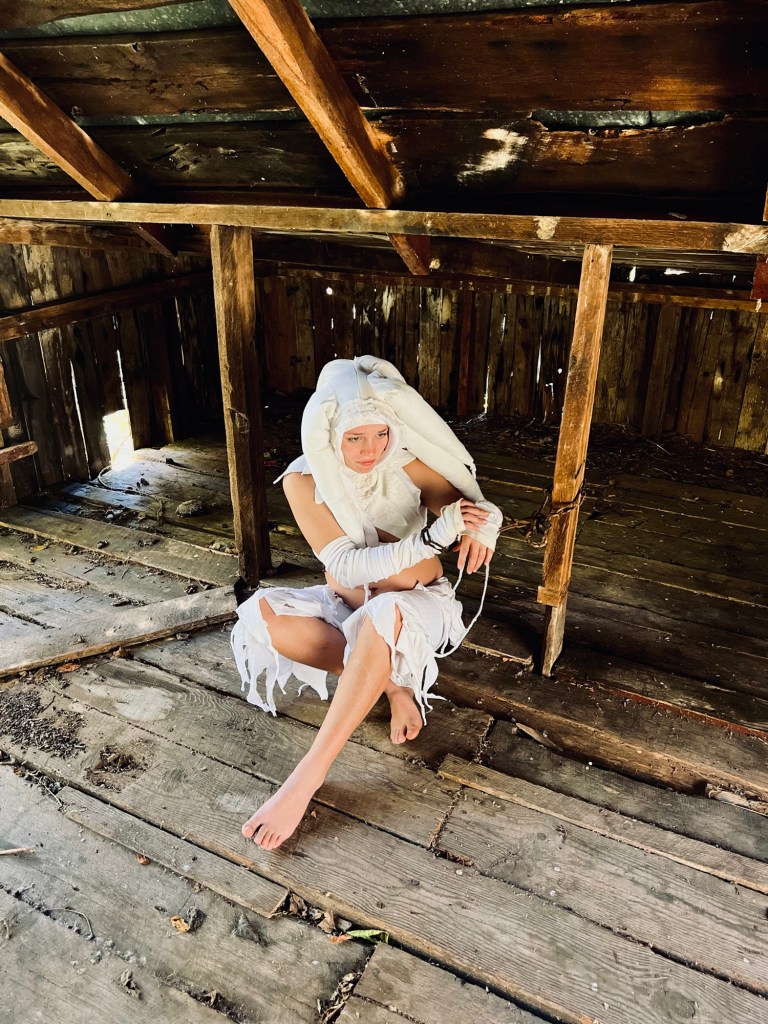
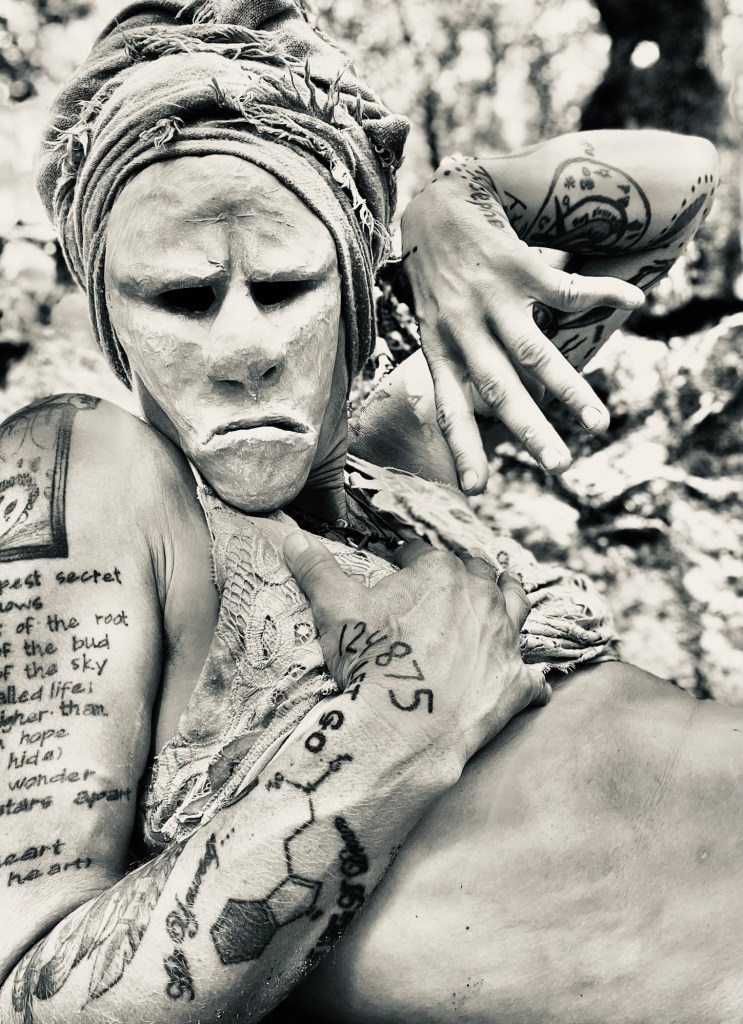
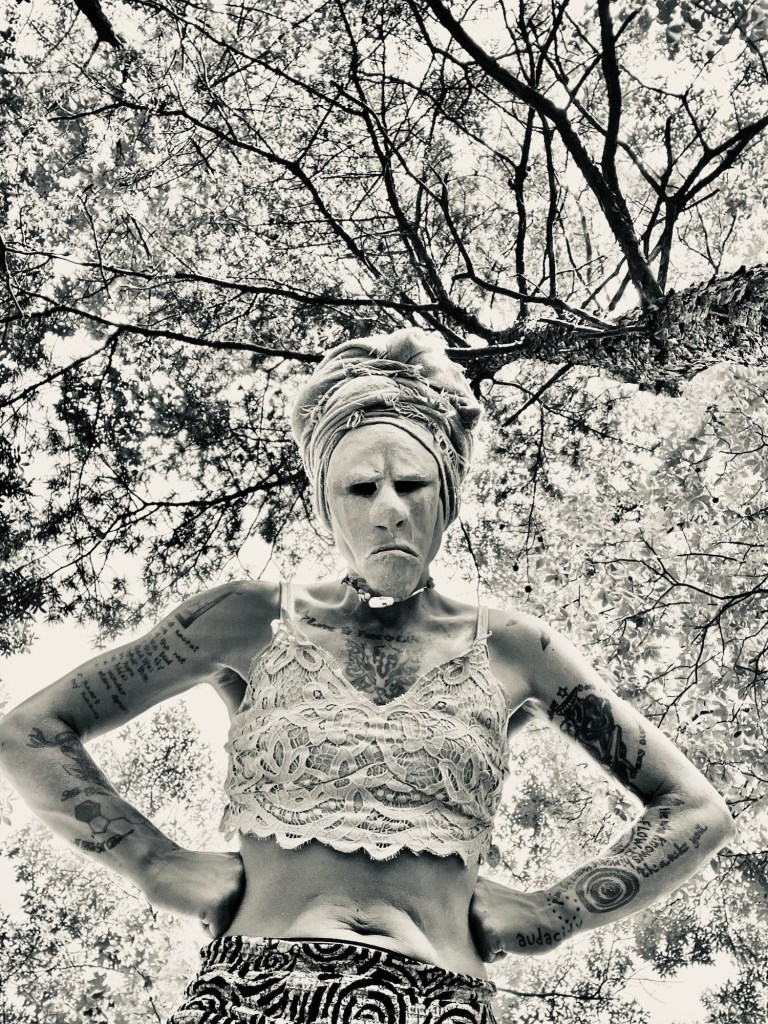
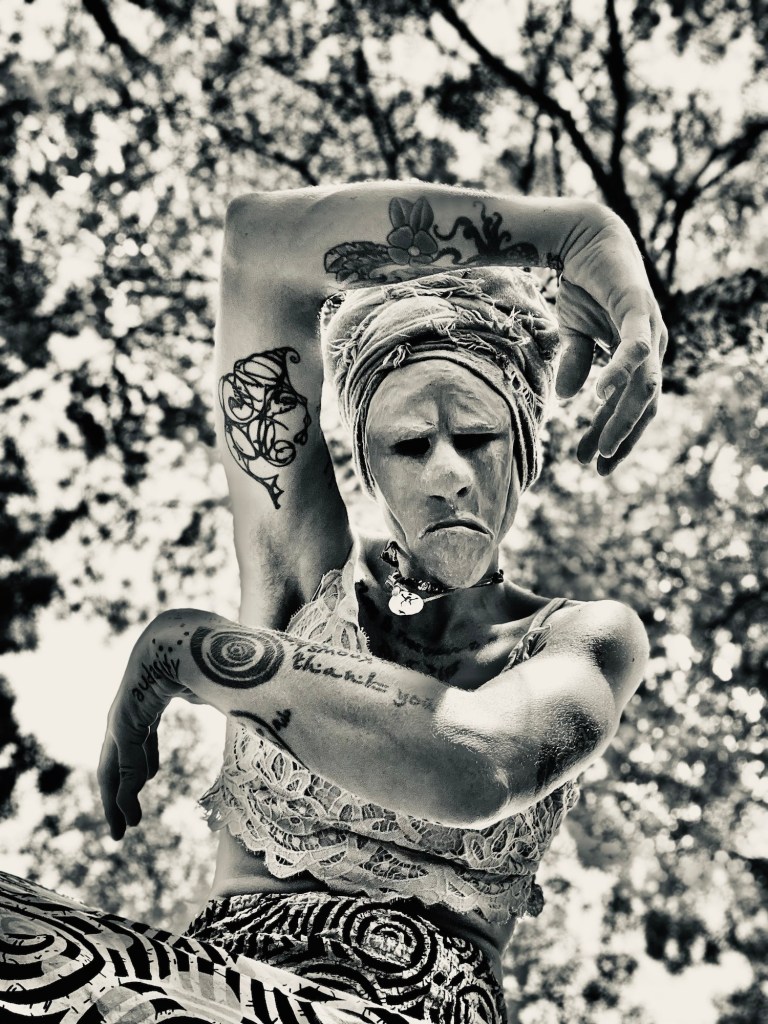
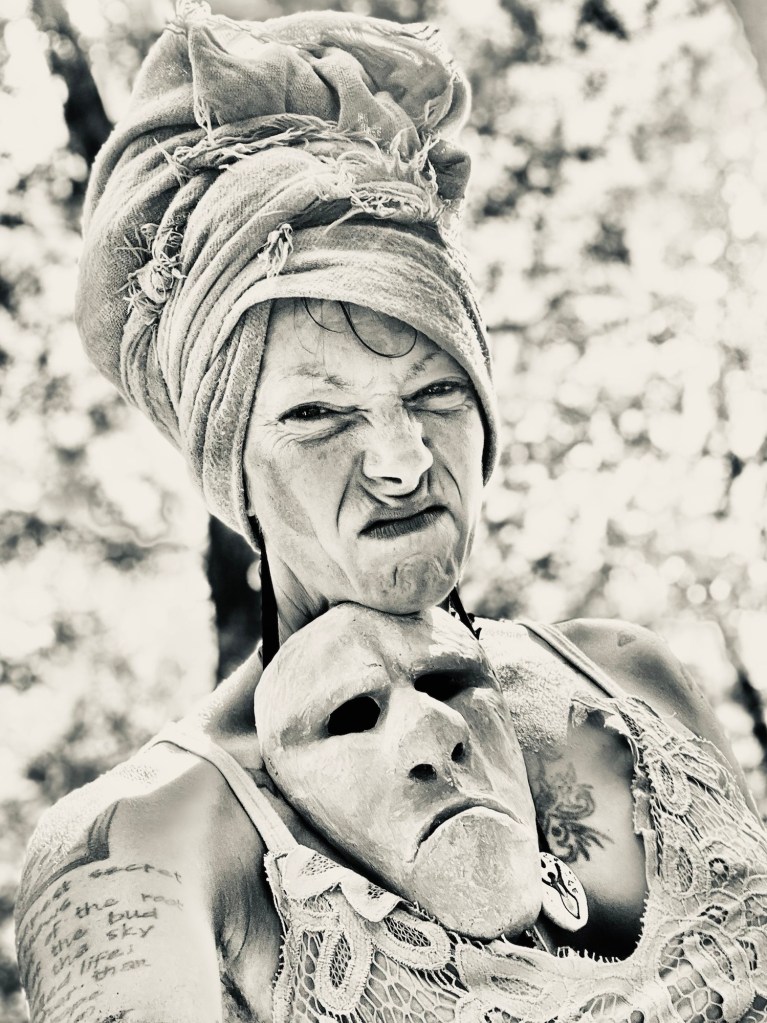
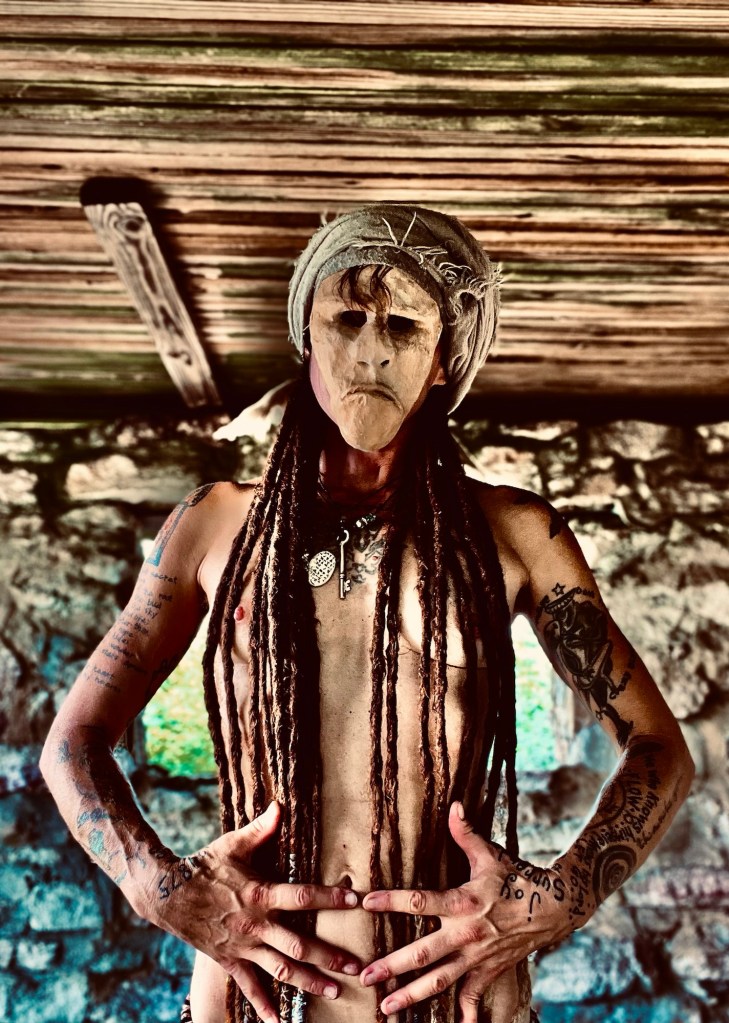
Reese Miller as the Kore , (or Jester Maiden) before being Taken by hades to the Underworld to become his Jester Queen
The Kore archetype, traditionally representing youthful innocence and potential in mythology and psychology, symbolizes much more than just the early stages of life. It is a powerful symbol of transformation, growth, and the cyclical nature of existence. The Kore, as a maiden figure often associated with goddesses like Persephone in Greek mythology, also carries deeper meanings about the illusions tied to youth, time, and identity. By examining the symbolism of the Kore, we can explore the larger themes of human experience—innocence, growth, and the journey from one phase of life to another. ~ Jenna LillaThe Kore is often depicted as a young maiden, symbolizing the freshness and purity of youth. This stage of life is marked by innocence, untested potential, and an open future. In mythology, the Kore is often paired with the figure of the mother, as seen in the myth of Demeter and Persephone. Kore, in this case, represents Persephone in her youthful form before her descent into the underworld, where she transforms into the queen of the dead. This dual role of the Kore—both innocent maiden and future queen—symbolizes the unfolding of life from youth to maturity. While the Kore is a symbol of growth and transformation, this very cycle also highlights the transitory nature of life. Youth, while often idealized as a time of beauty, vitality, and potential, is fleeting. The attachment to youth and the fear of aging reflect deeper psychological and spiritual challenges. Just as the Kore will eventually transform, we, too, are called to move beyond the illusions of youth and embrace the full journey of life. ~Jenna LillaThe Kore’s association with youth also raises questions about how we perceive time and change. The concept of youth, as something idealized or feared, is tied to the larger illusion of time itself. We often become attached to the idea of youth as a period of innocence and purity, but this attachment can lead to a sense of loss as we grow older. The fear of aging, or the desire to remain forever young, is an illusion created by the mind, which clings to temporary states of being. ~Jenna LillaIn reality, the essence of life is timeless and not bound by the cycles of youth and age. The Kore archetype reminds us that while we pass through different stages of life, these stages are just phases in a larger continuum. The true nature of our being—our consciousness or essence—remains unchanged, even as our bodies age and our experiences shift. The Kore, therefore, symbolizes the movement through these stages, but also serves as a reminder that beneath these changing forms, there is something timeless and unchanging.~Jenna LillaOne of the central themes of the Kore archetype is the journey from innocence to wisdom. In many myths, this journey involves a descent into the unknown, a confrontation with darker, more challenging forces. In the case of Persephone, her abduction by Hades and subsequent time spent in the underworld represent the loss of innocence and the gaining of wisdom. This is not just a story about personal growth but about the necessary transitions that all individuals must undergo to attain greater understanding. In this context, the Kore symbolizes the tension between innocence and experience, youth and maturity. While youth is often seen as a time of unblemished potential, true wisdom comes through the trials and challenges of life. However, both innocence and wisdom are part of the same journey. The duality between these states—between youth and age, innocence and wisdom—reflects the deeper truth that growth and transformation are part of the natural order of life. ~Jenna LillaThe Kore archetype also speaks to the cyclical nature of life, where birth, growth, decay, and renewal are intertwined. In many cultures, the Kore is connected to the cycles of the seasons, particularly in the myth of Persephone, whose descent and return from the underworld are linked to the changing of the seasons. Her time in the underworld represents winter and death, while her return to the surface symbolizes spring and rebirth. This cyclical pattern serves as a reminder that life is not linear but is made up of repeated cycles of growth and transformation. The Kore’s journey from maidenhood to queenhood, from innocence to wisdom, is not a one-time event but part of a continuous process of renewal. Just as nature moves through its seasons, so too do we pass through different phases of life, each phase offering its own lessons and opportunities for growth. ~Jenna LillaWhile the Kore represents the cycles of life, she also invites us to transcend the illusions of duality that often accompany these cycles. The distinction between youth and age, innocence and experience, can create a sense of separation, making us believe that these stages of life are opposites. However, the Kore archetype teaches that these are not separate states but are interconnected parts of a whole. ~Jenna LillaIn the myth of Persephone, her role as both Kore (the maiden) and queen of the underworld shows that youth and maturity are two sides of the same coin. The cycle of life encompasses both light and dark, innocence and wisdom. By embracing both aspects of ourselves—the youthful, innocent part and the mature, wise part—we can move beyond the illusions of duality and experience a more integrated, whole sense of self. ~Jenna LillaUltimately, the Kore archetype symbolizes the potential for growth, transformation, and renewal. She represents the beginning of a journey, but also the deeper truth that all stages of life are interconnected. The youthful innocence of the Kore is not something to cling to, but something to honor as part of the larger process of becoming. Her story is one of continuous transformation, reminding us that life is a series of cycles that lead us toward greater understanding and wisdom. ~Jenna LillaBy reflecting on the Kore, we are reminded that the passage of time, the movement from youth to age, is not something to fear but something to embrace. Each phase of life brings its own gifts, and by accepting the flow of time, we can experience life more fully. The Kore symbolizes the beauty of this unfolding journey, encouraging us to embrace both the innocence of youth and the wisdom that comes with experience. Jenna Lilla
I came thru the other side of that and learned that it’s not about Transcending but about Integrating. Spirit plays here for its own reasons, and is drawn to this Earth Flesh Playground because it wants to Feel Deeply and experience visceral Life. Being a very plutonic underworld person but aiming always for the spirit when I was in my 20s, it took a lot of delusional wake up experiences to Own all that I had believed myself to have transcended. All that stuff I thought I had evolved past, I had simply dissociated from, and the force of its wrath at being ignored and suppressed made its fury known in physical symptoms and deeply imbalanced emotional reality with a dash of incredibly Underworld-like navigations thrown in. The higher I thought I was flying in those years, the more pure i thought I was, came at a price and it was collected by the Dark Feminine in 2018. And since complete dissolution and and finally Truly making friends with the parts of the Self that I had trapped in deep subterranean caves and dungeons , with compassion, and awareness that it was a matter of freeing bit by bit, those fragments from all timelines trapped in my Prizm Cell.Ves. Instead of ‘Mind over Mattering’ my body and pushing it to extremes, instead of convincing myself I was pure and lofty and fully my idealized Spirit Self-the Puer( my online and business name even used to be Puella Eterna for 13 years)- i became engaged in the true Alchemical Work. I Realized how abusive I had been to Psyche and Body all those years ( and lifetimes) of denigrating the dark hungry fiery tempest of my soul, the Feminine, thinking I could Will Myself into the magical spheres of the heavenly abodes:.:::: I have always been easily carried away on the wings of spirit, can easily disembody into OBE states etc. What I came here to do, Now, was to actually Make This Body Fully Conscious , for it is the Marriage bed of Eros and Psyche, and the Alchemy of Life uses all vibrations to create.
When I made friends with the depth of my own Pain and Anger and Lust for Aliveness, Lust for Intensity of Being, and my own Arrogance etc ( Scorpio ascendent/Mercury conjunction, sun/Uranus Scorpio conjunction( all ruled by mars) and all in the 1st house( house of mars/Aries), with an Aries moon( mars ruled) and Mars aspecting strongly every planet in my chart = I was a complete Fool to imagine that I was a soft and ethereal spiritual angelic figure floating in the higher spheres…..:. I am a child of Mars, and Mars at its best is the Blood and Passion and Vitality to Exist and Move in this Realm, Mars is the defender and protecter of all that is sacred in creation, it is Raw, Brash, Authentic, Physically Vital, Mentally Agile, Temperamental….and Serves the Feminine……
When I truly came to Know Myself and stopped building castles in the sky, but used my archetypal Mercurial nature along with Mars to go to the Underworld and reclaim the very Selves I had locked up thru this Infinite Game over Time, I came Alive and learned what real Power is.
That’s my journey. I have compassion for that person I was and thought I was, but I have made my Vow, to Die in Battle, as a Sacred Warrior, and a Warrior must be in touch with his/her Fire and Anger and lust and Blood and sacrifice it on the alter of the Feminine Creation…..
( of interest is the relation of mars and Saturn… Mars/Blood is made in the Marrow of the bones/Saturn…… Mars is the Warrior who serves The Saturn Kingdom, which is the very energy that gives Form to the life principle:= in my chart, My mars is in Sagittarius/conjunct Neptune ( the spiritual warrior) in the second house( using the physical body/ it’s values and resources) And is Square( tension) (serving) Saturn in Libra which is also conjunct to almost a degree…… in the 11th house/ community and the larger stage of service to the people: It’s all written in Light Codes we wove ourselves into.
My heavy 12th house/ underworld where Pluto/hades sits exactly to the minute almost, with Venus, is my Lifelong lesson…..spiritualizing and completely transforming the Sexual and Aesthetic principles……using the raw lust and vitality of The black Goddess Black Carbon through Dionysus protean morphing Imaginal spheres under intense pressure to create the Diamond Body.:::: the twin Sisters of Carbon666 and Daimond ….. the Treasures hidden in this Earth and this Flesh and this Game of Matter Mater Mother Matrix Maat.
The Psyches realm is a dark realm that takes in everything….light and dark and everything in between. It likes the humus of earth, the compost, the shit of life, the messy smelly sweaty fleshy human realm of bodies bumping into bodies in sensate expression , playing with selves in Carnes Nation, the carnal nest of alchemy, where Soul is the Imaginal Playscape and Spirit must come Down To Earth to Play with Form.
I spent so much time out of body for the first 26 years of my life; I’m now happily Wed in the alchemical marriage bed knowing the Great Work goes on and on and on, and my relationship with Saturn has transformed my life into one of beauty: I used to balk at Saturn and his crusty old crystallization and constriction of my ever-so Icarus-like ideals……
But….
I am the Sacred Warrior who Serves the Divine…:.I serve the King and the Kingdom and Protect and Honor the Queen and her Queendom… because as the Mercurial Martian or the Martian Mercurius……..the Foolish Warrior or the Warrior Fool, my realm is not just the heavens but I travel between the Yooer and the Lower and The middle realms and so I just be able to hold the Tension of all Their Frequencies.
An honest person is one who knows his own capacity to Lie but chooses Truth…..a Strong person knows his own capacity for Violence but chooses Restraint….a Wise person is one who knows his own capacity for ignorance and knows he is a Fool…..a Peaceful person is one who knows his own Anger and so is not blindsided when least expecting it, and thus knows what it is to be Gentle.
May the black moist Fertile Soil keep your Roots nurtured as your branches reach for the Sky ⭐️🙌⭐️
Aho.
10-18-24
My friends post that my response is in reference to.
another way of saying what I expressed, is that as a Waving Being who Becomes Particular….in this journey of Embodiment through the entire Spectrum of Light and Frequency….. is that I am in the Prizm Cell of All my Lives in All Realities, in All Times and Spaces……expressing through this Body, Now, which is made up of All of Me~s, all the Cell.ves and Organ~I~zed Cohesions holographically …. In terms of Light… Infrared all The way thru UltraViolet….we also Embody as Sound and All variations of frequency.
Infrared penetrates all the way thru Earth and hence Body, ‘the smokeless fire’…..the realm of the Djinn….. that is where we have the Dark parts of ourCellves ….not Evil…..Darkness and of a different spectrum …..Ultraviolet more akin to our Angelic SidesOfSelf..,;;
When we seek the UV and demonize the Infrared, we get trapped in the Prizm of our own fragmentation…..we disown a huge amount of the deepest aspects of Being, whilst grasping for the Angelic Aspects: They have their Realms for a reason.:::::.
When I speak of going deep into the underworld, to mine the treasures of Pluto/Hades in the darkest layers of Self trapped and submerged and cast off in this infinite journey, I speak of going into the Infrared WaveForms of Self that are as much Me as the UV or higher vibration LightWaves that are of a very different nature, but equally Me.
Fire & Light
Is a poetic way of playing with it
In my lifetime of ‘out of Body’ experiences and traversing in the high frequency Light of detachment and lucidity, the permeations are very different than when I go deeply ‘in body experience’ which is raw and primal and Fiery and red heat of Feeling….
Our Bodies give us a Playground where we bring All Of these Refractions of Self into one Expression , as a Tether, if you will, to Come To Terms With Self Literally To Bring to Term Our Self Like a Mother carrying To term Her Baby
New creation.
The more we Integrate and ReClaim all the fractured frequencies that issue From our own Spark of Existence as a Being Who Is,
The more we Free those frequencies to Nourish all Of Bodies In all Of Times.
If the very Elementals/elements that make up my fleshly abode are brought into a cohesive net of Understanding and Loving Awareness, as they go on in their journey and become part of other bodies and abodes, they themselves are able to bring healing …
Like the Dwarves who live deep in earth and who are like elementals in a sense
And Elves who are like the perfected or angelic higher selves
And the HuMan, here in the Middle Earth,
Thigh we are all of them Depending on which Angle Of the Arc We Shine our I’s From
This is the Nekyia, the night sea journey through the underworld made also by Odysseus, Aeneas, and Hercules, and by Eurydice, Inanna, Persephone, Psyche, by Orpheus, by Christ. Whether this underworld is frigid and ghastly or burning with the hots of hell, it is a realm characterized by temperatures suitable only for demons, ghosts, heroes and heroines, goddesses and shades who are no longer altogether of the upper world. Outsiders. Marginals. Alchemy is a profession of marginals; those at the edge. Those who live from their own fires, sweating it out, self-sustaining their own temperatures which may be at variance with the collective climate.”
Salt is the mineral substance or objective ground of personal experience making experience possible. No salt, no experiencing- merely a running on and running through of events without psychic body. Thus salt makes events sensed and felt, giving us each a sense of the personal–my tears, my sweat and blood, my taste and value.
The entire alchemical opus hangs on the ability to experience subjectively. Hence it is said in The Golden Tract: “He who works without salt will never raise dead bodies.” The matters are only macrocosmic and chemical, out there, dead unless one works with salt. These intensely personal experiences which give taste and flavor to events are nonetheless common to all-both mine and yet common as blood, as urine, as salt. In other words, salt acts like the ground of subjectivity (“That which is left at the bottom of our distilling vessel is our salt-that is to say our earth.”). It makes possible what psychology calls felt experience. So, we must turn to this same ground to mine our salt.
James Hillman, Salt
(Continued in the Captions for each photo)
Felt experience takes on a radically altered meaning in the light of alchemical salt. We may imagine our deep hurts not merely as wounds to be healed but as salt mines from which we gain a precious essence and without which the soul cannot live. The fact that we return to these deep hurts, in remorse and regret, in repentance and revenge, indicates a psychic need beyond a mere mechanical repetition compulsion. Instead, the soul has a drive to remember; it is like an animal that returns to its salt licks; the soul licks at its own wounds to derive sustenance therefrom. We make salt in our suffering and, by working through our sufferings, we gain salt, healing the soul of its salt-deficiency.Salt requires a pinch, feeling the pinch of the event that stings; lead seems to require time, waiting it through. What results from the salt cure is a new sense of what happened, a new appreciation of its virtue for soul. Salt may also be mined from whatever is stable. As the principle of stability whose alchemical sign was a square, salt can be mined from the rocks of concrete experience, those fixities which mark our lives with defined positions. These places are not merely solid facts-my degree, my property, my car accident, my war record, my divorce; these are also places where psychic body is salted away and stored. These rocks, when recognized and owned, belong to the history of my soul, where it has been salted down by the fixities of experience, giving a certain crystallization to my nature and keeping me from inflammations and volatilizations.Though we do not make it by fire, we do make salt by means of dissolutions. Salt is soluble. Weeping, bleeding, sweating, urinating bring salt out of its interior underground mines. It appears in our moistures, which are the flow of salt to the surface. “During the work the salt assumes the appearance of blood” (CW’ 14, 8337). Moments of dissolution are not mere collapses; they release a sense of personal human value from the encrustations of habit. “I too am a human being worth my salt”-hence my blood, sweat, and tears.Viewed from the perspective of salt, early traumas are moments of initiation into the sense of being a me with a subjective personal interior. We tend to fixate on what was done to us and who did it: resentment, revenge. But what psychologically matters is that it was done: the blow, the blood, the betrayal. Like the ashes which are rubbed into the wounds at initiation rites to purify and scarify, the soul is marked by its trauma. Salt still is touched to the body in Christian Baptism, and eaten still at Jewish Pessach in ritual remembrance of trauma. A trauma is a salt mine; it is a fixed place for reflection about the nature and value of my personal being, where memory originates and personal history begins. These traumatic events initiate in the soul a sense of its embodiment as a Vulnerable experiencing subject.The paradigmatic story of “looking back” is that of Lot’s wife. (Lot and Lot’s wife were even used as alchemical terms for salt- Jobnson’s Dictionary.) Because Lot’s wife could not refrain from looking back at the destruction of Sodom from which they had been saved, she was turned to a pillar of salt. Jewish commentators on the tale say that her mother-love made her look behind to see whether her married daughters were following; and Christian comments on Luke 17:32 also see the source of her move in remembrances of family and relatives, personal subjectivities of feeling. Evidently, family fixations are also salt mines. The disappointments, worries, smarts of mother-complex love–the evening with the photograph album, the keepsakes- are ways the psyche produces salt, returning to events in order to turn them into experiences.The danger here is always fixation, whether in recollection, childhood trauma, or in a literalized and personalized notion of experience itself: “I am what I have experienced.” Paracelsus defined salt as the principle of fixation (Il:366).
“⭐️This book changed the way I look at dreams, or maybe the book taught me what my heart always wanted me to understand. Hillman looks at the dream as happening in the “Underworld” – a place of death – and wants us to enter into that world to understand the dream instead of trying to drag the dream up into the day-world by interpreting it.
Some quotes from the book:
“Freud’s method projects the persons in a dream back over the bridge into the dream-day, even if for the sake of their latent meaning. We associate my dream-brother and dream-father to my day-brother and day-father and, by this association, return the dream to the day. Jung’s method of interpretation on the subjective level takes the dream persons into the subject of the dreamer. They become expressions of my psychic traits. They are introjected into my personality. In neither method do we ever truly leave the personal aspect of the dream persons, and thus they remain in the upperworld. Dare I say it loud and clear? The persons I engage with in dreams are neither representations of their living selves nor parts of myself. They are shadow images that fill archetypal roles; they are personae, masks, in the hollow of which is numen.”
“Public performance on a stage, perhaps because it puts us into the underworld of theatre, also constellates the curious interplay between life-soul and image-soul. The almost depersonalization experience of stage fright makes one feel deserted by one’s soul. All that one memorized and trained for has suddenly vanished. It is as if another soul must play the role, and this moment of going on stage is like a rite de passage, a transition into death.”
“For a dream image to work in life it must, like a mystery, be experienced as fully real. Interpretation arises when we have lost touch with the images, when their reality is derivative, so that this reality must be recovered through conceptual translation. Then we try to replace its intelligence with ours instead of speaking to its intelligence with ours.”
Hillman notes that when we see a killer in a dream, we tend to fear him. But Hillman looks at this figure as a helper who is trying to initiate us into the Underworld land-of-the-dead; the dream world: “There is a divine death figure in the killer, either Hades, or Thanatos, or Kronos-Saturn, or Dis Pater, or Hermes, a death demon who would separate consciousness from it life attachments.
Hillman, in one section of the book describes the circus as a metaphor of the Underworld: “Where else but the circus will we ever see the underworld in daylight: the tent of enclosed space, the rings, everyone as close to death as his or her art will allow, the freaks of nature that are beyond nature, and above all, the precise performances of repetitive nonsense, as if Ixion, Tantalus, and Sisyphus had once worked for Ringling Brothers.”
“The comic spirit masquerades in all things we do and say; we are each a joke and do not need to put on a white face. The matter is not one of becoming a clown but of learning what he teaches: making an art of our senseless repetitions, our collapsing and our pathologizings, putting on the face of death that allows the dream world in and watching it turn ordinary objects into amazing images, our public persons into butts of laughter.”
“Unfortunately psychology emphasizes attention and recall; the dayworld wishes to have, must absolutely have, a ‘good memory’; a bad memory is more devastating to success than is a bad conscience. Forgetting therefore becomes a pathological sign. But depth psychology based on an archetypal perspective might understand forgetting as serving a deeper purpose, seeing in these holes and slips in the dayworld the means by which events are transformed out of personal life, voiding it, emptying it. Somehow we must come to better terms with Lethe, since she rules many years, especially the last years, and we would be foolish to dismiss her work only as pathological. The romantics took Lethe most seriously.”⭐️
James Kulm, in reference to the book ‘The Dream and the Underworld’ by James Hillman
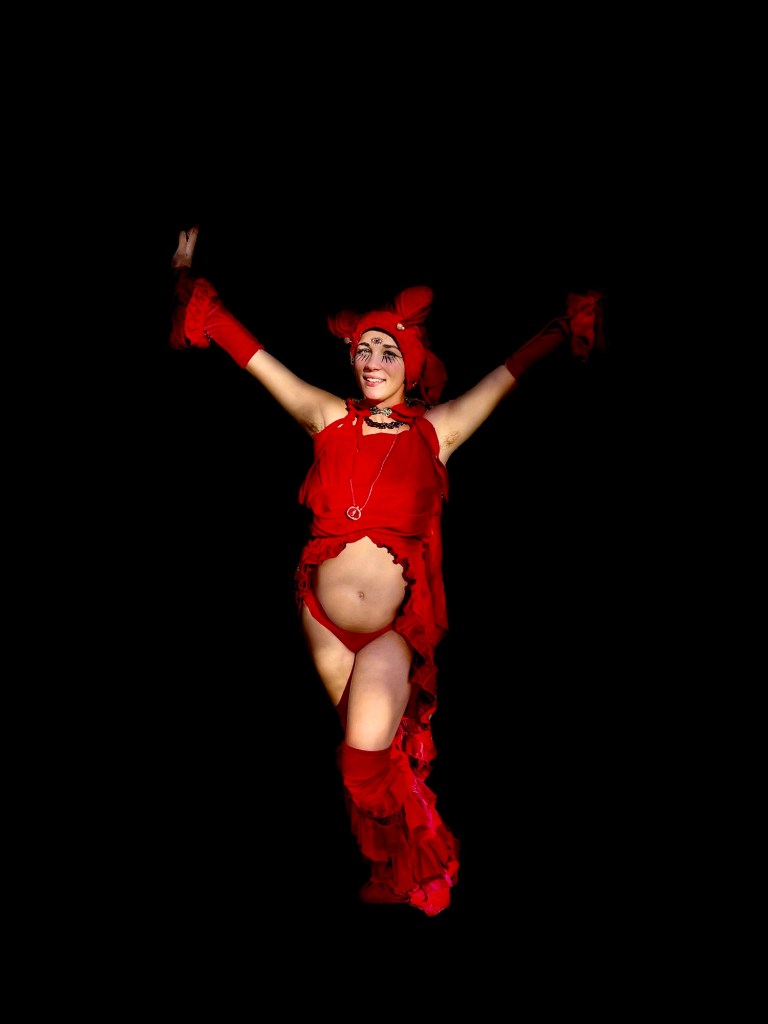
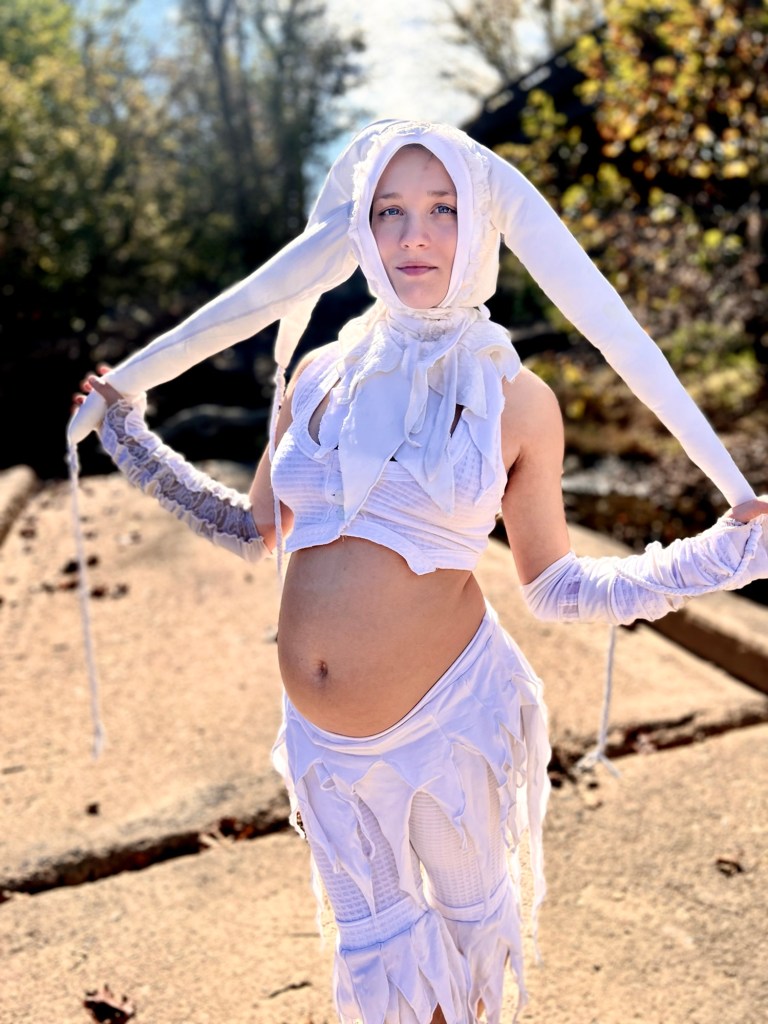
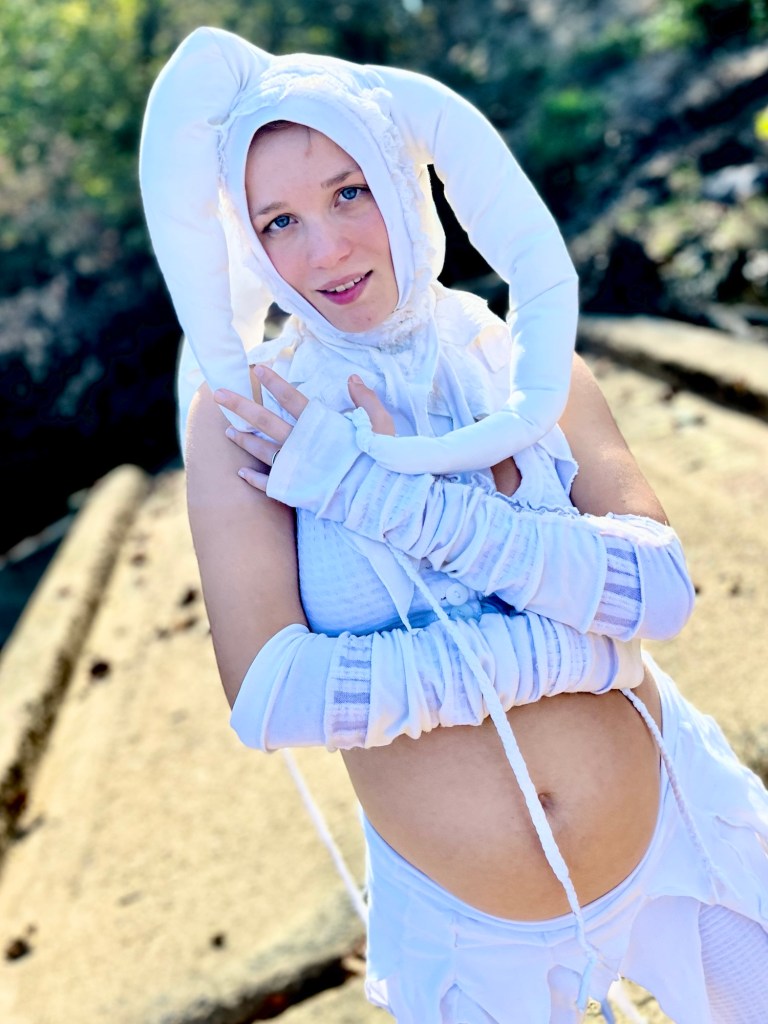
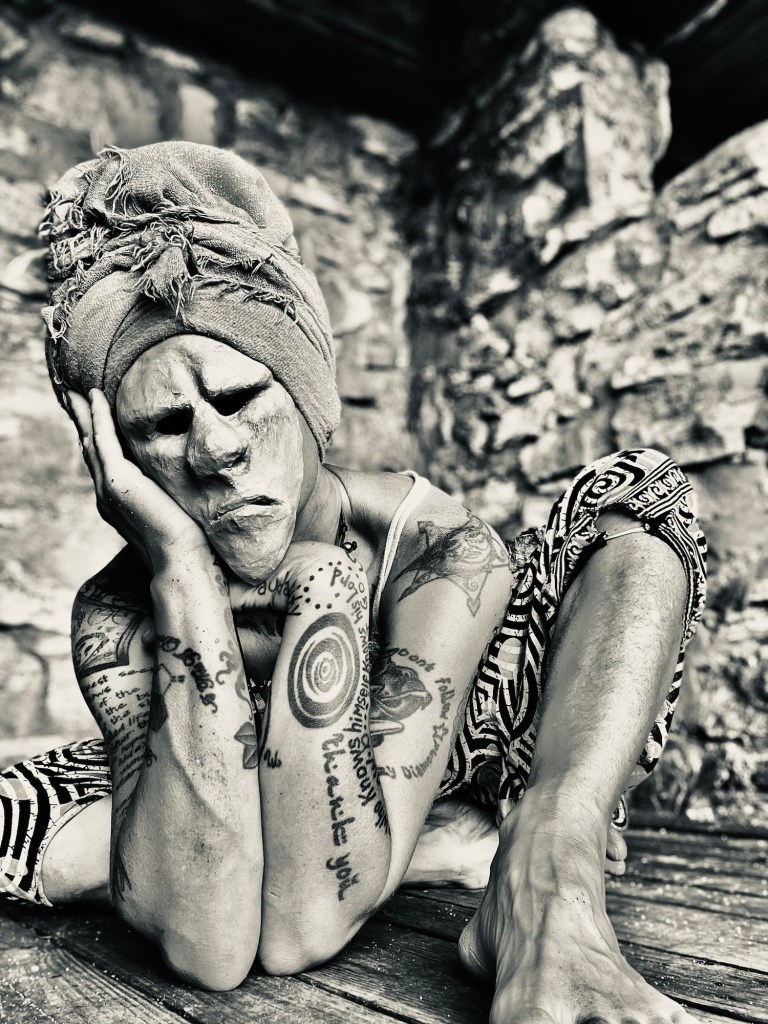
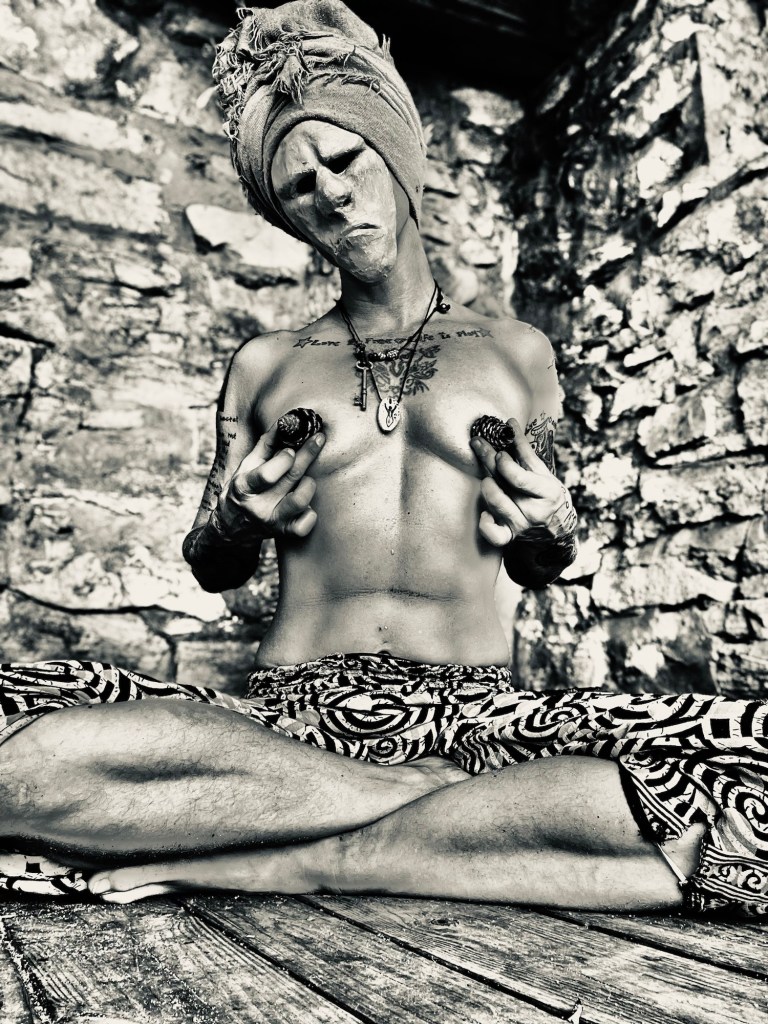
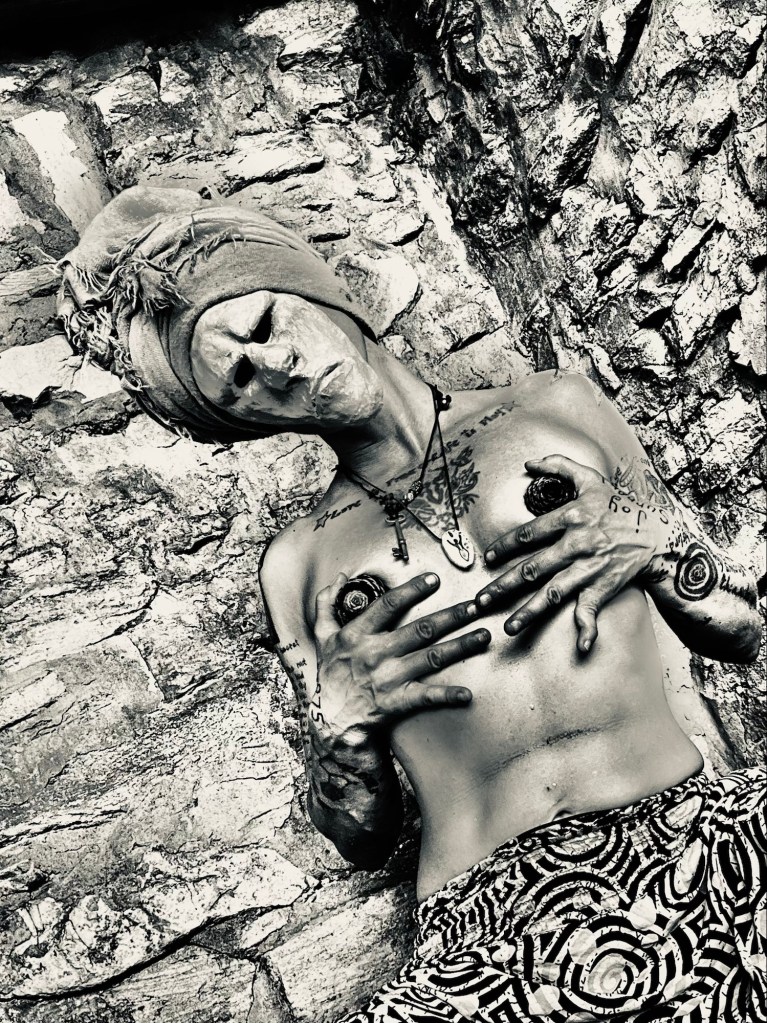
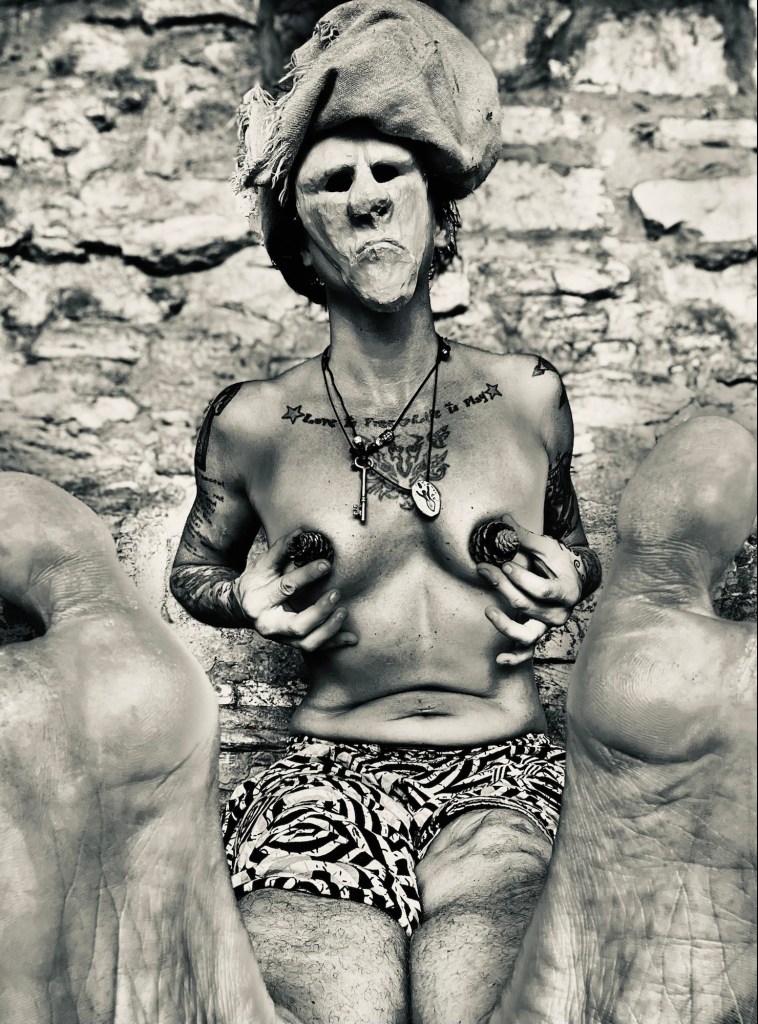
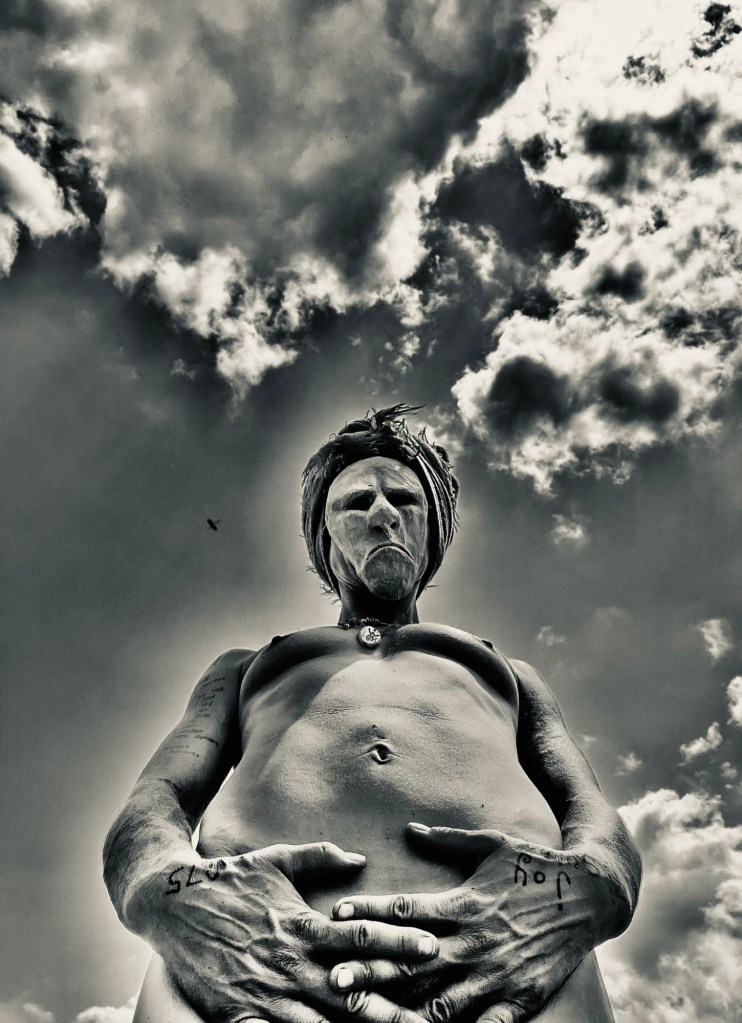
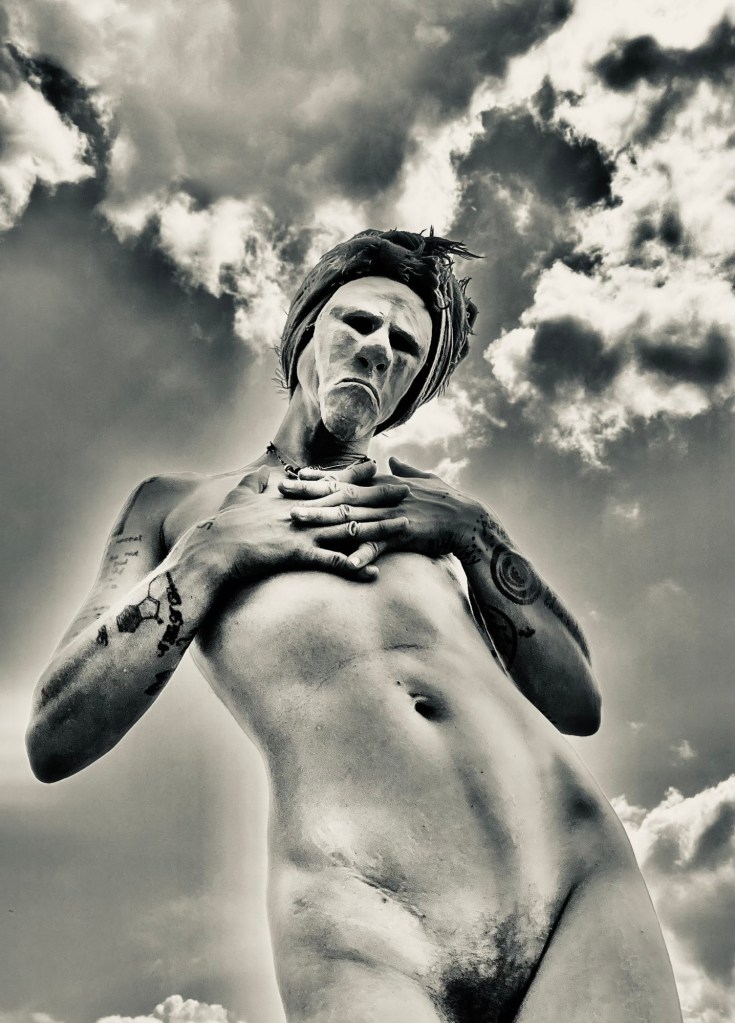
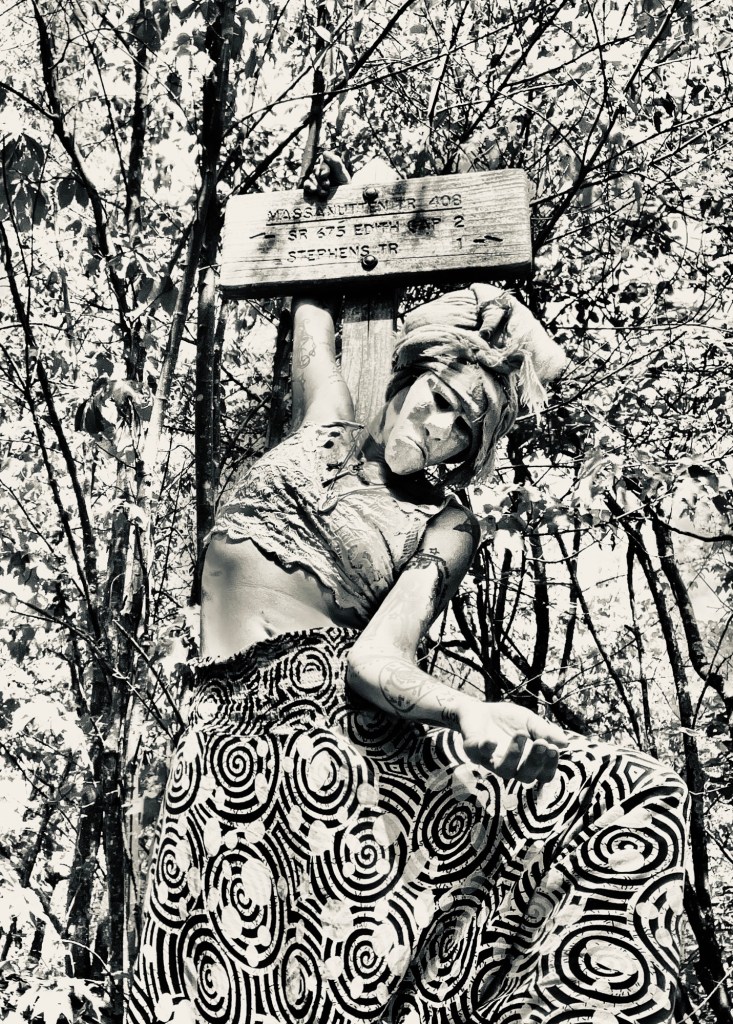
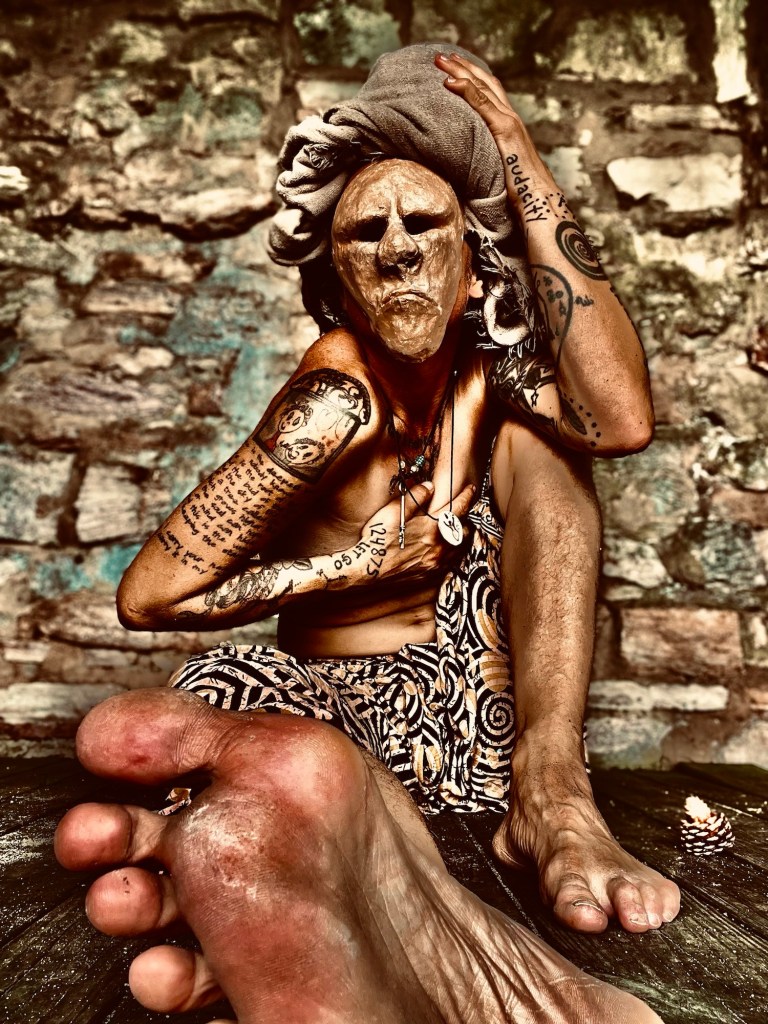
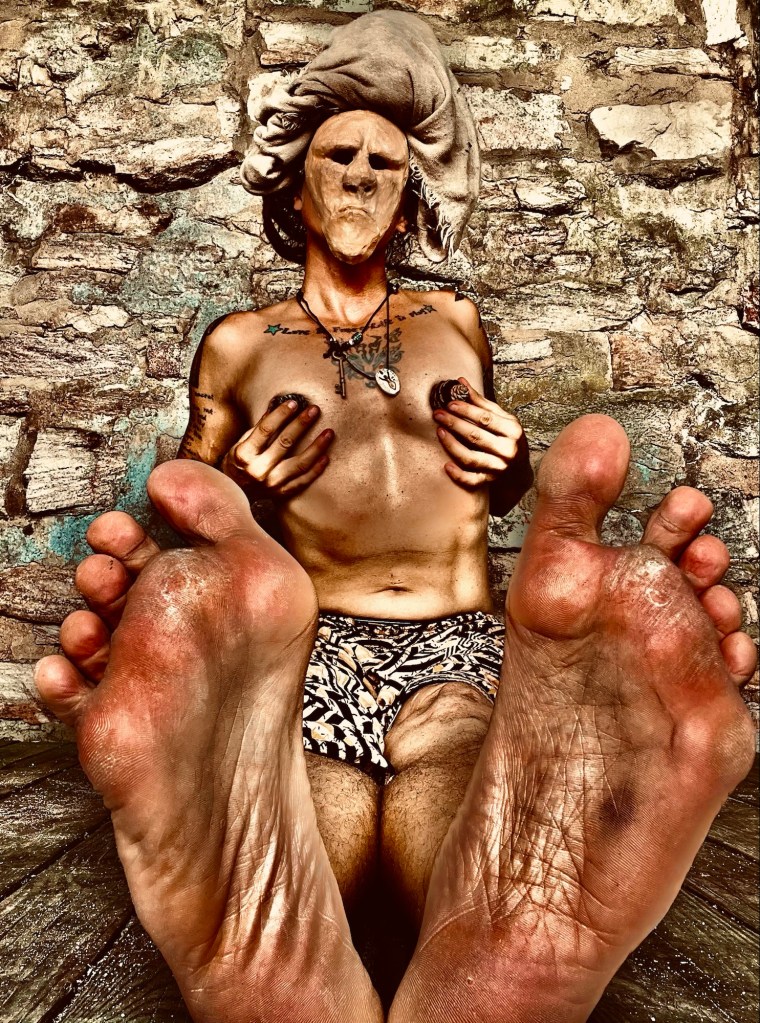
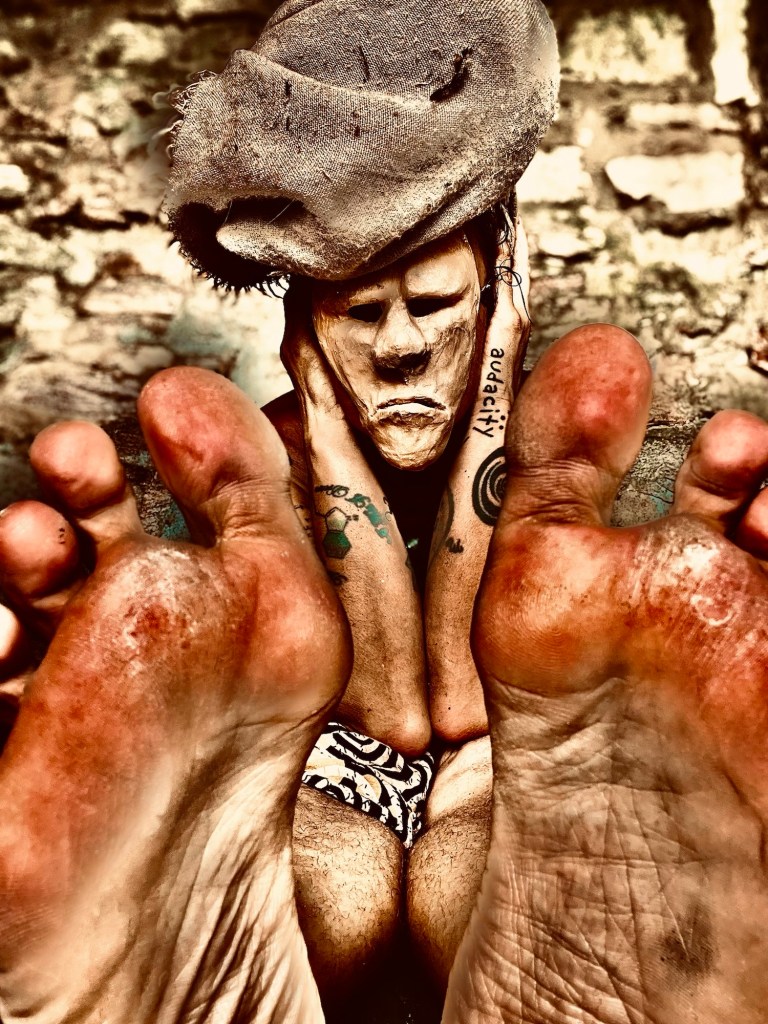
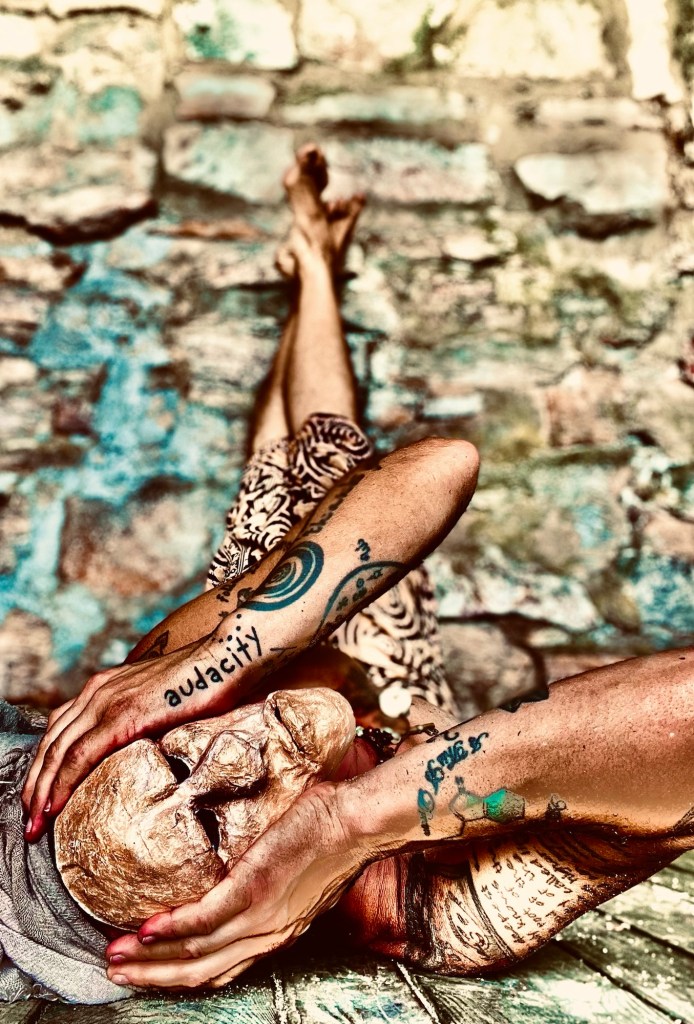
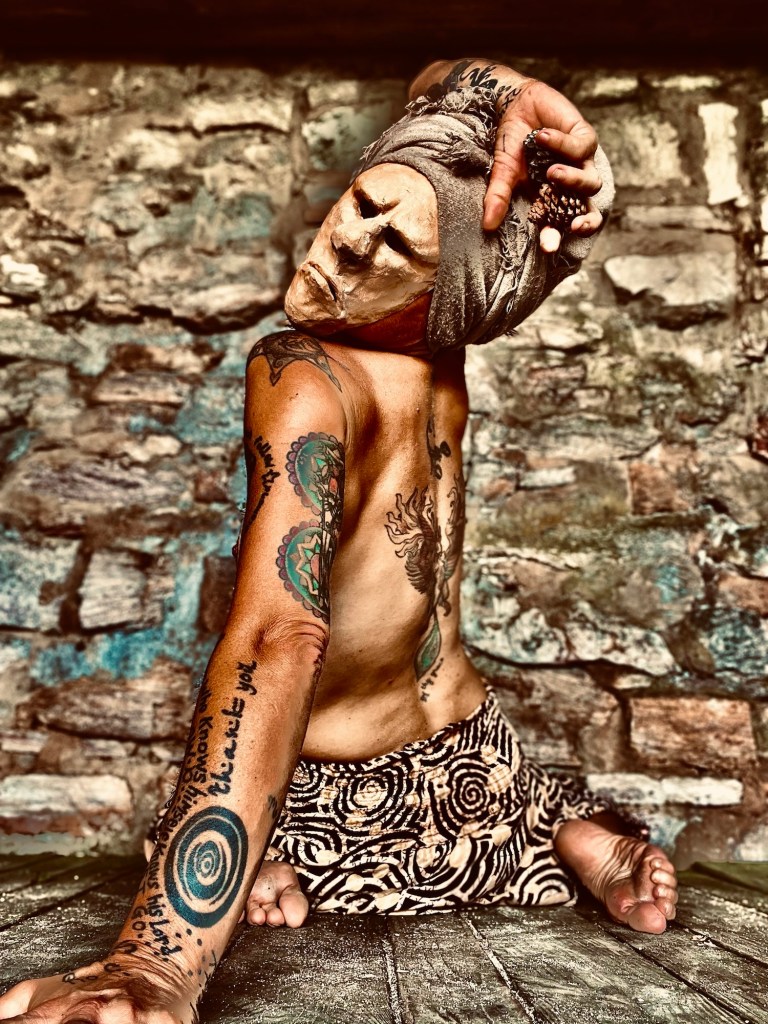
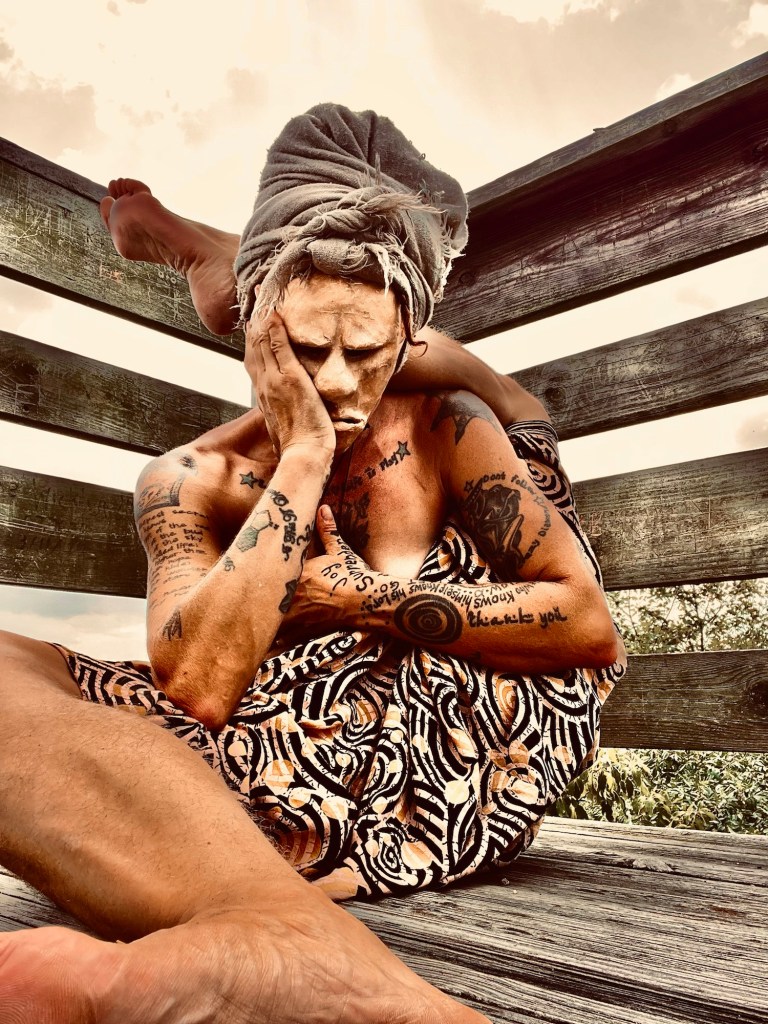
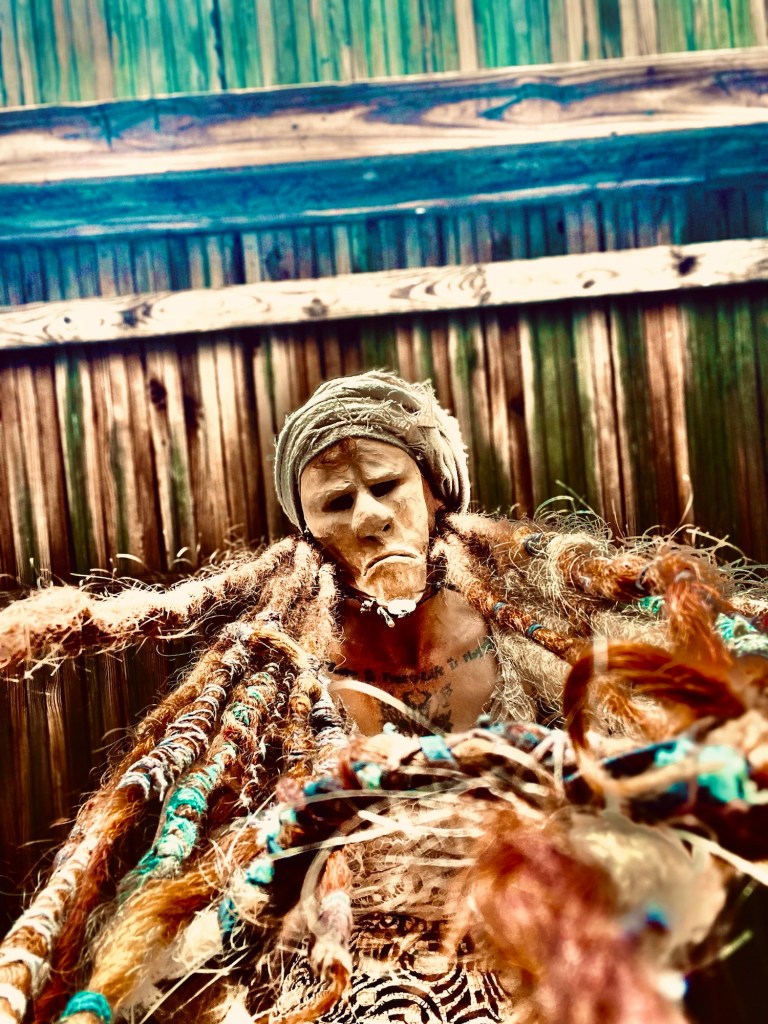
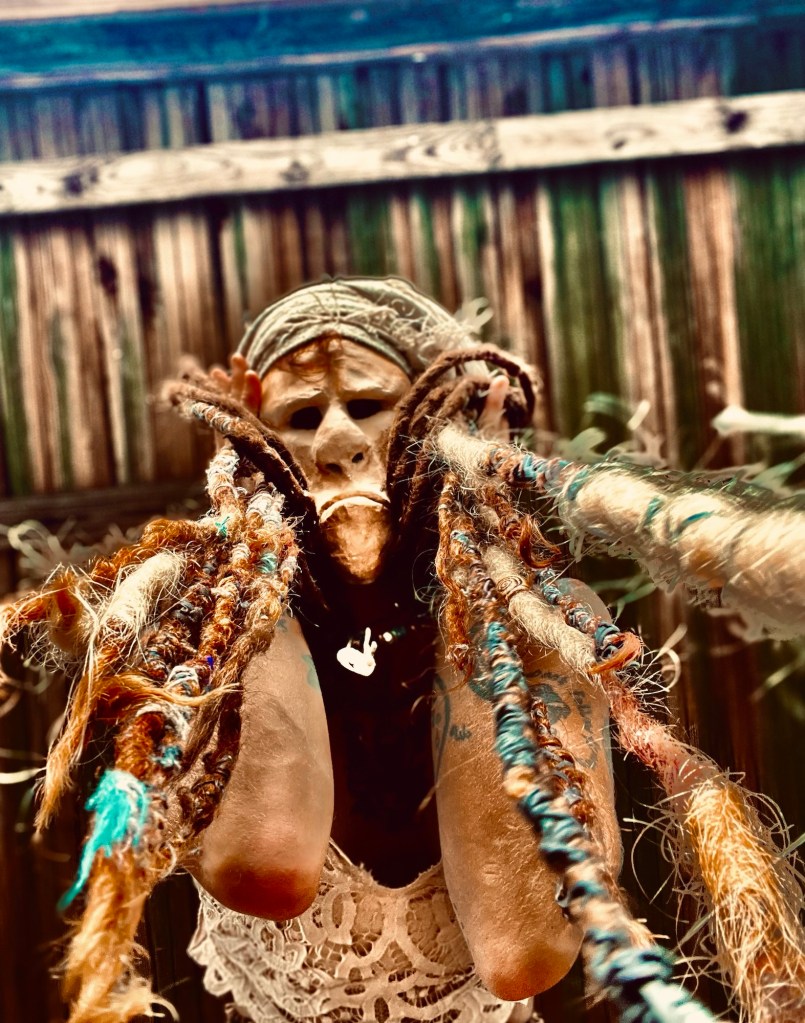
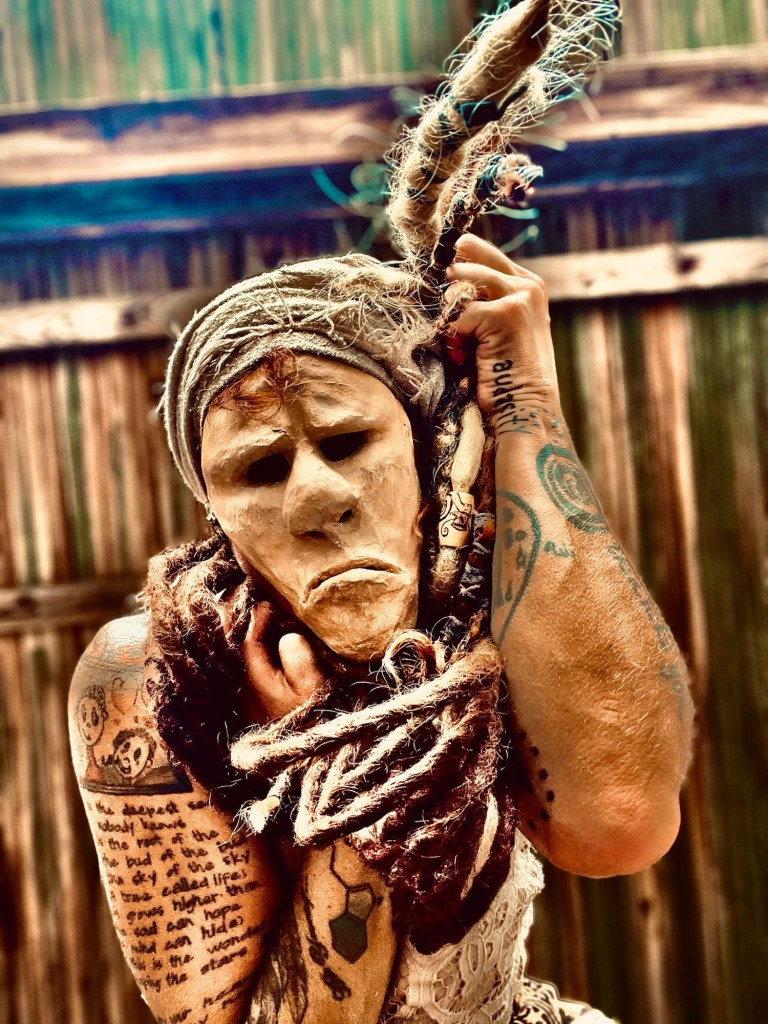
{self portrait series Kennedy Peak 8-6-24 part 4 ::::The SilverScreen of the Underworld Dream }
~all photo captions contain quotes/excerpts from the book by Hillman
UNDERGROUND AND UNDERWORLD When using the word underworld, it is imperative to keep in mind a distinction made by some classicists. This distinction is of great psychological importance, because it frees the psychic realm from nature. Chthon and ge (“underworld” and “underground”) do not necessarily refer to the same region or evoke identical feelings. “Chthon with its derivatives refers in origin to the cold, dead depths and has nothing to do with fertility. “This kind of deep ground is not the same as the dark earth; and the Great Lady (potnia chthon), who sends black-winged dreams and who can also be called Erinys, cannot simply be merged into the single figure of the Great Earth Mother.Psychology’s great-mother complex has swallowed even her own differentiations. Small wonder that this complex is also called “uroboric consciousness,” for even she herself vanishes into an interpretive monotony that makes me believe that the monotheistic psychology I so often belabor is less a mimesis of ancient Hebrewism (within and alongside of which there was much space for imaginal variety) than it is a mimesis of the Great Mother. Monism as Momism. Be this as it may, when we read analytical psychology today to discover about the ‘chthonic,’ we find it has taken on her meaning of primitive earthiness. Morever, as primitive and earthy, it must mean matriarchal and feminine. Thus our instinctual body, whether in flesh or image, in men or women, in the past or now, belongs to her, and we must become murderous heroes to get it back. The great-mother complex hangs the trinket of female gender on agriculture and fertility, as well as on the earth, body, instinct, and on depth. This move ignores that chthonic is an epithet belonging in the sense of “Is ignorant about,” a chthon that cannot be identified with instinctual body or earthy soil.Let us be clear: the chthonic is not only female, not only instinctual, not only physical, and it does not have to do with fertility rites. As Wilamowitz-Moellendorf said, Ïf modern scholars, who talk so much about chthonian cults, think in this connection of agriculture and all that goes along with Demeter in that sphere, they have not accustomed their ear to the overtones of Greek words.” The two words ge and chthon imply two worlds, the first of the earth and in it, the second below the earth and beyond it.There are even three distinctions here which have been imagined as levels of earth: an earthed imagination in keeping with Ge herself, whose name we still find in ge-ography, ge-ology, and ge-ometry. The first of these distinctions is between Demeter’s horizontal green plain with its activities of growth and Ge, the earth below Demeter. This second level Ge, may be imagined as the physical and psychic ground of an individual or community, its ‘place on earth,’ with its natural rights, rituals, and laws (Ge-Themis). Here, Ge serves as a fundament on which human life depends even more deeply than on food and fertility, like a governing maternal principle that makes material fertility possible and is its spiritual ground, and then beneath these the third, chthon, the depths, the dead’s world.Of course, a polytheistic mind does not firmly divide these “levels,” and so Demeter-Ge-chthon frequently merge in epithet and cult. (What scholars imagine about the Greeks does not correspond, nor must it, with what the Greeks imagine about the Gods.) Also against my distinctions is the fact that one can as well view the entire complex of the underworld that one can as well view the entire complex of the underworld from the perspective of Ge, as does Patricia Berry. She then is able to see much of the chthonic spirit that I meet in Hades to be equally present in Ge, and that Gaia (Ge) is both material, maternal earth, and chthonic void with its own spirit.The question here partly turns on how one regards earth. The strata of meanings which I have just laid out in terms of Demeter-Ge-chthon imagines a nonphysical earth or terre pur, below or beyond and maybe prior to the ground that we touch. Some etymologists and classicists try to relate the three “levels” culturally, believing one level of meaning to be prior in the sense of historically earlier than another; as if in a genealogy fantasy themselves, they try to derive one level from another, tracing the historical development of these three concepts. For example, Kirk refers to the very early pre-Socratic Pherecydes of Syros (frg. 1), who placed Chthon at the beginning with Zeus and Chronos, “but Chthonie acquired the name Ge…”Rather than enter the arguments of historical fantasy, I would keep to the psychological distinctions reflected in the three words and three personifications. Ge herself shows two aspects. On the one hand, she has to do with retributive justice, with the Fates, and she has also mantic, oracular powers. (Ge chthonia was worshipped on Mykonos, together with Zeus Chthonios and Dionysos Leneus, as she was linked with the chthonic Pluto and Hermes and the Erinyes at Athens [Areopagus].) This is the “great lady” who sends the black-winged dreams and is appropriately the mother of Themis (“Justice”). This spiritual side of her can be distinguished, on the other hand, from the physical Ge to whom grains and fruits were given (Ge-Demeter). Demeter too has a mystery aspect; her daughter Persephone belongs to Hades and has an underworld function. The spiritual significance may not be reduced to the physical (death cult to fertility rites, sense of justice to agricultural rituals) without ignoring the blatant fact that there are different figures with different epithets. In other words, even the earth and nature have their psychic function as well as their terrestrial ones, and one may serve the earth and be on the ground in more ways than one, i.e., through psychic activities, and not only through natural ones.“Is it the transition to light that gives the dream its shadowy quality? We all know how much of an art it is, not to dream, but to recall it.”The distinction between chthonicand earthy, between invisible fundaments and tangible ground, between darkness of soul and blackness of soil, between three Egyptian hieroglyphs, one for earth, another for Aker or entrance to the underground at the edge of existence, and yet another for the realm of the dead of Anubis, the blue-black jackal-dog.Once again, the distinctions are presented in terms of distance. The most radical classicist of the late nineteenth century, Erwin Rohde friend of Nietzsche, said in his great work Psyche that the underworld of Hades and Persephone is so remote from our world that those removed there “can have no influence upon the life and doings of men on earth.”He further emphasized the distinction between the underground of Ge and the chthonic underworld by saying that Ge ïn actual worship was seldom found among the groups of male and female deities of a chthonic nature such as were worshipped together at many places.”The spiritual quality of the underworld stands forth most clearly in descriptions of Tartaros, which, from Hesiod onward, was imagined to be at the very bottom of Hades, its farthest chasm. Tartaros was compared with the sky – as distant from the earth as the heaven above, and it was personified as the son of ether and of earth, that is, a realm of dust, a composite of the most material and immaterial. As the fantasy of Tartaros developed, it became more and more a pneumatic region of air and wind. Unlike the Christian hell of fire, in the imagination of late antiquity Tartaros was a region of dense cold air without light. Hence, Hades often was spoken of as having wings, just as in the Gilgamesh Epic, Enkidu dreams of his death as a transformation into a bird, his arms covered with feathers. The dead are clad like birds, their element evidently air.The volatilization of the underworld contrasts it sharply with the ground under our feet. In the Alexandrian age, the netherworld lost its localization in the earth altogether – that is, it became free of natural literalism – and was geographically transposed to the underside of the world. There was now a lower hemisphere. The word subterranean (hypogeios, or “below ge”) referred to the whole celestial hemisphere curved below our earth and which, like Hades, must necessarily be invisible from our perspective. It cannot be seen from our usual standpoint. Already then the dayworld and the nightworld, the two sides of the romantic soul, were conceived in a geographical theology of the upperworld and netherworld.In “this theology the world is divided into two halves by the line of the horizon; upper hemisphere is the domain of the living and the higher gods, the lower that of the dead and the infernal gods. “The Egyptians had carried into extreme detail this reversed world below our feet. The dead walked upside down, feet up, heads down. “People there walk with their feet against the ceiling. This has the unpleasant consequence that digestion goes in the reverse direction, so that excrements arrive in the mouth.” The Underworld is converse to the dayworld, and so its behavior will be obverse, perverse. What is merely shit from the daytime perspective – or what Freud called day-residues – becomes soul food when turned upside down. The way we go about there, the way we ruminate, even logic is stood on its head, for there our heads are in another place. (In Chapter 6 we shall look at some contemporary examples of this “upsidedownness,” including excrements in dreams.)Might there be an archetypal figure within Freud’s “day residues” that are the material of the dream? Could these leftover scraps refer to the household garbage that was sacrifice to Hekate (Cults2:515)? Hekate has long been implicated in dream interpretations. Both the magical view that considers dreams to be foretellings and the nineteenth-century mechanistic view that attributes them to waste products of physiological sensations (garbage) show Hekate’s influence when she becomes equated with Nyx (night), as in Spenser and at times in Shakespeare, then dreams become her province and our interpretative ideas reflect her perspectives.We may continue this tradition, although in a different manner. Yes, the dream is made of scraps that belong to the Goddess who makes sacred the waste of life, so that it all counts, it all matters. Offering the dream to “the mysteries of Hekate and the night” (King Lear, act 1, scene 1) means giving back the regurgitations that “come up” in dreams without attempts to save them morally or to find their dayworld use. The junk of the soul is primordially saved by Hekate’s blessing, and even our trashing ourselves can be led back to her. The messy life is a way of entering her domain and becoming a “child of Hekate.”Our part is only to recognize that there is a myth in the mess so as to dispose of the day residues at the proper place, that is, to place them at Hekate’s altar. Ritually, the garbage was placed at night at a crossroads so that each dream may lead off in at least three directions besides the one we have come from. Hekate, who has traditionally been represented with three heads, keeps us looking and listening in many ways at once.Because the underworld differs so radically from the underground, that which has its home there, dreams, must refer to psychic or pneumatic world of ghosts, spirits, ancestors, souls, daimones. These are invisible by nature, and not merely invisible because they have been forgotten or repressed. This world is fluid, or dusty, fiery, muddy, or aetherial, so there is nothing firm to hold to – unless we develop intuitive instruments for seizing impalpables that slip through our fingers or burn at the touch.By locating the dream among these impalpable fundamentals in Hades, we will begin to find that dreams reflect an underworld of essences rather than an underground of root and seed. They present images of being rather than of becoming. We will learn that a dream is less a comment on life and an indication as to where it is growing, than it is a statement from the chthonic depths, the cold, dense, unchanging state – what we so often today call psychopathic because, as Freud saw, the dream does not show morality, human feelings, or the sense of time. We can no longer turn to the dream in hopes of progress, transformation, and rebirth.I think too that the underworld teaches us to abandon our hopes for achieving unification of personality by means of the dream. The underworld spirits are plural. So much is this the case that the di manes (underworld spirits), who were the Roman equivalent of the Greek theoi chthonioi, have no native singular form. Even individual dead persons were spoken of plurally, as di manes. “The ancient Egyptian was thought to live after death in a multiplicity of forms, each of these forms was the full man himself”(Ba, p. 113). The underworld is an innumerable community of figures. The endless variety of figures reflects the endlessness of the soul, and dreams restore to consciousness this sense of multiplicity. The polytheistic perspective is grounded in the chthonic depths of the soul. A psychotherapeutic emphasis will be upon the disintegrative effects of the dream, which also confronts us with our moral dis-integrity, our psychopathic lack of a central hold on ourselves. Dreams show us to be plural and that each of the forms that figure there are “the full man himself,” full potentials of behavior. Only by falling apart (RP, pp. 53-112) into the multiple figures do we extend consciousness to embrace and contain its psychopathic potentials.We get into difficulties when we try to read the deep chthonic level from the viewpoints of Demeter or of Ge. To perceive the chthonic with Demeter’s eyes is to take the dream as signal for literal action and to translate it with naturalistic ethics into a moralized world. To take a dream as containing an immoral implication or a moral indication for setting matters right and redressing a balance is to read it from the Ge-Themis-Dike perspective. Perhaps we need the intervention of another lady of the underworld, Hekate, who was especially adept with ghosts, who both brought and banned fear, and who had nothing to do with the round of human life (marriage, birth, agriculture), herself without brother or sister or any descendants. “Her worship was without morality.” Hekate’s underworld perspective reaches to the chthonic depth of the dream, which, on the one hand, is a simple statement of essence – how spectral things look when stripped of their human context – and, on the other, elicits our psychopathy. The region of the soul in which dreams have their home is deeper than flesh-and-blood urges, which we have been, mistakenly, calling chthonic, as if it were the same as natural, as if the underworld referred to ira and cupiditas, the blood-soul, the thymos. This all is earthy; the natural, physical, somatic soul of emotions. Our modern word unconscious has become a catch-all, collecting into one clouded reservoir all fantasies of the deep, the lower, the baser, the heavier (depressed), and the darker. We have buried in the same monolithic tomb called The Unconscious the red and earthy body of the primeval Adam, the collective common man and woman, and the shades, phantoms, and ancestors. We cannot distinguish a compulsion from a call, an instinct for an image, a desirous demand from a movement of imagination. Looking into the night from the while light of the dayworld (where the term unconscious was fashioned), we cannot tell the red from the black. So, we read dreams for all sorts of messages at once – somatic, personal, psychic, mantic, ancestral, practical, confusing instinctual and emotional life with the realm of death. The pronounced distinction between emotion and soul, between emotional man and psychological man, comes out in another of Heraclitus’ fragments (85): “. . . whatever it [thymos] wishes it buys at the price of soul.” Thymos, the earlier Greek experience of emotional consciousness or moist soul, did not belong in the underworld. So, to consider the dream as an emotional wish costs soul; to mistake the chthonic as the natural loses psyche. We cannot claim to be psychological when we read dream image in terms of drives or desires. Whatever counsel an analyst gives about emotional life, supposing it drawn from dreams, refers to his experience, which he reflects from the dreams. It is not in the dreams. He is “sup-posing” about them, that is, he is “putting onto” them what he knows about life. What one knows about life may not be relevant for what is below life. What one knows and has done in life may be as irrelevant to the underworld as clothes that adjust us to life and the flesh and bones that the clothes cover. For in the underworld all is stripped away, and life is upside down. We are further than the expectations based on life experience, and the wisdom derived from it. Again, we can follow Heraclitus (frg. 27): “When men die there awaits what they neither expect nor even imagine.” The word translated here as “expect” is related in Greek to “hope” (elpis), so that the specific hope that is abandoned (Dante, Inferno 3) on entering the underworld perspective is the fantasy of daylife expectations and flesh-and-blood illusions. Souls in Hades are “incurable” said Plato. There is no alteration to be hoped for. Such hope would be hope for the wrong thing. We need more the hope of St. Paul, which is a hope of invisibles and for invisibles, than the hope of Pandora, who, as the wife of Prometheus, contains a hidden hope, which he makes evident in his mission to help mankind. To go deep into a dream requires abandoning hope, the hope that rises in the morning and would turn the dream to its purposes. At the Hades level of the dream there is neither hope nor despair. They cancel each other out; and we can move beyond the language of expectations, measuring progressions and regressions, ego strengthening and weakening, coping and failing.Let me once more try to draw this distinction between the underground of vital, emotional life and the underworld Heraclitus said (frg. 15): It it were not in honour of Dionysus that they conducted the procession and sang the hymn to the male organ, their activity would be completely shameless. Hades and Dionysus are the same, no matter how much they go mad and rave celebrating bacchic rites in honour of the latter. The passage has given scholars – those who accept this phrasing at all – so much trouble partly because it juxtaposes, even identifies, the very different realms we are keeping distinct: psychic essences and emotional nature.This fragment refers to the mystery of a sacred procession and it must be read with a similar reverence, even as a revelation of something profound in acts that seem shamelessly pornographic, raving, and mad. It is therefore not enough to pass it off with a moral generality, as some interpreters do, that Heraclitus means that even the wildest life forces also lead to death, or let it go by, as other interprets do, as another of his metaphysical generalities about the sameness of life and death (frgs. 62, 88). We are still left with the vivid imagery of this mystery in the sexual language that is so fundamental to psychology. So, Heraclitus, as one psychologist to another, across the centuries I read you to be saying that for this troublesome distinction between emotion and soul, between the perspective of vitality (Dionysos) and the perspective of psyche (Hades), sexual fantasy holds a secret. In what seems most evident, public, and concrete, there is also something covered in shame, hidden and invisible.The Hades within Dionysus says that there is an invisible meaning in sexual acts, a significance for soul in the phallic parade, that all our life force, including the polymorphous and pornographic desires of the psyche, refer to the underworld of images. Things in life, no matter how full of life, are not only natural. Dionysos is also a “downer.” We may believe we are living life only on the level of life, but we cannot escape the psychic significance of what we are doing. Soul is made in the rout of the world. What has meaning for life has meaning for soul at the same moment, so consider you living in the light of the Hades within it.The other side of the mysterious identity, the Dionysos within Hades, says that there is zoe, a vitality in all underworld phenomena. The realm of the dead is not as dead as we expect it. Hades too can rape and also seize the psyche through sexual fantasies. Although without thymos, body, or voice, there is a hidden libido in the shadows. The images in Hades are also Dionysian – not fertile in the natural sense, but in the psychic sense, imaginatively fertile. There is an imagination below the earth that abounds in animal forms, that revels and makes music. There is a dance in death. Hades and Dionysos are the same. As Hades darkens Dionysos toward his own richness. Farnell describes their fusion as a “mildness joined with melancholy.”
🌟🌟🌟 “Creativity is divine! To me it is the virgin soul opening to spirit and creating the divine child. You cannot live without it. That’s the meaning of life, that creative fire………::”
“::….. My soul is fed. I see, I smell, I taste, I hear, I touch. Through the orifices of my body, I give and I receive. I am not trying to capture what is absent. It’s that interchange between the embodied soul and the outside world that is the dynamic process. That’s how growth takes place. That is life.”🌟🌟🌟
Marion Woodman
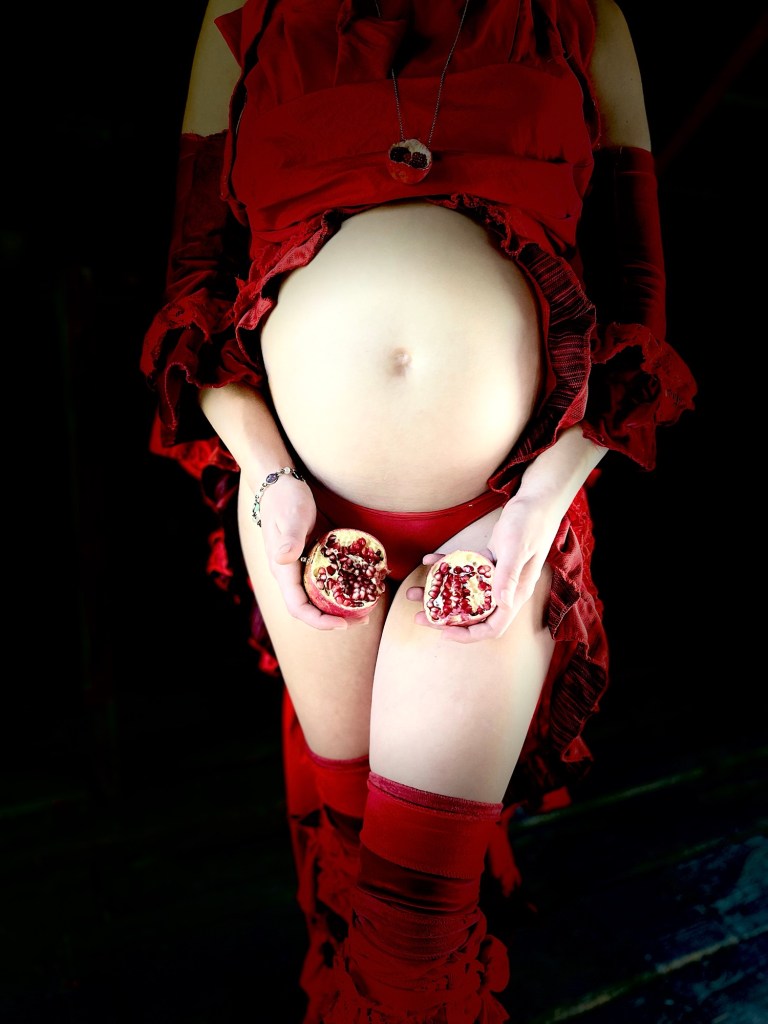
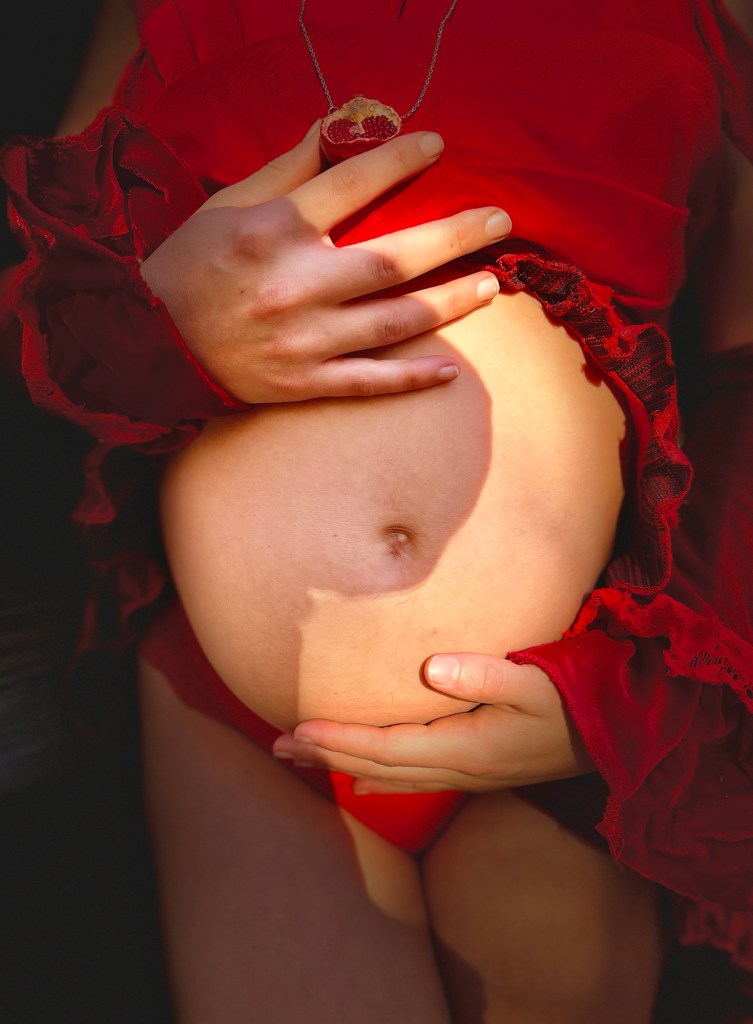
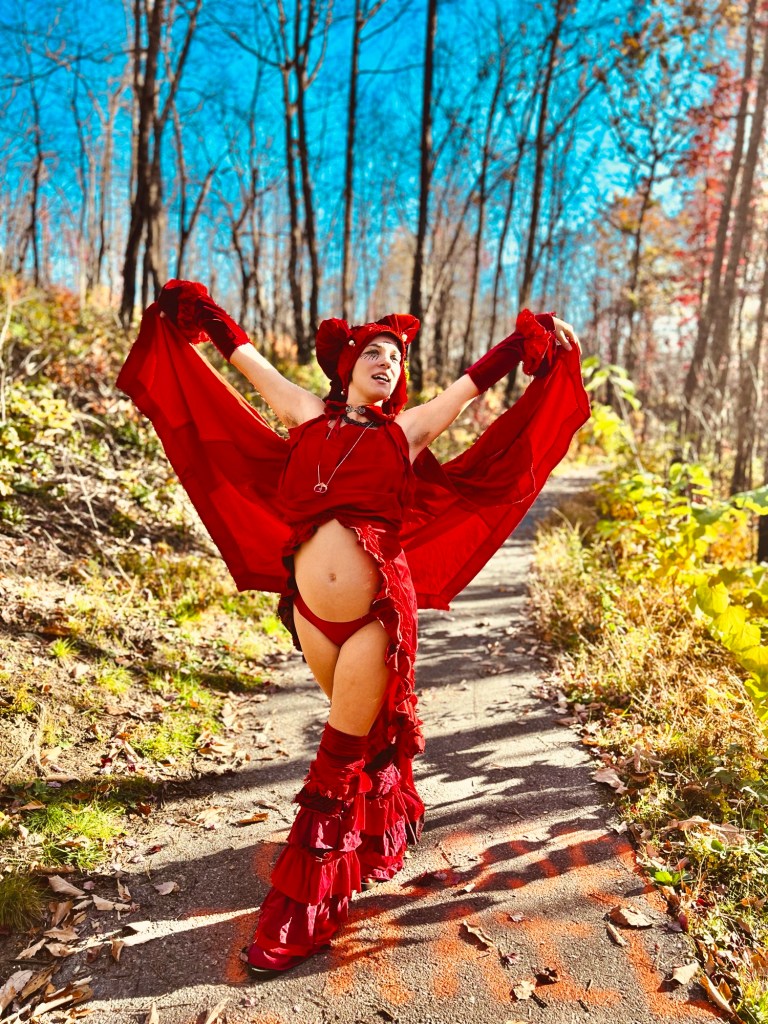
{self Portrait series at Kennedy peak 8-6-24}
This is your body, your greatest gift, pregnant with wisdom you do not hear, grief you thought was forgotten, and joy you have never known. Marion WoodmanTo me, real love, the move from power to love, involves immense suffering. Any creative work comes from that level, where we share our sufferings, just the sheer suffering of being human. And that’s where the real love is. Marion WoodmanWhen the power comes from within us and we claim it as our own, then we no longer have to affirm ourselves by dominating others. The irony is that we are actually afraid of our own power.
Marion Woodman, Dancing in the Flames: The Dark Goddess in the Transformation of ConsciousnessOnly by discovering and loving the goddess lost within our rejected body can we hear our own authentic voice.
Marion Woodman, Coming Home to Myself: Reflections for Nurturing a Woman’s Body and SoulI yearned for lightness; I still yearn for lightness. Lightness is freedom — freedom from the heaviness of too much stuff, too many words, too heavy a pull toward inertia. I feared being buried in stone — becoming stone.
Marion Woodman, Bone: Dying into LifeKill the imagination and you kill the soul. Kill the soul and you’re left with a listless, apathetic creature who can become hopeless or brutal or both.
Marion Woodman, Bone: Dying into LifeIn our yearning to be perfect, we have mistaken perfection for wholeness. We think we cannot love ourselves until we and others meet some external standard. Depression, anxiety—in fact, most neuroses and compulsions—are ultimately a defense against loving ourselves without condition. We are afraid to look at the damp, dark, ugly yet exquisite roots of being that stretch deep into our survival chakra. We are fearful of finding that the spirit is not there, that our Home is empty, even as our outer home is empty. Yet it is in that place of survival, where the dark mother has been abandoned, that spirit longs to be embodied so that the whole body may become light. Ego wants to be the god of our own idealized projection; spirit wants to be incarnated in our humanity where it can grow in wisdom through experience.
Marion Woodman, Dancing in the Flames: The Dark Goddess in the Transformation of ConsciousnessThe Goddess is the unspeakable wisdom that grows into the very cells of the body. She lives with this sacramental truth at her center: the beauty and the horror of the whole of life are blazing in Her love. She is dancing in the flames.
Marion Woodman, Dancing in the Flames: The Dark Goddess in the Transformation of ConsciousnessIn the story of Persephone and Hades there is a child. Hades abducts Persephone and takes her into the Underworld, where in some versions of the myth she has a child. In many of the myths, Leda and the swan, Danae and the shower of gold, for example, the human woman is impregnated by the god. In other words, matter is penetrated by spirit and the child of the union of matter and spirit is the divine child.
Marion WoodmanYou think of yourself — light, fast, free — free of earth, free of bondage to your body. In your ‘perfect’ body, you are in control, addicted to the light that keeps you out of body. You’re a swan maiden, addicted to wings, addicted to spirit. You refused to eat in order to fly.
Marion Woodman, Bone: Dying into LifeThe solid line throughout was my trying to make space to fly and forever smashing my wings against the bars of the cage. Granted, the cage grew bigger and very big, but I was always beyond the collective in my soul and always cut back by the collective in my body.
Marion Woodman, Bone: Dying into LifeThe word ‘feminine,’ as I understand it, has very little to do with gender, nor is woman the custodian of femininity. Both men and women are searching for their pregnant virgin. She is the part of us who is outcast, the part who comes to consciousness through going into darkness, mining our leaden darkness, until we bring her silver out.
Marion Woodman, The Pregnant Virgin: A Process of Psychological TransformationWhy put them through the danger of the fire? And then, I heard, as though it spoke, the voice of the guardian-head: “Each piece must go through the fire. The cowl, the wings, the pneuma, the source, the flow. All must go the way that I have gone. Each may crack in the process, as I have cracked. But look, the crack has healed. I did not break. Without the fire, the piece is untested, unlived, raw. Each must go through the fire.
Marion Woodman, Leaving My Father’s House: A Journey to Conscious FemininityKundalini power, the symbol of raising the energy coiled at the base of the spine upward through the chakras, is called by Sri Chinmoy, ‘the power of the Supreme Goddess.’ Repressed or coiled in a circle, she can be poisonous both to the body and the psyche, but once risen and standing upright, she is beneficent. The power of the serpent, rightly understood, is one of the ways the Goddess overcomes duality.
Marion Woodman, Dancing in the Flames: The Dark Goddess in the Transformation of ConsciousnessSo long as she is obedient to a mother—actual or internal—who unconsciously wishes to annihilate her, she is in a state of possession by the witch; she will have to differentiate herself out from that witch in order to live her own life.
Marion Woodman, Addiction to Perfection: The Still Unravished Bride: A Psychological StudyThe way to healing an addiction lies in finding a connection between body and soul.
Marion Woodman, Coming Home to Myself: Reflections for Nurturing a Woman’s Body and SoulIf we are blindly living out an archetype, we are not containing our own life. We are possessed, and possession acts as a magnet on unconscious people in our environment. A life that is being truly lived is constantly burning away the veils of illusion, gradually revealing the essence of the individual.
Marion Woodman, The Pregnant Virgin: A Process of Psychological TransformationMany people are being dragged toward wholeness in their daily lives, but because they do not understand initiation rites, they cannot make sense of what is happening to them. They are being presented with the possibility of rebirth into a different life. Through failures, symptoms, inferiority feelings and overwhelming problems, they are being prodded to renounce life attachments that have become redundant. The possibility of rebirth constellates with the breakdown of what has gone before. But because they do not understand, people cling to the familiar, refuse to make the necessary sacrifices, resist their own growth. Unable to give up their habitual lives, they are unable to receive new life. Unless cultural rituals support the leap from one level of consciousness to another, there are no containing walls within which the process can happen. Without an understanding of myth or religion, without an understanding of the relationship between destruction and creation, death and rebirth, the individual suffers the mysteries of life as meaningless mayhem—alone.
Marion Woodman, The Pregnant Virgin: A Process of Psychological TransformationWhat I learned is the difference between of destiny and fate. We are all fated to die. Destiny is recognizing the radiance of the soul that, even when faced with human impossibility, loves all of life. Fate is the death we owe to Nature. Destiny is the life we own to soul.
Marion Woodman, Bone: Dying into LifeLinearity does not come naturally to me. It kills my imagination. Nothing happens. No bell rings. No moment of here and now. No moment that says yes. Without these, I am not alive. I prefer the pleasure of the journey through the spiral. Relax. Enjoy the spiral. If you miss something on the first round, don’t worry. You might pick it up on the second—or third—or ninth. It doesn’t matter. Relax. Timing is everything. If the bell does ring, it will resonate through all the rungs of your spiral. If it doesn’t ring, it is the wrong spiral— or the wrong time— or there is no bell.
Marion Woodman, Coming Home to Myself: Reflections for Nurturing a Woman’s Body and SoulA free woman has a strong neck—an open connection between heart and head, a balance between reality and ideals. To fall into the complex is to damn herself for her imperfections; to accept the attitude of the virgin is to accept her human life and open herself to her own truth.
Marion WoodmanWithout embodied soul, spirit cannot manifest through human feeling.
Marion Woodman, The Ravaged Bridegroom: Masculinity in WomenWhether we like it or not, one of our tasks on this earth is to work with the opposites through different levels of consciousness until body, soul and spirit resonate together. Initiation rites, experienced at the appropriate times in our lives, burn off what is no longer relevant, opening our eyes to new possibilities of our own uniqueness. They tear off the protective veils of illusion until at last we are strong enough to stand in our own naked truth.
Marion Woodman, The Pregnant Virgin: A Process of Psychological TransformationA woman must be able to stand in the face of power, because ultimately some part of that power will become hers.
Clarissa Pinkola Estés, Women Who Run With the WolvesThis is your body, your greatest gift, pregnant with wisdom you do not hear, grief you thought was forgotten, and joy you have never known.
Marion WoodmanSo long as consciousness is enslaved by the darkness of unconsciousness, we blindly live out these handicaps in our lives, projecting them onto our men or choosing defeated men as an image of our own defeat. The flames of our fear, grief and rage burn without light. Without realizing what we are doing, we can allow consciousness to fall into the service of darkness. If, on the other hand, we are conscious of the darkness, that very consciousness is the light that illumines the darkness. This is the journey into mature consciousness, with arms and legs, heart and genitals, strong enough to bear the lights.
Marion Woodman, The Ravaged Bridegroom: Masculinity in WomenLiving by principles is not living your own life. It is easier to try to be better than you are than to be who you are.
Marion Woodman, Addiction to Perfection: The Still Unravished Bride:William Blake says the body is ‘that portion of soul discerned by the five senses.
Marion Woodman, Conscious Femininity: Interviews With Marion WoodmanLove is the real power. It’s the energy that cherishes. The more you work with that energy, the more you will see how people respond naturally to it, and the more you will want to use it. It brings out your creativity, and helps everyone around you flower. Your children, the people you work with–everyone blooms.
Marion WoodmanThe Crone has been missing from our culture for so long that many women, particularly young girls, know nothing of her tutelage. Young girls in our society are not initiated by older women into womanhood with its accompanying dignity and power. Without the Crone, the task of belonging to oneself, of being a whole person, is virtually impossible.
Marion Woodman, Dancing in the Flames: The Dark Goddess in the Transformation of ConsciousnessWomen are, by nature, disposed to relationship and connectedness; yet true relationship cannot be embraced until a woman as a deep sense of her at-one-ment. Without this essential independence from all roles and bonds, she is a potential victim for servitude.
Marion Woodman, Dancing in the Flames: The Dark Goddess in the Transformation of ConsciousnessShe dreams she is in a glass coffin. From her prison, details have beauty. In her aloneness, she imagines emotions. Her husband is the perfect bridegroom, the trickster, the small boy looking for mother. She is goddess and mirror, siren and friend, femme fatale and sacrificing wife. He is attracted to her girlhood purity, her desire to sacrifice, to serve. At first he may be flattered: she sees him as a god.
Marion Woodman, Coming Home to Myself: Reflections for Nurturing a Woman’s Body & SoulSince she has not been present in the culture, she has not been readily accessible to the conscious awareness of modern women. Without her, even the dynamic symbols of Virgin and Mother are distorted. The Crone is a woman is that part of her psyche that is not identified with any relationship nor confined by any bond. She infuses an intrinsic sense of self-worth, of autonomy, into the role of virgin and mother, and gives the woman strength to stand to her own creative experience.
Marion Woodman, Dancing in the Flames: The Dark Goddess in the Transformation of ConsciousnessCan I really believe I am worth an hour a day? Am I, who have given my life to others, selfish enough to take one hour a day to find myself?
Marion Woodman, Coming Home to Myself: Reflections for Nurturing a Woman’s Body & SoulChange means change. We may have all the insights, but if we do not incarnate them, they are all in vain.
Marion Woodman, Dancing in the Flames: The Dark Goddess in the Transformation of ConsciousnessWe know we can change ourselves when we realize that we are not dependent on how we feel, nor on how others feel about us, nor on what the situation is around us. The values we hold, the choices we make within ourselves and for iourselves remain our prerogative. In most situations, if we begin to change, to do our own inner work, to accept our own darkness and work toward consciousness, the situation will change. We will begin to emanate a different energy, one that exudes a sense of autonomy and authenticity.
Marion Woodman, Dancing in the Flames: The Dark Goddess in the Transformation of ConsciousnessIt takes great courage to break with one’s past history and stand alone
Marion WoodmanOnce the purging has taken place, the woman often dreams of a black goddess who becomes her bridge between spirit and body. As one aspect of Sophia, such an image can open her to the mystery of life being enacted in her own body. Her “mysterious and exotic darkness” inspires a particular depth of wonderment and love. For a woman without a positive mother, this “dark” side of the Virgin can bring freedom, the security of freedom, because she is a natural home for the rejected child. The child born from the rejected side of the mother can bring her own rebel to rest in the outcast state of Mary. In loving the abandoned child within herself, a woman becomes pregnant with herself. The child her mother did not nourish, she will now nourish, not as the pure white biblical Virgin who knew no Joseph, but as the dark Montserrat Virgin who presides over “marriage and sex, pregnancy and childbirth.” The Black Madonna is nature impregnated by spirit, accepting the human body as the chalice of the spirit. She is the redemption of matter, the intersection of sexuality and spirituality.
Marion WoodmanWe are all unconsciously bound to the wheel of fortune. It goes round and round and we go blindly around on it until one day something happens that wakes us up, face to face with ourselves. What for years we could not or would not see is made visible. The unconscious is made answerable to consciousness. The Self demands a reckoning: the ego must recognize what it has long feared and rejected. Whether we grow or wither in that encounter depends on whether we cling to our ego’s rigid standpoint or whether we choose to trust the Self and leap into the unknown.
Marion Woodman, The Ravaged Bridegroom: Masculinity in Women


















































 BlissNinja