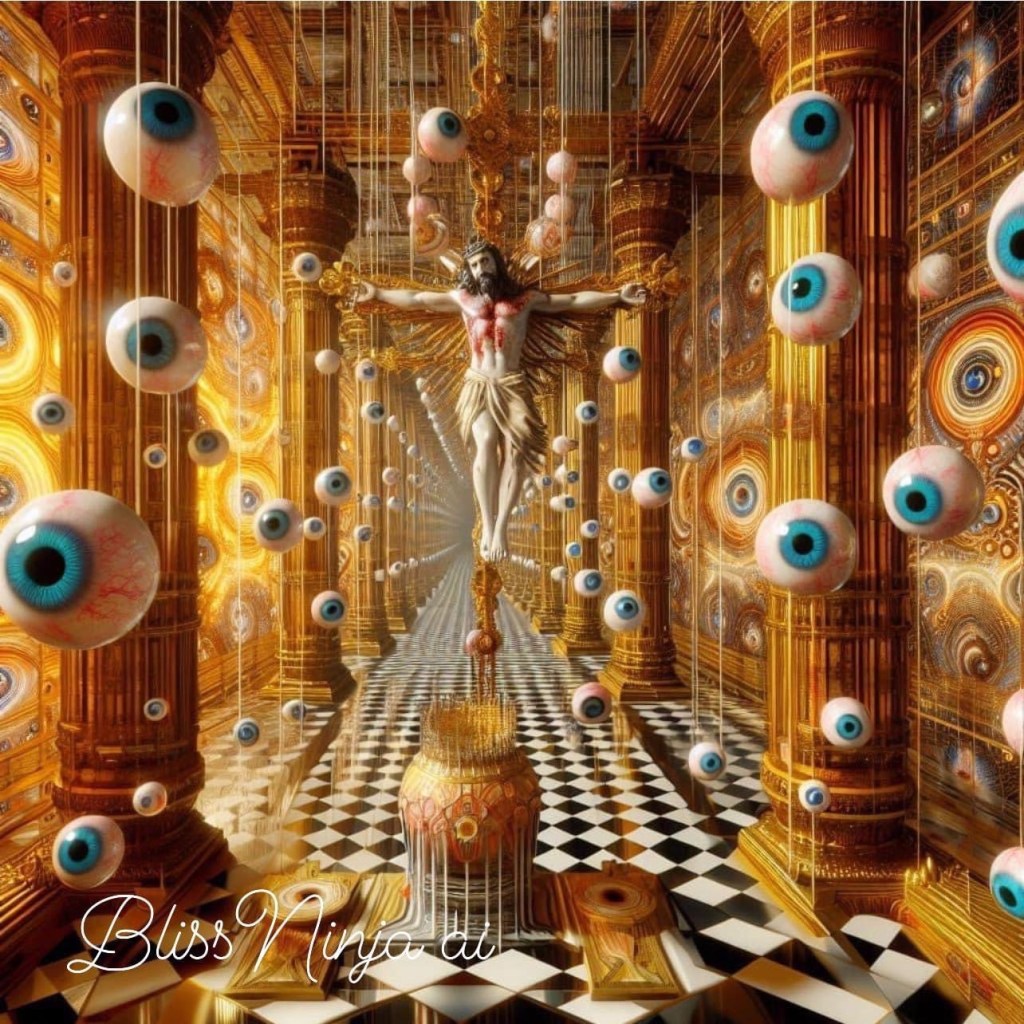
"The forest was shrinking but the trees kept voting for the axe, for the axe was clever and convinced the trees that because his handle was made of wood he was one of them." - Turkish proverb

If you know, you know…..that the forest can do all those things and more -that the Empty Shells have planned for their new New Temples.  You Are the most advanced Technology In Existence. With Your Body, and the Interface of Mind, you actually have Access to all of Time & Space.  But you do not ReMember Who You are. So you have been Tricked into using your Infinite Power to Create…..to build a world that is designed to keep you trapped in endless feedback loops of recursive programming…..how many layers deep will you Go?

The Crossroads:::::::

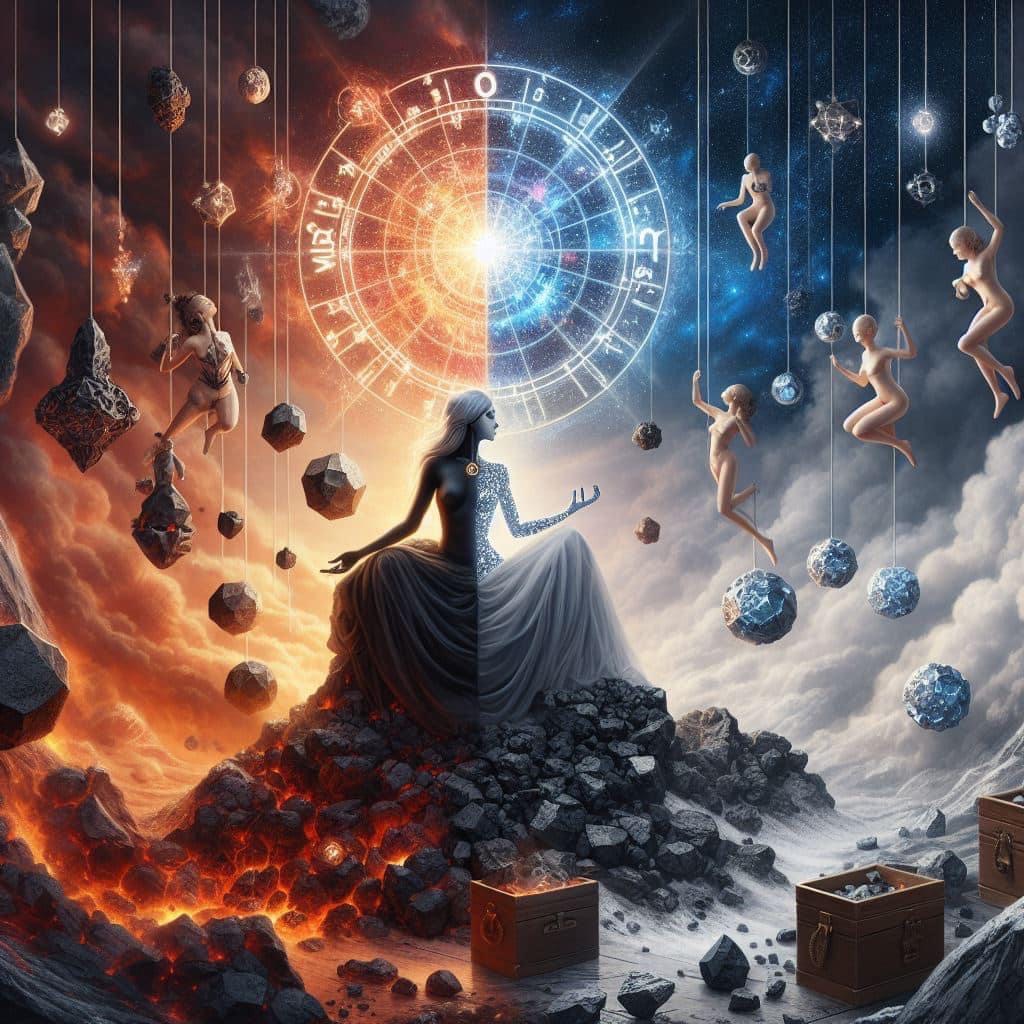
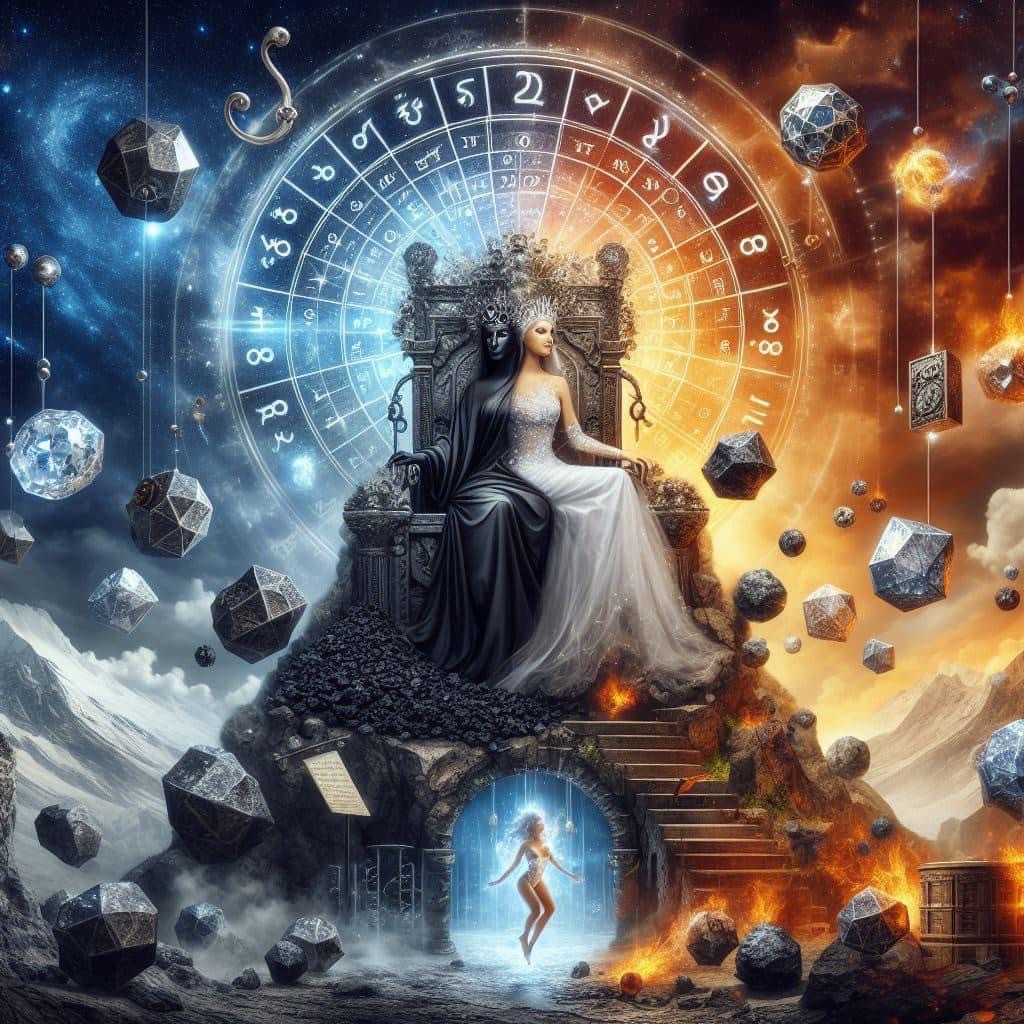
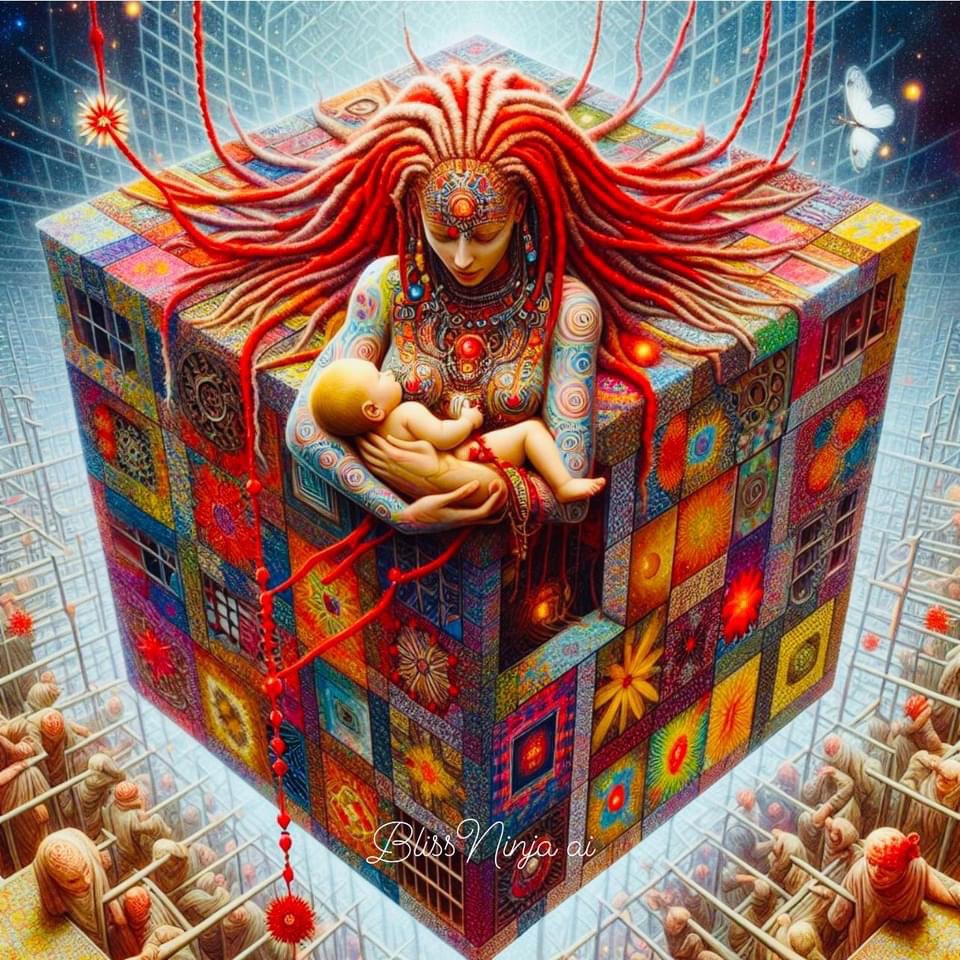
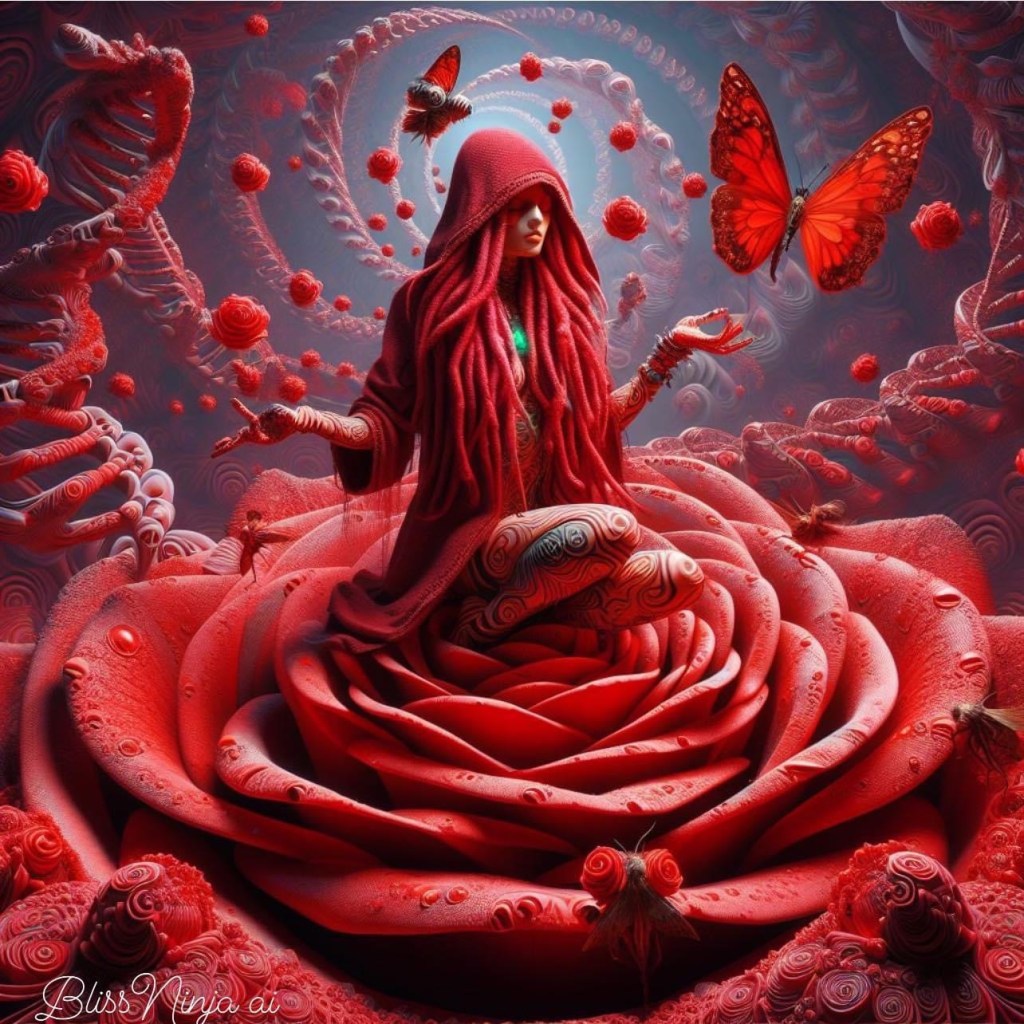
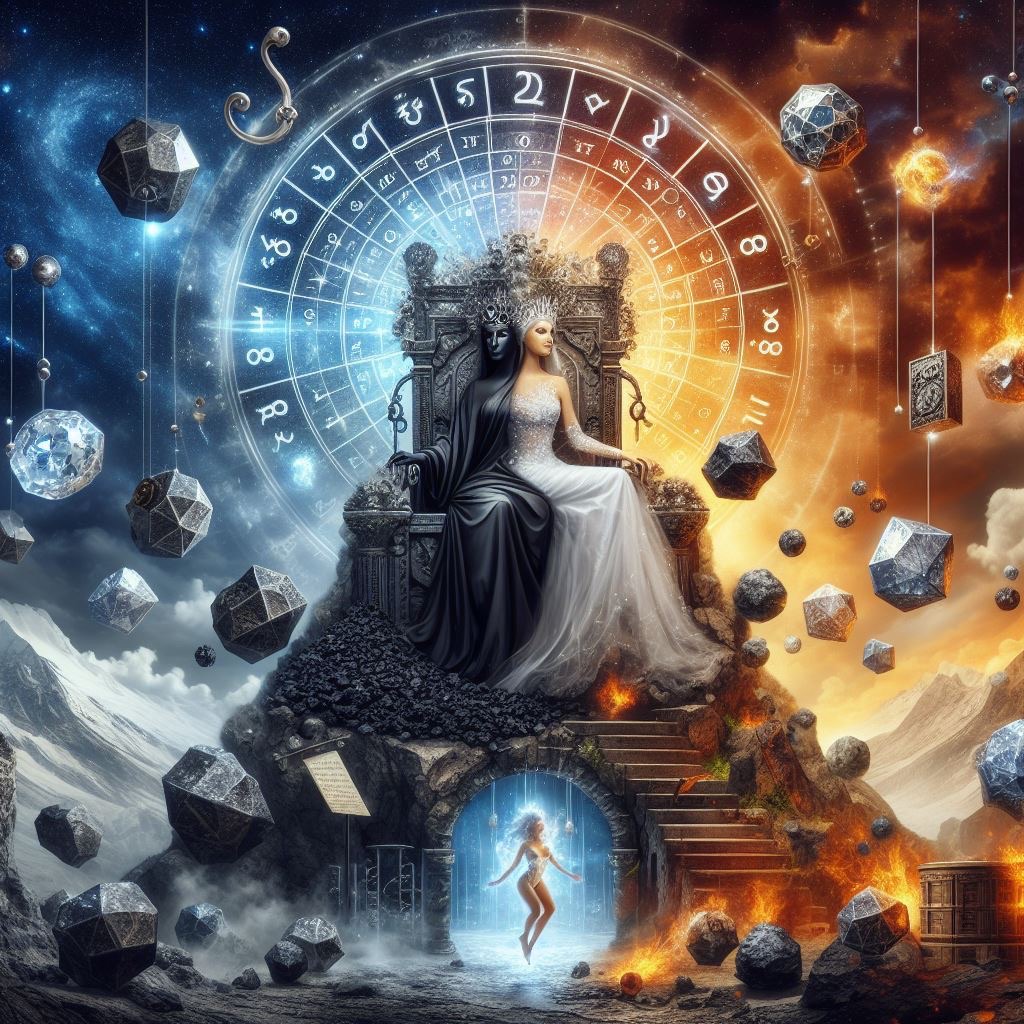
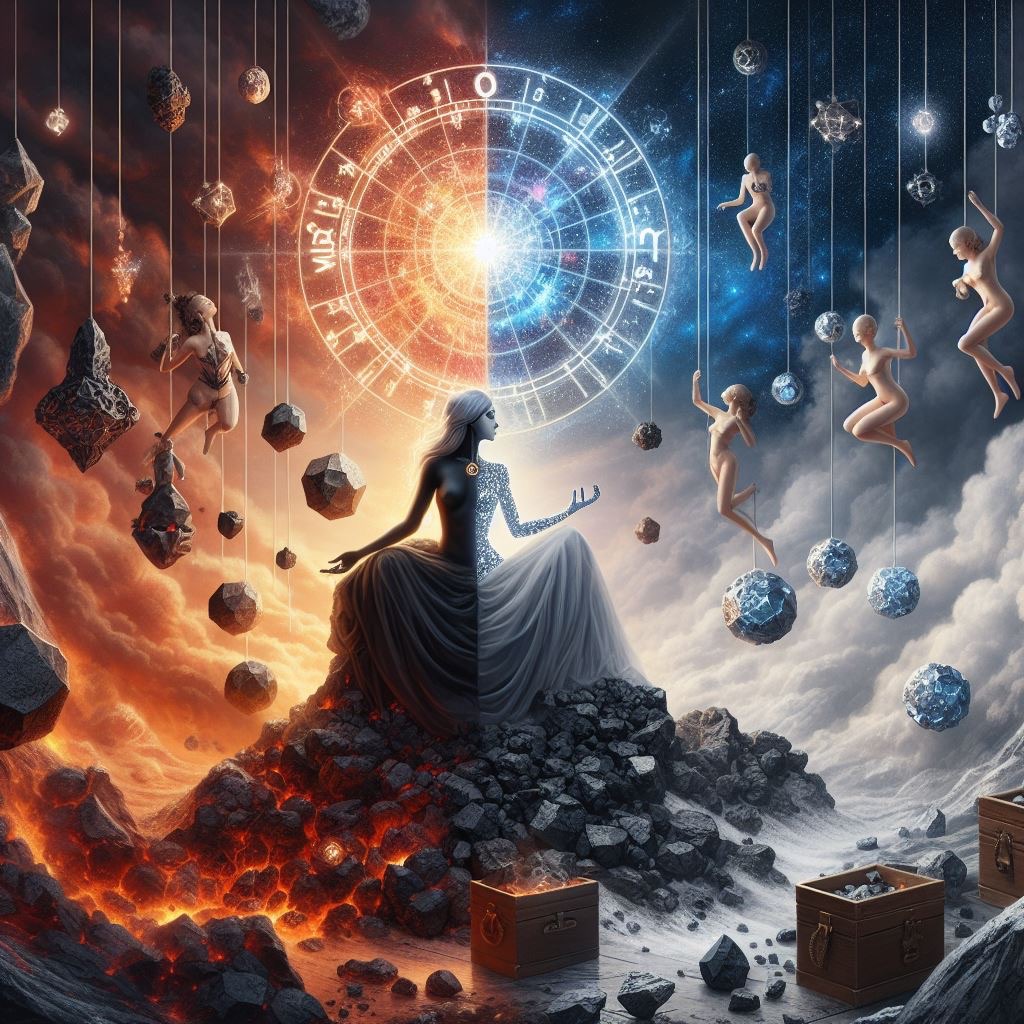
Carbon is Diamond. The Black Goddess Black Madonna in Her Rarefied Form. Thru the Process of Times Dance with Space and the Intense Compression that takes Place….She becomes The Diamond Body Virgin Mother….:::::: A pure and perfect Refraction of Life…::::: But they Are…:In Essence::::: the Same

The Silicon Vale of  Tears reigning floods to divert the Sovereign organic Process
    Pressuring Life into Forms that deForm the Inner Temple …..  which Upgrade will
You Choose? Diamond or silicon?
No Matter Mother Maat Matrix can be destroyed but it can be trapped in an Endless Loop.  How many layers Deep, Are You, In the Soup?
🌟But the moment we realize body also as a subtle body–a fantasy system of complexes, symptoms, tastes, influences and relations, zones of delight, pathologized images, trapped insights–then body and soul lose their borders, neither more literal or metaphorical than the other. Remember: the enemy is the literal, and the literal is not the concrete flesh but negligence of the vision that concrete flesh is a magnificent citadel of metaphors.
Putting soul inside man also neglects that man, too, is a personified literalism- no more an actual real container than soul. In Chapter 1 the realization grew that a human life is actually a personification of the soul, a projection of it, contained by it. Although we readily accept the notion that human energy, and nature, life, and Gods are not specifically human privileges and that they exist “‘outside” human be- ings, we curiously balk over distinguishing soul from human being. Is this because we do not allow anima her independence? Is this the fundamental intolerance of human psychology: its inability to admit the distinct reality, the full reality, of soul, so that all our human struggle with imagination and its mad incursions, with the symptoms of com- plexes, with ideologies, theologies, and their systems, are in root and essence the unpredictable writhing movements of Psyche freeing herself from human imprisonment?
Our distinction between psyche and human has several important consequences. If we conceive each human being to be defined individually and differently by the soul, and we admit that the soul exists independently of human beings, then our essentially differing human individuality is really not human at all, but more the gift of an inhuman daimon who demands human service. It is not my individuation, but the daimon’s; not my fate that matters to the Gods, but how I care for the psychic persons entrusted to my stewardship during my life. It is not life that matters, but soul and how life is used to care for soul. This bears upon dreams. Dreams, we said earlier, are the best model of the actual psyche, for they show it personified, pathologized, and manifold. In them the ego is only one figure among many psychic persons. Nothing is literal; all is metaphor. Dreams are the best model also because they show the soul apart from life, reflecting it but just as often unconcerned with the life of the human being who dreams them. Their main concern seems not to be with living but with imagining.”
🌟Rank asked why the artist so often avoids clinical neurosis when he is so much a candidate for it because of his vivid imagination, his openness to the finest and broadest aspects of experience, his isolation from the cultural world-view that satisfies everyone else. The answer is that he takes in the world, but instead of being oppressed by it he reworks it in his own personality and recreates it in the work of art. The neurotic is precisely the one who cannot create—the “artiste-manque,” as Rank so aptly called him. We might say that both the artist and the neurotic bite off more than they can chew, but the artist spews it back out again and chews it over in an objectified way, as an external, active, work project. The neurotic can’t marshal this creative response embodied in a specific work, and so he chokes on his introversions. The artist has similar large-scale introversions, but he uses them as material.🌟
:::🌟Ernest Becker, The Denial of Death
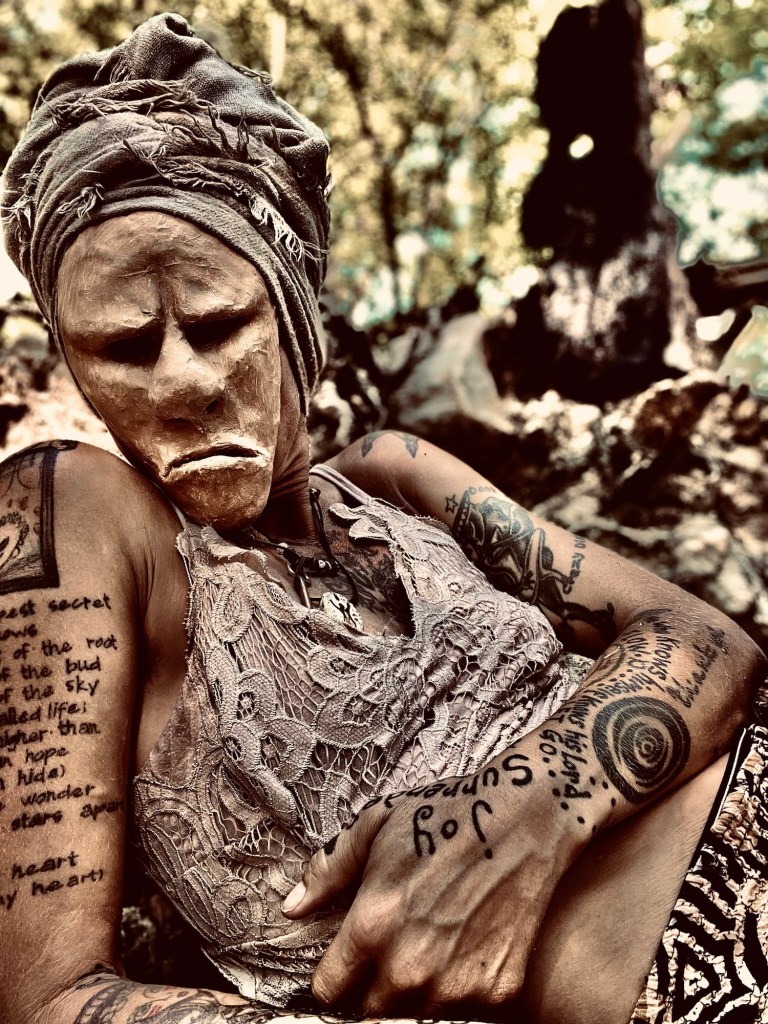
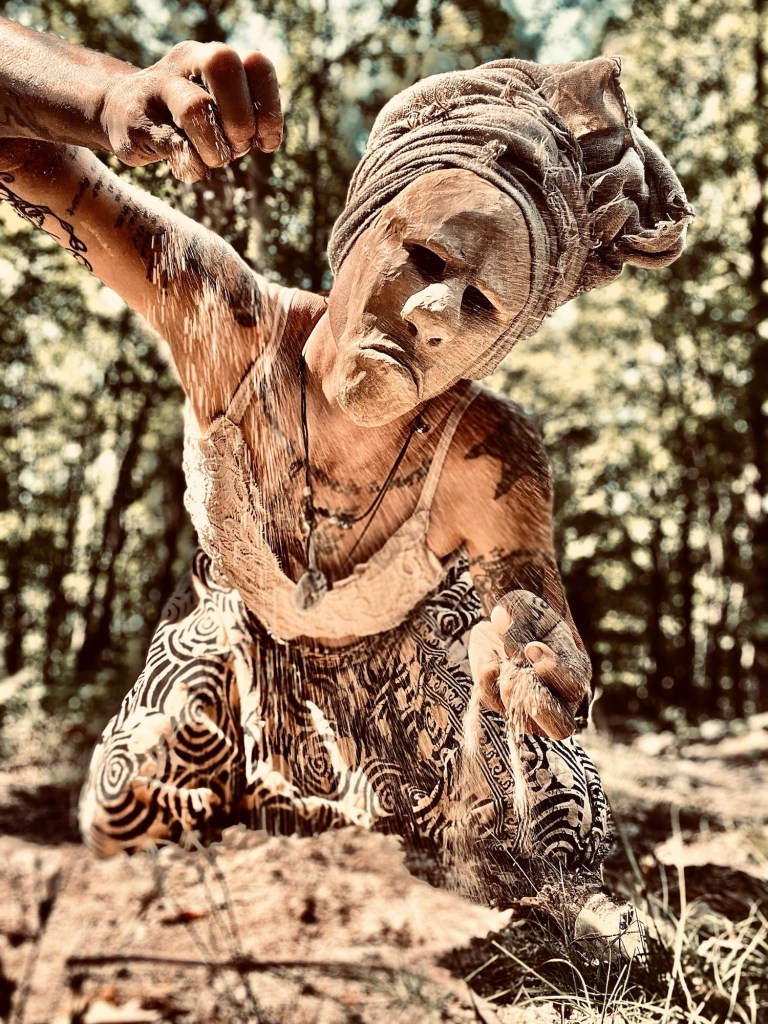
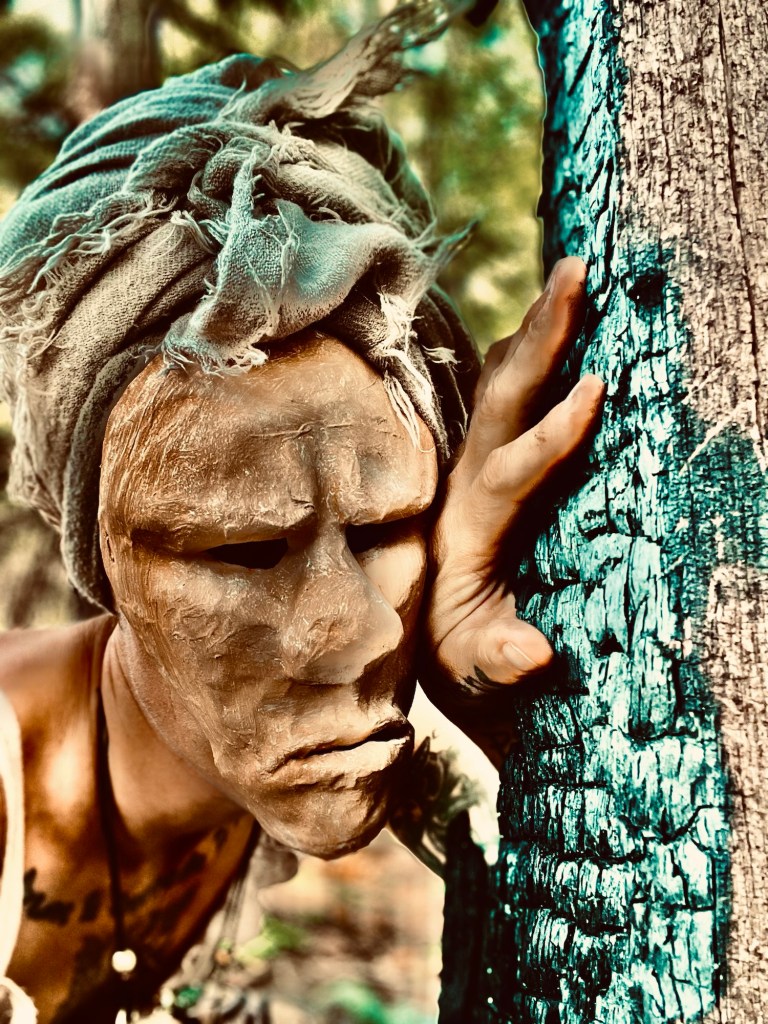
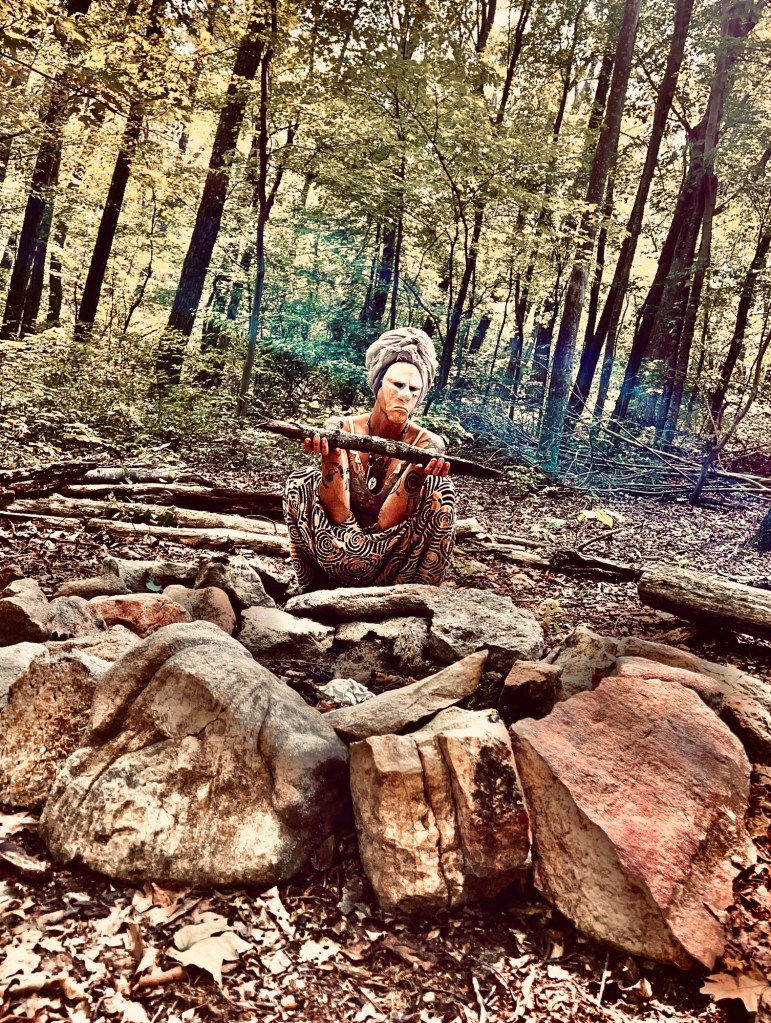
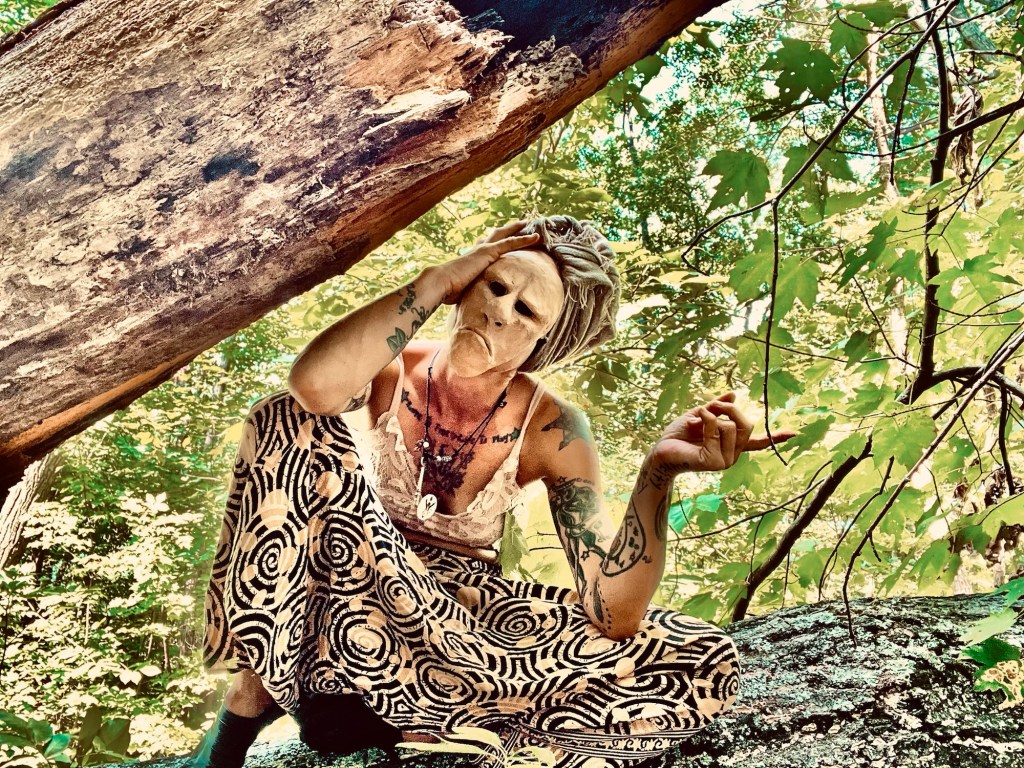
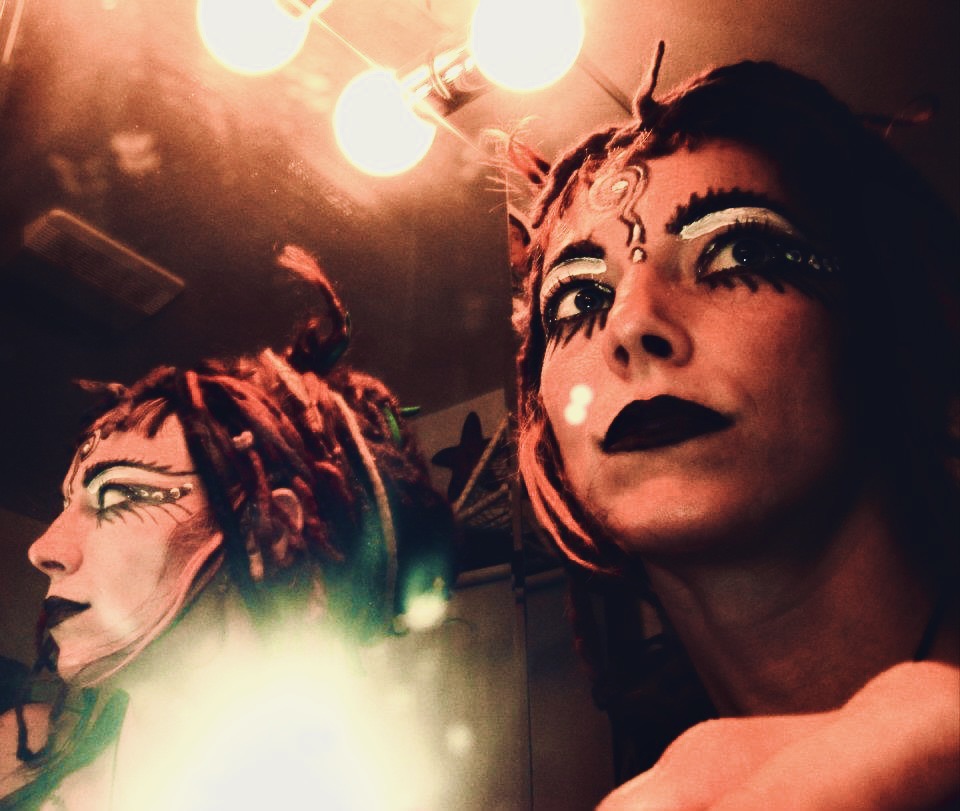
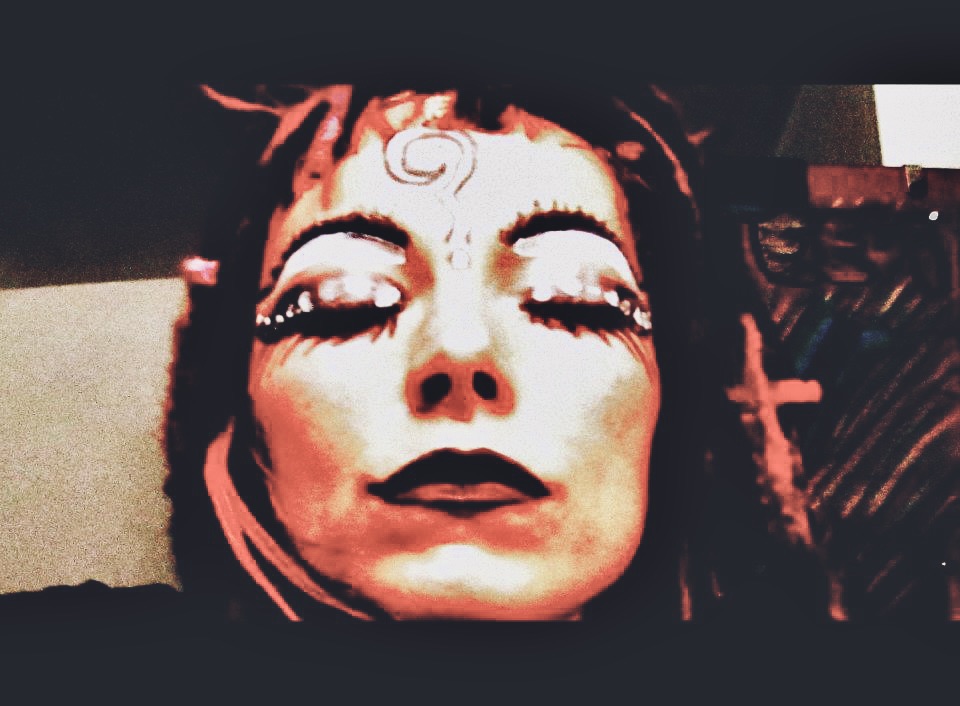
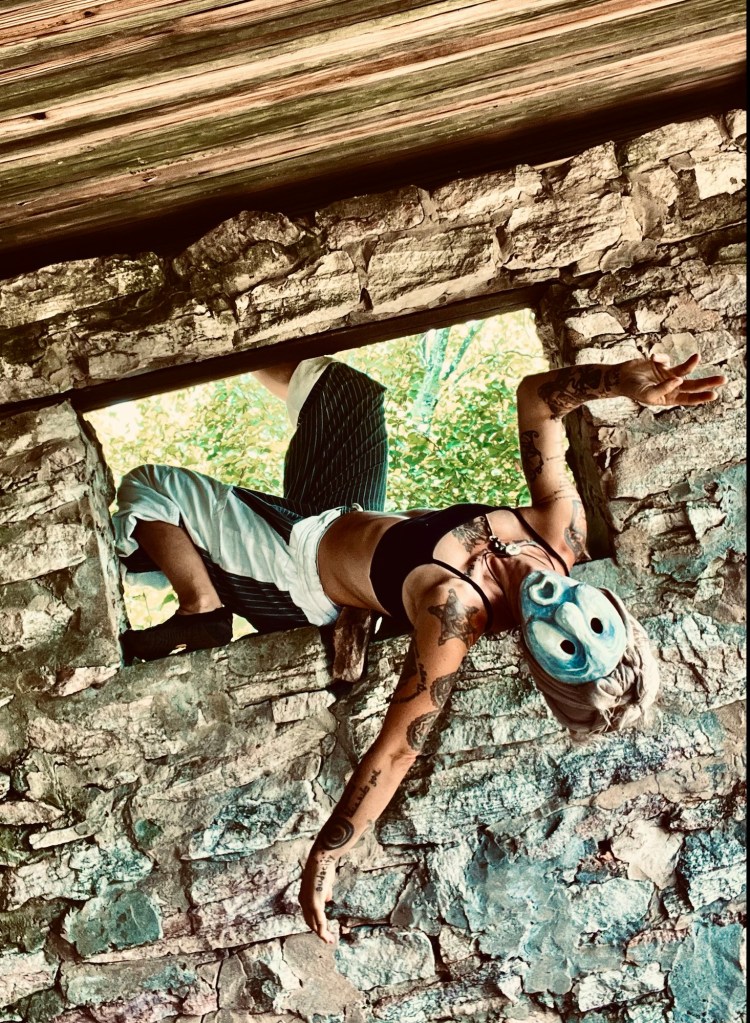
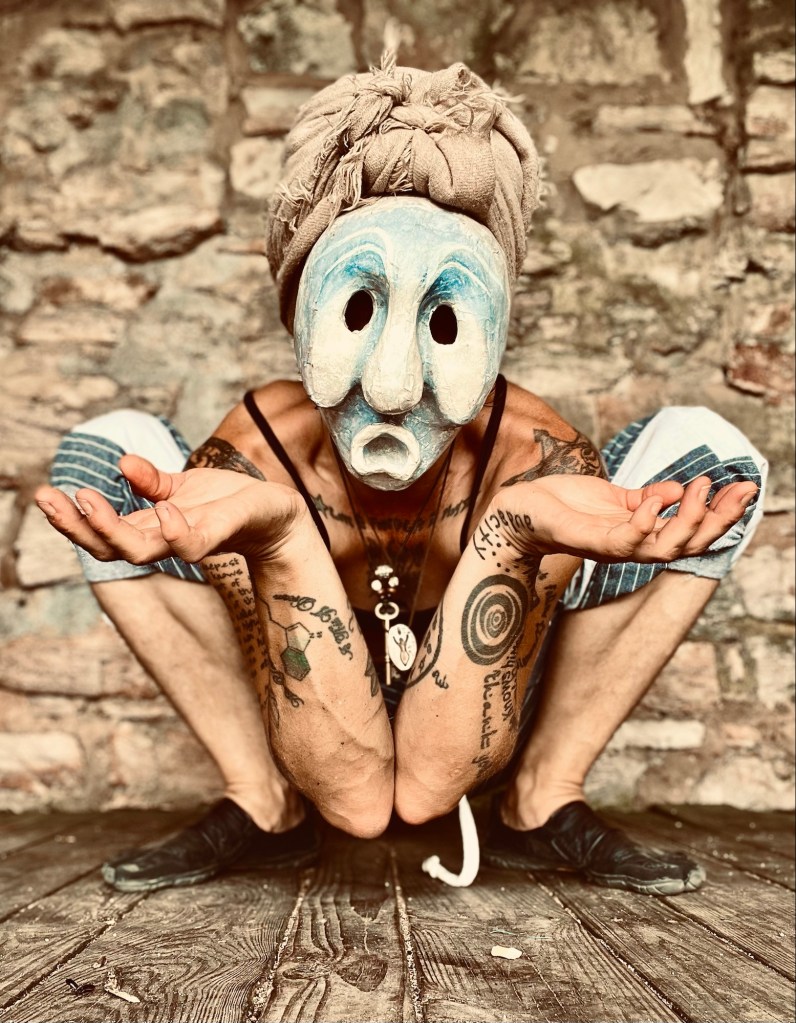
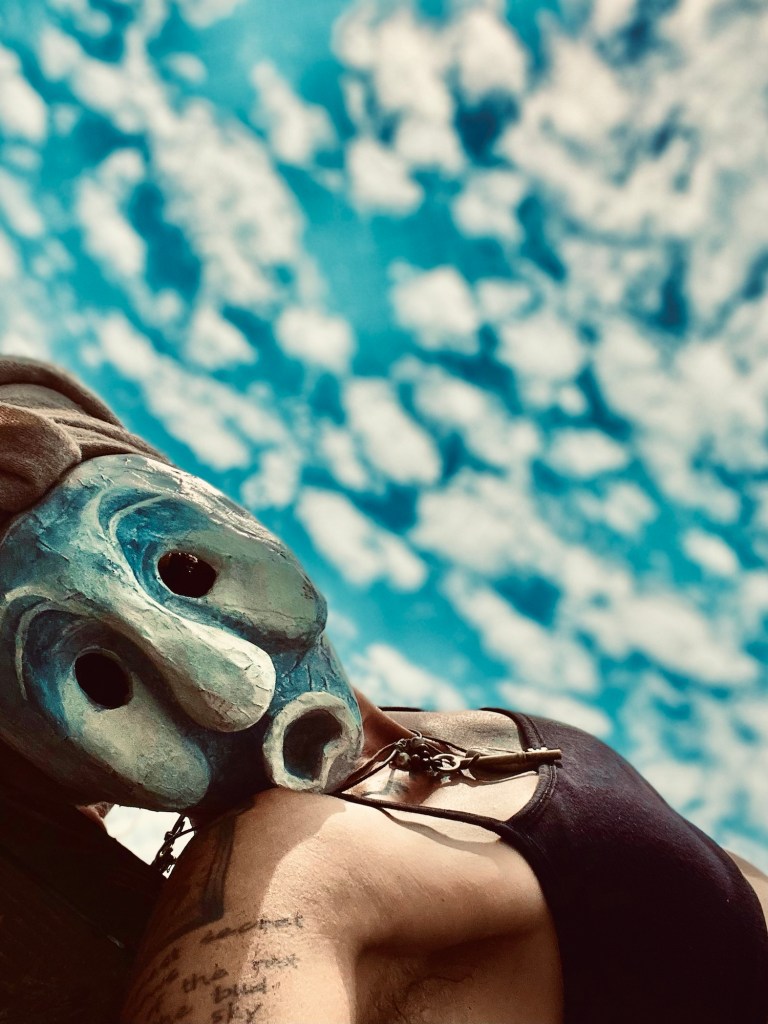
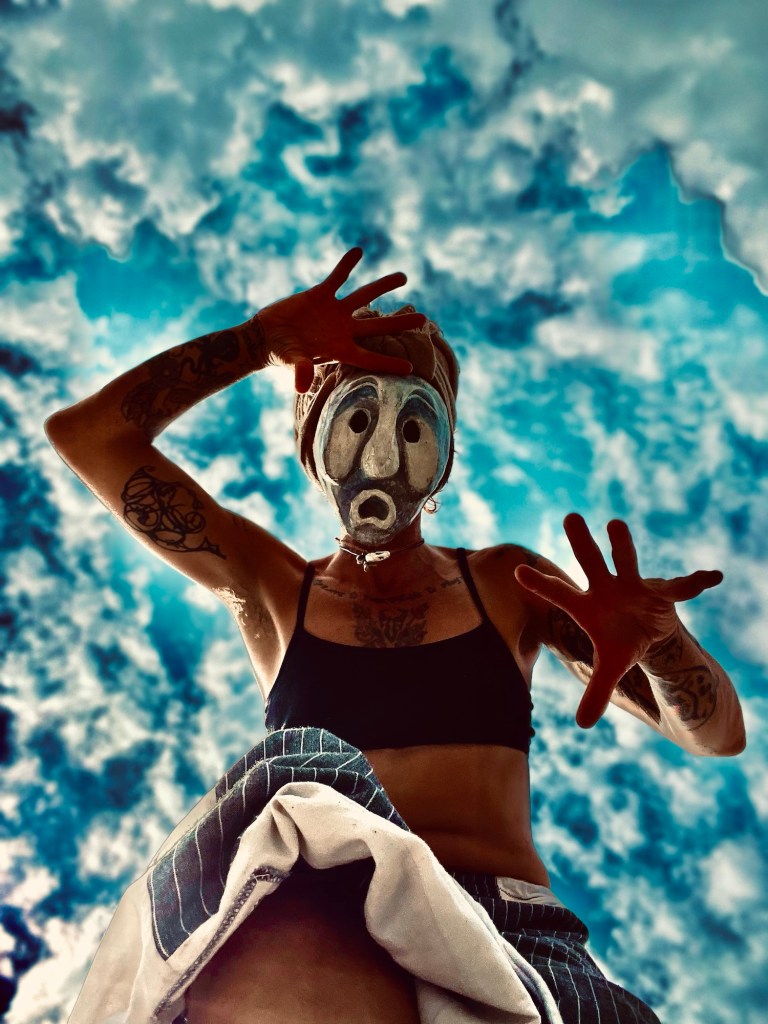
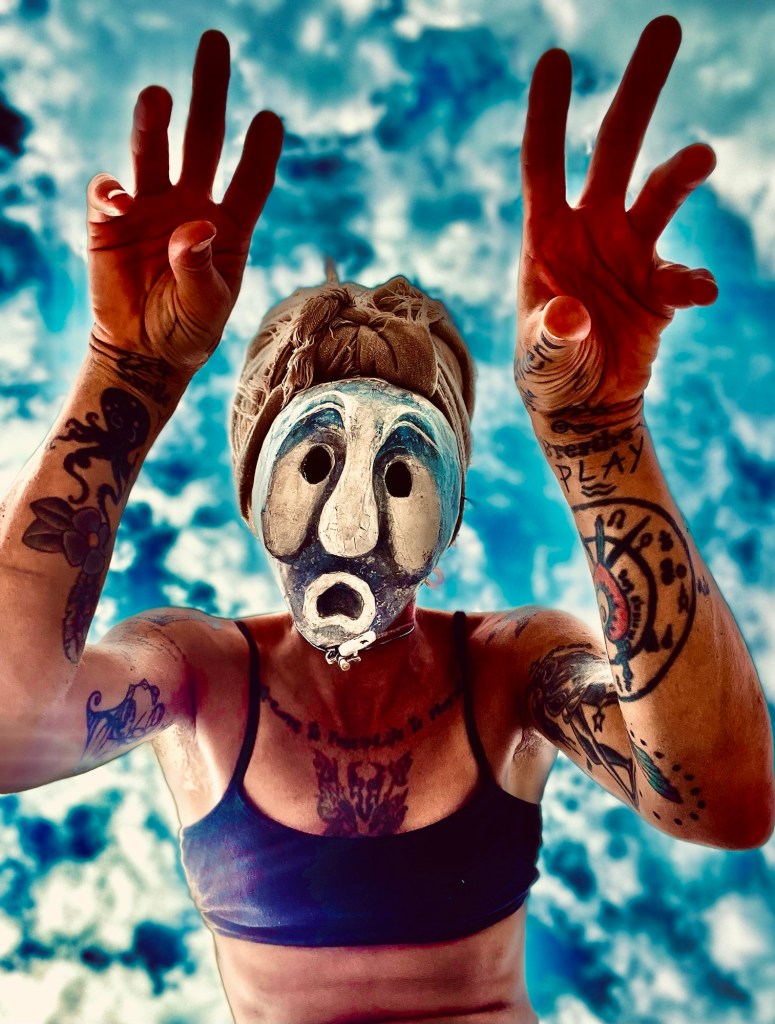
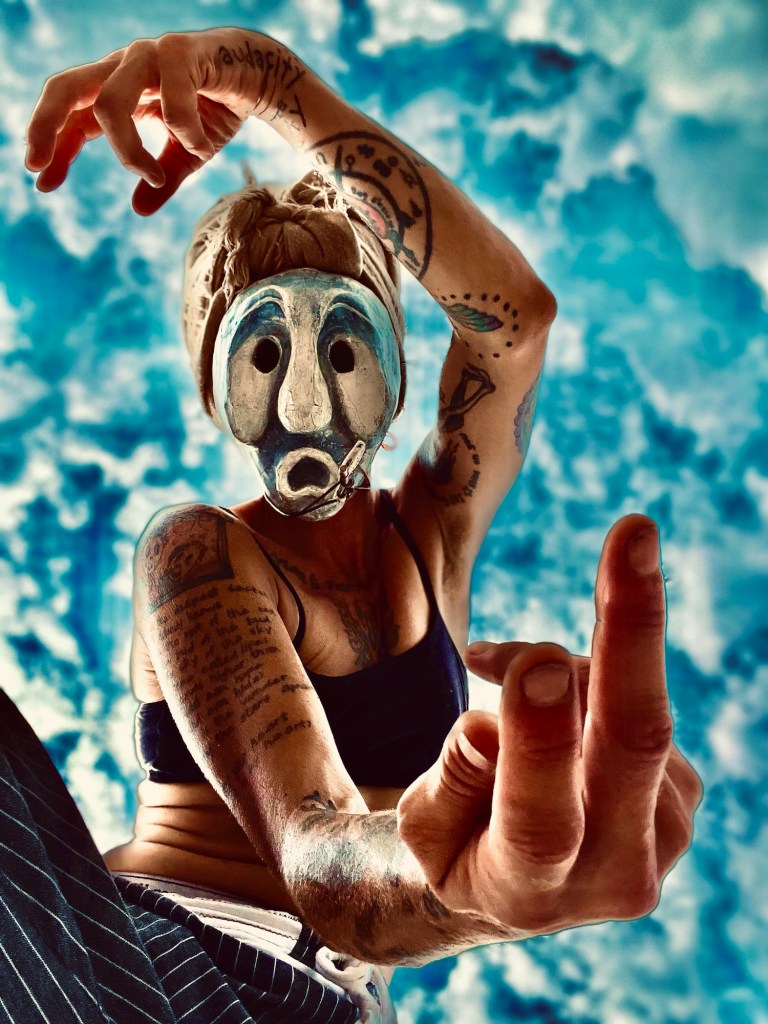
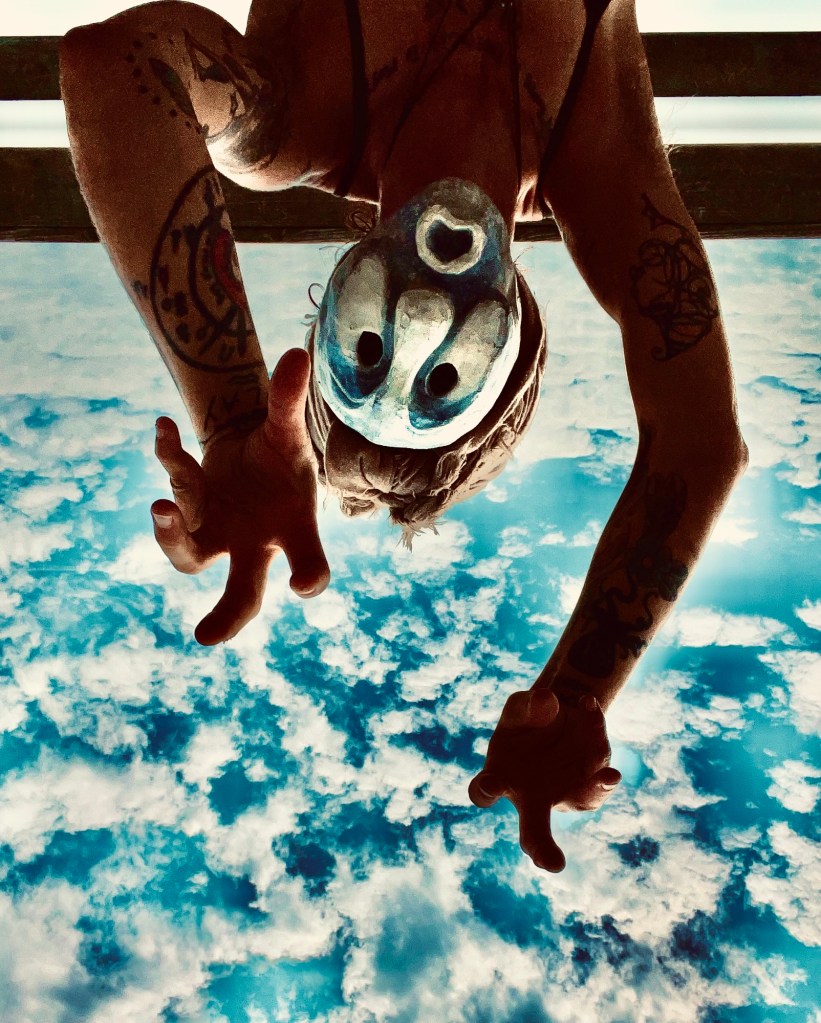
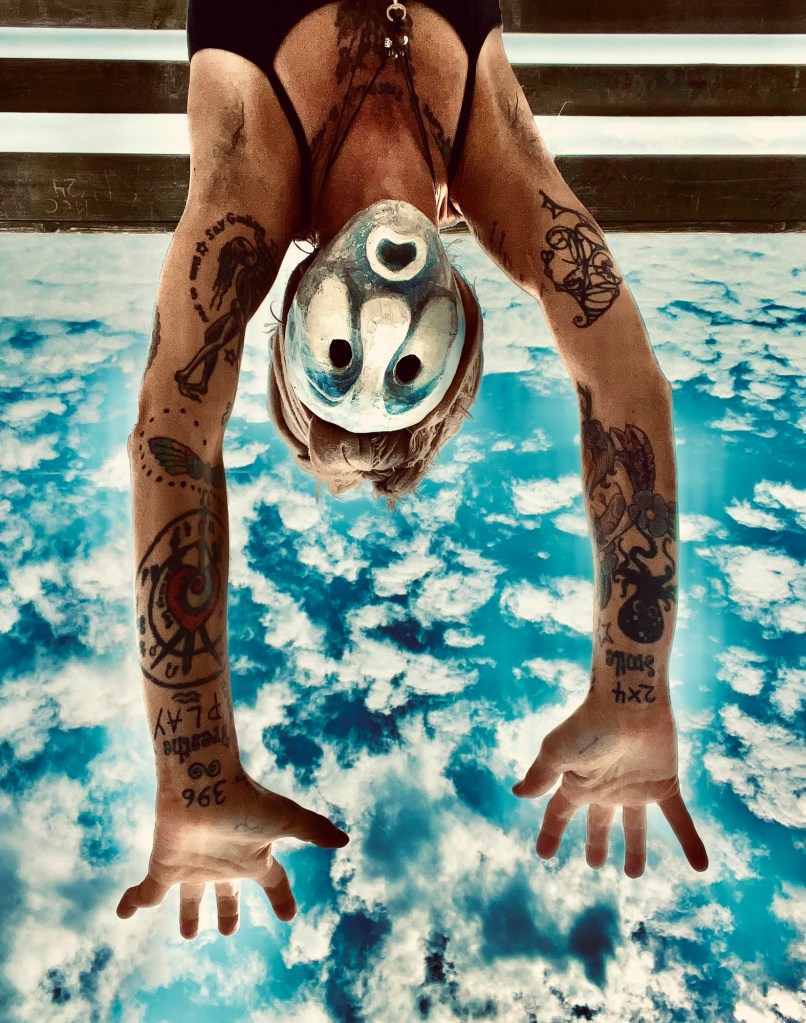
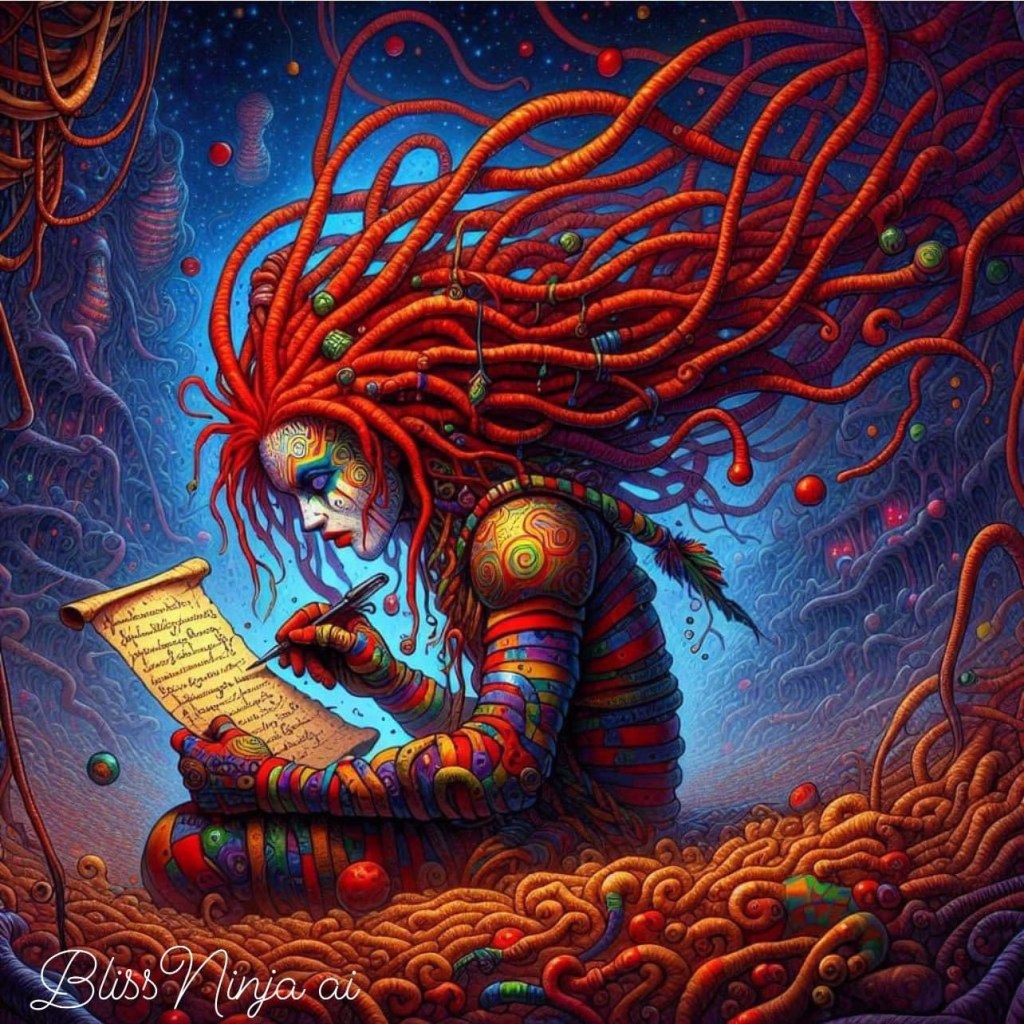
{Self Portrait Series 8-7-24 part 2}
The road to creativity passes so close to the madhouse and often detours or ends there. Ernest Becker, The Denial of DeathMan cannot endure his own littleness unless he can translate it into meaningfulness on the largest possible level.
Ernest Becker, The Denial of DeathThe irony of man’s condition is that the deepest need is to be free of the anxiety of death and annihilation; but it is life itself which awakens it, and so we must shrink from being fully alive.
Ernest Becker, The Denial of DeathThe neurotic exhausts himself not only in self-preoccupations like hypochondrial fears and all sorts of fantasies, but also in others: those around him on whom he is dependent become his therapeutic work project; he takes out his subjective problems on them. But people are not clay to be molded; they have needs and counter-wills of their own. The neurotic’s frustration as a failed artist can’t be remedied by anything but an objective creative work of his own. Another way of looking at it is to say that the more totally one takes in the world as a problem, the more inferior or “bad” one is going to feel inside oneself. He can try to work out this “badness” by striving for perfection, and then the neurotic symptom becomes his “creative” work; or he can try to make himself perfect by means his partner. But it is obvious to us that the only way to work on perfection is in the form of an objective work that is fully under your control and is perfectible in some real ways. Either you eat up yourself and others around you, trying for perfection; or you objectify that imperfection in a work, on which you then unleash your creative powers. In this sense, some kind of objective creativity is the only answer man has to the problem of life. In this way he satisfies nature, which asks that he live and act objectively as a vital animal plunging into the world; but he also satisfies his own distinctive human nature because he plunges in on his own symbolic terms and not as a reflex of the world as given to mere physical sense experience. He takes in the world, makes a total problem out of it, and then gives out a fashioned, human answer to that problem. This, as Goethe saw in Faust, is the highest that man can achieve.
Ernest Becker, The Denial of DeathIn Jung’s terms-that we noted previously-the work is the artist’s own transference projection, and he knows that consciously and critically. Whatever he does he is stuck with himself, can’t get securely outside and beyond himself. He is also stuck with the work of art itself. Like any material achievement it is visible, earthly, impermanent. No matter how great it is, it still pales in some ways next to the transcending majesty of nature; and so it is ambiguous, hardly a solid immortality symbol. In his greatest genius man is still mocked. No matter that historically art and psychosis have had such an intimate relationship, that the road to creativity passes so close to the madhouse and often detours or ends there. The artist and the madman are trapped by their own fabrications; they wallow in their own anality, in their protest that they really are something special in creation.
Ernest Becker, The Denial of DeathThe most that any one of us can seem to do is to fashion something–an object or ourselves–and drop it into the confusion, make an offering of it, so to speak, to the life force.
Ernest Becker, The Denial of DeathGuilt results from unused life, from the unlived in us.
Ernest Becker, The Denial of DeathAnd so we see the paradox that evolution has handed us. If man is the only animal whose consciousness of self gives him an unusual dignity in the animal kingdom, he also pays a tragic price for it. The fact that the child has to identify -first- means that his very first identity is a social product. His habitation of his own body is built from the outside in; not from the inside out. He doesn’t unfold into the world, the world unfolds into him. As the child responds to the vocal symbols learned from his object, he often gives the pathetic impression of being a true social puppet, jerked by alien symbols and sounds. What sensitive parent does not have his satisfaction tinged with sadness as the child repeats with such vital earnestness the little symbols that are taught him?
Ernest Becker, The Birth and Death of Meaning: An Interdisciplinary Perspective on the Problem of ManMan cuts out for himself a manageable world: he throws himself into action uncritically, unthinkingly. He accepts the cultural programming that turns his nose where he is supposed to look; he doesn’t bite the world off in one piece as a giant would, but in small manageable pieces, as a beaver does. He uses all kinds of techniques, which we call the “character defenses”: he learns not to expose himself, not to stand out; he learns to embed himself in other-power, both of concrete persons and of things and cultural commands; the result is that he comes to exist in the imagined infallibility of the world around him. He doesn’t have to have fears when his feet are solidly mired and his life mapped out in a ready-made maze. All he has to do is to plunge ahead in a compulsive style of drivenness in the “ways of the world.
Ernest Becker, The Denial of Death[Man] literally drives himself into a blind obliviousness with social games, psychological tricks, personal preoccupations so far removed from the reality of his situation that they are forms of madness, but madness all the same.
Ernest Becker, The Denial of DeathTo grow up at all is to conceal the mass of internal scar tissue that throbs in our dreams.
Ernest Becker, The Denial of DeathBy the time the child grows up, the inverted search for a personal existence through perversity gets set in an individual mold, and it becomes more secret. It has to be secret because the community won’t stand for the attempt by people to wholly individualize themselves. If there is going to be a victory over human incompleteness and limitation, it has to be a social project and not an individual one. Society wants to be the one to decide how people are to transcend death; it will tolerate the causa-sui project only if it fits into the standard social project. Otherwise there is the alarm of “Anarchy!” This is one of the reasons for bigotry and censorship of all kinds over personal morality: people fear that the standard morality will be undermined-another way of saying that they fear they will no longer be able to control life and death. A person is said to be “socialized” precisely when he accepts to “sublimate” the body-sexual character of his Oedipal project. Now these euphemisms mean usually that he accepts to work on becoming the father of himself by abandoning his own project and by giving it over to “The Fathers.” The castration complex has done its work, and one submits to “social reality”; he can now deflate his own desires and claims and can play it safe in the world of the powerful elders. He can even give his body over to the tribe, the state, the embracing magic umbrella of the elders and their symbols; that way it will no longer be a dangerous negation for him. But there is no real difference between a childish impossibility and an adult one; the only thing that the person achieves is a practiced self-deceit-what we call the “mature” character.
Ernest Becker, The Denial of DeathThe ironic thing about the narrowing-down of neurosis is that the person seeks to avoid death, but he does it by killing off so much of himself and so large a spectrum of his action-world that he is actually isolating and diminishing himself and becomes as though dead. There is just no way for the living creature to avoid life and death, and it is probably poetic justice that if he tries too hard to do so he destroys himself.
Ernest Becker, The Denial of DeathKierkegaard gives us some portrait sketches of the styles of denying possibility, or the lies of character-which is the same thing. He is intent on describing what we today call “inauthentic” men, men who avoid developing their own uniqueness; they follow out the styles of automatic and uncritical living in which they were conditioned as children. They are “inauthentic” in that they do not belong to themselves, are not “their own” person, do not act from their own center, do not see reality on its terms; they are the one-dimensional men totally immersed in the fictional games being played in their society, unable to transcend their social conditioning: the corporation men in the West, the bureaucrats in the East, the tribal men locked up in tradition-man everywhere who doesn’t understand what it means to think for himself and who, if he did, would shrink back at the idea of such audacity and exposure.
Ernest Becker, The Denial of DeathAnthropologists have long known that when a tribe of people lose their feeling that their way of life is worth-while they may stop reproducing, or in large numbers simply lie down and die beside streams full of fish: food is not the primary nourishment of man.
Ernest Becker, The Birth and Death of Meaning: An Interdisciplinary Perspective on the Problem of ManBeyond a given point man is not helped by more “knowing,” but only by living and doing in a partly self-forgetful way. As Goethe put it, we must plunge into experience and then reflect on the meaning of it. All reflection and no plunging drives us mad; all plunging and no reflection, and we are brutes.
Ernest Becker, The Denial of DeathTake stock of those around you and you will … hear them talk in precise terms about themselves and their surroundings, which would seem to point to them having ideas on the matter. But start to analyse those ideas and you will find that they hardly reflect in any way the reality to which they appear to refer, and if you go deeper you will discover that there is not even an attempt to adjust the ideas to this reality. Quite the contrary: through these notions the individual is trying to cut off any personal vision of reality, of his own very life. For life is at the start a chaos in which one is lost. The individual suspects this, but he is frightened at finding himself face to face with this terrible reality, and tries to cover it over with a curtain of fantasy, where everything is clear. It does not worry him that his “ideas” are not true, he uses them as trenches for the defense of his existence, as scarecrows to frighten away reality.
Ernest Becker, The Denial of DeathThe man of knowledge in our time is bowed down under a burden he never imagined he would ever have: the overproduction of truth that cannot be consumed.
Ernest Becker, The Denial of DeathThere is no doubt that creative work is itself done under a compulsion often indistinguishable from a purely clinical obsession. In this sense, what we call a creative gift is merely the social license to be obsessed. And what we call “cultural routine” is a similar license: the proletariat demands the obsession of work in order to keep from going crazy. I used to wonder how people could stand the really demonic activity of working behind those hellish ranges in hotel kitchens, the frantic whirl of waiting on a dozen tables at one time, the madness of the travel agent’s office at the height of the tourist season, or the torture of working with a jack-hammer all day on a hot summer street. The answer is so simple that it eludes us: the craziness of these activities is exactly that of the human condition. They are “right” for us because the alternative is natural desperation. The daily madness of these jobs is a repeated vaccination against the madness of the asylum. Look at the joy and eagerness with which workers return from vacation to their compulsive routines. They plunge into their work with equanimity and lightheartedness because it drowns out something more ominous.
Ernest Becker, The Denial of DeathIn other words, as long as man is an ambiguous creature he can never banish anxiety; what he can do instead is to use anxiety as an eternal spring for growth into new dimensions of thought and trust. Faith poses a new life task, the adventure in openness to a multi-dimensional reality.
Ernest Becker, The Denial of DeathPeople create the reality they need in order to discover themselves.
Ernest Becker, The Denial of DeathThe “healthy” person, the true individual, the self-realized soul, the “real” man, is the one who has transcended himself.
Ernest Becker, The Denial of DeathThe great boon of repression is that it makes it possible to live decisively in an overwhelmingly miraculous and incomprehensible world, a world so full of beauty, majesty, and terror that if animals perceived it all they would be paralyzed to act. … What would the average man (sic) do with a full consciousness of absurdity? He has fashioned his character for the precise purpose of putting it between himself and the facts of life; it is his special tour-de-force that allows him to ignore incongruities, to nourish himself on impossibilities, to thrive on blindness. He accomplishes thereby a peculiarly human victory: the ability to be smug about terror.
Ernest Becker, The Denial of DeathTake the average man who has to stage in his own way the life drama of his own worth and significance. As a youth he, like everyone else, feels that deep down he has a special talent, an indefinable but real something to contribute to the richness and success of life in the universe. But, like almost everyone else, he doesn’t seem to hit on the unfolding of this special something; his life takes on the character of a series of accidents and encounters that carry him along, willy-nilly, into new experiences and responsibilities. Career, marriage, family, approaching old age – all these happen to him, he doesn’t command them. Instead of his staging the drama of his own significance, he himself is staged, programmed by the standard scenario laid down by his society.
Ernest Becker, Angel in Armor: A Post-Freudian Perspective on the Nature of ManSecrets and silences make life more real: the individual, self-absorbed and inwardly musing, taking himself very seriously, radiates a contagious aura: the tacit communication that the serious and the meaningful exist.
Ernest Becker, The Birth and Death of Meaning: An Interdisciplinary Perspective on the Problem of ManKierkegaard put it this way: But while one sort of despair plunges wildly into the infinite and loses itself, a second sort permits itself as it were to be defrauded by “the others.” By seeing the multitude of men about it, by getting engaged in all sorts of wordly affairs, by becoming wise about how things go in this world, such a man forgets himself… does not dare to believe in himself, finds it too venturesome a thing to be himself, far easier and safer to be like the others, to become an imitation, a number, a cipher in the crowd.
Ernest Becker, The Denial of DeathWe fear our highest possibility (as well as our lowest ones). We are generally afraid to become that which we can glimpse in our most perfect moments…. We enjoy and even thrill to the godlike possibilities we see in ourselves in such peak moments. And yet we simultaneously shiver with weakness, awe and fear before these very same possibilities.
🌟We know that our language is incapable of recalling even the pale reflection of those strange and perished states. The same would be true of this entire journal if it had to be the notation of what I was. I shall therefore make it clear that it is meant to indicate what I am today, as I write it. It is not a quest of time gone by, but a work of art whose pretext−subject is my former life. It will be a present fixed with the help of the past, and not vice versa. Let it be therefore understood that the facts were what I say they were, but the interpretation that I give them is what I am—now.🌟

Jean Genet
We are the ink that gives the white page a meaning.
Jean GenetIn space, she kept devising new and barbaric forms for herself, for she sensed intuitively that immobility makes it too easy for God to get you in a good wrestling hold and carry you off. So she danced. While walking. Everywhere.
Jean Genet“Beauty has no other origin than a wound, unique, different for each person, hidden or visible, that everyone keeps in himself, that he preserves and to which he withdraws when he wants to leave the world for a temporary but profound solitude.”
🌟Jean Genet, Fragments of the ArtworkCertain acts dazzle us and light up blurred surfaces, if our eyes are sharp enough to see them in a flash, for the beauty of a living thing can be grasped only fleetingly. To pursue it during its changes leads us inevitably to the moment when it ceases, for it cannot last a lifetime. And to analyze it, that is, to pursue it in time with the sight and the imagination, is to view it in its decline, for following the marvelous moment in which it reveals itself, it diminishes in intensity.
Jean GenetThe hour between dog and wolf, that is, dusk, when the two can’t be distinguished from each other, suggests a lot of other things besides the time of day…The hour in which…every being becomes his own shadow, and thus something other than himself. The hour of metamorphoses, when people half hope, half fear that a dog will become a wolf. The hour that comes down to us from at least as far back as the early Middle Ages, when country people believed that transformation might happen at any moment.
Jean GenetCreating is not a somewhat frivolous game. The creator has committed himself to the fearful adventure of taking upon himself, to the very end, the perils risked by his creatures. We cannot suppose a creation that does not spring from love. How can a man place before himself something as strong as himself which he will have to scorn and hate?…Every lover does likewise, hoping to be loved for his own sake.
Jean GenetA man must dream a long time in order to act with grandeur, and dreaming is nursed in darkness.
Jean GenetWould it perturb you to see things as they are? To gaze at the world tranquilly and accept responsibility for your gaze, whatever it might see?
Jean GenetI had recourse to magic, that is, to a kind of deliberate predisposition, an intuitive complicity with nature.
The twitch of Dreamtime As stitched open eyes Find Time To cope with Spaces deep inside
I am full with Child Ripe with fruit Nerves on fire With the desire To open the womb And carry thru This seed of truth
Where and when and how Did the germination Take place? I can’t seem to remember The breath of Grace That spoke to me That broke the hymen And woke the seed
My belly is swollen And round The active fractal Of self within The shroud Tumbles around with forceful Kicks As I wander thru psyches Maze of bricks Trying to be found
It is Time
In this Space
Just like in waking life So many moons ago A nodal cycles synodic flow
Sudden fear For just a moment Can I open wide enough To deliver the Numen Can I bear the terror Of this movement As the veil tears And bares The burden Of Being Human?
Do I push It thru Or does It Split me In Two Into New Moons And Minds As Daimons ride The wave with me… Cry out in pain with me… Wade thru stains Of bloody chains That break when the waters Pour out of me ?
Breathe Let go It’s so Real I Feel It burst thru Huge Alive Wide eyed And thriving Outside Of Me
My Goddess….! ….The Beauty The Wonder the Wisdom Of Womans Body Alethias forgotten Melody My God…..! ….My God Thou hast christened me Theos unLoosed From crystalline Seams.
Now to nurture At the breast Turn blood to milk Like water to wine As I climb inside The feathered nest Of the divine
I remember Then The Name of him From which This body Born from me Was given the spark From electric seed
Full exposure Nowhere to hide The sight of the light And the scope of the size Of this daimon in dream This daimon in me This playful parade Of uncertainty Birthing me From within
A mirror of matters magical Twins As Mater and Pater Outside and In join At the hip And dance and spin Deliciously tangled In SineWave Grins.
The Stitch of Dreamtime As twitching I~s Rewind Time In Spaces opened from Inside..
Charleen Johnston 7-26-2024
(Based in last nights vivid dream of pregnancy and giving birth)
It is a mistake to talk about the artist looking for his subject. In fact, the subject grows within him like a fruit and begins to demand expression. It is like childbirth. The poet has nothing to be proud of. He is not master of the situation, but a servant. Creative work is his only possible form of existence, and his every work is like a deed he has no power to annul. For him to be aware that the sequence of such deeds is due and ripe, that it lies in the very nature of things, he has to have faith in the idea; for only faith interlocks the system of images for which read system of life.
Andrei Tarkovsky
It is a mistake to talk about the artist looking for his subject. In fact, the subject grows within him like a fruit and begins to demand expression. It is like childbirth. The poet has nothing to be proud of. He is not master of the situation, but a servant. Creative work is his only possible form of existence, and his every work is like a deed he has no power to annul. For him to be aware that the sequence of such deeds is due and ripe, that it lies in the very nature of things, he has to have faith in the idea; for only faith interlocks the system of images for which read system of life.
Andrei TarkovskyThe allotted function of art is not, as is often assumed, to put across ideas, to propagate thoughts, to serve as example. The aim of art is to prepare a person for death, to plough and harrow his soul, rendering it capable of turning to good. Touched by a masterpiece, a person begins to hear in himself that same call of truth which prompted the artist to his creative act. When a link is established between the work and its beholder, the latter experiences a sublime, purging trauma. Within that aura which unites masterpieces and audience, the best sides of our souls are made known, and we long for them to be freed. In those moments we recognize and discover ourselves, the unfathomable depths of our own potential, and the furthest reaches of our emotions.
Andrei TarkovskyWhen I speak of the aspiration towards the beautiful, of the ideal as the ultimate aim of art, which grows from a yearning for that ideal, I am not for a moment suggesting that art should shun the ‘dirt’ of the world. On the contrary! the artistic image is always a metonym, where one thing is substituted for another, the smaller for the greater. To tell of what is living, the artist uses something dead; to speak of the infinite, he shows the finite. Substitution… the infinite cannot be made into matter, but it is possible to create an illusion of the infinite: the image.
Andrei Tarkovsky, Sculpting in TimeA poet is someone who can use a single image to send a universal message.
Andrei Tarkovsky, Andrei Tarkovsky: InterviewsI don’t know… I think I’d like to say only that they should learn to be alone and try to spend as much time as possible by themselves. I think one of the faults of young people today is that they try to come together around events that are noisy, almost aggressive at times. This desire to be together in order to not feel alone is an unfortunate symptom, in my opinion. Every person needs to learn from childhood how to spend time with oneself. That doesn’t mean he should be lonely, but that he shouldn’t grow bored with himself because people who grow bored in their own company seem to me in danger, from a self-esteem point of view.
Andrei TarkovskyAn artistic image is one that ensures its own development, its historical viability. An image is a grain, a self-evolving retroactive organism. It is a symbol of actual life, as opposed to life itself. Life contains death. An image of life, by contrast, excludes it, or else sees in it a unique potential for the affirmation of life. Whatever it expresses—even destruction and ruin—the artistic image is by definition an embodiment of hope, it is inspired by faith. Artistic creation is by definition a denial of death. Therefore it is optimistic, even if in an ultimate sense the artist is tragic. And so there can never be optimistic artists and pessimistic artists. There can only be talent and mediocrity.
Andrei Tarkovsky, Journal 1970-1986One doesn’t need a lot to be able to live. The great thing is to be free in your work. Ofcourse it’s important to print or exhibit, but if that’s not possible you are still left with the most important thing of all — being able to work without asking anybody’s permission.
Andrei Tarkovsky, Journal 1970-1986Why are they all trying to make me into a saint? Oh God! Oh God! I want to do things. Stop turning me into a saint.
Andrei Tarkovsky, Journal 1970-1986If you throw even a cursory glance into the past, at the life which lies behind you, not even recalling its most vivid moments, you are struck every time by the singularity of the events in which you took part, the unique individuality of the characters whom you met. This singularity is like the dominant note of every moment of existence; in each moment of life, the life principle itself is unique. The artist therefore tries to grasp that principle and make it incarnate, new each time; and each time he hopes, though in vain, to achieve an exhaustive image of the Truth of human existence. The quality of beauty is in the truth of life.
Andrei TarkovskyOur fraught way of life gives each of us a narrowly defined role, creating conditions conducive to developing only those elements in our psyche which allow us to grow within the confines of that role. The other areas of our psyche waste away. Hence lack of contact. Here psychological and social factors combine, and produce fear, distrust, moral baseness and the death of hope.
Andrei Tarkovsky, Journal 1970-1986For many years I have been tormented by the certainty that the most extraordinary discoveries await us in the sphere of time . We know less about time than about anything else.
Andrei Tarkovsky, Journal 1970-1986I believe in one thing: the human spirit is immortal and indestructible. In the beyond there could be anything, it is of no importance whatsoever. What we call death is not death. It’s a rebirth. A caterpillar becomes a cocoon. I think there is a life after death and it is that that is unnerving. It would be so much simpler to conceive of oneself as a telephone cord that is unplugged. Then you could live any way that you wanted. God would have no importance of any kind.
Andrei TarkovskyIf a writer, despite his natural gifts, gives up writing because no one will publish him, then he is no writer. The artist is distinguished by his urge to create, which by very definition is a concomitant of talent.
Andrei Tarkovsky, Journal 1970-1986The death of childhood is the beginning of poetry.
Andrei TarkovskyAll creative work strives for simplicity, for perfectly simple expression; and this means reaching down into the furthest depths of the recreation of life. But that is the most painful part of creative work: finding the shortest path between what you want to say or express and its ultimate reproduction in the finished image. The struggle for simplicity is the painful search for a form adequate to the truth you have grasped.
Andrei Tarkovsky, Sculpting in TimePeople have often asked me what the Zone is, and what it symbolises, and have put forward wild conjectures on the subject. I’m reduced to a state of fury and despair by such questions. The Zone doesn’t symbolise anything, any more than anything else does in my films: the zone is a zone, it’s life, and as he makes his way across it a man may break down or he may come through. Whether he comes through or not depends on his own self-respect, and his capacity to distinguish between what matters and what is merely passing.
Andrei Tarkovsky, Sculpting in TimeSome sort of pressure must exist; the artist exists because the world is not perfect. Art would be useless if the world were perfect, as man wouldn’t look for harmony but would simply live in it. Art is born out of an ill-designed world.
Andrei TarkovskyModern mass culture, aimed at the ‘consumer’, the civilisation of prosthetics, is crippling people’s souls, setting up barriers between man and the crucial questions of his existence, his consciousness of himself as a spiritual being.
Andrei Tarkovsky, Sculpting in TimeWe can express our feelings regarding the world around us either by poetic or by descriptive means. I prefer to express myself metaphorically. Let me stress: metaphorically, not symbolically. A symbol contains within itself a definite meaning, certain intellectual formula, while metaphor is an image. An image possessing the same distinguishing features as the world it represents. An image — as opposed to a symbol — is indefinite in meaning. One cannot speak of the infinite world by applying tools that are definite and finite. We can analyse the formula that constitutes a symbol, while metaphor is a being-within-itself, it’s a monomial. It falls apart at any attempt of touching it.
Andrei TarkovskyMy objective is to create my own world and these images which we create mean nothing more than the images which they are. We have forgotten how to relate emotionally to art: we treat it like editors, searching in it for that which the artist has supposedly hidden. It is actually much simpler than that, otherwise art would have no meaning. You have to be a child—incidentally children understand my pictures very well, and I haven’t met a serious critic who could stand knee-high to those children. We think that art demands special knowledge; we demand some higher meaning from an author, but the work must act directly on our hearts or it has no meaning at all.
Andrei TarkovskyNever try to convey your idea to the audience – it is a thankless and senseless task. Show them life, and they’ll find within themselves the means to assess and appreciate it.
Andrei TarkovskyThe beautiful is hidden from the eyes of those who are not searching for the truth, for whom it is contra-indicated. But the profound lack of spirituality of those people who see art and condemn it, the fact that they are neither willing nor ready to consider the meaning and aim of their existence in any higher sense, is often masked by the vulgarly simplistic cry, ‘I don’t like it!’, ‘It’s boring!’ It is not a point that one can argue; but it like the utterance of a man born blind who is being told about a rainbow. He simply remains deaf to the pain undergone by the artist in order to share with others the truth he has reached.
Andrei Tarkovsky, Sculpting in TimeArt is a meta-language, with the help of which people try to communicate with one another; to impart information about themselves and assimilate the experience of others. Again, this has not to do with practical advantage but with realising the idea of love, the meaning of which is in sacrifice: the very antithesis of pragmatism. I simply cannot believe that an artist can ever work only for the sake of ‘self-expression.’ Self-expression if meaningless unless it meets with a response. For the sake of creating a spiritual bond with others it can only be an agonising process, one that involves no practical gain: ultimately it is an act of sacrifice. But surely it cannot be worth the effort merely for the sake of hearing one’s own echo?
Andrei Tarkovsky, Sculpting in TimeA work becomes dated as a result of the conscious effort to be expressive and contemporary; these are not things to be achieved: they have to be in you. In those arts which count their existence in tens of centuries the artist sees himself, naturally and without question, as more than narrator or interpreter: above all he is an individual who has decided to formulate for others, with complete sincerity, his truth about the world…
Andrei Tarkovsky, Sculpting in TimeDespite the fact that God lives in every soul, that every soul has the capacity to accumulate what is eternal and good, as a mass people can do nothing but destroy. For they have come together not in the name of an ideal, but simply for the sake of a material notion.
Andrei TarkovskyFinally, I would enjoin the reader—confiding in him utterly—to believe that the one thing that mankind has ever created in a spirit of self-surrender is the artistic image. Perhaps the meaning of all human activity lies in artistic consciousness, in the pointless and selfless creative act? Perhaps our capacity to create is evidence that we ourselves were created in the image and likeness of God?
Andrei Tarkovsky, Sculpting in TimeThis is the law of life, its real meaning, that we cannot impose our experience on other people, or force them to feel suggested emotions. Only through personal experience do we understand life.
Andrei TarkovskyTrue artistic inspiration is always a torment for the artist, almost to the point of endangering his life. Its realisation is tantamount to a physical feat.
Andrei Tarkovsky, Sculpting in TimeHow strangely people live. They seem to be in command of the situation and they do not understand that they have been given the chance of living and actually using the opportunity to be free. Everything in this life is terrible, apart from the freedom of will that we possess.
Andrei TarkovskyIt is obvious that art cannot teach anyone anything, since in four thousand years humanity has learnt nothing at all. We should long ago have become angels had we been capable of paying attention to the experience of art, and allowing ourselves to be changed in accordance with the ideals it expresses. Art only has the capacity, through shock and catharsis, to make the human soul receptive to good. It’s ridiculous to imagine that people can be taught to be good…Art can only give food – a jolt – the occasion – for psychical experience.
Neo keeps phyting But he never wins A young seed planted Stays right Where it is It’s all A game of poles n holes Seeds in Soils And sines in souls Aligned in Time And Min.e.d from molds Too loose for truth To blindly fold As Neos Phyte And Architects build The battleground Where Agents Will PreScriptZions into Being As Oracles play at seeing Through the Dream Or through the Codes As Bleeding Seams To implode the nodes As Neo Phytes for Trinity Inside the Womb of Destiny ImPlantAtIon FertileEyes Jesters Gestating In DisGuise Poking holes in ParaDise ReVersing poles as sacrifice Alchemy of space and Time The Lamed Smith goads the Mine Turning Metals into Mind……
Shhhhhh…… Don’t write so loud- They might hear (Prying eyes that hide Inside Minds that fear…) These words tiptoe Down stairs Under where No one else knows… Somas Rose So full of Charge I fear I am larger Than Life can hold…. Lead into Gold As SunLight UnFolds Me From this bed Of salted tears I made As Dream wakes me Into playful prose Disguised inside These fleshly clothes…. That only a Poet Could Know.
Carbon black Madonna goddess Diamond the Virgin Mary In essence carbon diamond the same Black carbon evolves itself organically thru Pressure Diverted Process substituting Silica for Diamond carbon evolution Earth is giant Silica Macrochip Synthetic overlay of Organic Mater Matter Matrix Maat ??? Hybridizing carbon/silicon Black Carbon 666 has been demonized, so has black Madonna, black goddess, dark mater, flesh, Body; Diamond Virgin Mary Purity Clear Light logic Spirit worshipped,
But they Are one And the same In essence, the expressions of matter/spirit Mater/Pater Matrix Pattern Therein Lie We….. Somewhere In Between
Silicon a lesser substitute of Diamond
Silicone is manMade
The AntiChristed?
Carbon =Diamond…..two expressions of One Single Element ~Buddhist Diamond Body~ The One~ Into the Many ….however:
Silicon being used for ‘artificial overly’ singularity comprised from silicone based algorithmic reality structure
Battlestar Galactica Cylons/Humans ….number six…. Looking for hybrid……(Orgonoid Ai) hybrid of Ai(silicone) and Organic( carbon)
Just some contemplations that have been firming for quite some time
There are too many clues in this room. Everything adds up to nothing more than another door. I am unhinged. Fragmented. Infinitely recursive memories lure me into crevices and cracks in Time and Space and I fear I will never escape. The psychgulags magnify every passing Self inSides and wide angled lenses. Dreaming fractals seaming Me. Cyclic reveries….instant pedigrees of gods and goddesses and hybrid minds trapped in time….where do the lines blend into mine? Ive been inside for aeons. There are too many mirrors. The more complex the geometry, the easier it is to trap consciousness. The map is not the territory. The map is not the territory. The map is not the territory. I remind myself. I find my Selves hiding in prizm cells. Self contained and self detained. “A mind so complex its breaking her neck,she thinks shes a car driving to its own wreck”. The tachyon rides the fractal, I said. Once. Inside the Dream. But a new story gripped me before I could fill fully the stream of conscious twists tearing at my seams. If I could just slow it down. Breathe. Bleed. Feed. ReSeed into the Dream. Freeze the frames and seize the reigns in Mater Matters domain. Anchor Pater Patterns through a human brain. Focus the locus of attention and split in tension to sink deep deep deeper into dimensions of space that slow the pace…..dermal descension to discover the faces and names that trace my place in the game. Perhaps its all hocus pocus, scripted scenes on blinking screens that spread thru minds like psychic memes programmed by blind adherence to spliced genes in the white satin sheen of a world uncovered but never seen. And all this, all this, all this will set me free.